Home Blog Page 80

UN Rapporteur: Sharifeh Mohammadi’s Case a Clear Example of Urgent Need to Abolish the Death Penalty

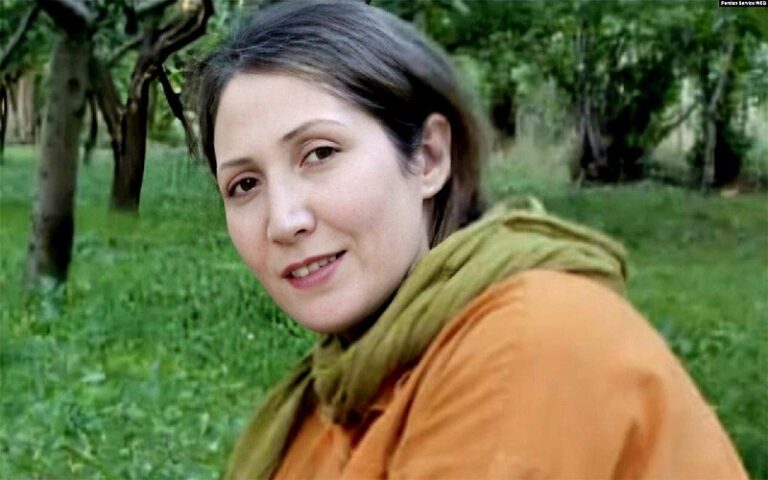
The UN Special Rapporteur on human rights in Iran described the case of Sharifeh Mohammadi, an imprisoned labor activist, as a clear example of the urgent need to abolish the death penalty.

Mai Sato, the UN Special Rapporteur on human rights in Iran, referring to the Iranian Supreme Court’s approval of Mohammadi’s death sentence, wrote that this case is a clear example of the urgent necessity to abolish capital punishment.

On Monday, August 18, Mai Sato wrote on the social media platform X that although Branch 39 of the Supreme Court had previously overturned Mohammadi’s death sentence due to serious legal and procedural flaws, this time it upheld the ruling.

The UN Special Rapporteur pointed out that Mohammadi’s conviction was based on the charge of “baghi” (armed rebellion) and alleged links to an “armed group.” He wrote: “Officials claim that the Coordinating Committee to Help Form Workers’ Organizations, which Mohammadi was once a member of, is linked to the Komala Party, which the Iranian government considers armed and rebellious.”

Sato continued, citing reports that Mohammadi was subjected to violations of fair trial guarantees, including torture, denial of access to a lawyer of her choice during interrogations, and five months of solitary confinement.

On August 16, Amir Raeesian, Mohammadi’s lawyer, told the state-run daily Shargh that her death sentence had been finalized, saying: “Although none of the issues previously cited by Branch 39 of the Supreme Court for overturning [Mohammadi’s] ruling have been resolved, this time the court upheld the death sentence.”

He added: “The ruling of Branch 2 of the Revolutionary Court in Rasht merely repeats the earlier ruling of Branch 1, without addressing the Supreme Court’s objections and based solely on the security forces’ claims. Therefore, it was expected that the Supreme Court would overturn the ruling again, but contrary to expectations, it did not.”

Iranian Regime Authorities Execute Nine Prisoners

In another part of her note on X, Sato emphasized that international human rights law does not allow the death penalty for national security crimes, including “baghi.” She wrote that the International Covenant on Civil and Political Rights restricts the death penalty to “the most serious crimes,” meaning the intentional taking of life.

She stated that the irreversible nature of capital punishment requires the highest legal standards, adding: “When Iran’s own Supreme Court previously identified serious flaws in a death penalty case, its decision to uphold the same flawed conviction raises grave concerns about the risk of an unfair execution.”

The UN Special Rapporteur concluded that this case is a clear example of the urgent need to abolish the death penalty.

Currently, around 70 prisoners across Iran, including Sharifeh Mohammadi, Verisheh Moradi, and Pakhshan Azizi, face political charges and are at risk of having their death sentences upheld or carried out.
Iranian Regime Authorities Execute Nine Prisoners

On Monday, August 18, nine prisoners were executed in the prisons of Amol, Khorramabad, Shiraz, Isfahan, Sari, and Hamedan. This brings the number of executions from July 23 to August 18 (less than one month) to at least 140. According to these figures, nearly five people have been executed daily, meaning one prisoner executed every five hours.

At dawn on Monday, August 18, Saman Ghasemi was executed in Amol prison. He had previously been arrested on murder charges and sentenced to death.

82nd Week of “No To Execution Tuesdays” Campaign In 49 Prisons Across Iran

Two prisoners, Iman Jouzi and Ali Omidi Moghadam, were executed in Khorramabad prison.

Iman Jouzi, son of Hatem and a native of Veysian, had previously been arrested on murder charges and sentenced to death.

The other executed prisoner, Ali Omidi Moghadam, had also been arrested earlier on murder charges.

Davoud Kashani was executed in Hamedan prison. He had been arrested earlier on murder charges and sentenced to death. Behrouz Sadeghi and Arash Mahjoor were executed in Isfahan prison.

Behrouz Sadeghi, 28 years old and from Isfahan, had been arrested four years ago on murder charges and sentenced to death.

Arash Mahjoor, 36 years old and also from Isfahan, had been arrested six years ago on murder charges and sentenced to death.

Also, on the morning of Sunday, August 17, Salar Rahimzadeh, 38 years old, was executed in Adelabad prison in Shiraz. He had been arrested on murder charges and sentenced to death.

At dawn on Saturday, August 16, Houshang Fathi and Siamand Sa’adati were executed in Sari prison.

Houshang Fathi, 30 years old, had been arrested three years ago on drug-related charges and sentenced to death.

Siamand Sa’adati, 41 years old, had been arrested two years ago on drug-related charges and sentenced to death.

Transfer of 13 prisoners to solitary confinement for execution

Thirteen prisoners in the cities of Bandar Abbas, Beyram, Saveh, and Arak were transferred to solitary confinement in preparation for execution.

– In Bandar Abbas, seven Afghan prisoners were transferred to solitary confinement.

– The head of the judiciary of Larestan county announced the public execution of two men and one woman scheduled for Tuesday, August 19, in the Gehdom district of Beyram, a town in Larestan. These prisoners are currently held in solitary confinement.

– On the morning of Tuesday, August 19, two prisoners in Arak prison were transferred to solitary confinement for execution. Their charges were announced as murder.

– Also on Monday morning, Abolfazl Fateh was transferred to solitary confinement in Saveh prison for execution. His charge was announced as murder.

82nd Week of “No To Execution Tuesdays” Campaign In 49 Prisons Across Iran

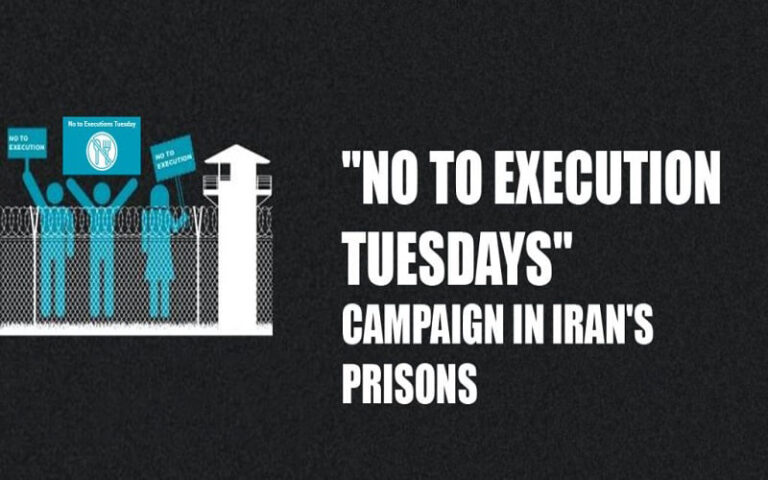
The 82nd week of the “No To Execution Tuesdays” campaign was held in 49 prisons across Iran. Prisoners, by participating in this campaign, expressed their protest against the issuance of death sentences in the country.

Political prisoners announced that between July 23 and August 18 alone, 128 people had been executed, and since March 21 of this year, 619 people have been hanged. “These numbers are not merely statistical data, but stories of lives and families plunged into grief and suffering.”

The statement of the prisoners participating in the 82nd week of the “No To Execution Tuesdays” campaign reads as follows:

The 82nd week of the “No To Execution Tuesdays” campaign in 49 prisons across the country

In its 82nd week, the “No To Execution Tuesdays” campaign once again amplified the voices of prisoners and their families to society. The continued lack of information regarding five political prisoners sentenced to death and members of the campaign (Vahid Bani Amerian, Pouya Ghobadi, Babak Alipour, Mohammad Taghavi, Akbar (Shahrokh) Daneshvarkar), as well as one security-related prisoner sentenced to death, Babak Shahbazi, is a clear sign of gross human rights violations and increasing pressure on prisoners’ lives.

Families of Five Political Prisoners Sentenced to Death Expressed Concern Over Continued Lack of News About Them

Furthermore, the Supreme Court’s confirmation of the death sentence for political prisoner Sharifeh Mohammadi once again exposes the dimensions of injustice and cruelty of the regime’s judiciary—a tyrannical system that has completely lost its legitimacy in society.

Iranian Activist Sentenced to Death

The statistics of executions reveal a human tragedy: between July 23 and August 18 alone, 128 people were executed, and since March 21, 619 people have been hanged. These numbers are not merely statistical data, but the stories of lives and families plunged into mourning and suffering.

The members of the “No To Execution Tuesdays” campaign strongly condemn this wave of executions and the intensified pressure on prisoners. They express their appreciation for the courage and perseverance of the justice-seeking families who have gathered outside prisons and other locations to echo the voices of prisoners, and they call on all compatriots not to leave the families of prisoners, especially those sentenced to death, alone in these difficult times.

The “No To Execution Tuesdays” campaign urges all people to use any means and tools available to express their protest against unjust verdicts and the policy of executions in the country, and to demonstrate their human solidarity against this systematic violence through possible methods, including gatherings and supporting the families of those sentenced to death.

On Tuesday, August 19, 2025, the members of the “No To Execution Tuesdays” campaign in its 82nd week are on strike in 49 prisons across Iran.

80% of Pharmacies in Iran on the Verge of Bankruptcy

Shahram Kalantari, head of the Iranian Pharmacists Association, pointed to the heavy debts of insurance companies and the Subsidy Targeting Organization to pharmacies and announced that 80% of the country’s pharmacies are on the verge of bankruptcy.

On Sunday, August 17, in an interview with the state-run Fars News Agency, Kalantari said: “The Subsidy Targeting Organization has not made any payments since February, and the debts of this organization along with the debts of insurance companies to pharmacists have exceeded 300 trillion rials (approximately 322.58 million dollars).”

Medicine Shortages In Iranian Pharmacies And Online Sales

He added that many private pharmacies, due to bounced checks, have practically been pushed out of the drug supply cycle, and distribution companies no longer cooperate with them.

These remarks come at a time when the rising prices of medicine and medical services in recent months have placed increasing pressure on citizens, especially low-income groups.

Meanwhile, a number of sick citizens, under the current circumstances, have given up on buying medicine and pursuing their treatment.

50% of the pharmaceutical market is monopolized by state-owned pharmacies

The head of the Pharmacists Association further stated in his interview that there are more than 17,000 pharmacies in Iran, of which about 16,000 are private.

Kalantari added that nevertheless, 50% of the pharmaceutical market is controlled by 1,700 state-owned pharmacies.

He continued: “Pharmaceutical companies, because they cannot collect payments from state-owned pharmacies and medical universities, put pressure on private pharmacies and significantly reduce their settlement deadlines.”

He put the amount of bounced checks of pharmacists at 40 trillion rials (approximately 43 million dollars) and added: “Any pharmacist whose check bounces can no longer practically obtain a checkbook, and in effect, distribution companies no longer work with such pharmacists, do not sell them products, and these pharmacies head toward bankruptcy.”

Criticism of “online drug interventions”

The head of Iran’s Pharmacists Association also criticized “online drug interventions” in Iran and warned about its consequences.

Kalantari said: “No matter how much we explain that medicine is not a commodity that we should allow patients to obtain through platforms, no one listens. Or they buy from centers whose origins are completely unknown.”

He stressed: “The sale of medicine must be under strict supervision, and the related data and information should be monitored on servers located in the Ministry of Health.”

According to Kalantari, the issue of online drug sales currently has supporters in the Article 90 Commission of Iran’s parliament, and even the head of this commission supports it.

Twelve Major Dams in Iran Supplying Drinking and Agricultural Water at Less Than 10% Capacity

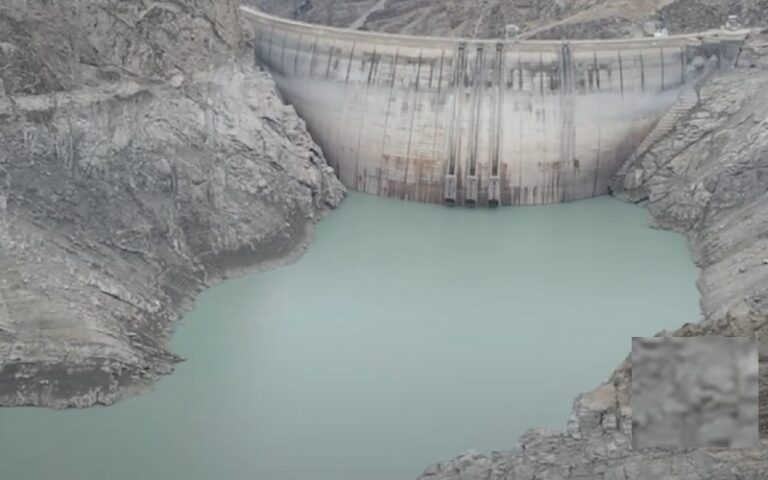
The latest data from Iran’s Water Resources Management Company shows that twelve major dams that supply drinking and agricultural water currently hold less than 10% of their capacity. According to these statistics, Lar Dam is at less than 5%, Latian Dam at 16%, Doosti Dam in Khorasan Razavi at 5%, and Sefidrud Dam in Gilan province at 4%.

The state-run ISNA news agency, citing these figures on Sunday, August 17, reported that water reserves in Shamil and Niyan dams in Hormozgan province, Rudbal Dam in Darab (Fars province), as well as Voshmgir and Boustan dams in Golestan province, have completely dried up.

A New Wave of Protests Over Water and Power Shortages from Nishapur to Amol and Anar

The data shows that from the beginning of the current water year (September 23, 2024) until August 16, inflows into all reservoirs across Iran totaled 23.81 billion cubic meters—representing a 42% decrease compared to last year.

Iranian media had earlier reported that as of August 9, the water volume in reservoirs was at 42% of capacity.

Water levels behind Amir Kabir Dam (Karaj), Lar Dam, and Latian Dam have dropped to their lowest levels in modern history. This situation is no longer described as a “crisis” but rather as a “water failure state,” with part of the damage deemed irreversible.

Frequent and widespread water and power outages in recent months have disrupted daily life across different parts of Iran.

For example, Tasnim News Agency, affiliated with the Islamic Revolutionary Guard Corps (IRGC), reported on August 16 that the city of Baneh is facing severe water shortages, with water supplies being cut for eight to ten hours daily.

According to Tasnim, this issue is the result of several factors, including climate conditions, reduced rainfall, ongoing droughts, and the pressure caused by population growth and tourism in the area.

Meanwhile, a three- to seven-fold increase in electricity bills in recent days, coupled with a lack of transparency about the details, has triggered protests from consumers. Mismanagement of water resources, diversion of water to regime-linked industries and agriculture, and lack of investment in the water sector are among the main causes of the shortage—making the Iranian regime fully responsible for this situation.

The Iranian Regime’s New Tax Law: Collecting Taxes from Citizens on Inflation

Masoud Pezeshkian, the president of the Iranian regime, has ordered the implementation of the “Speculation and Arbitrage Tax Law.” The legislative process for this law began in 2020, and it aims to tax half of the increase in the value of citizens’ assets caused by inflation during its first two years of enforcement.

The “Speculation and Arbitrage Tax Law,” which was approved by the regime’s Majlis (parliament) on June 29, was formally enacted by Pezeshkian on Friday, August 15.

Since the 1980s, the Iranian regime has sought to impose taxes on citizens’ capital gains from assets such as property, cars, gold, and foreign currency, but these attempts had never been put into practice.

Only $1.5 Million Paid Out of $70 Million in Taxes Owed by Luxury Homeowners in Iran

The law covers real estate, vehicles, gold, jewelry, silver, platinum, foreign currency, and cryptocurrencies. To enforce it, the Ministry of Economy is required to create an intelligent system that links to the registries of deeds, the stock exchange, customs, and the Central Bank in order to track transactions subject to taxation.

First two years: taxing citizens on inflation

Although the regime’s state-run media welcomed this law with headlines such as “Considering the effect of inflation for the first time,” evidence shows that the government also intends to tax the burden of inflation itself. In practice, during the first two years, citizens will be taxed not only on profits but also on 50% of the increase in asset prices caused by inflation.

For example, if a citizen purchased an apartment in 2024 for 50 billion rials (about $54,000), and due to 40% inflation, its value rises to 80 billion rials (about $86,000) in 2025, the 30 billion rial price difference would be considered profit.

Out of this 30 billion rials, 20 billion comes from inflation. According to the law, 10 billion rials (half of the inflation effect) plus 10 billion rials of actual profit would be subject to taxation. In this way, during the first two years of enforcement, the government will also be taxing inflation itself.

However, the text of the law includes numerous exemptions from paying taxes.

Details of the new law

According to the law, the sale of taxable assets within one year will be subject to a tax rate of 20% to 40%. Sales between one and two years will be taxed at 10% to 15%, and sales after more than two years will be taxed at lower rates.

The first residential property and one vehicle per family are exempt, as are agricultural, livestock, industrial, and mining properties used for production. Family transfers, inheritances, and legally registered settlements are also exempt.

In some sections of this 28-article law, penalties are foreseen, including preventing deed transfers, bans on commercial activity, and fines of up to twice the owed tax.

Through this law, the Iranian regime seeks to offset the effects of its recent regional setbacks and international sanctions by imposing heavy taxes on the people. In Iran, however, the largest financial transactions and assets are controlled by regime institutions, all of which remain tax-exempt.

Increasing Gasoline Price in Iran: Social Experiment or Preparation for Fuel Price Hikes?

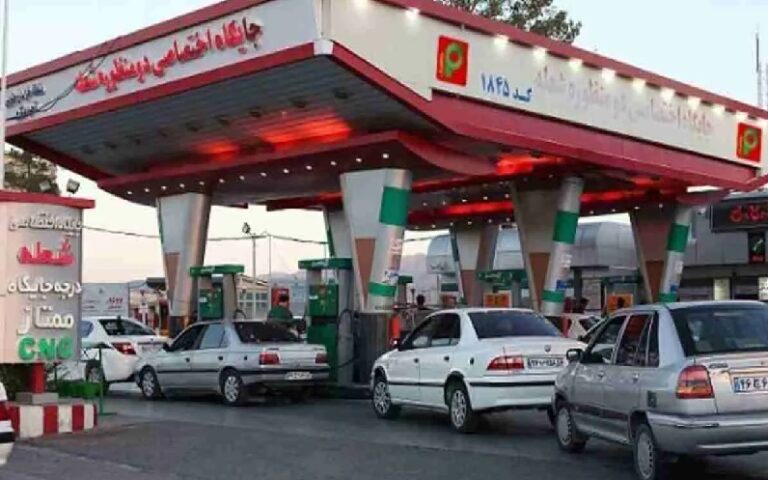
In recent days, Mohsen Paknejad, the Iranian regime’s oil minister, announced the introduction of a type of “special super gasoline” to be imported by the private sector and sold at specific stations for more than 50,000 tomans (500,000 rials / $0.50) per liter. He simultaneously stressed that this has no connection to rationed gasoline or the existing prices of 1,500 and 3,000 tomans (15,000 and 30,000 rials, roughly 1.5 to 3 cents) and that the 60-liter monthly quota for vehicles will remain unchanged.

On the surface, the government seems to be targeting specific consumers—particularly luxury car owners and those demanding higher-quality fuel. In reality, however, this decision raises serious questions about the future of Iran’s subsidy policies and the likelihood of a broader increase in gasoline prices.

The continuous devaluation of the rial and lack of investment in refining capacity have forced the Iranian regime, despite its claims of self-sufficiency, to rely on gasoline imports. According to regime officials, about $8 billion was spent on fuel imports last year alone.

The social experiment model

In political economy, one method governments use to gauge public reaction to price reforms is through limited trial projects. The sale of imported gasoline at 50,000 tomans fits this framework. Oil officials insist that this fuel is only for specific consumers and unrelated to subsidized quotas. However, this move can be interpreted as a form of “social conditioning,” gradually nudging people to accept that the real price of fuel is far higher than current subsidized rates.

From a behavioral perspective, the aim of creating a “dual pricing” system between subsidized and free-market gasoline could push society toward accepting gradual price increases. The November 2019 protests showed the regime that any sudden, across-the-board price hikes can trigger severe and costly social backlash. For this reason, establishing incremental price tiers starting with specific groups is likely the strategy the government is pursuing. In the 2019 nationwide protests, the Iranian regime killed 1,500 people.

The Anniversary of Iran’s Bloody November 2019 Protests

Budgetary pressure and political signals

Iranian regime president Masoud Pezeshkian and members of his cabinet have repeatedly stated that they do not intend to raise fuel prices for the “underprivileged.” At the same time, however, Pezeshkian and other officials have often criticized the “disproportionate consumption of wealthier groups,” questioning why these groups should receive subsidized gasoline. This contradiction shows that while the government fears the social consequences of price hikes, it also fully recognizes that the current policy is financially and economically unsustainable.

Given the regime’s chronic budget deficit, recurring energy crises in both winter and summer, and the heavy costs of fuel imports, the pressure to raise gasoline prices is greater than ever. The introduction of 50,000-toman gasoline by the private sector may be the first step in this process—a step presented as “liberalization for luxury vehicles” but one whose consequences will inevitably spread to society as a whole.

Although regime officials currently insist that subsidized gasoline prices will remain unchanged, economic evidence and political signals indicate that sooner or later, the debate on raising prices will extend to the general level. Pezeshkian’s government faces a choice: either continue bearing the financial burden of fuel subsidies and cover deficits by printing money and fueling inflation or take the difficult path of price reforms.

The increase in gasoline prices is less about providing a luxury fuel for certain cars and more a sign of a potential shift in the Iranian regime’s energy policies in the near future—a shift that could bring broad economic and social consequences.

Iranians Blame Secret Cryptocurrency Farms for Power Outages

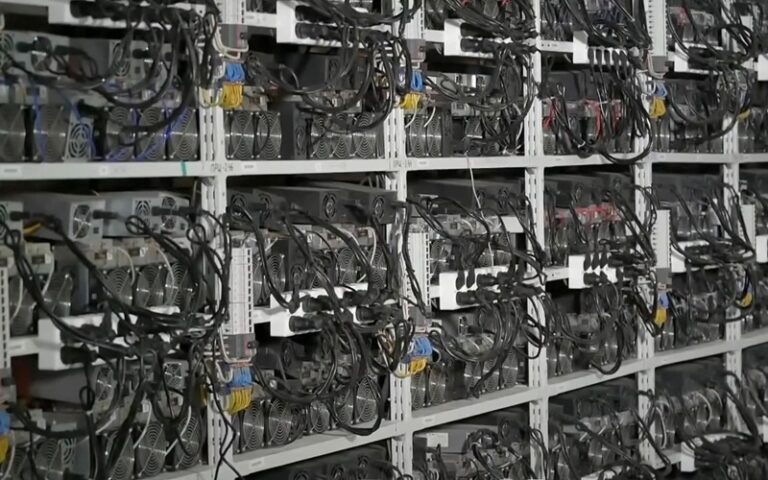
The specialized website Bitcoin News, in a detailed report on Iran’s growing energy crisis, identified secret cryptocurrency mining farms as the main cause of the widespread blackouts.

This report, based on local sources and energy experts, claims that massive and hidden cryptocurrency mining facilities—believed to be run under the supervision of the Islamic Revolutionary Guard Corps (IRGC)—have placed unprecedented pressure on Iran’s already worn-out electricity infrastructure.

The Outflow of Capital from Iran Through Cryptocurrencies Increased By “70 Percent” In 2024

According to the report, large-scale, round-the-clock cryptocurrency mining operations, particularly Bitcoin, have led to excessive and uncontrolled electricity consumption on an industrial scale. Many of these farms operate in secret locations, sourcing their electricity either illegally from the public grid or at subsidized rates. This abuse has worsened blackouts across residential, commercial, and industrial areas of the country.

Bitcoin News, quoting angry citizens, reported that people have been left in darkness and heat without electricity while the mining farms continue operating. A resident of Tehran said: “These power cuts are endless. I can’t take it anymore. They only mine cryptocurrency, but we are deprived of electricity.”

The report also highlighted the economic consequences of the energy crisis. Power outages have reduced productivity in schools, factories, and service centers, placing additional strain on the already sanctions-hit economy. In many rural and urban areas, the lack of electricity has fueled public discontent and anger toward regime institutions.

The website further wrote, based on field evidence, that state-run power plants are operating at full capacity but cannot meet the soaring demand. Some of these farms use diesel generators during peak consumption hours, which are both costly and environmentally damaging.

The report emphasized that the management and oversight of cryptocurrency mining operations are largely in the hands of military and unaccountable institutions. It concluded that unless transparency, public oversight, and effective legislation are implemented, Iran’s energy crisis will not only remain unresolved but may also worsen.

In November 2024, Ali Aghamohammadi, head of the economic office of Ali Khamenei (the regime’s supreme leader), called for the use of cryptocurrency to circumvent international sanctions on the Iranian regime. On the sidelines of a state event, he told reporters: “The role of cryptocurrencies in the digital economy cannot be denied. To overcome problems in sectors such as banking and financial payments, which are under sanctions, we can use digital currencies and cryptocurrencies.”

He added that regime officials should take Khamenei’s recent remarks on cryptocurrencies seriously. The head of Khamenei’s economic office said that the regime’s leader “also emphasized this issue, and we must move toward ‘proper use of it.'”

Shutdown of Ferdows Hospital Operating Rooms Due to Water Outage

The complete water outage at Ferdows Hospital, a 280-bed medical center, has left patients in need of surgery waiting for days and has forced the suspension of operating rooms.

The state-run ILNA news agency reported on Thursday, August 14, that only about two years after the official opening of the 280-bed “Qassem Soleimani” Hospital in Ferdows, which was inaugurated with promises of improving healthcare services, the facility is now facing a serious water crisis, causing surgeries to be postponed due to the outage.

ILNA wrote that the crisis is currently being managed through emergency water supply by fire department tankers. Fire trucks temporarily fill the hospital’s reservoir to meet part of its needs, but this solution only lasts a few hours.

Iran Regime Expediency Council Warns of Imminent Tehran Water Shortage

The agency, citing on-site observations by its reporter and statements from patients’ relatives, reported that the complete water outage has disrupted the hospital’s normal operations, leaving surgery patients in limbo. It added that all departments, from restrooms and washbasins to operating rooms, are without water.

A traffic accident patient hospitalized in Ferdows told ILNA: “Since Tuesday night, August 12, after I was transferred to this hospital, they told us that the fracture surgery requiring a plate would not be performed the next day, Wednesday, because there was no water.”

The patient continued: “It was planned that if the water supply returned on Thursday, August 14, the surgery would be carried out. But today, with the water still cut off, I have to wait until next week and bear the pain with painkillers.” One of the patient’s companions also told ILNA that the hospital does not even have water for basic washing.

A major part of Iran’s water crisis stems from unsustainable management of resources and consumption. All natural resources in the country are controlled by the Islamic Revolutionary Guard Corps (IRGC) and regime-affiliated institutions, a situation that has led to water bankruptcy and the growing electricity shortages across Iran.

Power Outages and Extreme Heat in Iran Are Claiming Lives

The power outage and extreme heat in Kavar, a town in Fars province, led to the deaths of two young people, aged sixteen and eighteen. These two individuals, Tara Younesi and Sadegh Khoshdel, went into a running car in their home’s garage to cool off after the power went out and their air conditioner stopped working. With the car running in the enclosed space, carbon monoxide filled the vehicle, and they suffocated from inhaling the gas.

In recent weeks, frequent and widespread power outages across Iran have turned into a serious crisis affecting various aspects of people’s lives and have created problems in the healthcare sector as well.

Power Outages Return in Iran After the 12-Day War

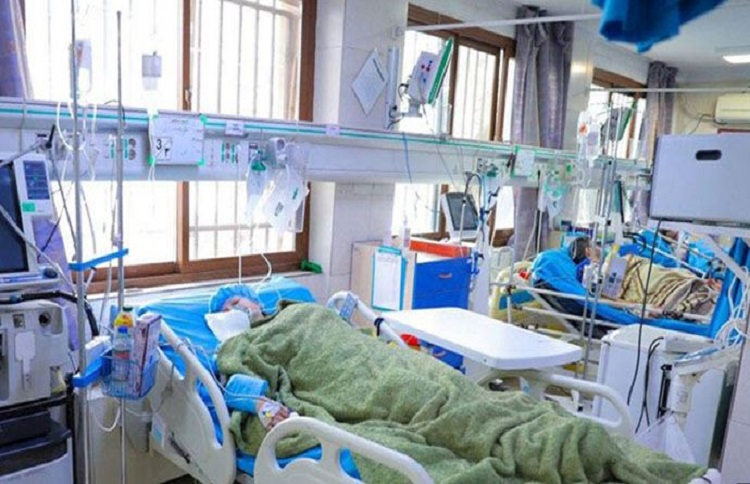
The state-run daily Payam-e Ma wrote that the power outages have not only disrupted daily life but also hindered medical services. Patients in hospitals and even in their homes are facing the risk of losing their lives due to sudden blackouts. Accounts from medical staff portray a widespread crisis in the healthcare sector, one that extends from ICUs to operating rooms and the homes of patients dependent on medical devices.

In one hospital in Tehran, a sudden blackout caused ventilators and other life-support equipment to shut down simultaneously. An ICU nurse said: “Every time the power goes out, the anxiety of patients and nurses doubles. For patients at home who depend on ventilators and suction devices, a power outage means the complete shutdown of the equipment and the risk of suffocation.”

Also, according to Payam-e Ma, an operating room nurse stated: “In some cases, it takes about 30 seconds for the hospital’s electricity to be restored, and during that time, when the surgical light goes out, all doctors and technicians are forced to continue surgery using their mobile phone flashlights.” He also added: “In certain surgeries, such as cardiovascular procedures and kidney transplants, where every second is critical, power outages can cause serious problems.”

In contrast, Mohammadreza Zafarghandi, Iran’s health minister, said: “So far, we have not received any reports of deaths or serious incidents caused by power outages in hospitals.” He emphasized that 10 trillion rials have been allocated for the purchase and repair of generators. However, medical staff and members of parliament say the reality is different.

Salman Es’haghi, spokesperson for the parliament’s Health and Treatment Commission, warned about discontent in some sectors such as dialysis, saying that power outages could lead to the shutdown or damage of devices. He emphasized that this crisis has also caused losses in the pharmaceutical production sector.

According to Payam-e Ma, some pharmaceutical factories have purchased generators to prevent production stoppages, but this has led to heavy costs and may cause future drug shortages. Mohammad Abdozadeh, chairman of the Syndicate of Pharmaceutical Industry Owners, said: “Currently, for two to three days a week, power is cut off in pharmaceutical factories, which has reduced production capacity by 40%.” He explained that in one eight-hour work shift, generators consume about 1,600 liters of diesel, and the fuel cost for three days of weekly outages amounts to about 1.2 billion rials.

He warned that with the continuation of power outages, coupled with problems such as gas shortages in the winter season and delays in foreign currency allocations, starting in September there will be a significant increase in drug shortages across the country.

At the end of its report, Payam-e Ma, while noting that the health minister and the parliament’s Health Commission spokesperson claimed there are no reports of patients dying due to power outages, wrote that many families, in addition to worrying about surgery outcomes, are terrified of sudden blackouts. The newspaper cited a citizen on X who said: “Tomorrow my father is scheduled for surgery. I’m afraid the hospital’s power will go out while he’s in the operating room. God willing, the hospital’s electricity won’t go out tomorrow.”