Home Blog Page 85

UN Rapporteur Expresses Concern Over Possible Enforced Disappearance Of Evin Prison Detainees

The United Nations Special Rapporteur on the situation of human rights in Iran, Mai Sato, published a post on the social media platform X on Friday, July 4, expressing concern about the potential “enforced disappearance” of several political prisoners in Evin Prison, including Ahmadreza Djalali, an Iranian-Swedish researcher.

Mai Sato wrote in part of the post: “I continue to receive reports of deteriorating conditions faced by prisoners transferred from Evin Prison to the Great Tehran Penitentiary and to Qarchak Prison after Israeli attacks on its facilities. The whereabouts of some prisoners detained at Evin Prison remain unknown, raising fears of enforced disappearances.”

In light of numerous reports of the arrest of hundreds of individuals—including media activists, social media users, journalists, human rights defenders, and foreign nationals such as Afghan migrants, as well as ethnic and religious minorities—she objected to the ongoing wave of arrests on charges of “espionage for Israel.”

The UN Special Rapporteur also noted the escalation in executions of prisoners convicted of espionage for Israel or collaboration with hostile states.

“I am concerned by official statements announcing expedited trials on accusations of espionage, putting individuals at heightened risk of summary execution or punishment without adequate due process. Equally alarmed by Iran’s Parliament advancing a legislation that would classify intelligence or espionage activities carried out for ‘hostile governments’ as ‘corruption on earth’ – an offence punishable by death.”

Mai Sato issued a warning to Iran’s regime: “post-conflict situations must not be used as an opportunity to increase repression against ethnic and religious minorities or suppress dissent.”

At the end of her post, she called on the international community to prioritize support for Iranian civil society activists and to provide financial and technical assistance to “independent media and human rights organizations.”

Water Tensions In 25 Provinces And 53 Cities Of Iran

0

According to the state-run Tasnim News Agency, quoting the head of Iran’s Water and Wastewater Company, “25 provinces and more than 53 cities in the country are currently facing water tension.”

Hashem Amini, referring to the recent 12-day war, stated that water outages occurred for several hours in Tehran due to a missile hitting Ghods Square in the Tajrish district, but there have been no other major issues affecting citizens’ access to drinking water.

He emphasized the need for “water consumption management” by consumers and said, “We have introduced emergency plans, and the government has allocated funds for them.”

Hashem Amini described the stabilization and resilience of the drinking water and sanitation network, as well as the preservation of water quality, as a “red line” for his organization, and stated that all efforts by the water and wastewater companies are aimed at minimizing consumer concerns in this area.

Warning About the Possibility of Water Rationing in Iran

These claims come as Iranian citizens have continued to report multiple-hour water and electricity outages in various cities across the country on social media, even after the end of the 12-day war.

Over the past years, the water crisis has consistently remained a major issue for residents in various provinces, especially in Iran’s western, eastern, and southern border regions.

In August 2021, one of the largest protests related to the water crisis took place in Khuzestan province. These protests were met with brutal repression by the regime, resulting in the killing and wounding of several demonstrators.

New U.S. Sanctions on Iranian Oil Network and Hezbollah Financial Entity

The U.S. Department of the Treasury has imposed sanctions on a network of companies and individuals accused of smuggling billions of dollars’ worth of Iranian oil by forging documents and falsely labeling it as Iraqi oil. Additionally, a financial institution affiliated with Lebanon’s Hezbollah has also been targeted by these sanctions.

The Office of Foreign Assets Control (OFAC) of the U.S. Treasury Department stated that this smuggling network is led by Iraqi-British businessman Salim Ahmed Said. By blending Iranian oil with Iraqi oil, the network sold it to foreign buyers, primarily through the United Arab Emirates and Iraq, circumventing sanctions. Said allegedly bribed Iraqi officials to produce forged documents and also controls the companies VS Tankers and Oil Terminal, which played roles in smuggling oil and transferring foreign currency to Iran.

The sanctions are based on Executive Orders 13902 and 13224, which target the Iranian regime’s oil sector and terrorism-related activities. U.S. Treasury Secretary Scott Bessent emphasized that this move is part of a maximum pressure campaign to cut off the Iranian regime’s financial resources and weaken its destabilizing activities.

Simultaneously, the U.S. State Department has sanctioned six entities and four vessels involved in oil trade with Iran. Iran’s so-called “shadow fleet” uses unflagged, sanctioned ships to transport oil from Iran to Asia.

The Singapore-based company Trans Arctic Global Marine Services has also been sanctioned for assisting vessels of the National Iranian Tanker Company in navigating through the Strait of Malacca. Four vessels—VIZURI, FOTIS, THEMIS, and BIANCA JOYSEL—are reported to have transported millions of barrels of Iranian oil.

In the same context, the company Al-Qatirji has facilitated Iranian oil sales on behalf of the Quds Force of the Islamic Revolutionary Guard Corps (IRGC), generating hundreds of millions of dollars in revenue. Vessels such as ELIZABET, ATILA, and GAS MARYAM have participated in these operations by delivering Iranian oil to global markets under false identities.

In another part of the sanctions, the Treasury Department designated seven senior officials, and one company connected to Al-Qard al-Hassan, a financial institution affiliated with Hezbollah. Through their management roles, these individuals have enabled Hezbollah to access Lebanon’s financial system and evade U.S. sanctions. The move is in support of the new Lebanese government’s efforts to limit Hezbollah’s influence.

The company Tasheelat has also been sanctioned for its role in financing Hezbollah. All assets and transactions related to these individuals and entities within U.S. jurisdiction have been frozen, and any dealings with them are prohibited for U.S. citizens.


Protests Erupt at Funeral of Young Men Murdered by Iran’s Regime

The funeral procession for Mohammad-Mehdi Abaei and Alireza Karbasi, two young men killed by gunfire from Basij forces (a paramilitary wing under the IRGC), was held on Thursday, July 3. Attendees turned the ceremony into a protest against Iran’s regime policies, chanting “Death to the oppressor” and demanding the prosecution of those responsible for their deaths.

During the burial of the two young men killed by security forces in Hamedan, participants chanted “I will kill those who killed my brother.”

A group of attendees also chanted: “Our enemy is right here; they lie when they say it’s America.”

Another video shows attendees at the funeral of the two young men in Hamedan continuing their protest with the chant: “Iranians will die but will not accept humiliation.”

Earlier, following reports of the two young men being killed by regime forces in Hamedan, the state-run Fars News Agency, affiliated with the IRGC, confirmed the incident and wrote that it resulted from “security operation forces” shooting at a vehicle carrying three occupants.

Fars reported that regime agents, suspecting a vehicle due to drone activity in the Tarik Darreh area, initially fired warning shots, gave a “halt” order, and then opened fire on the vehicle, resulting in the deaths of two occupants and injury of the third.

The head of the Armed Forces Judicial Organization in Hamedan Province stated that a case has been filed in judicial authorities and field investigations are underway.

The two young men had gone to the outskirts of Hamedan for a nature outing.

In 2024, indiscriminate shootings by military forces across different parts of the country killed at least 163 civilians and injured 321 others.

Following the ceasefire in the 12-day war between Iran’s regime and Israel, security forces have set up checkpoints, holding vehicles for hours and conducting thorough inspections. Reviewing mobile phone contents, creating long queues, deploying machine guns, and even building barricades are part of the heightened security atmosphere now in place.

Some reports indicate that at the entry and exit points of various cities, all passing vehicles are stopped and searched.

Rezgâr Beigzadeh Babamiri, A Political Prisoner in Urmia, Sentenced to Death

The daughter of Rezgâr Beigzadeh Babamiri, a Kurdish political prisoner held in Urmia Prison, announced that he has been sentenced to death. Beigzadeh Babamiri was arrested for participating in the nationwide uprising of 2022 in the city of Bukan and for providing medicine and medical aid to those injured during the violent crackdown on protests.

Zhino Beigzadeh Babamiri wrote in a post on her X (formerly Twitter) account on Thursday, July 3: “Dad was sentenced to death.”

She did not specify the charges against her father or the court that issued the sentence, but earlier reports had indicated that Rezgâr Beigzadeh Babamiri had been charged with “baghi” (armed rebellion against the state) in the Revolutionary Court.

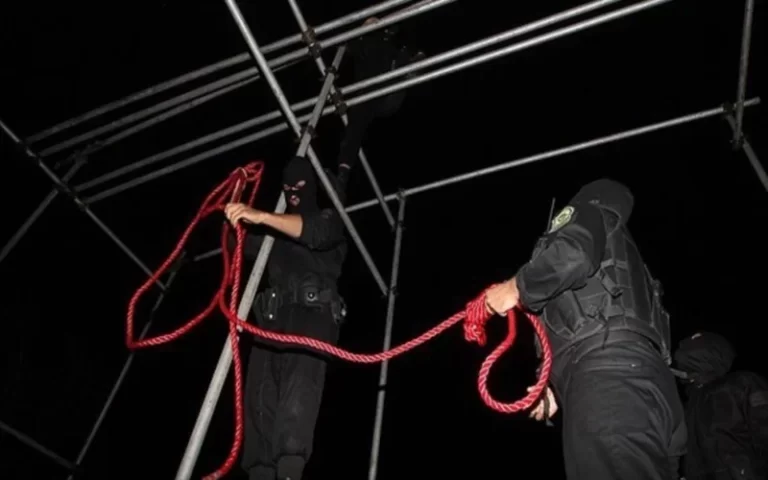
Iranian Regime’s Judiciary Announces Execution of 9 Prisoners

Earlier, in February 2025, Babamiri had been sentenced to 15 years in prison by Branch One of the Criminal Court in Urmia, in another part of his case, on the charge of “complicity in murder” during the 2022 protests.

According to the verdict, in this part of the case, Pejman Soltani, another political prisoner, was sentenced to death for the charge of “ordering the killing of a security officer,” and Ali Ghasemi was sentenced to 10 years in prison for “complicity in murder.” The fourth defendant, Kaveh Salehi, was acquitted of the charges against him.

Later, on May 12, Babamiri’s daughter wrote on X that the 15-year prison sentence for her father had been upheld in full by the Appeals Court of West Azerbaijan Province.

At the time, she emphasized that her father “was arrested solely for providing humanitarian aid to the wounded” and wrote: “None of the basic rights of an accused person have been respected, even according to the Iranian regime’s own minimal laws.”

The 47-year-old farmer is the father of three children—the youngest of whom was only two years old at the time of his arrest.

On April 25, 2025, Babamiri wrote a letter from Urmia Prison detailing the torture he endured at the Intelligence Ministry detention centers in the cities of Bukan and Urmia. He stressed that his only “crime” was helping fellow human beings during the protests.

In the letter, Babamiri wrote that during 130 days of detention and interrogation, he was subjected to “specialized torture,” including induced suffocation (using water and a bag over his head), mock executions (hanging and firing squad), electric shocks to sensitive areas of his body, and continuous sleep deprivation.

In recent months, the rising number of executions, as well as the issuance and confirmation of death sentences against political prisoners in Iran, has sparked a wave of protests both inside and outside the country.

The National Council of Resistance of Iran (NCRI) had previously called on all international bodies and the United Nations Human Rights Council to condemn these crimes and hold Iran’s regime accountable.


Pezeshkian Announces Suspension of Iranian Regime’s Cooperation with IAEA

Pezeshkian formally announced the law suspending the Iranian regime’s cooperation with the International Atomic Energy Agency (IAEA). The law was passed in the regime’s parliament on June 25 and was swiftly approved by the Guardian Council.

The law states: The government is obliged to immediately suspend all cooperation with the IAEA based on the NPT treaty and its related safeguards until certain conditions, including the protection of nuclear facilities and scientists, are met.

Unable to confront the United States and Europe directly, Iran’s regime has targeted the IAEA and its director-general as a perceived weak link, while also seeking to prevent inspectors from discovering the extent of damage caused by American bombings at nuclear sites in Fordow, Natanz, and Isfahan.

Grossi Warns of Consequences of Attacks on Iran’s Nuclear Facilities

The regime also believes that posturing as though it is building an atomic bomb following the suspension of cooperation with the agency is a show of force and a bargaining chip it can use to buy time.

Meanwhile, on Tuesday, July 1, U.S. President Donald Trump declared that it is now appropriate to use the word “destruction” regarding the regime’s nuclear sites that were targeted by U.S. attacks, as the IAEA has stated that it is not even possible to enter those locations.

Another noteworthy point is that, contrary to previous threats, Iran’s regime has not withdrawn from the NPT but has instead suspended cooperation with the agency. The aim of this contradictory approach is to both project strength and leave the door open for potentially resuming cooperation in future negotiations.

Iranian Regime Hackers Threaten to Release Emails of Trump’s Close Aides

Reuters reported that hackers affiliated with Iran’s regime have threatened to release another batch of stolen emails from the inner circle of Donald Trump, the President of the United States.

These hackers, who operate under the alias “Robert,” had already shared part of these emails with media outlets ahead of the 2024 U.S. presidential election.

In online conversations with Reuters on Sunday and Monday, the hackers claimed they have about 100 gigabytes of emails from the accounts of different US officials.

“Robert” raised the possibility of selling this information but did not provide any specific details about their plans. The group also did not describe the contents of the emails.

“Raising Money for the Assassination of Trump and Netanyahu” by Iranian Regime Supporters

The White House and FBI issued a joint statement through FBI Director Kash Patel, stating that any individual involved in violating national security will be fully investigated and prosecuted.

Iran’s regime delegation at the United Nations also did not respond to requests for comment. Tehran has previously denied any involvement in cyber espionage.

The identity of “Robert” came to light in the final months of the 2024 presidential campaign when the group claimed to have gained access to the email accounts of several of Trump’s allies, including Susie Wiles, Trump’s Chief of Staff.

In an indictment issued in September 2024, the U.S. Department of Justice accused the Islamic Revolutionary Guard Corps (IRGC) of orchestrating the “Robert” hacking operation. However, in their conversation with Reuters, the hackers declined to comment on this allegation.

After Trump’s victory in the election, the “Robert” group told Reuters that they no longer planned to release any information.

However, the group became active again after the recent 12-day war between Israel and Iran’s regime, which ended with U.S. airstrikes on Iran’s nuclear sites.

In messages to Reuters this week, “Robert” said they are planning to sell the stolen emails and asked the media outlet to “make it public.”

Frederick Kagan, a researcher at the American Enterprise Institute and an expert on Iran’s cyber-espionage operations, said Iran’s regime suffered significant damage during the conflict and its intelligence agencies are likely trying to respond in ways that do not provoke stronger retaliation from the U.S. or Israel.

Despite concerns about the potential for destructive digital actions by Iran’s regime, hackers affiliated with the regime remained relatively quiet during the recent conflict. On Monday, U.S. cybersecurity officials warned that American companies and critical infrastructure may still be vulnerable to cyberattacks from Tehran.

“Raising Money for the Assassination of Trump and Netanyahu” by Iranian Regime Supporters

Abdolmajid Kharaqani, a cleric supporting Iran’s regime and a religious media activist, announced in an interview with an Instagram-based outlet called “OnNews” that a campaign has been launched on the regime’s domestic social media networks to raise money for the assassination of U.S. President Donald Trump and Israeli Prime Minister Benjamin Netanyahu. In the same interview, he also directly threatened both leaders.

He stated, “Netanyahu and Trump must be killed as leaders of the front of infidelity,” and added, “In European countries, this is done for 20 million dollars.”

These remarks by the regime-affiliated cleric come days after senior Shiite religious authorities issued religious rulings labeling Trump and Netanyahu as mohareb (waging war against God).

On June 29, 2025, Naser Makarem Shirazi and Hossein Noori Hamedani, two regime-aligned Shiite clerics based in Qom, declared individuals who threaten Ali Khamenei, the supreme leader of Iran’s regime, as “mohareb,” without directly naming Trump and Netanyahu.

Yesterday, Najmuddin Tabasi, a member of the Qom Seminary Teachers Association, also threatened Trump with death, saying, “Trump’s hands are stained with blood and he must be punished and receive retribution for his actions.”

Referring to the fatwas by Makarem Shirazi and Noori Hamedani declaring Trump a mohareb, he added, “I am confident that brave youth will deprive Trump of security.”

UK Probes Iranian Regime’s Hidden Network Amid Growing Fears of Tehran’s Hybrid Warfare

The UK Treasury is investigating nine suspected violations of sanctions related to Iran’s nuclear program in 2024—infractions that have gained greater sensitivity amid tensions following the recent 12-day war with Israel.

According to The Telegraph, these cases represent only a small part of Iran’s regime’s extensive covert financial and political influence network in Britain—a network fostered by years of inattention from London’s policymakers to Tehran’s “hybrid warfare.”

In June 2009, the Iranian regime’s supreme leader called the UK the “most evil” foreign power, and the slogan “Death to Britain” was chanted during Friday prayers in Tehran—a symbol of the regime’s long-standing hostility toward the UK.

The Telegraph reports that Tehran has targeted British public opinion in an effort to undermine the UK’s support for human rights in Iran and retaliate against sanctions.

Press TV, the regime’s English-language broadcaster—despite having its UK license revoked in 2012 for airing forced confessions—continues to promote the regime’s official narrative online while painting a bleak picture of Britain’s economic hardship.

The appearance of Labour Party figures such as George Galloway, Chris Williamson, and Jeremy Corbyn on this network has been cited as a sign of Tehran’s influence.

From 2013 to 2014, Iranian cyber operatives ran a Facebook page called “Scottish Cartoon,” which promoted Scottish independence and accused then-Prime Minister David Cameron of suppressing Scots.

Support for Scottish separatism intensified ahead of the 2021 parliamentary elections and continued into this year. In early June, coinciding with Israel’s “Operation Dawn of the Lions,” a network of pro-independence accounts—responsible for 250,000 posts—suddenly went dark.

In addition to online operations, aligned NGOs are also active.

The Islamic Human Rights Commission, which organizes the annual Quds Day march, raised the Hezbollah flag until it was banned in 2019 and is now under scrutiny for supporting sabotage activities against Israeli targets.

The survival of these networks has been facilitated by the inflow of Iran’s “dark money” into the UK financial system. In 2016, as part of efforts to advance the nuclear deal, sanctions on Bank Melli and Bank Saderat—accused of financing Kataib Hezbollah, Hamas, and Islamic Jihad—were lifted.

Rising concerns have finally prompted security responses.

In October 2024, MI5 Director General Ken McCallum announced that “top-level” attention had been given to threats from Iran and revealed that 20 potentially lethal plots against British citizens had been thwarted.

In March 2025, Security Minister Dan Jarvis warned that regime operatives who fail to register could face up to five years in prison.

Nevertheless, The Telegraph argues that these scattered measures are not enough to counter Iran’s “shadow war”; London must urgently impose stricter sanctions on Tehran’s financial networks and curtail its malign influence.


Iran’s Regime Arrests European Nationals in Connection with The 12-Day War

Amid an increasingly repressive security atmosphere in Iran, Asghar Jahangir, the spokesperson for Iran’s judiciary, announced that in several provinces, “individuals of European nationality” who, according to him, “were in some way collaborating with Israel,” had been arrested and that legal cases had been opened against them.

In a press conference on Monday, June 30, Jahangir did not specify the identity or number of European detainees but announced that special judicial branches had been ordered to be established throughout the country to handle the cases of individuals labeled as “traitors and mercenaries.”

Jahangir stated, “We will address the cases of mercenaries and traitors without leniency,” adding that directives issued by Gholamhossein Mohseni Ejei, the head of the judiciary, would ensure these cases are processed rapidly.

Political Prisoners Held In The Greater Tehran Prison Are Enduring Unbearable Conditions

He added that the judiciary would address cases involving charges such as “crimes against national and regime security, espionage, treason, and betraying the country” in a “firm and expedited” manner. According to Ejei’s order, these cases would be handled in an “extraordinary” process.

Iran’s regime has long been accused by European officials and non-governmental organizations of engaging in “hostage diplomacy” by detaining dual nationals and foreign citizens in order to pursue its political objectives and extract concessions.

In recent days, following the implementation of a ceasefire after the 12-day war with Israel, the Iranian regime has intensified its security clampdown and increased the arrests of civil society and media activists in connection with the conflict.

Throughout this period, judiciary officials have repeatedly announced the creation of special branches within the judiciary to process these cases, stating that verdicts will be issued swiftly.

On June 27, the human rights website HRANA reported that since the early morning of June 13, coinciding with the start of Israeli airstrikes on Iran, Iranian regime security forces had arrested more than 1,596 individuals.

According to the report, the number of detained foreign nationals, ranging from Europeans to Afghans, had reached at least 98. These individuals were arrested on charges such as illegal entry and membership in intelligence networks.

Subsequently, human rights media outlets and state-run websites reported the arrest of dozens more individuals across various cities on political and security-related charges.

HRANA, citing the large number of arrests and the rapid issuance of provisional sentences, warned that the public threats issued by judiciary officials have raised serious concerns about the detainees’ right to a fair trial.

Amnesty International, in a report dated June 25, stated that Iranian regime officials’ calls for the swift trial and execution of detainees accused of “collaborating with Israel” demonstrate their use of the death penalty as a tool for exerting control and instilling fear among the public.