Home Blog Page 87

Iranian Regime Parliament Approves Suspension of Cooperation With IAEA

0

Alireza Salimi, spokesperson for the presidium of the Iranian regime’s Majlis (parliament), stated that the lawmakers approved both the general outline and specific details of a bill that suspends the regime’s cooperation with the International Atomic Energy Agency (IAEA).

He said, according to the parliamentary resolution, IAEA inspectors are not allowed to enter the country for inspections unless the security of nuclear facilities and the peaceful nature of Iran’s nuclear activities are guaranteed — a condition subject to the approval of the Supreme National Security Council.

The bill was passed while Rafael Grossi, the Director General of the IAEA, has called for the immediate resumption of nuclear verification activities in Iran.

Alireza Salimi further stated: “Majlis has introduced penalties for those who allow IAEA inspectors to enter the country. The legislation applies to both safeguards-related and non-safeguards cooperation.”

Day 13 – Ceasefire Endures While Iran Faces Fallout and Diplomatic Pressure

Meanwhile, Mohammad Bagher Ghalibaf, Speaker of the Iranian regime’s parliament, stated that the Atomic Energy Organization of Iran will suspend its cooperation with the IAEA until there is a “guarantee of the security of nuclear facilities.”

Majlis members approved both the general and specific aspects of a bill that suspends the Iranian regime government’s cooperation with the IAEA.

Ghalibaf went on to say that the Iranian regime will accelerate its nuclear program.

Regime officials have increasingly emphasized the continuation and advancement of Iran’s nuclear program following the ceasefire in the conflict with Israel.

Rafael Grossi, Director General of the IAEA, announced that following U.S. airstrikes on Iran’s nuclear facilities, the location of approximately 400 kilograms of the regime’s enriched uranium is unknown.

In an interview with Fox News, Grossi added that Iran claims to have relocated the material for protective measures, but the agency has no knowledge of its precise whereabouts.

He emphasized that the Natanz facility has sustained serious damage, and Isfahan has also been hit, but direct inspection has not yet been possible.

Grossi called for the immediate resumption of the agency’s monitoring activities and added that his responsibility is to track every gram of uranium in Iran.

Responding to U.S. officials’ claims that Iran’s efforts to acquire a nuclear weapon have failed, Grossi said that possessing 60% enriched uranium alone is not sufficient, but more importantly, “we must know where this material is.”

Abbas Araghchi, the Iranian regime’s foreign minister, stated: “No one in Iran will abandon the nuclear program.”

He added: “We have shown for years that we are committed to the NPT [Non-Proliferation Treaty], but the treaty failed to protect our program.”

Iran’s foreign minister further stated: “Iran’s acceptance of the ceasefire was aimed at maintaining moral and ethical superiority. This decision is based on the formation of a new approach in Iran’s foreign policy, grounded in regional and Islamic values.”


Day 13 – Ceasefire Endures While Iran Faces Fallout and Diplomatic Pressure

0
Fallout from war escalates internally for Iran as international scrutiny on nuclear program and regional diplomacy deepens.

Post-War Crackdown & Domestic Turmoil

Following the ceasefire between Israel and Iran, reports have emerged of a widespread wave of arrests and internal repression within the Islamic Republic. According to the state-affiliated Tasnim News Agency, authorities in Kermanshah province have detained at least 115 individuals accused of “disturbing security” during recent days. Additional arrests were reported by the Revolutionary Guard Corps in Hamedan and Hormozgan, with local police in Fars province reporting 53 detainees and Gilan province 36. In Zarand, 11 people were arrested for “propaganda against the system.”

June 24, 2025 – Iran-Israel Ceasefire Takes Effect Amid Renewed Tensions

A report from the regime-linked outlet Farda News highlighted a growing wave of desertion and disobedience within the ranks of the military and security forces. Many soldiers and officers are reportedly refusing to report for duty, declining to follow orders, or going into hiding. In response, Iran’s General Staff has issued new directives permitting commanders to use “the harshest possible measures” to suppress desertion and reassert control.

Arrests for Alleged Espionage & Drone Use

Fars News Agency, aligned with the IRGC, reported the arrest of over 700 individuals during the 12-day war. These arrests reportedly occurred in provinces including Kermanshah, Isfahan, Khuzestan, Fars, and Lorestan. The charges range from guiding drones and controlling micro-drones, to photographing military installations and leaking intelligence to Israel. The report also stated that more than 10,000 micro-drones were seized in Tehran alone. Opposition groups have warned that the regime is using these arrests as a pretext to suppress dissent in the post-war climate.

Security and Military Status

As of today, there have been no new missile or airstrikes reported between Iran’s regime and Israel since the ceasefire declaration. However, tensions remain high. Regime President Masoud Pezeshkian reiterated that Iran would respect the ceasefire as long as Israel does the same, and expressed readiness to resolve issues with the U.S. under international frameworks.

Meanwhile, U.S. President Donald Trump, attending the NATO summit in the Netherlands, made headlines again on Truth Social, stating that Iran’s nuclear sites were completely destroyed, and dismissing contrary intelligence reports as falsehoods spread by media outlets like CNN and The New York Times.

U.S. Policy & Strategic Posture

Despite critical reporting by U.S. media suggesting that Iran’s nuclear capability was only set back by a few months, the White House continues to claim total success. Intelligence sources cited in the New York Times and CNN suggest that key underground components survived, and that Tehran’s program could be rebuilt. However, Trump and the White House Press Secretary have rejected these claims, reaffirming that the attack on Iran’s nuclear sites—including Fordow, Natanz, and Isfahan—was decisive.

U.S. CENTCOM Deputy Commander Brad Cooper warned that Iran still retains considerable tactical capability, despite the destruction inflicted during the conflict.

Nuclear Diplomacy and the IAEA

Rafael Grossi, Director General of the International Atomic Energy Agency (IAEA), called on Iran to resume full cooperation and inspections, emphasizing that diplomatic resolution is only possible with transparency. Grossi revealed that inspectors were in Iran during the Israeli attacks and are prepared to return, pending Iran’s approval. He confirmed that Iran has over 400 kg of 60% enriched uranium, enough to potentially build multiple nuclear weapons if further enriched.

A report by The Telegraph added that Iran had likely relocated many advanced centrifuges and a substantial amount of enriched uranium prior to the strikes. The intelligence suggests that Iran may still possess the core infrastructure needed for a weapons program.

Targeting Fordow: Deep Facility Under Scrutiny

Sky News revealed new details about the Fordow site, claiming that tunnels beneath the facility were mapped using intelligence stolen from Iran. The report states that U.S. B-2 bombers targeted these tunnels, believed to house uranium enrichment infrastructure. Satellite imagery showed at least six bomb impacts, but the full extent of damage remains unknown, even to Tehran.

Regional & Global Diplomacy

Steve Witkoff, U.S. Special Envoy to the Middle East, revealed that Iran had been in indirect talks with the U.S. throughout the war, seeking a diplomatic resolution contingent on Israel halting attacks.

In a call with Saudi Crown Prince Mohammed bin Salman, Iranian regime President Pezeshkian emphasized Iran’s desire for regional unity and reiterated that Iran has no demands beyond its legal rights. He welcomed mediation and stressed Tehran’s belief that the U.S. and Israel seek to divide the Muslim world.

NATO leaders, meeting in the Netherlands, have devoted substantial time to the Iran-Israel conflict, despite the summit’s prior focus on Eastern Europe and defense budgets.

In Jerusalem, the U.S. Embassy announced it would resume full operations starting June 25, signaling a return to normal diplomatic functions amid the ceasefire.

Casualty & Damage Update (As of June 25, 2025)

Iran’s Regime
• 606 killed (including 107 in past 24 hours)
• 5,332 injured (1,342 in past 24 hours)
• Most deaths due to structural collapse
• Among the dead: 44 women, including 2 pregnant women
• Reports confirm the death of Alireza Lotfi, Deputy Chief of FARAJA intelligence unit

Israel
• 28 killed by Iranian drones and missile strikes
• Over 3,000 civilians wounded or psychologically affected
• 3,238 hospitalized, with 23 critical injuries
• Estimated 9,000+ displaced due to residential destruction
• Iran launched approx. 550 ballistic missiles and 1,000 drones, most of which were intercepted

War Ends, Narratives Begin

Both governments have begun shaping public narratives of victory. In a Tuesday night video, Israeli Prime Minister Benjamin Netanyahu claimed a “historic victory” over Iran, crediting Trump’s intervention and asserting that Israel would not allow Iran to rebuild its nuclear infrastructure.

Iran, meanwhile, has shifted to portraying itself as the resilient victim of Western aggression, while cracking down on internal dissent and working to rebuild its military and nuclear infrastructure under intensified international scrutiny.


June 24, 2025 – Iran-Israel Ceasefire Takes Effect Amid Renewed Tensions

0

Ceasefire Announcement and Immediate Developments

  • U.S. President Donald Trump declared on Truth Social:
    “THE CEASEFIRE IS NOW IN EFFECT. PLEASE DO NOT VIOLATE IT! … That perfect ‘hit,’ late in the evening, brought everyone together, and the deal was made!!!”
  • Reuters and NBC News confirmed that the ceasefire announcement surprised senior White House officials.
    • Trump made the decision after a direct conversation with Israeli Prime Minister Benjamin Netanyahu.
    • The mediation was reportedly facilitated by Qatar.
  • The Israeli military reported that Iran launched six missiles toward Israel in two separate waves prior to the ceasefire.
    • The first wave included two missiles, while the second wave involved four, one of which struck an apartment building in Beersheba, killing three civilians.
  • Despite the ceasefire announcement, Reuters reported that a fourth wave of Iranian missile attacks occurred just after the agreement was declared.
  • The Israeli Broadcasting Authority confirmed that the ceasefire between Tehran and Tel Aviv officially began late Monday.

Political Opposition Statement – Maryam Rajavi

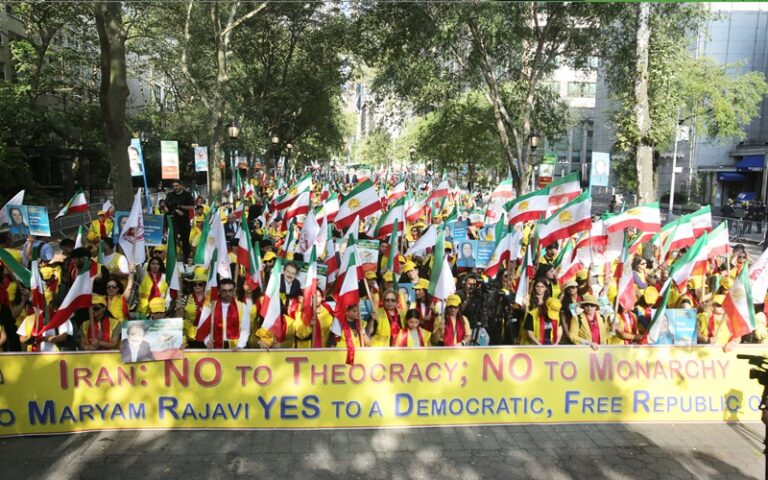
The National Council of Resistance of Iran (NCRI) issued a statement on behalf of Mrs. Maryam Rajavi, who welcomed the ceasefire:

“The proposal for a ceasefire and ending the war is a step forward for the third option: neither war nor appeasement. Let the people of Iran themselves, in the battle of destiny, bring down Khamenei and the dictatorship of velayat-e faqih.”
“We seek a democratic, non-nuclear republic, with the separation of religion and state, gender equality, and also autonomy for Iran’s nationalities. This will bring peace, democracy, human rights, stability, reconstruction, friendship, cooperation, and economic development to the region and the world.”

ISRAEL

➤ Casualties and Damage from Final Wave of Attacks

  • In the final Iranian strike on Beersheba, three civilians were killed when a missile hit a residential building.
  • Sirens sounded across southern and central Israel throughout the day.
  • No further casualties were reported after the ceasefire took effect.

IRAN

➤ Key Losses and Confirmed Casualties

The Israeli military confirmed the death of top Iranian military and nuclear figures, following intense coordinated strikes prior to the ceasefire:

  • Military commanders killed:
    • Hossein Salami (Commander-in-Chief of IRGC)
    • Mohammad Bagheri (Chief of Staff of Iran’s Armed Forces)
    • Amir Ali Hajizadeh (IRGC Aerospace Force Commander)
    • Gholam-Ali Rashid (Head of Khatam-al-Anbiya Central HQ)
    • Mehdi Rabani, Gholamreza Mehrabi, Davoud Shekhiyan, Masoud Shanei, Saeed Izadi, Behnam Shahriari
    • Six additional IRGC officers killed in the same operation: Mahmoud Bagheri, Mohammad Bagher Taherpour, Mansour Safarpour, Masoud Tayeb, Khosrow Hassani, Javad Jarsara
  • Senior political casualty:
    • Ali Shamkhani, senior advisor to Khamenei, was seriously injured during an Israeli strike on his residence.
  • Nuclear scientists killed (9 confirmed):
    • Fereydoon Abbasi-Davani (former AEOI chief)
    • Mohammad-Mehdi Tehranchi, Akbar Matlabi-Zadeh, Saeed Borji, Amir-Hassan Faghihi, Abdolhamid Minoochehr, Mansour Asgari, Ahmadreza Zolfaghari Daryani, Ali Bakaei Karimi

Assassination Report

  • According to Saberin News, Mohammadreza Sedighi Saber, a sanctioned Iranian figure linked to nuclear-related research and previously designated by the U.S. Treasury, was assassinated in Astaneh Ashrafiyeh, Gilan Province.
  • Foreign media previously linked him to research on sympathetic detonation mechanisms.

International Reactions

➤ Trump Administration Statements

  • Trump emphasized that the goal of U.S. military action was solely the destruction of Iran’s nuclear program, not regime change.
  • In a statement to Fox News, Vice President J.D. Vance said:
    “Iran was close to acquiring a nuclear weapon, but after the B-2 strikes, that is no longer possible.”

➤ White House Sources

  • A senior U.S. official told NBC News that Iran notified the U.S. of its intent to stop missile attacks, which prompted Trump to contact Netanyahu and say: “The war is over.”
  • The White House confirmed Israel agreed to the ceasefire on the condition that Iran cease all future attacks.
  • According to Al Arabiya, a senior White House source stated Iran had communicated to Washington that it would not launch additional missile strikes against Israel.

Economic Impact

  • Oil prices dropped sharply following the ceasefire announcement:
    • Brent crude fell an additional 4% to just above $68/barrel, after a 7% drop on Monday.
    • Prices are now below June 12 levels, when the Israeli campaign began.
  • Stock markets in Asia rallied in response:
    • Major indices in Japan, South Korea, and Australia recorded strong gains.

Field Reports & Developments

➤ Renewed Tensions and Alleged Ceasefire Violation

  • The Israeli military reported that missiles were launched from Iranian territory toward Israel.
    • Air defense systems were activated, and residents in affected areas were instructed to enter shelters and remain there until further notice.
    • The number of missiles, their targets, and potential damage have not been confirmed yet.
    • The incident occurred after the declared ceasefire between Iran and Israel had officially taken effect.
  • In response, the Israeli Minister of Defense ordered renewed airstrikes against military targets in Tehran.
    • The Israeli military described the incident as a clear violation of the ceasefire by Iran and stated that strong retaliatory action would follow.
    • Senior Israeli military officials stated that the country would proceed with forceful countermeasures.
    • Several high-ranking Israeli officials also made public statements suggesting a significant response was imminent.

➤ Iran Denies Missile Launches

  • Iranian state media and military officials denied launching any missiles toward Israel after the ceasefire was announced.
    • The Iranian Armed Forces General Command stated that no missile operations had been conducted during the reported timeframe.
    • Iran’s Supreme National Security Council released a statement describing the ceasefire as a result of pressure placed on Israel and emphasized that Iranian forces remain alert and fully prepared to respond to any aggression.
    • Iranian officials also rejected Israel’s claims as fabrications aimed at justifying a new wave of attacks.

➤ Ambiguous Ceasefire Status – Renewed Fire, Global Reactions, and Casualty Updates

Conflicting Claims on Ceasefire Violations

  • Israel and Iran continued to accuse each other of violating the ceasefire declared the previous night.
  • The Israeli military stated that it had conducted a targeted airstrike on a radar system in northern Tehran, which it described as a symbolic response to Iran’s alleged missile launch after the ceasefire.
  • Explosions were reported in Babolsar, with Iranian judiciary-affiliated media confirming the incident and accusing Israel of breaching the ceasefire.
  • Meanwhile, Iran’s Armed Forces reiterated their denial of having launched any missiles after the ceasefire took effect.

Trump’s Reaction to Ceasefire Instability

  • U.S. President Donald Trump, prior to his departure for the NATO Summit in the Netherlands, expressed dissatisfaction with both Iran and Israel, stating that both sides had violated the ceasefire he brokered.
  • Later on Truth Social, Trump explicitly warned:
    “ISRAEL. DO NOT DROP THOSE BOMBS… All planes will turn around and head home… The Ceasefire is in effect!”
  • Trump’s statement signaled frustration with Israel’s potential renewed strikes and reinforced U.S. support for sustaining the ceasefire.

International Diplomatic Developments

  • France called on Iran to immediately resume negotiations concerning its nuclear and missile programs and welcomed the ceasefire announced by President Trump.
  • Qatar sent an official protest letter to the United Nations over Iran’s missile attack on Al-Udeid airbase and summoned the Iranian ambassador in Doha.
  • Qatar also called on Iran and the United States to resume nuclear negotiations, which had been underway in Muscat and Rome before the Israeli attacks disrupted them.
  • Turkey issued a call for both Iran and Israel to fully respect the ceasefire and avoid further escalation.

Nuclear Program and Damage Assessment

  • The head of Iran’s Atomic Energy Organization stated that an assessment of the damaged nuclear sites is ongoing.
    • He said that contingency measures were in place and efforts were underway to ensure that there is no interruption in the nuclear industry’s operations.
    • No details were provided on the extent of damage to enrichment or infrastructure.

Casualties and Human Impact

  • Iran’s Minister of Health reported a total of 606 deaths resulting from Israeli strikes.
    • 95% of fatalities occurred due to building collapses, while only 5% of hospitalized patients succumbed to injuries.
  • The IRGC unit in Alborz Province released a list of confirmed casualties following the Israeli strike on the Imam Hassan Mojtaba Corps HQ:
    • Brig. Gen. Mojtaba Karami (Deputy Commander)
    • Brig. Gen. Akbar Enayati (Social Affairs)
    • Ali Tarkashvand (Inspection)
    • Col. Gholam Ojani, Col. Mohsen Kouhkheil
    • Fatemeh Salehi (female IRGC member), Gholamreza Soori (Basiji)

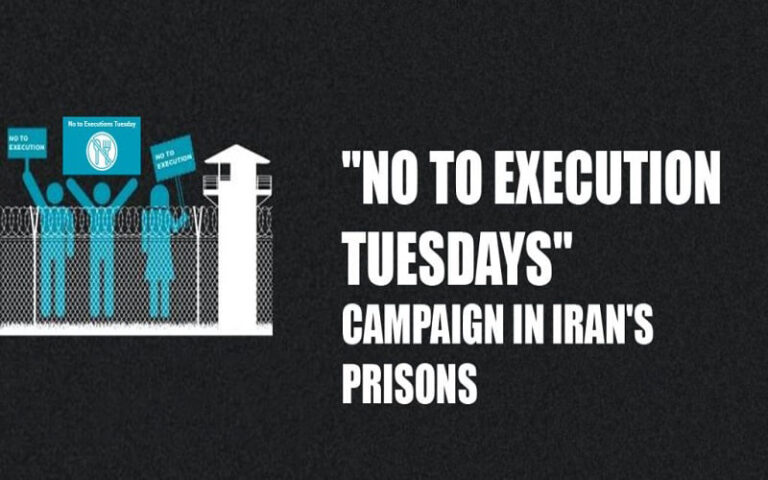
The “No to Executions Tuesdays” campaign continued into its 74th week across 47 prisons in Iran

Political prisoners in Iran, during the 73rd week of the “No to Executions Tuesdays” campaign, stated:
“War and execution are two sides of the same coin of state-led killing and repression. We warned that prisoners’ lives are at risk and the pace of executions might increase.” Despite the regime cutting off internet access, unfortunately, according to published reports, their prediction proved accurate.

Israel, in its wave of attacks and bombings, did not even spare Evin Prison. As of now, there is no precise information on casualties or damage. However, reports indicate that all general wards, including the women’s ward, wards 4, 7, and 8, have sustained serious damage. Prisoners in the general wards are under siege by prison guards, without access to water or food, and are in a dire and terrifying situation. They are under immediate pressure from the prison warden and suppressive agents to be transferred to the Greater Tehran Prison.

UN Report: Iran’s Regime Guilty of Mass Executions and Repression

Additionally, political prisoners have been transferred by security forces from Ward 209, which is operated by the Ministry of Intelligence, and Ward 2-A, which is controlled by the IRGC Intelligence Organization, to unknown locations. Unfortunately, several prisoners from the women’s ward as well as wards 7, 8, and 4 have been injured.

In recent days, despite the ongoing crisis and war, the execution machinery continues its relentless pace. Between May 21 and June 21, at least 140 individuals were executed, including five women. Over the past week alone, death sentences were issued for at least two political prisoners, Mohammad Darvish Narouyi and Yasin Kabdani, on the baseless charges of “enmity against God” and “rebellion,” without fair trials. Additionally, the death sentences of two prisoners accused of espionage, Majid Mosayyebi and Mohammad-Amin Mahdavi Shayesteh, were carried out. Dozens of others have been arrested in various cities with no information available about them, raising fears they may be tried and executed under wartime conditions without due process.

The regime bears the responsibility of protecting prisoners. However, instead of safeguarding them, we are witnessing an escalation in repressive measures by the clerical regime against inmates. We demand an immediate ceasefire and the release of all prisoners, including political and ideological prisoners.

The “No to Executions Tuesdays” campaign urges all opponents of war and execution not to allow more individuals to fall victim and be executed under the cover of war. We call on all international and human rights organizations to put pressure on all parties to stop the war.

We express our deep concern regarding the condition of inmates, particularly those held in Evin Prison and prisoners sentenced to death, whose situation and whereabouts remain unknown.

We strongly condemn the forced and sudden transfer of defenseless prisoners under heavy security and suppressive measures.

Given the wartime situation, prisoners’ lives are in grave danger. We appeal to the honorable and noble people to demand the release of prisoners by any means possible, especially by gathering in front of prisons to show solidarity and not leave prisoners alone during these critical times.

Political prisoners participating in the “No to Executions Tuesdays” campaign will go on hunger strike on Tuesday, June 24, in 47 prisons across Iran as part of the 74th week of protest.

Day Eleven of the War: Attack on Evin Prison and a Series of Iranian Regime Security Institutions

0

The entrance gate and administrative sections of Evin Prison, Sarallah Headquarters, the Basij Headquarters, Seyyed al-Shohada IRGC, Alborz IRGC, the Intelligence Protection Organization of the Law Enforcement Command, and the Intelligence Headquarters of the Law Enforcement Command were among the locations targeted by the Israeli military on the eleventh day of the war.

Israeli forces launched an unprecedentedly intense attack against security and military targets in the heart of Tehran.

Israel’s Defense Minister announced that the targets included the Basij Headquarters, Evin Prison — known as the detention center for political prisoners and regime opponents — internal security offices of the Islamic Revolutionary Guard Corps (IRGC), propaganda organizations, and other governmental institutions.

Earlier, the spokesperson for the Israeli military had announced that the army was attacking IRGC bases in Tehran.

Destruction of Evin Prison’s Entrance Gate

Evin Prison is a symbol of political repression in Iran.

According to reports from within the prison, the administrative buildings, the visitation area, and the Evin Prosecutor’s Office were targeted, and some prison staff members were killed.

Repression by Iran’s regime under the fire of war: Abduction, arrest, and internet shutdown

Reports indicate that a group of political prisoners’ families and local residents attempted to reach Evin Prison.

In recent days, the Special Unit Headquarters of the Law Enforcement Command and the Cyber Police (FATA) were also targeted.

Attack on Basij Headquarters

The Basij Organization, part of the IRGC and one of the Iranian regime’s main tools of repression in recent years, had its headquarters attacked by Israel today.

The Basij had previously stated that with escalating conflict between the Iranian regime and Israel, it would expand the security atmosphere across the country, activating and gradually expanding checkpoints.

This organization has played a persistent and prominent role in suppressing protesting citizens.

Sarallah Headquarters Targeted

In another Israeli strike, the IRGC’s Sarallah Headquarters in Tehran was targeted.

This headquarters is a crisis-response institution of the IRGC in Tehran, operating under the command of the IRGC’s top leadership.

The Intelligence Protection Organization of FARAJA (Law Enforcement Command), which was also targeted by Israel today, is an intelligence agency under the Chief of Armed Forces and affiliated with the Law Enforcement Command of Iran’s regime.

This organization is responsible for monitoring and controlling intelligence, communications, and documentation, and its head is directly appointed by the Supreme Leader of the Islamic Republic.

The “Seyyed al-Shohada” unit, another target of Israel, is a military-security force and a provincial branch of the Islamic Revolutionary Guard Corps, known as the second IRGC unit for Tehran province.

This unit oversees all areas of Tehran province, except for Tehran city itself, and has been actively involved in suppressing citizens during times of protest.


Repression by Iran’s regime under the fire of war: Abduction, arrest, and internet shutdown

0

Since the onset of the war between Israel and Iran, numerous reports have emerged detailing the repression of citizens, arrests of civil activists, pressure on political prisoners, and global internet outages. In conditions where Israel issues evacuation warnings and the regime doesn’t even provide air raid sirens, access to life-saving information and demands for the right to education during wartime, access to shelters, and the release of prisoners have increased the pressure on activists, prisoners, and ordinary citizens.

Pressure on political prisoners: Where is Ali Younesi?

Ali Younesi, an elite student at Sharif University and a medalist in the International Astronomy Olympiad, was arrested in March 2020 along with his friend Amirhossein Moradi. These two young men, both around twenty years old at the time, were accused of collaborating with the People’s Mojahedin Organization of Iran (PMOI/MEK), the largest opposition group to the Iranian regime. After months of solitary confinement, sustained pressure, and relentless interrogations—and over two years of legal limbo—each was sentenced to 16 years in prison.

Iranian Political Prisoner Ali Younesi Transferred from Evin Prison to an Unknown Location

On Tuesday, June 17, “Aida Younesi,” Ali’s sister, tweeted about the “abduction” of her brother, who is incarcerated in Tehran’s notorious Evin Prison, by intelligence agents. The agents later told Ali’s cellmates that he had been taken for interrogation.

Nevertheless, as of the time of writing this report, there has been no news about this imprisoned student. Ali Younesi has been held in prison for the past five years without a single day of furlough.

According to published information, “Hossein Mirbahari,” a well-known child rights activist in Iran, was arrested on June 21 in Tehran. Reports indicate that six plainclothes agents arrested him on that day, but no details have been released regarding the location of his detention or the reasons behind his arrest.

“Hassan Bagherinia,” a former professor at Hakim Sabzevari University, and his wife “Fatemeh Navardi” were also arrested following the circulation of a video on social media in which he accused the regime of consistently exploiting crises to silence dissent.

In another report, “Pouria Nasiri,” a student at the Islamic Azad University in Mahabad, was arrested on June 20. “Sadoun Ghazali,” another Kurdish citizen residing in Mahabad, was also arrested by security forces on Sunday, June 22.

Just two days after the war began, a prominent social sciences scholar known for repeatedly criticizing the policies of the Iranian regime was also arrested. “Mostafa Mehraeen” was detained and transferred to Evin Prison just hours after publishing an open letter addressed to Ali Khamenei and other political and military officials of the regime.

In his letter, Mehraeen called for the immediate end of the war, a return to negotiations, and the resignation of the regime’s supreme leader. He emphasized that the Iranian regime no longer represents the legitimate will of the Iranian people and warned that the continuation of the current situation would further intensify internal crises.

“Motahareh Gonei,” a former political prisoner and student activist, was also arrested one day after the attack, on Saturday, June 14. In her last post on X (formerly Twitter), written just hours before her arrest, she stated: “Now is the time to be precise in our responses and stances. To see who stood with the people and Iran, and which groups, out of fear of war, ran into the arms of the Iranian regime.”

The arrests are not limited to activists. Amid the war between Israel and Iran, justice-seeking families reported that “Majid Naderkhani,” father of “Matin,” and “Ali Mohammadi,” father of “Shahriar”—both killed during the “Woman, Life, Freedom” protest movement—were arrested by security forces.

All these arrests are taking place while prison conditions during wartime are dire. According to several political prisoners held in Evin Prison, Iranian prisons—especially Ward 8 of Evin—lack safety measures against missile and drone attacks, and continuing to hold inmates under such circumstances could put their lives in danger.

Pressure on ordinary citizens

Reports circulating on social media indicate a heightened security atmosphere in various cities across Iran. Eyewitnesses say that riot police have been deployed at several gas stations, especially in northern cities of Iran where millions of displaced citizens have recently sought refuge.

At the same time, state-run news agencies have published reports of citizens being arrested for expressing opinions about the war. Tasnim News Agency, affiliated with the IRGC, reported that on June 14, amid ongoing military strikes between Israel and Iran, two individuals in Kerman Province were arrested by the Public Security Police. The charges included “supporting and backing Israel,” “disturbing public opinion in cyberspace,” “propaganda activities against the regime,” “insulting the exalted status of martyrs,” and “spreading rumors.”

Internet access in Iran has been down for more than 62 hours, with the shutdown beginning on June 18.

While internet access remains cut off across Iran, eyewitnesses and even regime institutions report that Basij forces have set up street patrols and checkpoints. On Monday, June 16, the Basij Organization announced that with the escalation of hostilities between the Iranian regime and Israel, security measures would be intensified nationwide.

Arrest of foreign nationals; espionage accusations

The regime’s repression is not limited to its own citizens who are under bombardment and cut off from the internet. Mehr News Agency published a report about a German-Jewish tourist who entered Iran a year before the war began and was cycling through the country. In a video, this individual—identified as “Marc Kaufman”—is accused of spying for Israel. It is claimed that he sent photos, videos, and GPS locations of “sensitive sites” to individuals outside of Iran.

The Mashregh News website, affiliated with the IRGC, reported on Thursday, June 19, quoting an informed source, that 18 individuals—mostly Afghan nationals—were arrested in the city of Mashhad. According to the source, they were identified in a complex operation and detained on charges of “espionage for Israel.”


Day 11 – Regional Fallout and Military Escalation After U.S. Strikes on Iran

0

On the eleventh day of the Iran-Israel conflict, attention has shifted globally following the U.S. airstrikes on Iran’s nuclear facilities. Despite ongoing exchanges of missiles and drones between the two sides, the spotlight is now on the diplomatic rifts, economic turbulence, and evolving security responses. A divided emergency session was held by the United Nations, even as Iranian and Israeli military operations persist across various fronts.

IRAN

➤ Missile Launches Toward Israel

• Iranian forces launched a new wave of 27 missiles toward Israel early Sunday, with reports confirming that some of these struck populated areas, including Tel Aviv, Haifa, Ness Ziona, and Rishon LeZion.
• The strikes followed the previous day’s U.S. air assault on Iran’s nuclear infrastructure.

➤ Strikes Inside Iran

• Israeli airstrikes targeted multiple regions, including:
o Tehran Province: Air defenses activated in multiple sectors
o Yazd: Two military facilities bombed, nine fatalities reported
o Kermanshah and Hamadan: Radar and satellite systems attacked
o Parchin: According to regime-affiliated media (Nour News), a military-industrial complex in southeast Tehran was bombed
• Explosion reports and active air defense observed in Tehran, Tabriz, Yazd, Hashtgerd, and other cities.• A regime official claimed that over 200 locations in Tehran province have been targeted during the past ten days.

Mohammad Saeed Izadi, Quds Force Commander, Reportedly Killed in Israel Strikes Against Iran

➤ Regime Response and Messaging

• Senior regime officials stated that the presence of U.S. bases and forces in the region is no longer tolerable.
• They warned that any country cooperating with U.S. strikes may be considered a legitimate military target.
• Others emphasized that Iran retains its technical capability and enriched materials, and that despite attacks, the country’s nuclear ambitions remain operational.

➤ U.S. Satellite Damage Claims

• U.S. President Donald Trump reiterated via Truth Social that “monumental damage” was inflicted on Iran’s nuclear sites.
• He claimed that the deep underground structures were hit and referred to the operation as a “bullseye.”
• Trump questioned why “regime change” would be inappropriate if the Iranian government could not “make Iran great again.”

ISRAEL

➤ Missile Strikes and Alerts

• Israeli military announced that air raid sirens were activated across central Israel due to incoming missiles launched from Iran.
• According to the army, the alerts were lifted after a short time, allowing civilians to exit shelters.
• Iranian missile fire during the previous 24 hours included at least 27 ballistic missiles in two waves, targeting Tel Aviv, Haifa, Ness Ziona, and Rishon LeZion.
• Several buildings in Tel Aviv were damaged. Reports indicate additional damage in the northern and central regions.

➤ Military Operations Inside Iran

• Israeli forces confirmed the dispatch of 20 fighter jets conducting what it termed “intelligence-based operations” in the Tehran, Kermanshah, and Hamadan regions.
• Targets reportedly included missile storage facilities, launch platforms, radar and satellite installations, and a surface-to-air missile system near Tehran.
• Following these attacks, explosions and activation of air defense systems were reported in several cities, including Tehran, Tabriz, Yazd, and Hashtgerd.

➤ Confirmed Casualties

• According to Iranian state-linked media (Tasnim), seven IRGC members and two conscripts were killed during Israeli strikes on two military sites in Yazd.

➤ Official Israeli Statements

• The Israeli prime minister stated that the country is nearing completion of its objective to eliminate Iran’s nuclear and missile capabilities.
• He also said that Israel does not intend to enter a prolonged war but that the current military operation will not end prematurely.

Field Reports & Developments

➤ UN Security Council Emergency Meeting – No Resolution

• The session was held Sunday evening at Iran’s request.
• The UN Secretary-General warned that the region cannot withstand another cycle of destruction and called for de-escalation.
• The Director General of the IAEA said that nuclear sites must not be targeted and confirmed that the agency is currently unable to assess the full extent of the damage at Fordow.
• The Russian delegate condemned the U.S. strike as illegal and unilateral.
• The U.S. representative stated that the operation was aimed at dismantling Iran’s nuclear enrichment capabilities, protecting Israel, and exercising the U.S. right to self-defense under the UN Charter.
• The Iranian ambassador accused the U.S. of once again placing Israeli interests ahead of its own security and denounced the UN and IAEA for inaction.
• The Israeli ambassador praised the U.S. attack and said Iran had never seriously pursued negotiations.

➤ Australia Supports U.S. Strike

• The Australian Prime Minister publicly supported the U.S. airstrikes on Iran’s nuclear sites.
• Speaking in Canberra alongside the foreign minister, he called for all parties to return to diplomacy, while warning Iran against further actions that would destabilize the region.

➤ Security Inside the U.S.

• ABC News: Senior FBI and DHS officials briefed hundreds of U.S. state and local security leaders following the attack.
• No direct threat to U.S. territory was identified at this time.

➤ Regional Positioning

• A senior official from Yemen’s Houthi forces stated that their response would depend on the Islamic Republic of Iran’s next move.
• Syrian media reported that the government expelled Talal Naji, a Palestinian militant leader allied with Iran, from Syrian territory.
• The expulsion is seen as a distancing move by Syria after U.S. involvement in the conflict.

Global Economic Impact

  • Following the U.S. strike, oil prices rose sharply in early Monday trading in Asian markets:
    o Brent crude surged to $81.40/barrel before stabilizing at $78.89
    o WTI crude hit $78.40, later settling at $75.71
    • Analysts note this is the highest price level since January 2025, and volatility is expected to continue as long as military actions affect Persian Gulf security.

Mohammad Saeed Izadi, Quds Force Commander, Reportedly Killed in Israel Strikes Against Iran

On the morning of Saturday, June 21, Israeli Air Force targeted an apartment in a building in the Salarieh neighborhood of Qom. Reports indicate that the strike left at least two people dead.

A few hours later, Israel’s Defense Minister Yoav Gallant claimed that the target of the attack was Mohammad Saeed Izadi, commander of the Quds Force’s Palestine branch, who was known by the alias “Haj Ramadan.” On September 10, 2019, the U.S. Treasury Department designated him as “one of the leaders of terrorist groups.”

Iran’s regime has not yet confirmed or denied the news, but if Tehran confirms Izadi’s death, he would be the first IRGC commander killed in the ongoing conflict. Israel claims he was targeted due to his direct role in arming Hamas for its attack against Israel.

Yoav Gallant described Mohammad Saeed Izadi as the commander who “trained and armed the extremist group Hamas for the October 7, 2023, massacre,” and added that he was killed in the attack on “an apartment in the heart of Qom.”

U.S. Attack on Iranian Regime’s Nuclear Facilities

In a post on X (formerly Twitter), the Israeli army quoted its Chief of Staff calling Saeed Izadi’s death “one of the key turning points in the current war.”

But what is known about Mohammad Saeed Izadi, one of the senior commanders of the IRGC Quds Force?

Survivor of Three Israeli Strikes

Following the October 7 Hamas attack, Israel launched targeted strikes in Lebanon and Syria, some of which aimed at commanders of the IRGC and the Quds Force.

Israel’s Channel 14 reported that after the Hamas attack, several IRGC commanders were placed on Israeli intelligence services’ “kill list,” with Mohammad Saeed Izadi among them.

Mohammad Saeed Izadi was targeted by Israeli airstrikes in Syria at least three times—operations that all failed. At one point, reports of his death surfaced but were later denied.

He survived Israeli strikes on January 29, 2024 in the Sayyidah Zaynab area near Damascus; February 21, 2024 in the Kafr Sousa district of Damascus; and March 1, 2024 in the Babilla area, also near Damascus.

The Longest-Serving Iranian General in Lebanon

Holding the rank of major general, Mohammad Saeed Izadi was regarded as “the longest-serving Iranian general in Lebanon.” He was also described as the liaison between Iranian regime leader Ali Khamenei and the now-killed Hezbollah Secretary-General Hassan Nasrallah.

A graduate in electronic engineering from Khajeh Nasir al-Din Tusi University of Technology, Izadi was also responsible for supplying weapons to Hezbollah.

He began his military career in 1979 by joining the IRGC and served as a mid-level commander during the Iran-Iraq War.

From 1982 to 1983, he commanded the IRGC in Kurdistan province; from then until 1985, he led the Hamzeh Seyyed al-Shohada Headquarters; and up to 1987, he was the commander of the Najaf Ashraf Headquarters. He was then transferred to the IRGC General Staff and served as deputy commander until 1989.

After the end of the war, he served as commander of the IRGC Ground Forces until 1993, and from then until 2006, he held the position of deputy for planning, programs, and budgeting at the Armed Forces General Staff before transferring to the Quds Force.


U.S. Attack on Iranian Regime’s Nuclear Facilities

U.S. President Donald Trump announced the execution of “successful airstrikes” against three of the Iranian regime’s nuclear sites: Fordow, Natanz, and Isfahan. He stated that all U.S. aircraft had exited Iranian airspace.

On the evening of Saturday, June 21, Trump posted on X (formerly Twitter):

Meanwhile, Israel’s Channel 14 reported that during the attack on the Iranian regime’s nuclear facilities, U.S. and Israeli officials simultaneously observed live footage of the operation.

This move has been described as a sign of what is being referred to as unprecedented and close coordination between the two countries.

According to this report, the United States also carried out a deception operation aimed at catching the Iranian regime off guard both militarily and politically.

The operation involved releasing fabricated reports about tensions between Washington and Tel Aviv, as well as misleading troop movements.

The Israeli media outlet stated that the aim of these measures was to create confusion in the Iranian regime’s military and political decision-making processes ahead of the coordinated U.S.-Israeli strikes.

The United States used the 13.6-ton GBU-57A/B bomb, known as the “bunker buster,” in its strikes against the Iranian regime’s nuclear facilities. This marks the first reported operational use of this massive bomb.

Mrs. Maryam Rajavi, the president-elect of the National Council of Resistance of Iran (NCRI), the largest political coalition opposing the Iranian regime, also stated in a message:


UN Report: Iran’s Regime Guilty of Mass Executions and Repression

UN Secretary-General’s Report on Human Rights Violations by Iran’s Regime
According to a shocking report by António Guterres, Secretary-General of the United Nations, presented on Wednesday, June 18, 2025, at the UN Human Rights Council in Geneva, Iran’s regime recorded one of the darkest human rights records in 2024 by executing at least 975 people. The report presents a horrifying picture of systematic human rights violations under the dictatorship of the Supreme Leader: from widespread and public executions to the brutal suppression of protesters, minorities, women, and journalists.

The United Nations, expressing deep concern, has called on the international community to hold the regime accountable for ending the cycle of violence and human rights violations through diplomatic pressure and targeted sanctions.

Wave of Executions, Gross Violation of the Right to Life

In 2024, Iran’s regime executed at least 975 people, marking a 17% increase compared to 2023 (834 executions), setting a horrifying record not seen since 2015. At least four of these executions were carried out publicly—an act that, according to international organizations, is a blatant violation of human dignity and human rights standards.

Week 73 of “No to Execution Tuesdays” Campaign Spreads to 47 Prisons

An analysis of the charges against those executed reveals non-transparent and unfair judicial procedures:

  • 52% for drug-related offenses
  • 43% for murder
  • 2% for sexual offenses
  • 3% for security-related charges, including espionage
    Human rights experts regard this range of accusations combined with the lack of fair trials as a sign of systematic violations of the right to life.

Women, Double Victims of the Regime’s Suppression

The UN report highlights a troubling rise in the execution of women in Iran. In 2024, at least 31 women were executed—a significant increase compared to 22 cases the previous year. Many of these women were convicted in cases involving domestic violence, forced marriage, or child marriage. Notably, nine women were executed for killing their husbands, despite clear evidence of prolonged domestic abuse. These cases starkly illustrate the regime’s gross violation of gender justice and its disregard for international standards of protection for women who are victims of violence.

Repression of Protesters and Minorities, Systematic Discrimination

Iran’s regime continues its relentless crackdown on protesters, particularly those who took part in the nationwide uprisings following the killing of Mahsa Amini in 2022. The UN report confirms that several of those executed were convicted on charges related to these protests, despite the fact that the regime’s courts lacked the basic standards of fair trial. This has further heightened concerns about widespread human rights violations in Iran.

Ethnic minorities have also been disproportionately subjected to harsh punishments:

  • 108 of those executed were Baluch citizens
  • 84 Kurdish prisoners were among those executed
    These figures clearly indicate the regime’s systematic and deliberate discrimination against ethnic minorities and serve as an alarm for the international community.

Arbitrary Arrests and Suppression of Free Expression

The UN report details a rise in arbitrary arrests, widespread use of torture in detention centers, and unfair trials. By intensifying restrictions on freedom of expression and peaceful assembly, Iran’s regime has blatantly violated its international obligations under the International Covenant on Civil and Political Rights. In 2024, at least 125 journalists, including 40 women, faced prosecution, summons, or arrest due to their media activities and critical reporting.

UN Call to Halt Executions

Nada Al-Nashif, UN Deputy High Commissioner for Human Rights, presenting the report, called on Iran’s regime to immediately halt executions and uphold human rights. She also urged the international community to exert effective diplomatic pressure to stop human rights abuses in Iran, particularly executions and the crackdown on protesters.

Nada Al-Nashif clearly stated that the continuation of mass executions, torture, arbitrary detentions, and severe restrictions on free expression paints a grim picture of the human rights situation in Iran—one that demands urgent intervention from the global community.

The UN report, along with the outcry of the Iranian people and political prisoners in campaigns like “No to Executions,” underscores the depth of the human rights catastrophe in Iran. Widespread executions, repression of protesters, discrimination against minorities, and the crackdown on free expression have made the regime of the Supreme Leader one of the world’s most notorious violators of the Iranian people’s rights. The international community must help end this cycle of violence through diplomatic pressure, targeted sanctions, and support for the Iranian people’s demands for justice and freedom. Without decisive action, the human rights crisis in Iran will remain one of the most pressing challenges for the global community.