Home Blog Page 9

Agreement Between Iran’s Regime and the United States Highlights a New Rift Within the Ruling Establishment

0

Disagreements over the course of negotiations between Tehran and Washington have once again become public. While some media outlets and figures close to the government speak of progress in the talks and the possibility of reducing tensions, other factions within the ruling establishment present a different narrative. The latest example of these disputes is the remarks of Mahmoud Nabavian, a member of the National Security Commission of the Iranian regime’s Majlis (parliament), who has sharply questioned claims regarding the achievements of the negotiations.

The IRGC Affiliate with A 400 million Euro Empire in Europe

On June 12, Nabavian commented on the course of talks between Iran’s regime and the United States. He rejected claims that the United States had retreated from its previous demands and said that such narratives are highly inaccurate and even completely false. The member of parliament emphasized that, contrary to the publicity surrounding the talks, the text of the potential agreement has not only failed to address past shortcomings but also includes additional restrictions.

Disputes Over an Agreement With the United States

Nabavian’s remarks come as numerous reports have emerged in recent hours about the possibility of a new agreement between Tehran and Washington. Supporters of the negotiations have spoken of the potential for reducing economic pressure and achieving progress in certain areas. However, critics of the process argue that the concessions made by Iran’s regime will outweigh any potential gains.

In his remarks, Nabavian sought to challenge the perception that the United States has backed away from its positions. He stressed that all the issues criticized in previous negotiations remain present in the new text. According to him, some factions inside the country are attempting to portray an agreement with the United States as a political victory, while the reality of the negotiations is quite different.

These positions reflect the continuing struggle among different power factions over how to deal with the United States. Although officials of Iran’s regime have repeatedly spoken of complete coordination regarding the negotiations, contradictory statements by regime figures indicate the existence of serious disagreements on the issue.

An Agreement With the United States and the Battle of Narratives

The issue of an agreement with the United States has for years been one of the most significant sources of disagreement within the political structure of Iran’s regime. Whenever negotiations have entered a new phase, one part of the ruling establishment has presented them as a means of reducing international pressure, while another has warned about their consequences.

The increase in public verbal disputes among regime figures may be a sign of intensifying political competition ahead of important decisions. In such an environment, each faction seeks to present its own narrative of the negotiations to the public.

Mahmoud Nabavian’s remarks have once again exposed internal divisions within the ruling establishment over a potential agreement with the United States. While part of the power structure speaks of the possibility of an agreement and reduced tensions, internal critics view the process as lacking any real achievements.
Renewed Protests Erupt in Iran

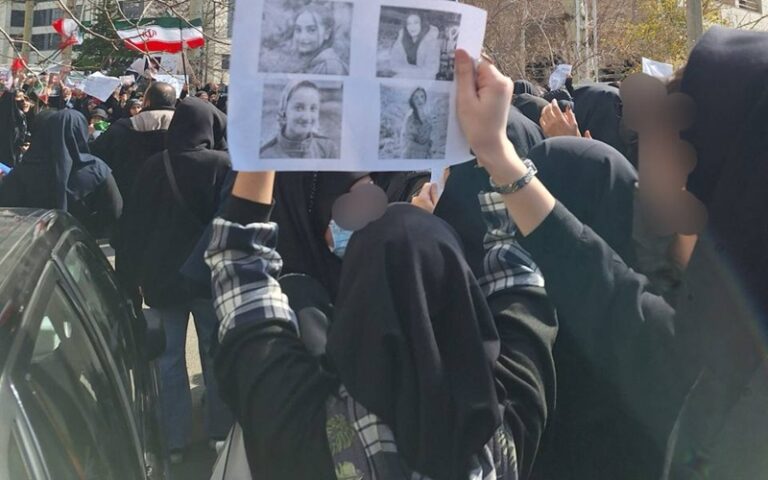
In recent days, Iran has witnessed fundamental changes in the nature of popular protests. The movement has evolved from economic, and livelihood demands to direct political demands and then to widespread student protests involving both university and high school students, encompassing all of these grievances. The protests have spread across dozens of cities, from Tehran, the capital, to Mashhad, Ahvaz, Tabriz, and Isfahan.

This movement, which reached its peak on June 6, 2026, is a real test of the cohesion of the educational system and the effectiveness of policies adopted by the body known as the “Supreme Council of the Cultural Revolution,” an institution responsible for setting cultural and educational policies in Iran. This reflects a structural gap in the development-oriented approach of Iran’s regime.

Widespread Student Protests Across the Country; Opposition to Educational Policies

Educational Inequality; The Structural Roots of the Crisis

The essence of this crisis lies in the widespread perception of a “lack of justice” within educational institutions. Field reports and independent observers indicate that policies governing the national university entrance examination and university admissions have entrenched a clear class divide in education, with private schools and social groups connected to government circles monopolizing most seats at the country’s top universities. This discrimination is not merely an administrative failure but reflects a structural breakdown in “equality of opportunity.” As a result, students from disadvantaged and marginalized backgrounds increasingly feel that educational and career paths have been closed to them in advance, a sentiment reflected in the slogan of protesting students: “We saw no justice, we only heard promises.”

The Psychology of Protest; From Fear to Solidarity

What distinguishes the current protests is the shift in the protesters’ “critical mass,” as high school students have now emerged as an active and powerful force. Slogans such as “Don’t be afraid, don’t be afraid, we are all together” and “Students may die, but they will not accept humiliation” indicate a transformation in public psychology toward breaking the barrier of fear. This organized solidarity between high school and university students reflects a complete erosion of trust in official institutions, as the younger generation views the policies of the body known as the “Supreme Council of the Cultural Revolution” not as a bridge to social advancement but as a tool for institutionalizing discrimination and oppression. This anger, combined with youthful awareness, has confronted the Iranian regime with a domestic challenge regarding how to address the educational demands of a generation that sees both its present and future in jeopardy.

Political Consequences: The Student Movement as a Barometer of Uprising

Calls by Maryam Rajavi, president-elect of the National Council of Resistance of Iran (NCRI), for expanding solidarity among school students, university students, and educators place these protests within a broader political framework. From a strategic analysis perspective, the current student movement functions as a “thermometer” measuring social stability and the extent of confrontation with the ruling authoritarian system. Regimes that are unable to understand and accommodate the aspirations of a rising generation and rely solely on security or bureaucratic solutions place themselves in direct conflict with society’s most vital force.

The spread of protests to major cities such as Karaj, Shiraz, Rasht, and Kermanshah demonstrates that the education crisis is neither regional nor sector specific. Rather, it is a comprehensive national crisis tied to a social contract that now urgently requires revision.

Strategic Outlook and the Outcome of Current Policies

A deep examination of the movement’s structure indicates that any attempt to contain the situation through superficial measures will fail when confronted with the roots of the crisis. Student slogans have now moved beyond educational demands and evolved into calls for “social justice.” The movement once again raises questions about the nature of the Iranian regime’s strategic planning, including whether the regime can balance preserving its ideology with meeting the demands of a generation that possesses communication tools and spontaneous organizational capabilities beyond the reach of traditional censorship mechanisms.

In conclusion, Iran today stands at a critical and decisive juncture. The young generation that has taken to the streets is not merely demanding improvements to the educational system; it is rejecting the entire regime and its integrated structure of systematic discrimination. The success or failure of the Iranian regime in managing this crisis will largely determine the nature of political developments in the period ahead, as educational justice and social fairness will remain the primary driving forces behind any future movement aimed at reshaping the structure of the state and society in Iran.

Rising Crime and Social Breakdown After 47 Years of Clerical Rule in Iran

While Iran’s regime has spent much of its resources and capabilities over more than four decades suppressing opponents, silencing advocates of freedom, executing critics, and demonizing the opposition, the consequences of these policies are now visible not only in the political sphere but also in social and criminological indicators. Rising theft, expanding social harms, increasing divorce rates, weakening social cohesion, and deepening economic crises are not phenomena that can be attributed solely to the individual behavior of citizens.

For years, social sciences and criminology have emphasized that crime and social harms are less the product of individual morality and more a direct reflection of governing structures and the social relations they create. In this context, legal expert Kambiz Norouzi, in an article published on June 10 in the state-run Shargh newspaper, warned about the social consequences of accumulated economic and political crises and wrote: “Data from criminology and criminal sociology show that this situation is extremely fertile ground for the growth of weeds called crime and social harm.”

This assessment effectively confirms one of the fundamental principles of modern criminology: crime does not emerge in a vacuum but develops in environments shaped by poverty, inequality, economic instability, corruption, and the mismanagement of government institutions.

In the article, Norouzi points to a notable statistic: despite harsher punishments and intensified policing measures, theft in the country increased by 600% between 2006 and 2023. He emphasizes that during the same period, the country’s population grew by only 21%. In other words, the growth in theft was nearly 30 times greater than population growth, and this trend has shown a significant correlation with inflation and unemployment rates.

These statistics reveal an important reality: policies based solely on repression and punishment are incapable of resolving social crises. If expanding security forces and increasing penalties were effective solutions, such a dramatic rise in crime rates would not have occurred after four decades of expanding control and surveillance institutions.

What Makes a Society Vulnerable to Crime?

Émile Durkheim, the prominent French sociologist, viewed crime as a social phenomenon and believed that its prevalence depends on the health and cohesion of social structures. In his theory of anomie, he explained that whenever society experiences economic disruption and the breakdown of shared norms, conditions become favorable for increased deviant and criminal behavior.

Meanwhile, Jürgen Habermas, the German philosopher and political theorist, has repeatedly emphasized that the legitimacy of governments depends on their ability to solve public problems and build social trust. The greater the gap between government and society, the more social capital and public cohesion will erode.

Norouzi also refers to the rising trend of divorce and writes: “In 2018, the ratio of divorces to marriages was 26.7%… This figure reached 39% in 2025, and in Tehran the divorce-to-marriage ratio increased to 52.5%.”

These figures indicate that the economic crisis has not only reduced people’s purchasing power but has also had direct effects on the institution of the family. Rising living costs, job insecurity, diminishing hope for the future, and psychological pressures caused by chronic economic and social crises are among the factors identified by social research as major drivers of family breakdown.

Norouzi further warns: “The persistence of these crises leads to the development of criminal or harmful behavioral patterns across different social groups, and their continuation will result in the institutionalization of criminal and harmful behaviors as part of everyday survival.”

This statement describes a stage that many social theorists consider the most dangerous point of a crisis: when social harms cease to be exceptional and become part of everyday life.

The reality is that after 47 years of rule characterized by the suppression of freedoms, imprisonment, torture, executions, structural corruption, a rent-seeking economy, and the plundering of public resources, statistics on theft, divorce, and other social harms reveal more about the performance and record of the ruling system than about society itself.

The increase in crime cannot be attributed solely to the people, because crime and social harm are, above all, products of the conditions imposed on society by political, economic, and social structures. When inflation, unemployment, corruption, discrimination, and hopelessness become chronic conditions, society ultimately pays the price through rising crime, family breakdown, and the weakening of social cohesion.

Seventy-Eight Nobel Laureates Urge UN Action Amid Rising Executions in Iran

0

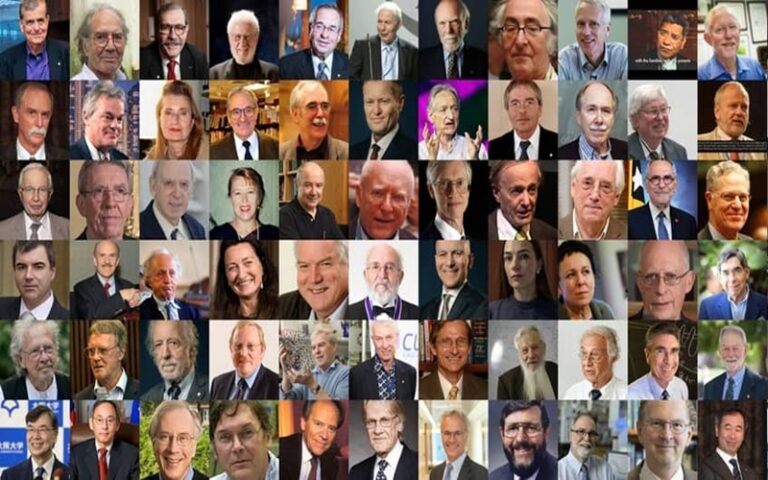
A coalition of 78 Nobel Prize laureates has issued a joint appeal to United Nations Secretary-General António Guterres, calling for urgent international action in response to what they describe as escalating human rights violations and a growing wave of executions in Iran.

The statement, signed by Nobel laureates from a broad range of disciplines—including Peace, Medicine, Physics, Chemistry, Literature, and Economics—raises concerns about developments following the widespread protests that took place across Iran in January 2026. The signatories warn that the international community must not remain passive as reports emerge of executions, mass arrests, and increasing pressure on political prisoners.

The appeal represents one of the most prominent international interventions by a group of Nobel laureates on Iran in recent years, bringing together leading figures from more than two dozen countries.

Concerns Over Executions and Arrests

According to the statement, Iranian authorities intensified their crackdown on dissent in the aftermath of the January protests. Citing reports from the United Nations High Commissioner for Human Rights, the Nobel laureates state that dozens of political prisoners have already been executed.

Those reportedly targeted include participants in the January demonstrations, political activists, and individuals accused of links to the People’s Mojahedin Organization of Iran (PMOI/MEK). The statement also refers to reports indicating that more than 4,000 people have been arrested on security-related charges.

In addition, the signatories point to information from internal sources suggesting that the initial suppression of the protests may have resulted in several thousand casualties.

The laureates describe the situation as a “widespread, systematic, and ongoing” violation of fundamental rights. Their statement emphasizes the consequences of international inaction, warning that silence from the global community risks emboldening further repression.

Four Demands Directed at the United Nations

At the center of the appeal are four specific requests directed toward the United Nations and the wider international community.

First, the signatories call for a complete halt to the use of the death penalty, particularly in cases involving political charges.

Second, they demand the immediate release of political prisoners and individuals detained during recent protests.

Third, they urge the establishment of unrestricted international monitoring of Iranian detention facilities. The statement calls for independent oversight mechanisms capable of assessing prison conditions and monitoring the treatment of detainees.

Finally, the laureates encourage democratic governments around the world to reconsider their diplomatic and economic engagement with Iran. In their view, progress toward abolishing the death penalty should become a central benchmark in relations with Tehran.

Together, these demands reflect an effort to place human rights concerns at the forefront of international discussions regarding Iran.

Position on Iran’s Political Future

Beyond addressing the immediate human rights situation, the statement also outlines a broader vision regarding Iran’s future political trajectory.

The Nobel laureates explicitly reject both foreign military intervention and any return to previous authoritarian forms of governance. They state that the future of Iran should be determined exclusively by its citizens through a democratic process based on free choice and national sovereignty.

The statement argues against what it describes as dictatorship in either monarchical or religious forms, emphasizing that political change should occur without war and without outside military involvement.

In this context, the signatories express support for the National Council of Resistance of Iran (NCRI) and its proposed framework for political transition. They specifically reference the Ten-Point Plan presented by NCRI President-elect Maryam Rajavi, describing it as a democratic roadmap for a peaceful transfer of power through a temporary transitional government.

Timing Ahead of June 20 Gathering

The release of the statement comes shortly before June 20, 2026, a date observed as the Day of Martyrs and Political Prisoners.

According to the report, more than 100,000 Iranians and international supporters are expected to participate in a major gathering in Paris to draw attention to the issues raised in the appeal. Organizers intend to use the event as an opportunity to amplify calls for international action and to highlight concerns regarding political prisoners and executions in Iran.

The timing of the Nobel laureates’ intervention is likely to increase international attention on the event and on the broader human rights situation in the country.

A Diverse Coalition of Nobel Laureates

One of the most notable aspects of the appeal is the breadth of support behind it.

The 78 signatories come from countries including the United States, France, Germany, the United Kingdom, Japan, Canada, and Ukraine. Their backgrounds span a wide range of academic, scientific, literary, and humanitarian fields.

According to the statement, the coalition includes 22 Nobel laureates in Chemistry, 21 in Physics, 18 in Medicine, seven in Literature, six Peace Prize recipients, and four laureates in Economics.

Among the signatories are José Ramos-Horta, President of Timor-Leste and recipient of the 1996 Nobel Peace Prize; Geoffrey Hinton, the 2024 Nobel laureate in Physics and a leading figure in artificial intelligence research; and John Mather, senior project scientist for NASA’s James Webb Space Telescope.

Other participants include Nobel Peace Prize laureates Oscar Arias and Oleksandra Matvichuk, as well as internationally recognized literary figures Kazuo Ishiguro, Wole Soyinka, and Herta Müller. The list also features prominent scientists and medical researchers such as Victor Ambros, Harvey J. Alter, and Sir Peter Ratcliffe.

The involvement of figures from such diverse backgrounds highlights the international visibility the issue has gained and reflects a shared concern among signatories regarding recent developments in Iran.

As attention turns toward the June 20 gathering in Paris, the joint appeal places renewed focus on reports of executions, political detentions, and the broader debate over international responses to events unfolding inside Iran.

Bread Prices and the New Wave of Price Increases and Rationing in Iran

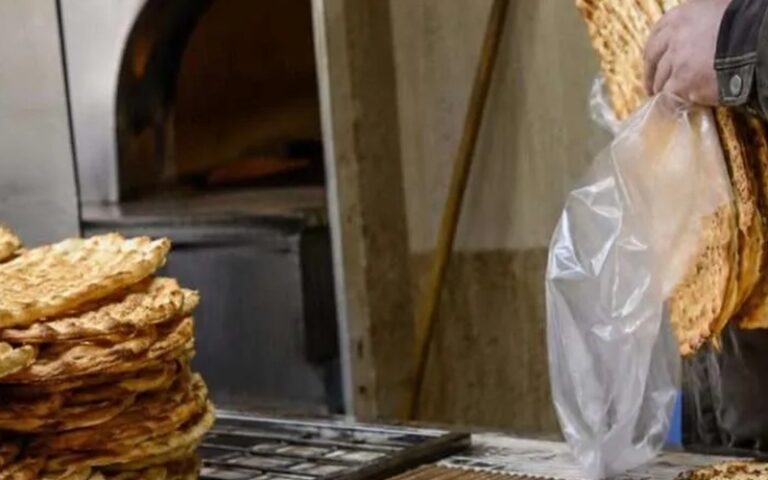
In recent days, the issue of bread prices has become one of the most important livelihood concerns in Iran. Reports from various provinces indicate that alongside official price increases, restrictions have also been imposed on sales. This situation has emerged while bread remains the primary staple food for a large portion of Iranian households. State-run media outlets such as Tabnak, Donya-e-Eqtesad, and several other media organizations have published reports on rising bread prices.

Reviews of public messages and reports from domestic media indicate that bread prices have increased by 50% to 80% in some areas. At the same time, some bakeries have introduced daily purchase limits. These changes have been reported in cities such as Tehran, Mashhad, Isfahan, and several other provinces.

Widespread Student Protests Across the Country; Opposition to Educational Policies

Bread Price Increases Across the Provinces

In various provinces, including Zanjan, Yazd, Razavi Khorasan, North Khorasan, and Markazi, local officials have announced official increases in bread prices. Some reports put these increases at approximately 60% to 80%. These changes have caused significant fluctuations in bread pricing structures across the country.

At the same time, bread prices in the open market have not moved in line with the officially approved rates. In some areas, bakers have applied different prices for various types of bread. Reports indicate that the lack of unified oversight has resulted in significant differences in pricing.

Rationing and Purchase Restrictions

Alongside rising bread prices, purchase rationing has also been observed at some bakeries. According to field reports, certain bakeries receiving government-subsidized flour have announced that each customer is allowed to purchase only a limited number of loaves.

In some cases, purchases of more than three loaves of bread per bank card have reportedly been restricted. As a result, some citizens have resorted to using multiple bank cards to buy larger quantities. This situation has been observed particularly in densely populated urban areas.

Meanwhile, some bakers have stated that rising production costs, reduced flour allocations, and increasing energy prices have placed substantial pressure on their operations. In their view, changes in bread prices without reforms to the support system have made continuing their businesses increasingly difficult.

Public Reaction and Living Conditions

The increase in bread prices has generated widespread reactions among the public. Some citizens report declining purchasing power and growing pressure on household food budgets. In public comments, bread has been described as the last stable item on the family table, which has now also become subject to price increases.

Economic reports have also identified rising agricultural input costs as one of the factors contributing to higher bread prices. Increased costs of wheat production, transportation, and energy have been cited among the drivers of this trend.

Recent developments indicate that bread prices in Iran have entered a period of volatility and rising costs accompanied by supply restrictions. This situation has placed pressure on both consumers and bakers. Under current conditions, the gap between official and open-market prices, combined with purchasing restrictions, has created a complex picture of the bread market.

Overall, the continuation of this trend could have a direct impact on household consumption patterns and further affect the role of bread as a staple item in the family food basket. Rising prices are not limited to bread; many other goods that were once part of people’s basic living expenses have also been affected by inflation, placing significant strain on household budgets. This has had a deeply negative impact on people’s ability to afford essential goods and could contribute to broader public unrest and protests.

Privatization: The Transfer of Wealth to Power Circles in Iran’s Regime

Privatization has been one of the most significant economic policies of Iran’s regime over the past three decades. Regime officials have repeatedly presented this policy as a way to reduce the size of the government, increase efficiency, and strengthen the private sector. However, statistics published by official institutions show that a large portion of these transfers has been made not to an independent private sector but to entities affiliated with the ruling establishment, often through debt settlements. An examination of official data and recent examples of asset transfers presents a different picture of the privatization process in Iran.

Privatization and the Real Share of the Private Sector

The privatization policy entered a new phase on a large scale in 2005 following the implementation of the policies associated with Article 44 of the Constitution. Under these policies, approximately 80% of state-owned companies were supposed to be transferred to the private sector.

40 million Iranians Below Poverty Line

However, official statistics published in recent years indicate that the share of the private sector in these transfers has been very limited. On June 7, the state-run Jahan-e Sanat newspaper, citing data from the Privatization Organization, reported that of the total 78.36 quadrillion rials in transfers carried out between 2011 and 2024, approximately 44.98 quadrillion rials were conducted through debt settlements. This figure represents about 57% of all transfers.

Abdolnasser Hemmati, the former Minister of Economic Affairs and Finance, stated in November 2024 that only 11% of transfers had been made to the private sector. According to him, 29% of transfers went to public institutions, while 56% were carried out through debt settlements.

These statistics indicate that the majority of the privatization process has not resulted in the transfer of ownership to independent investors but rather in the redistribution of assets among various entities linked to the ruling structure, including the Islamic Revolutionary Guard Corps (IRGC).

Debt Settlements: The Main Mechanism of Privatization

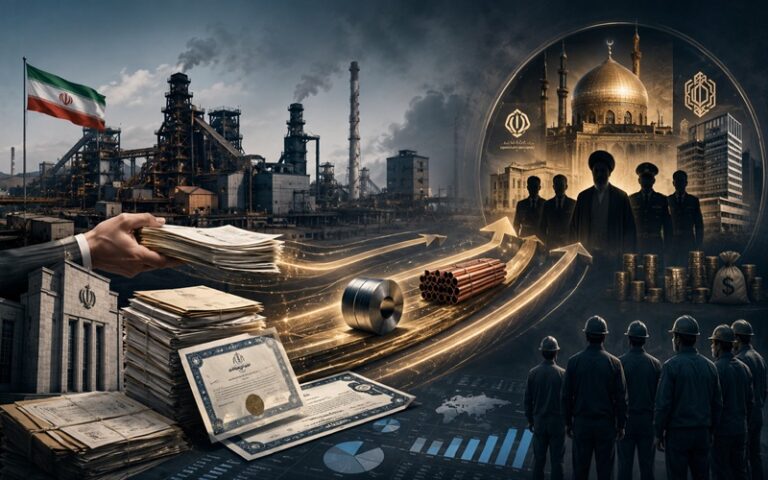
One of the principal methods used in privatization over recent years has been the transfer of state-owned companies and assets through debt settlements. Under this mechanism, the government transfers shares of state-owned companies to creditors instead of paying its debts in cash. A recent example of this process became public in February 2025, when the state-run Mehr News Agency reported the transfer of portions of the shares of Mobarakeh Steel Company of Isfahan and the National Iranian Copper Industries Company to Astan Quds Razavi, a Mashhad-based religious endowments that acts as one of the regime’s economic power centers.

According to published information, these transfers took place after efforts to sell the shares on the market failed. The shares were subsequently transferred to Astan Quds Razavi at prices below their nominal value. Reports indicate that Mobarakeh Steel shares were transferred at approximately 48% of their value, while shares of the National Iranian Copper Industries Company were transferred at around 50% of their value. Most of the payment for these transactions was carried out through offsetting claims and debts, with only a limited amount paid in cash.

The Impact of Privatization on Labor and the Economy

Critics of privatization in Iran argue that this policy has often been accompanied by a decline in job security for workers. In a number of transferred enterprises, employment structures have been altered, with temporary and subcontracted positions replacing permanent employment.

At the same time, various reports point to increasing economic pressures on households, declining purchasing power, and a widening gap between incomes and inflation. Economic experts have repeatedly warned about the effects of budget deficits, monetary expansion, and inflation on people’s livelihoods.

Alongside these issues, the transfer of profitable state-owned assets to public and quasi-governmental institutions remains one of the central controversies surrounding privatization in Iran. Official statistics show that a significant portion of these transfers has gone to organizations that continue to maintain ties to the ruling establishment.

On February 11, 2025, the state-run Mehr News Agency reported the transfer of shares in Mobarakeh Steel Company of Isfahan and the National Iranian Copper Industries Company to Astan Quds Razavi.

An examination of official statistics on privatization shows that the majority of transfers over the past three decades have been carried out through debt settlements or transfers of assets to public institutions. While the stated objective of this policy was to expand the role of the private sector in the economy, the available data indicates that the share of the independent private sector in these transfers has been limited. As a result, privatization remains one of the most controversial economic issues in Iran, and there is widespread disagreement regarding its actual outcomes.

European Union Sanctions Against Iran’s Regime and the Strait of Hormuz Crisis

In the latest development in the tense relations between Tehran and Brussels, the issue of European Union sanctions has once again come to the forefront. This time, the European Union’s decision to impose restrictions on two Iranian individuals and one military unit, citing threats to freedom of maritime navigation in the Strait of Hormuz, has triggered a new wave of political and security tensions in the region.

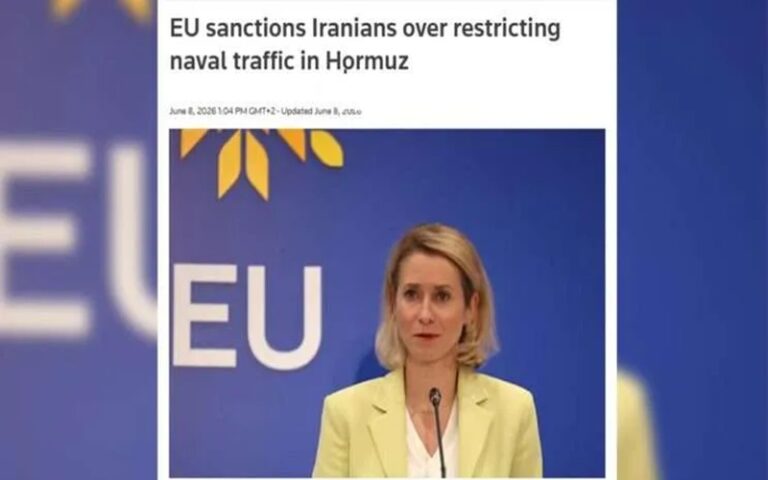
According to a Reuters report on June 8, the European Union announced that these measures were taken under its new mechanism designed to protect freedom of navigation. This is the first time that the mechanism has been activated directly against Iran. Under this framework, the Hormozgan Provincial Command of the Islamic Revolutionary Guard Corps (IRGC) Navy has also been placed on the sanctions list. The names of Mohammad Akbarzadeh and Hamid Hosseini are likewise included among those sanctioned. This decision has once again made European Union sanctions a central issue in diplomatic developments.

US Sanctions Chinese Refinery, Tehran-linked Shipping Companies

European Union Sanctions and Intensified Political Pressure

As this process continues, European officials have stated that the actions of Iran’s regime in the Strait of Hormuz constitute a direct threat to global energy security. Kaja Kallas, the European Union’s High Representative for Foreign Affairs and Security Policy, stressed in strong remarks that Iran’s conduct in the region is unacceptable. She also said that the European Union may expand its sanctions if the current situation continues.

In response, Tehran has described the decision as political and lacking legal legitimacy. Kazem Gharibabadi, Deputy Foreign Minister of Iran’s regime, stated that Iran does not take such measures seriously and will continue its course in protecting its strategic interests. This reaction reflects the widening divide between Iran and Europe, a divide that for years has been marked by a cycle of tensions, sanctions, and reciprocal responses.

The Strait of Hormuz and Its Role in the Crisis

The Strait of Hormuz, considered one of the world’s most important energy transit routes, has once again become a focal point of dispute. According to reports, about one-fifth of the world’s oil passes through this waterway. In this regard, the European Union has stated that the purpose of the sanctions is to prevent disruptions to this vital route.

According to the account presented in the European statement, Iran carried out actions in this waterway following regional military tensions. This issue has been cited as the basis for the European Union’s new decision. In this context, the role of the Islamic Revolutionary Guard Corps (IRGC) in developments related to the Strait of Hormuz has once again come under scrutiny and has been identified as one of the main reasons behind the sanctions.

Reactions and Political Consequences

According to European analysts, this measure could have broader consequences for relations between Iran and the West. Some European Union officials have emphasized that this is the first step within a new framework of targeted pressure. Nevertheless, the continuation of European Union sanctions could lead to increased regional tensions.

Inside Iran, critics of the power structure view this situation as the result of confrontational policies and the concentration of power within military institutions. In their view, continuing along this path has not only intensified external crises but has also increased economic and political pressure on society. In such an environment, European Union sanctions are seen as part of a complex cycle of political confrontation with no clear end in sight.

Overall, the renewed activation of European Union sanctions against Iran’s regime can be seen as a sign that relations between Tehran and Brussels have entered a new phase of tension. This development has emerged against a backdrop of mistrust, geopolitical competition, and regional crises.

From a political perspective, the continuation of this situation suggests that the ruling structure in Iran continues to emphasize confrontational regional policies. As a result, a cycle of pressure and response has replaced any prospect of sustained dialogue. Consequently, European Union sanctions appear not as a temporary event but as part of a long-term trend in the tense relationship between Iran and the West.

Political Prisoner Parisa Kamali Commemorates Martyrs of January Uprising In Defiant Message

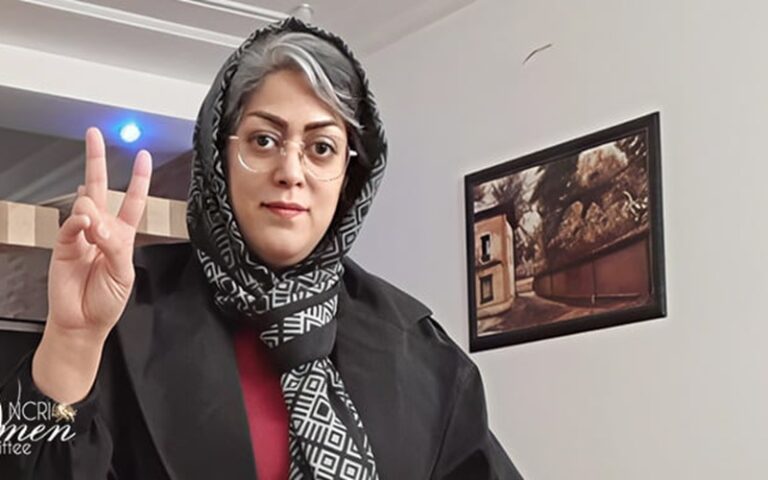
Parisa Kamali, a political prisoner held in Yazd Prison, who has been sentenced to eight and a half years in prison on charges of insulting former regime supreme leader Ali Khamenei, conducting activities against the Iranian regime, and membership in the People’s Mojahedin Organization of Iran (PMOI/MEK), addressed the people of Iran in a message.

Salute to the martyrs of the path of freedom and their families. Here, cardboard rulers govern. This is a place where one is stunned by the sight of boundless crimes. They answer cries for justice with bullets and the gallows.

The terrorist clerics commit crimes. There is not a day that passes without executions and the taking of lives.

Political Prisoner Yahgoub Derakhshan Sentenced to Death for a Second Time

My fellow countrymen are victims of polluted hands that issue death sentences with their pens. For years, the rule of the mullahs, through the systematic brutality of the Islamic Revolutionary Guard Corps (IRGC), has carried out crimes beyond imagination. Curse upon you, whose survival depends only on blood. May the hands that sign orders to take lives be severed.

No to executions! Because they are a tool for creating fear and repression. No to executions! Because they are essential to the survival of the rule of the mullahs and are destructive to humanity. You carry out executions in the hope of ending us.

We are Vahid Amerian, Mohammad Taghavi, Babak Alipour, Pouya Ghobadi, Abolhassan Montazer, Shahrokh Daneshvar Kar, Mohammad Amin Biglari, Amirhossein Hatami, Ali Fahim, Shahin Vahedparast, Sasan Azadvar, Abbas Akbari, and all those whom you sought to silence through execution. We are grains of wheat. One by one, we become thousands of sheaves.

I stand with the families of Manouchehr Fallah, Peyman Farahavar, Zahra Tabari, Karim Khojasteh, Alireza Mardasi, Farshad Etemadi Far, Reza Abdali, Massoud Jamei, and Mohammad Javad Vafaei Sani, and I call for the annulment of the death sentences imposed on my sisters and brothers. Those who consider themselves separate should know that one day the bloodstained hands of the criminal clerics will weave the noose for them and their loved ones and place it around their necks. I hope for the day when executions no longer exist in my homeland Iran or anywhere else in the world.

Who is Parisa Kamali?

Parisa Kamali Ardakani was arrested in Isfahan on April 29, 2024, and was initially transferred to Dolatabad Prison. She has faced various security-related charges in three separate cases in Isfahan and Ardakan.

In 2025, Parisa Kamali Ardakani was transferred from Dolatabad Prison in Isfahan to Yazd Prison, and her sentence was reduced to three and a half years after accepting the court’s ruling.

She was born in 1986, is from Abadan, is married, and is a geography student.

The Gallows: The Real Story of Iran Behind the Oslo Ceremony

0

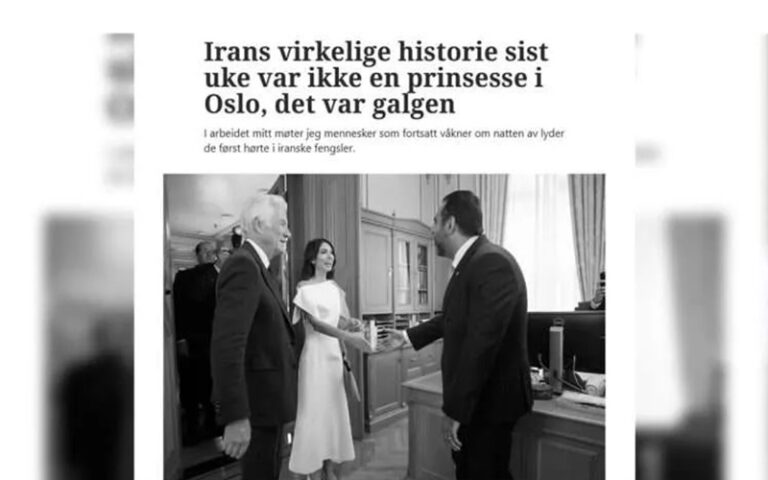
In an article published on June 8, the Norwegian newspaper Fædrelandsvennen sought to draw public attention to a different issue—one that, in its view, represents the reality of Iran today more than any other event: the “gallows.”

At the beginning of the article, the author refers to years of work and contact with Iranian refugees and activists. These are individuals who, after leaving Iran, now live in Norway but still carry memories of interrogations, imprisonment, and security pressures. According to the author, many of them continue to live with the psychological effects of years of repression, and their experiences show that Iran’s regime has not only targeted human lives but has also sought to destroy hope and the future.

In the article, the author refers to a ceremony in Oslo where Noor Pahlavi, granddaughter of the ousted shah, was welcomed by attendees. The event received media coverage and included discussion of the legacy and continuity of the Pahlavi family. However, the author argues that while these images were being highlighted, another reality was unfolding in Iran—a reality that, according to the author, was overshadowed by media attention.

The Pahlavi Restoration: A Legacy of Torture and Revisionism

The Gallows and the Execution of Prisoners

The author notes that several prisoners were executed in Iran within just a few days. He refers to political prisoners who have faced the death penalty because of their demands for political and civil rights. In the author’s view, the gallows in Iranian cities is an image that should accompany any political narrative about the country’s future.

The article emphasizes that public attention should not be focused solely on well-known political figures or historical symbols, but should also be directed toward the situation of prisoners, civil activists, and individuals facing the threat of execution.

Criticism of the Monarchy Narrative as an Alternative

Another section of the article criticizes the view that presents the Pahlavi family as the natural future alternative for Iran. The author argues that Iran’s regime has, over the years, attempted to create the impression that the only available alternative to the current system is the restoration of the monarchy.

He argues that the prominence given to members of the Pahlavi family in Western media and political circles, while the gallows of the clerical regime remain active in Iran, can reinforce this perception. The author also notes that for part of Iranian society, the Pahlavi era is associated with memories of political repression and the activities of SAVAK, the former intelligence and security organization under the monarchy, and therefore cannot simply be equated with democracy.

Within this framework, the author raises questions about the political legitimacy of Reza Pahlavi. He asks what democratic mechanism has led to his being presented as a representative of the Iranian people and what election has conferred such a position upon him.

The Less-Heard Voices of the Opposition

In the final section, the author emphasizes the situation of thousands of political and civil activists who have opposed Iran’s regime over the past decades. These are individuals who have experienced imprisonment, torture, or even death by the gallows, yet whose names and stories have received little attention in international media.

He believes that Western countries, including Norway, have no responsibility to determine Iran’s future leaders. In his view, that choice must be made by the Iranian people. Nevertheless, media organizations and political institutions can decide which voices to amplify and which narratives to give greater opportunities to be heard.

At the conclusion of the article, the author stresses that the young people currently facing the risk of execution in Iran’s prisons are not seeking special recognition or celebration. They simply ask not to be forgotten and for their voices not to be lost amid political and media narratives.

By placing the “gallows” at the center of its narrative, the article seeks to redirect the attention of Western audiences from symbolic ceremonies and well-known political figures toward the human rights situation and executions in Iran. The author argues that the reality of Iran today is best understood through the fate of political prisoners, victims of repression, and families who continue to pay a heavy price for freedom and democracy.

Lebanese President Expresses Clear Opposition to Iran’s Regime

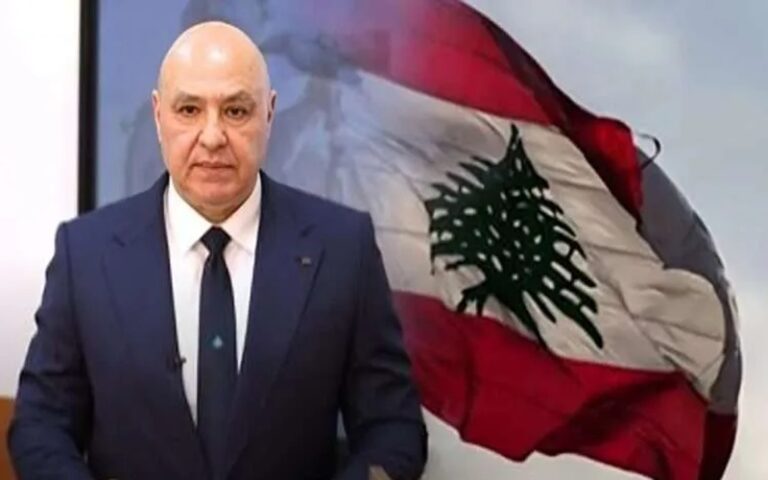
Recent remarks by Lebanese President Joseph Aoun regarding the role of Iran’s regime in developments in Lebanon have received widespread coverage in regional and international media. At a time when Lebanon continues to struggle with the consequences of war, economic crisis, and political tensions, he accused Tehran of using Lebanon as a tool to advance its objectives in negotiations with the United States.

According to a Reuters report published on June 6, Joseph Aoun stated that using Lebanon as a bargaining chip in foreign negotiations is unacceptable. He emphasized that the Lebanese people are paying the price for wars and conflicts that have no connection to the country’s national interests.

Direct Criticism of Iran’s Regime’s Role in Lebanon

In his remarks, Lebanese President Joseph Aoun said that Lebanese citizens are paying the cost of war for Iran’s interests. He added that the Lebanese people are exhausted by the conflict between Israel and Hezbollah and that the continuation of this situation has placed a heavy burden on the country’s society and economy.

These remarks come as Lebanon has witnessed escalating tensions along its southern border in recent months. Clashes between Israel and Hezbollah have caused extensive damage to infrastructure and residential areas and have forced thousands of people to leave their homes. At the same time, the economic crisis continues to cast a shadow over the daily lives of Lebanese citizens.

Reuters described these comments as Joseph Aoun’s strongest criticism of Iran’s regime and Hezbollah since the beginning of his presidency. The significance of this position lies in the fact that a substantial part of Lebanon’s political structure has been influenced by Hezbollah’s presence and influence over the past decades.

Lebanon Between Crisis and Regional Rivalries

In recent years, Lebanon has faced a combination of overlapping crises. Economic collapse, the depreciation of the national currency, rising poverty, and large-scale emigration on one hand, alongside security tensions on the other, have created extremely difficult conditions for the country.

In this environment, debate over the role of foreign actors in Lebanon has once again become one of the central issues in political disputes. Critics of Iran’s regime argue that Tehran’s policies and its support for Hezbollah have turned Lebanon into an arena for regional competition. In contrast, Hezbollah’s supporters view the group as part of the country’s defensive structure.

Joseph Aoun’s remarks can be regarded as one of the most explicit official positions taken by the Lebanese government against the influence of Iran’s regime and Hezbollah’s role in the country’s affairs. These comments were made at a time when Lebanon continues to bear the heavy costs of political, economic, and security crises. The Lebanese president’s recent position has once again brought attention to the extent of Tehran’s influence over Lebanon’s internal decisions and the consequences of that influence for the Lebanese people.