Home Blog Page 93

Austrian Intelligence: Iran’s Regime is Actively Pursuing Nuclear Weapons

Fox News, citing a new intelligence report from Austrian officials, has reported that Iran’s regime is still actively advancing its nuclear weapons program — a program that, according to the report, could be used in launching long-range missiles.

Fox News in its report wrote that: “The startling intelligence gathering of Austrian officials contradicts the assessment of the U.S. Office of the Director of National Intelligence (ODNI).”

Tulsi Gabbard, Director of National Intelligence of the United States, had stated in a March session of the U.S. Senate Intelligence Committee that the U.S. intelligence community “continues to assess that Iran is not building a nuclear weapon and Supreme Leader Ayatollah Ali Khamenei has not authorized the nuclear weapons program he suspended in 2003.”

Austrian intelligence report

However, the Austrian Federal Office for the Protection of the Constitution, which functions similarly to the FBI in the U.S. in terms of domestic security, wrote in an intelligence report on Monday:

“In order to assert and enforce its regional political power ambitions, the Islamic Republic of Iran is striving for comprehensive rearmament, with nuclear weapons to make the regime immune to attack and to expand and consolidate its dominance in the Middle East and beyond.”

Fox News, which obtained a copy of the report, added that the document also states:

“The Iranian nuclear weapons development program is well advanced, and Iran possesses a growing arsenal of ballistic missiles capable of delivering nuclear warheads over long distances.”

The intelligence document states: “Iran has developed sophisticated sanctions-evasion networks, which has benefited Russia.”

According to Fox News, the Austrian intelligence findings could hinder negotiations between the United States and Iran’s regime over resolving the nuclear crisis, as the data presented in the report indicate that Iran’s regime has no intention of giving up its pursuit of nuclear weapons.

In response to this report, a White House official told Fox News Digital:

“President Trump is committed to Iran never obtaining a nuclear weapon or the capacity to build one.”

In this 211-page report, which addresses serious threats to Austria’s democracy, Iran’s regime is mentioned 99 times as a state sponsor of terrorism and as possessing an illegal nuclear weapons program.

The Austrian intelligence agency stated that “Vienna is home to one of the largest embassies of the Islamic Republic of Iran in Europe, which disguises intelligence officers with diplomatic.”

In 2021, a court in Belgium convicted Asadollah Asadi, an Iranian regime diplomat stationed in Vienna, for planning a bombing at a gathering of the Iranian Resistance on the outskirts of Paris in 2018. The event was attended by tens of thousands of people, including politicians and lawmakers from across the world.

Differences between European and U.S. intelligence reports

David Albright, founder and president of the Institute for Science and International Security in Washington, D.C., told Fox News Digital about the difference in assessments between the U.S. Office of the Director of National Intelligence and the Austrian Federal Office for the Protection of the Constitution:

“The ODNI report is stuck in the past, a remnant of the fallacious unclassified 2007 NIE [National Intelligence Estimate].”

A spokesperson for the U.S. Office of the Director of National Intelligence declined to comment, and both the U.S. State Department and National Security Council did not respond to Fox News Digital’s inquiries on the matter.

In 2023, Fox News Digital published new intelligence documents showing that Iran’s regime had attempted to circumvent U.S. and EU sanctions to acquire the technology needed for its nuclear weapons program and move toward testing a nuclear bomb.

According to reports from European intelligence agencies, Iran’s regime has continued its illegal efforts to obtain technologies used in nuclear, biological, and chemical weapons programs both before and after the 2015 nuclear agreement (JCPOA).

The Austrian intelligence report also mentions Iran’s regime supplying weapons to U.S.-sanctioned terrorist groups such as Hamas and Hezbollah, as well as to Syrian militias.

75% Of Iranians Live Below the Poverty Line

As public protests against Iran’s regime grow louder by the day, Isa Kalantari, former agriculture minister and a longtime official within the regime, has declared: “In these 46 years, we have destroyed Iran.”

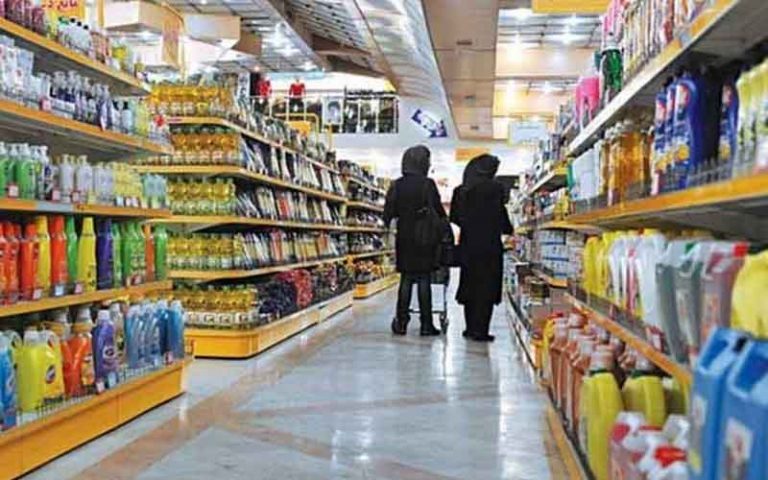
In an interview with the state-run Entekhab website, Kalantari pointed to the unprecedented spread of poverty across the country, stating: “About three-fourths of the Iranian people—that is, something between 70% to 75%—are living below the poverty line.”

This figure starkly contrasts with official statistics, which typically claim that 30% to 40% of the population lives below the poverty line.

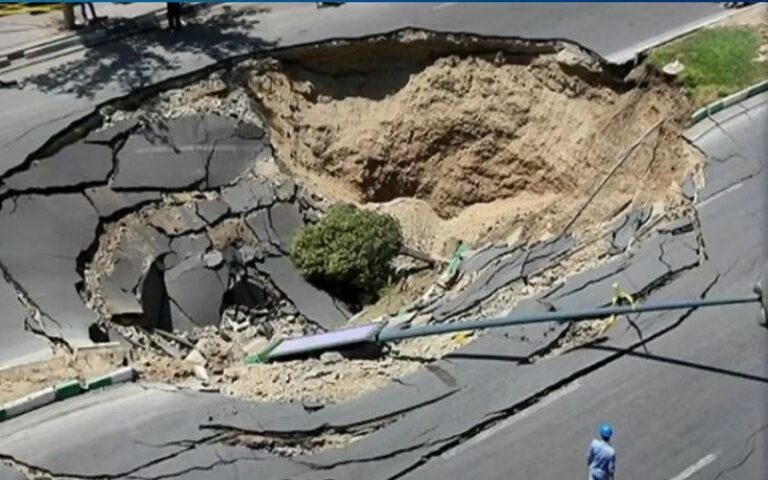
He also warned that the excessive exploitation of the country’s underground water resources has led to severe land subsidence in some areas—so much so that parts of the city of Isfahan are now effectively “standing on six meters of air.”

What sets Kalantari’s remarks apart is his previous high-ranking position within the formal power structure: a senior official now openly speaking of the “destruction of the country” as a consequence of the Iranian regime’s rule.

A key point in such remarks is that the criticism is coming from within the regime and from individuals who themselves played a role in creating the current situation.

Isa Kalantari presents this shocking statistic while clearly directing his criticism at the leader of Iran’s regime, Ali Khamenei, and the commanders of the Revolutionary Guards—even if he does not name them explicitly.

He describes the regime’s overarching economic policies as “anti-development” and stresses that a country cannot be governed through poverty—a sentiment increasingly echoed among critical officials.

With his startling claim that 75% of the population lives below the poverty line, Kalantari directly challenges the official narrative of the Iranian regime. Yet his remarks reflect a deeper crisis: the voice of dissent and criticism against the regime’s supreme leader and the Revolutionary Guards is now being heard not just from protesters in the streets, but from within the ruling establishment itself. This is the very rift that, through years of recurring popular uprisings, has grown wider by the day and now questions the regime’s cohesion.

In this context, issues such as the systemic corruption of the Revolutionary Guards (IRGC) in the areas of sanctions, oil smuggling, opposition to the FATF, and financial profiteering from hostility toward the United States and Israel have increasingly become topics of discussion within the ruling establishment.

The IRGC, acting as the main oil vendor, pockets the primary profits from sanctions under the guise of circumventing them, while the cost of this approach is borne by the people through poverty and unemployment.

IRGC commanders, who have effectively replaced the National Iranian Oil Company and the Central Bank, are now selling oil to China at a discount. The payments remain frozen in Chinese banks in the form of yuan, and Iran is forced to import overpriced and low-quality Chinese goods in exchange. A recent example was the purchase of three second-hand Airbus planes from China at three times their actual value—an explicit example of corruption under the label of sanctions circumvention.

Double the Price, None of the Promise: Corruption Behind Iran’s Aircraft Barter Deal

At the top of these “sanctions profiteers” are the IRGC commanders. According to Mohammad Hossein Adeli, former head of Iran’s Central Bank, the volume of rent-seeking, losses, and corruption resulting from sanctions exceeds 50 billion dollars.

But the issue doesn’t stop there. One of the major obstacles to economic recovery is the opposition by Khamenei and the IRGC to fully adopting the FATF (Financial Action Task Force). The main reason for this opposition is to prevent the disclosure of financial transactions related to supporting its proxy groups in the region.

As a result, Iran has remained on the FATF blacklist for more than eight years. The consequence has been financial isolation, lack of foreign investment, and a worsening economic crisis.

Former officials of Iran’s regime now openly admit that the country is on the wrong path. But this is nothing new—and it appears that these criminal officials are trying to downplay or deflect their own role in the current situation.

However, the Iranian opposition—led by the National Council of Resistance of Iran (NCRI) under Mrs. Maryam Rajavi—has repeatedly affirmed the reality that all factions of the regime bear responsibility for the current crisis. The only path to liberation for the Iranian people and the region from the clerics’ rule is through their overthrow by the Iranian people themselves.


Iran’s Regime Ties Nuclear Pause to U.S. Concessions

Two Iranian sources told Reuters on Wednesday, May 28, 2025, that Tehran might halt uranium enrichment as part of a “political agreement,” provided that the United States unfreezes Iran’s blocked assets and recognizes Tehran’s right to enrich uranium for civilian purposes. Such an agreement could pave the way for a comprehensive nuclear deal.

According to these sources, who are close to the negotiating team, if Washington accepts Tehran’s conditions, a political understanding with the United States could be reached soon.

One of the sources said that this issue has not yet been raised in discussions with the United States.

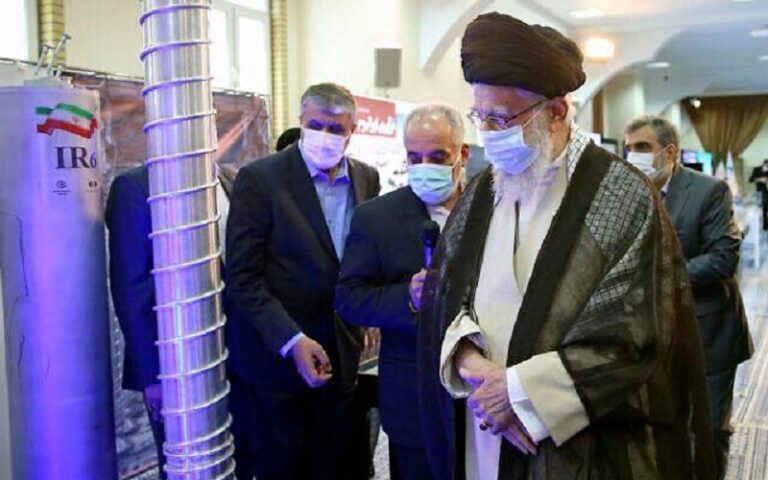
Iranian Regime Accelerates Uranium Enrichment to Concerning Levels

The Iranian sources stressed that Tehran will not agree to halt its nuclear program, dismantle its infrastructure, or seal its nuclear facilities, as demanded by the Trump administration.

Meanwhile, Iran’s regime has still not been able to access the 6 billion dollars deposited in a Qatari bank—an amount that was unfrozen in 2023 during a prisoner exchange between the U.S. and Iran under Joe Biden’s administration.

The second source acknowledged that Tehran wants these funds transferred to Iran without any conditions or restrictions. If it is necessary to lift certain sanctions for this to happen, then that should be done.

International Atomic Energy Agency that a new report on Iran’s nuclear program will be released soon.

Rafael Grossi, Director General of the International Atomic Energy Agency (IAEA), announced that the agency will “soon” release its new report on the nuclear program of the Iranian regime.

On Wednesday, he added that the report will be comprehensive.

The release of a comprehensive report on the Iranian regime’s nuclear program is a step toward potentially triggering the snapback mechanism for the automatic reimposition of sanctions against Iran’s regime.


Iran’s Gasoline Smuggling Crisis Exposes Systemic Corruption and Military Involvement

Iran is grappling with an unprecedented gasoline smuggling crisis, with new estimates suggesting that up to 50 million liters of fuel are illegally exported from the country each day. This staggering figure has cast serious doubt on the Iranian regime’s long-standing narrative that blames small-time border smugglers for the losses. Instead, mounting evidence points to a well-organized, large-scale operation involving institutional complicity at the highest levels.

A $4 Billion Drain on the Iranian Economy

According to Alireza Rashidian, head of Iran’s Central Headquarters for Combating Goods and Currency Smuggling, the daily average of smuggled fuel now stands at around 20 million liters, primarily diesel and gasoil. Speaking to Tasnim News Agency, Rashidian noted that substantial amounts of subsidized fuel meant for power plants and agricultural use have been systematically diverted into illicit markets in recent years.

Fuel Smuggling Mafia and the Policy of Concealment in Iran  

He added that a pilot monitoring scheme in five provinces had uncovered nearly 69,000 cases of irregularities by tracking around 200,000 fuel shipments—further underscoring the scale and complexity of the smuggling network.

Implausibility of the Small-Scale Smuggler Narrative

The regime often attributes smuggling to low-level operators who use 2,000–2,500-liter tanks mounted on Nissan Junior pickup trucks. However, simple logistics expose the flaws in this claim. Transporting 50 million liters would require at least 20,000 such trucks, forming a convoy stretching over 140 kilometers if lined up with minimal spacing.

Even the more conservative figure of 20 million liters would necessitate 8,000 vehicles, making it impossible for these operations to occur undetected and unaided by officials. Alternatively, using large tanker trucks capable of holding 40,000 liters would still require 500 to 1,250 trucks per day, depending on the volume smuggled.

Signs of Systematic and Institutionalized Corruption

The volume of fuel being trafficked, combined with the infrastructure required, strongly suggests that fuel smuggling is systemic. Reports of underground fuel pipelines and unmonitored maritime routes—especially from ports under the control of the Islamic Revolutionary Guard Corps (IRGC)—reinforce suspicions of official involvement.

In 2023, Mohammad Jafari, Deputy Head of the Headquarters for Combating the Smuggling of Goods, admitted that up to 25% of fuel allocated to power plants is being siphoned off for smuggling, though he did not disclose specifics. The implication is clear: large portions of Iran’s fuel distribution network are compromised.

Arrests of Officials Linked to Smuggling

High-profile arrests over the past few years have further highlighted institutional involvement:

  • In December 2022, Aref Akbari, Public and Revolutionary Prosecutor of Hormozgan Province, announced the arrest of six rural mayors, three Ministry of Industry employees, and two members of the Engineering Organization for issuing fraudulent permits that allowed fake claims to subsidized fuel.
  • In May 2021, Saeed Rashki, Public and Revolutionary Prosecutor of Iranshahr, revealed that nearly all employees of the local oil company had been arrested in connection with a major smuggling case. One of the key suspects was the head of a local parliamentarian’s office.

These cases illustrate how networks of corruption stretch across various levels of government, providing the necessary cover for massive fuel diversion operations.

The IRGC’s Pivotal Role

One of the most alarming aspects of the crisis is the alleged involvement of Iran’s armed forces—particularly the IRGC. As a powerful military and economic force, the IRGC controls much of Iran’s transportation infrastructure and border security. Given this control, it is highly improbable that millions of liters of fuel could be smuggled daily without their oversight or direct participation.

Numerous reports have implicated IRGC-controlled ports and border crossings in smuggling activities, with small cargo ships operating clandestinely under military protection. Observers argue that fuel trafficking helps fund the IRGC’s regional operations and off-the-books expenditures, making it a lucrative and politically protected enterprise.

Conclusion

Iran’s fuel smuggling crisis is no longer a case of petty cross-border theft. The sheer volume of stolen fuel, estimated to cost the Iranian economy $4 billion annually, combined with growing evidence of state and military complicity, paints a disturbing picture of institutionalized corruption.

As long as key power centers like the IRGC remain above the law, and government entities continue to profit from opaque fuel distribution schemes, there is little hope that this crisis can be resolved. Instead, it threatens to deepen the country’s economic woes and further erode public trust in state institutions.


Truckers’ Strike Spreads to 125 Cities Across Iran

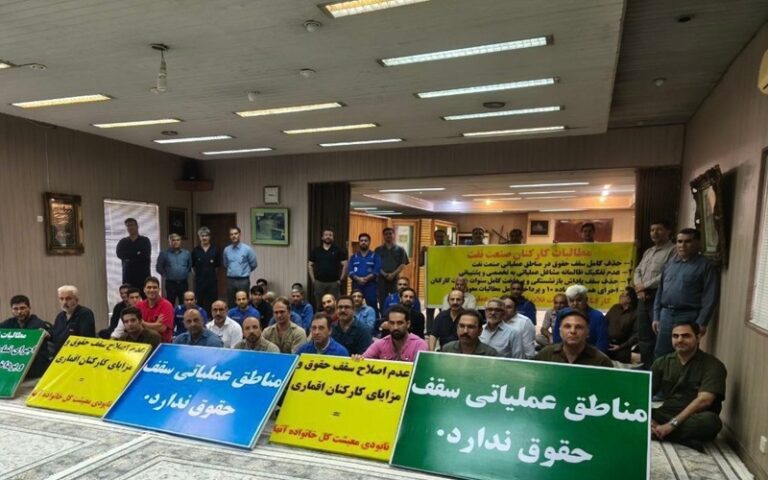
At the end of the fifth day of the strike, the Union of Truckers and Drivers of Iran stated that there had been “an exceptional show of solidarity and unity” during the nationwide strike that has spread to 125 cities. The statement added: “With hope and unity, we welcome the sixth day, with the belief that we will continue the path until our demands are met.”

The statement continued: “Since the beginning of this path on May 22, thousands of honorable drivers and truckers have joined us. This solidarity is a great honor that reflects a shared understanding and a common aspiration for a better future.”

The union added in its statement that despite the “hardship and pressure” during the strike days, “our voice of unity has grown louder and our steps more resolute.”

Truckers’ Strike in Iran Enters Fourth Consecutive Day

The latest round of protests by drivers and truckers began on May 19 in Bandar Abbas, following a call by the Union of Truckers and Drivers of Iran. Protesters went on strike by halting operations at the port’s entry and exit points.

The union issued a statement saying: “We went on strike because we demand our rights. We stood together because our unity is the only thing that can turn this wheel in our favor.”

The strike continued in a coordinated manner on May 22, with truckers in dozens of Iranian cities also halting work.

Protesting drivers have said they will strike for one week in response to the reduction in diesel fuel quotas, high insurance costs, low freight rates, and other unmet professional demands.

Tehran Bus Workers’ Syndicate Backs Truckers’ Strike

On May 26, the Syndicate of Workers of Tehran and Suburbs Bus Company issued a statement in support of the nationwide truckers’ strike, stating: “Striking and protesting is a legal right of drivers and all workers.”

The statement identified key demands of the truckers, including: “clarification of insurance entitlements, enforcement of government commitments to pay the insurance share for owner-operators, reduction of freight brokerage commissions, and an end to corruption and discrimination in the cargo allocation process.”

Among the videos circulated from the strike, there are rare images of the country’s main transit routes appearing unusually empty, with barely any cargo trucks in sight.

Other videos show truckers staging coordinated protests in various cities.

As the strike by truckers and heavy vehicle drivers expanded, Kamran Mir Haji, the Prosecutor General of Fars Province, announced that legal cases were being filed to enable “judicial action” against a number of these drivers.

On Monday, May 26, Mir Haji stated that judicial measures had been taken against several individuals accused of “disrupting the operations of drivers and truckers” in Fars province, some of whom had been arrested and others who now face legal proceedings.

Earlier, on Sunday, May 25, Mohammad Bagher Ghalibaf, the Speaker of the regime’s Majlis (parliament), addressed the truckers’ issues, and Adel Najafzadeh, the representative from Khoy, warned about the “collapse of the national transportation fleet.”

In a statement on May 25, the Union of Truckers and Drivers of Iran reported that police forces had attacked some of their colleagues with pepper spray and arrested several of them.


Iran: Execution of Pedram Madani in Ghezel Hesar Prison

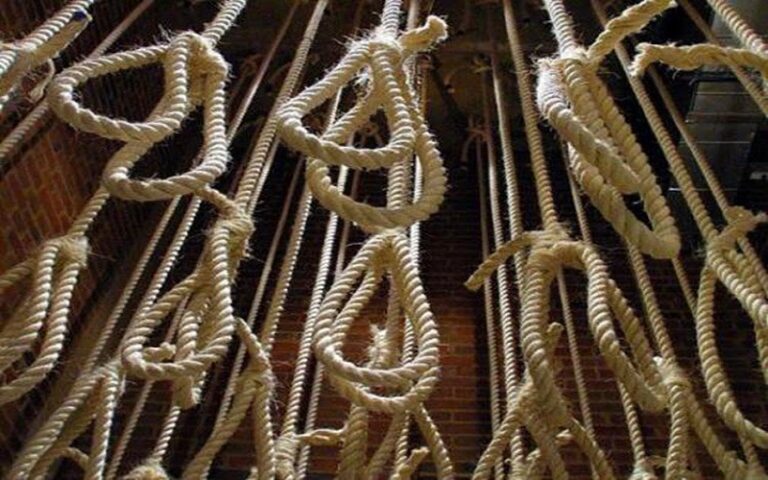
In the early hours of Wednesday, May 28, Pedram Madani, a 41-year-old prisoner, was executed in Ghezel Hesar Prison in Karaj. This act has sparked a wave of protests from human rights activists and his family. The judiciary of Iran’s regime carried out the execution based on vague charges and a case filled with legal flaws.

Pedram Madani was arrested in 2020 and charged with activities related to intelligence and security. According to his family and human rights defenders, the accusations were not backed by documented evidence but were instead based solely on “confessions” obtained under pressure and without access to a chosen lawyer. In a video message, his mother emphasized the illegal torture and pressure during interrogations, saying: “My son only had a court-appointed lawyer, and his case is full of ambiguity and flaws.”

Execution Wave in Iran: Six More Prisoners Hanged

On May 25, Madani was transferred from Evin Prison to Ghezel Hesar. At the same time, his family was summoned for a final visit, a sign that human rights activists interpreted as confirmation that the execution was imminent. Pedram Madani’s death sentence was overturned three times by the Supreme Court, yet each time the parallel branch reinstated the death penalty.

In this context, Olivier Grondeau, a French citizen and former inmate of Evin Prison who was imprisoned in Iran for over two and a half years, released a video message in Persian calling for the execution of Madani to be stopped. He said: “Pedram was one of the kindest cellmates I had. I cannot believe such a person deserves to be executed. He was the twentieth of my friends taken to Ghezel Hesar for execution.”

Pedram Madani’s mother, who had previously lost her husband due to the sorrow caused by their son’s imprisonment, tearfully warned: “Don’t let another family be plunged into mourning. This sentence is unjust.”

Despite repeated warnings from international bodies, Iran’s regime once again moved ahead with an execution, without a fair trial—a course that has claimed the lives of many young people in recent months. The execution of Pedram Madani took place amid a legal and judicial environment that, according to experts, is increasingly drifting away from standards of justice, transparency, and accountability.

Earlier, on April 29, Mohsen Langarneshin was also executed under similar charges without a public and fair trial in one of the country’s prisons. According to observers, this reflects a growing pattern of brutal suppression under the guise of “law” against political and ideological detainees in Iran.


Iranian Regime’s Deputy Minister of Intelligence for Internal Security Wanted by FBI

 The Federal Bureau of Investigation (FBI) has released the photo and personal details of Seyed Yahya Hosseiny Panjaki, also known as Seyed Yahya Hamidi, the deputy minister of intelligence for internal security in Iran’s regime. The FBI has placed him on its wanted list and is seeking information about him.

In the FBI notice published on Monday, May 26, Seyed Yahya Hosseiny is identified as being born on January 23, 1975, and as the deputy minister of intelligence in charge of Israel-related affairs.

FBI stated:“Seyed Yahya is wanted for questioning in connection with alleged worldwide lethal plots and terror activity using intelligence networks, operational networks, and cyber capabilities, including via cooperation between the MOIS and Iran’s Islamic Revolutionary Guard Corps (IRGC).”

Seyed Yahya Hosseiny is the chief architect of operations by the Ministry of Intelligence to assassinate opponents of Iran’s regime abroad.

The regime’s Ministry of Intelligence, alongside the IRGC’s Intelligence Organization, has for years carried out the regime’s most important acts of sabotage abroad.

The notice adds that:“The Directorate for Internal Security is responsible for operating the Naji Sharifi Zindashti criminal network and their associates as they targeted United States-based Iranian dissidents from at least December 2020, until or around March of 2021.”

FBI continued:“Seyed Yahya is the superior of Iranian Intelligence Officer Reza Hamidi Ravari, who is also wanted for questioning.”

He holds a PhD in political science from Azad University of Tabriz and has published two academic articles—one titled “The Role of Rumors and Hybrid Threats in the Security Environment,” published in the Ministry of Defense’s National Security quarterly, and another titled “Takfiri Terrorism in Cyberspace and Strategies to Counter It,” published in the Strategic Cyber Space Studies quarterly of Iran’s Supreme National Defense University.

Hosseiny Panjaki has been sanctioned by the European Union and the United Kingdom for his involvement in a 2018 bombing plot in Paris. The target was the annual gathering of the National Council of Resistance of Iran (NCRI), the largest opposition coalition to Iran’s regime. The plan was foiled by law enforcement before it could be carried out.

Within the Ministry of Intelligence, he founded the “Martyr Soleimani Headquarters,” which carries out sabotage operations around the world in cooperation with Iran’s intelligence agencies and with the assistance of IRGC forces.

The name of this headquarters refers to the Iranian regime’s plan to avenge the killing of Qassem Soleimani, the former commander of the Quds Force.

Yahya Hosseiny has very close ties with the IRGC and has traveled multiple times to Syria and Lebanon, collaborating with Hezbollah and the Quds Force through intelligence sharing between the Ministry of Intelligence, the IRGC, and their operational teams.

In addition to serving as deputy for internal security, Yahya Hosseiny is also in charge of the Israel desk at the Ministry of Intelligence.

The leader of Iran’s regime has prioritized offensive operations against Israel, and as a result, more financial and human resources have been allocated to this section.

Before Yahya Hosseiny, Saeed Hashemi Moqaddam held the position of deputy for internal security at the Ministry of Intelligence.

Hashemi Moqaddam, 62 years old and one of the older directors of the Ministry of Intelligence, was also sanctioned by the European Union and the United Kingdom after the Paris bombing plot was exposed. Although the internal security deputy position remains on the EU sanctions list, Yahya Hosseiny’s name has not yet been added to that list.


14 Men and Women Hanged in a Single Day in Iran

As Iran’s regime is trapped in a web of social, economic, and political crises, it has turned to executions to maintain its grip on power. In a single day, at least 14 prisoners—including four women—were executed in prisons across the country, including in Kermanshah, Damghan, Birjand, Kahnouj, Shiraz, Borujerd, and Zahedan. Since May 22, the number of executions has reached 20. Since April 21, the regime has executed 170 prisoners, marking the highest execution rate in recent years.

At dawn on Monday, May 19, Setareh Taherloo, a woman who had been arrested three years earlier on drug-related charges, was hanged in Damghan Prison. The rise in the number of women executed in recent months reflects the regime’s deep cruelty toward vulnerable segments of society.

Seventieth Week of the “No to Execution Tuesdays” Campaign in Iran’s Prisons

Mass Execution in Birjand

On the morning of Monday, May 26, eight prisoners—including five men and three women—were executed in Birjand Prison. One of the victims, Hamid Shirzai, 39 years old, was married and the father of ten children. His execution, carried out without allowing a final visit with his family, is a clear violation of the basic rights of prisoners.

This wave of executions reveals the Iranian regime’s fear of growing public protests. These include the truck drivers’ strike in more than 110 cities, protests by bakers, and widespread dissatisfaction across various sectors of society.

Even members of the regime’s Majlis (parliament) acknowledge the crisis. On May 23, MP Javad Nikbin warned, “This volume of protests is not normal.” Another MP, Ahmad Bigdeli, spoke of a “threshold situation” and added, “If we cannot reform matters, this dissatisfaction will lead to a social explosion.” These remarks show that even inside the regime, the fear of a popular uprising has reached its peak.

Urgent Need for Global Action and Popular Solidarity

The recent executions, which especially target women and youth, are a flagrant violation of human rights and a crime against humanity. The international community, human rights organizations, and global institutions must pressure Iran’s regime to halt these executions. Amnesty International’s 2024 report shows that Iran has the highest execution rate in the world, and this trend has intensified in the current year.

Inside Iran, solidarity among various groups with the families of victims and those facing execution can further pressure the regime. The truck drivers’ strike and protests by other sectors have shown that the people of Iran are no longer willing to endure this injustice. These movements—joined by workers, teachers, and women—have the potential to become a nationwide uprising that could bring down the foundations of the regime.


Seventieth Week of the “No to Execution Tuesdays” Campaign in Iran’s Prisons

In the seventieth week of the “No to Execution Tuesdays” campaign, Fardis Prison in Karaj joined the movement. Currently, 45 prisons across the country are on hunger strike in protest the growing number of executions in Iran’s prisons.

In this week’s statement, the prisoners declared that the only solution is to raise their voices and rise against oppression and injustice. They wrote:
“Silence is not the solution”; one must shout and rise against this injustice and tyranny. As has been the case for weeks, several families of political prisoners sentenced to death—together with young people and freedom-loving citizens—have shouted “No to executions” in front of prisons across the country and even in cities around the world in support of the campaign.

The Sixty-Ninth Week of the “No to Executions Tuesdays” Campaign In 44 Prisons Across Iran

The full text of the statement by prisoners participating in the “No to Execution Tuesdays” campaign is as follows:

With deep sorrow and regret, the killing of prisoners in the prisons of the ruling tyranny has not only failed to stop, but the statistics of this “madness of government-sanctioned killing of imprisoned citizens” continue to rise.

The repressive apparatus of the regime, between April 21 and May 21, sent over 170 imprisoned compatriots to the gallows—an unprecedented and horrifying statistic that shows every nine hours, two prisoners have been executed in Iran. Sadly, about 19% of these executions involve oppressed Baluch citizens, who are subjected to compounded discrimination and injustice.

The “No to Execution Tuesdays” campaign sincerely calls on all human rights advocates and those who aspire to a free and equal Iran to stand with the victims of oppression during these difficult days and years. Iran’s regime, by violating fair trial rights and widely carrying out execution sentences, tramples on the “right to life” of ethnic and religious minorities and brazenly sends Baluch, Kurdish, and Arab compatriots, as well as prisoners of conscience, to the gallows.

1,164 Executions in Less Than a Year in Iran

How just and necessary it is for those who care about Iran—especially those with access to international platforms—to echo the Iranian people’s cry of “No to executions” and expose the regime’s “madness for killing” to the world. This inhumane behavior by the dictatorial regime toward minorities and the Iranian people is a clear example of a “crime against humanity” and a flagrant violation of human rights.

It is abundantly clear that every execution verdict in Iran carries a political dimension and is not merely the punishment of a defendant, because each defendant is a victim of the corrupt and dysfunctional structure of the regime. Moreover, there is no fair judicial process within the regime’s judiciary and security apparatus. The primary goal of these executions is to instill fear in society and prevent popular uprisings. As the crises in the country intensify, repression and executions have also escalated.

In line with this, in a creative act, the women prisoners involved in this campaign at Evin Prison gather every Tuesday at the same time as the families’ gatherings and chant “No to executions.”

This solidarity between those inside and outside prison is admirable, and it is fitting for the slogan “No to executions” to resonate in the streets and protests of various sectors of society.

We are pleased to announce that this week, too, a group of prisoners at Fardis Prison in Karaj have expressed their solidarity with the “No to Execution Tuesdays” campaign and will join the hunger strike in protest of the wave of executions.

Accordingly, political prisoners involved in the “No to Execution Tuesdays” campaign will be on hunger strike in 45 prisons on Tuesday, May 27, during the campaign’s seventieth week.


Spokesman Majlis National Security Commission: There Is No Hope for Negotiations

The spokesman for the Iranian regime’s Majlis (Parliament) National Security Commission told CNN that, given the U.S. stance requiring a complete halt to uranium enrichment, there is no hope for successful negotiations with the United States, and the regime is preparing an alternative plan.

Ebrahim Rezaei, spokesman for the regime’s National Security and Foreign Policy Commission, told CNN that given the American officials’ insistence on a complete halt to uranium enrichment inside Iran, “there is no hope” for successful negotiations with the U.S., and the regime is “preparing for Plan B” in the event talks collapse.

On Saturday, May 24, Rezaei told the outlet that the Iranian regime has become disillusioned with the nuclear negotiation process, explaining that the U.S. side continues to insist on zero enrichment, and the Iranian regime will never agree to zero enrichment. “That’s why we are exploring an alternative plan.” However, he did not specify what that plan would entail.

Nuclear Talks Resume Between Iranian Regime and U.S. Amid Stalemate and Tensions

In the interview with CNN, Rezaei stated that if the Americans’ goal is merely to prevent Iran from acquiring nuclear weapons, a deal might be achievable. But he added that if their goal is complete cessation of enrichment, then a deal will definitely not be possible.

Despite this, the spokesman added that it is still too early to judge the outcome of the negotiations, but “so far we have not seen much seriousness from the American side.”

Two sources from within the Iranian regime told CNN that since the United States insists on dismantling Tehran’s uranium enrichment program, it is unlikely that these talks will lead to an agreement.

These statements echo recent remarks by Steve Witkoff, the head of the U.S. negotiation team, in an interview with ABC News, in which he said that uranium enrichment is a clear red line for the Trump administration.

The negotiations between the U.S. and the Iranian regime, which began in April, represent the highest level of talks since the United States withdrew from the nuclear deal during Donald Trump’s first term.

Trump, after returning to the White House, has revived his “maximum pressure” campaign against the Iranian regime. He supports the ongoing negotiations but has warned that if diplomacy fails, the option of military action remains on the table.