Home Blog Page 12

Iran’s Car Market Experiences Sharp Surge in Prices Afte War-Induced Stagnation

Media outlets in Iran report that the prices of many domestically produced cars have increased by 3 billion to 10 billion rials in less than two weeks. (Currently, the dollar price in Iran’s market is around 1,800,000 rials.)

The state-run Mehr News Agency wrote that during this period, even some car models such as Tara and Rira saw price increases exceeding 10 billion rials (approximately 5,587 dollars).

Prices of Iranian-Made Vehicles Jump by 50% in Less Than One Year

According to reports, in Iran’s car market between April 16 and April 30, an unprecedented trend of price surges was recorded across nearly all vehicle categories, from domestically produced cars to assembled and imported models.

Automotive experts and experienced market participants, who themselves have been surprised by the situation, told domestic media that this unprecedented price growth indicates the market, after a period of relative stagnation during the war, has re-entered a phase of volatility and widening price gaps.

Saeed Motameni, the former head of the Tehran Car Dealers Union, said that Iran’s car industry, which had been moving toward becoming a consumer market, has once again turned into an investment asset for preserving monetary value.

Motameni also emphasized that many buyers, due to reduced purchasing power, are unable to afford cars… only a small segment of society remains active in the market… approximately 10% to 15% of the population, while the majority of people cannot afford to buy or sell cars.

Why have car prices suddenly increased so sharply?

Automotive industry experts report an unusual situation in the car market; neither sellers are willing to transact, nor buyers have the financial ability to purchase.

Automotive experts, in interviews with media outlets, cite the consequences of the war and U.S. and Israeli attacks on Iran as one of the main reasons for this price increase.

The state-run Eghtesad Online website wrote that damage to the main supplier of steel sheets needed for car manufacturing on one hand, and disruptions in petrochemical production on the other, are undeniable factors behind the runaway increase in car prices.

As one of the most widely used and in-demand goods in the market, cars have inevitably been affected by recent developments. Damage to parts of the steel and petrochemical industries—especially sectors involved in automakers’ supply chains—is already showing its effects on production lines.

Meanwhile, the state-run Tasnim News Agency, quoting Mohammad Atabak, Iran’s Minister of Industry, Mine, and Trade, reported that planning for supplying the steel sheets required by automakers has been completed through the end of the year and their provision is guaranteed.

According to this news agency, last week 164,000 tons of steel sheets were offered, of which only 92,000 tons were sold.

At the same time, the reduction in car imports due to blocked import routes has also contributed to market volatility. As a result, prices of assembled and imported cars have also seen significant increases over the past two weeks.

According to Hadadi (an Iranian official or market figure), under current conditions, car imports are not the country’s top priority. Therefore, although imports will not stop entirely, they will certainly be more limited than before. Due to import restrictions, challenges may also arise in supplying parts for assembled vehicles.

On the other hand, the surge in foreign currency prices has also fueled the runaway increase in car prices in Iran, and Ezzatollah Zarei, spokesperson for the Ministry of Industry, Mine, and Trade, stated that the ministry has authorized price increases for automakers’ products.

He said: “In the automotive sector and all goods, we have a logical price adjustment. We have changed the exchange rate basis for calculating import duties and wage rates, and naturally this affects product prices. Apart from this logical price increase resulting from changes in production and import-related factors, we will not have any other price increases.”

The role of middlemen and the Ministry of Industry

However, a number of Iranian media outlets report that middlemen have entered the car market and are listing unrealistic prices for buying and selling in order to prepare the market mindset for further price increases.

According to these reports, these groups are trying to exploit the current instability and public fear about the future, aiming to turn at least 30% to 40% of these artificial increases into real profit.

The state-run Tabnak website also reported that a weekly increase of 3 to 5 billion rials (approximately 1,676 to 2,794 usd) is not consistent with any production logic, even considering rising raw material costs, and is instead due to severe monopolies and closed borders to large-scale, real imports.

The outlet added that the Peugeot 207 reaching a price of 30 billion rials (approximately 16,760 USD) is a bitter historical milestone. This means a car considered inexpensive and suitable for students in global markets is being sold in Iran at the price of a luxury European car, and at global rates.

UN Officials Call for a Halt to Executions and Repression in Iran

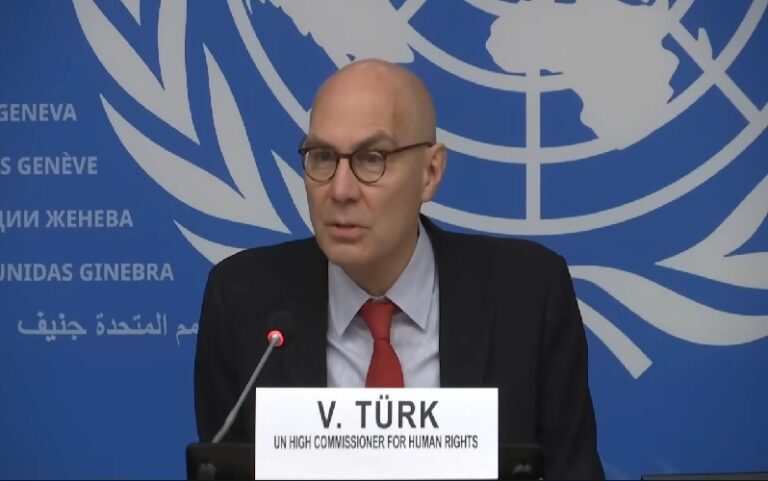
Volker Türk, the United Nations High Commissioner for Human Rights, in a statement published on April 29, strongly condemned the wave of protest repression, widespread human rights violations, and the increase in executions in Iran. At the same time, Mai Sato, the UN Special Rapporteur on the situation of human rights in Iran, also supported these positions in a message on X and warned about the worsening human rights crisis in Iran.

Both UN human rights officials emphasized the Iranian regime’s repeated use of vague security charges to silence dissent, the issuance of death sentences based on forced confessions under torture, and the systematic repression of ethnic and religious minorities.

Transfer of a death-row political prisoner to solitary confinement in Urmia, Iran

Volker Türk stated that since the beginning of the conflict, at least 21 executions have been officially announced by the regime. He stressed that the use of the death penalty, especially in the context of political protests and social unrest, is a clear violation of Iran’s international obligations and must be stopped immediately.

He also referred to widespread arrests, severe restrictions on freedom of expression, and the repressive atmosphere in the country, saying:

“I am appalled that – on top of the already severe impacts of the conflict– the rights of the Iranian people continue to be stripped from them by the authorities, in harsh and brutal ways. “In times of war, threats to human rights increase exponentially.”

The UN High Commissioner for Human Rights also called for an immediate halt to all executions and stated:
“I call on the authorities to halt all further executions, establish a moratorium on the use of capital punishment, fully ensure due process and fair trial guarantees, and immediately release those arbitrarily detained.”

According to this body, over the past two months and since the start of joint Israeli and U.S. attacks on Iran, at least nine people linked to the January 2026 protests, 10 accused of membership in opposition groups (the People’s Mojahedin Organization of Iran, PMOI/MEK), and two on espionage charges have been executed.

Volker Türk also warned that the prolonged internet shutdown, which he described as the longest recorded in history at 61 days, has raised serious concerns about concealing the true scale of repression and executions. He stressed that this measure has caused widespread economic damage, disrupted education and healthcare services, deprived people of vital information during the conflict, and enabled the regime to monopolize the official narrative.

Mai Sato had also previously warned that internet shutdowns have become a tool of repression, preventing the true scale of killings, executions, and human rights violations from being revealed. She believes the actual number of victims may be far higher than official figures.

Another part of the statement highlights the critical conditions in prisons and among political detainees. Severe overcrowding, shortages of food, water, medicine, sanitary facilities, and lack of access to medical care are among the issues raised.

In Chabahar Prison, prisoners’ protest the suspension of food distribution was met with severe violence, resulting in at least five prisoners killed and 21 injured. It has also been reported that two other prisoners in another facility died showing signs of torture.

Mai Sato has repeatedly emphasized the need for transparency regarding the fate of detainees, the prevention of enforced disappearances, and the immediate release of those arbitrarily detained.

The statement also addresses the confiscation of citizens’ assets. Officials of Iran’s regime have seized the assets of hundreds of citizens, including around 400 Iranians living abroad—such as artists, athletes, journalists, and executives—and labeled them as traitors. This action has drawn strong criticism from human rights organizations as an example of transnational repression.

In a joint stance, Volker Türk and Mai Sato have called on Iran’s regime to immediately halt executions and implement a moratorium on the death penalty, release all arbitrarily detained individuals, restore full internet access without delay, and ensure due process and access to legal counsel for all prisoners.

Iran’s National Currency Has Declined by 120% Over the Past Year

Reports from Iran indicate a sharp surge in the price of the U.S. dollar in the open market in recent days, reaching new records in the devaluation of Iran’s currency.

A review of the latest foreign exchange market changes shows that on Thursday April 30, the dollar price dropped by 37,000 rials compared to the previous day, settling at 1,788,500 rials. Over the past week, the dollar has also recorded an increase of 248,000 rials.

Analyses show that on March 30, the dollar stood at 1,579,500 rials. Since then, it has recorded a 13.23% increase.

War Economy and Stagflation in Iran

However, compared to one year ago, the dollar price has risen by 120.53%, increasing by 977,500 rials.

This marks the highest recorded price of the dollar in Iran, meaning the country’s national currency has reached its lowest value in history.

The rise in foreign currency prices in recent days has occurred following the start of a U.S. naval blockade and the intensification of tensions between Iran and several Arab countries along the Persian Gulf, including the United Arab Emirates.

Last week, U.S. President Donald Trump wrote on the Truth Social platform that Iran earns about 500 million dollars per day from the Strait of Hormuz remaining open, and that it would lose this amount if the strait were closed.

The sharp rise in the dollar comes as reports indicate that the United Arab Emirates has halted its economic activities with Iran following the recent war.

Before the war began, the United Arab Emirates was Iran’s second-largest trading partner after China, with bilateral trade reaching 28 billion dollars in 2024. Iran, which is under heavy U.S. sanctions, had been importing many goods produced in other countries through the UAE, making it the largest exporter of goods to Iran.

Many economic experts had also pointed to Iran’s heavy reliance on the UAE’s logistics system, highlighting the country’s significant economic dependence on this Persian Gulf state.

Despite these close economic ties, Iran’s retaliatory attacks on Persian Gulf countries, particularly the United Arab Emirates, have severely strained relations between the two countries, and Emirati officials have expressed anger over Iran’s attacks.

According to official statements from the United Arab Emirates, during the war, Iran’s regime fired more than 500 missiles and 2,200 drones at the country.

Following the war, the United Arab Emirates has not reconsidered its relations with Western allies but has instead sought to reduce its economic cooperation with Iran’s regime.

US Preparing for a Long-Term Blockade of Iran’s Ports

0

The Wall Street Journal, citing US officials, reported that US President Donald Trump has ordered preparations for a long-term blockade of the Iranian regime.

Citing statements from these officials, the newspaper wrote that Trump’s objective with this move is to undermine the Iranian regime’s financial resources in order to force Tehran to yield to US demands regarding its nuclear program.

According to the Wall Street Journal, citing informed sources, Trump has concluded that other options—such as resuming attacks and bombing Iran or withdrawing from the conflict—carry higher risks compared to maintaining and continuing the blockade.

The Naval Blockade And the Structural Fracture of Iran’s Economy

According to the report, the US president told his aides that the Iranian regime’s three-stage proposal—reopening the Strait of Hormuz and postponing nuclear negotiations to the final phase—demonstrates Tehran’s lack of good faith in negotiations. The Wall Street Journal wrote that Trump intends to increase pressure on the Iranian regime until it yields to his main demands, namely the complete dismantlement of its nuclear program.

On Tuesday, April 28, Trump wrote in a post on his social media platform, Truth Social, that Iran is in a state of collapse and has asked the United States to reopen the Strait of Hormuz as soon as possible.

CENTCOM reports many ships halted at Chabahar Port

The United States Central Command (CENTCOM) announced in a message on X on Tuesday evening, April 28, that before the start of the naval blockade of Iran’s southern ports and coastlines, an average of about five ships would dock or anchor at Chabahar Port.

CENTCOM stated in another post on X on Tuesday that forces under its command continue operations across the Middle East and are maintaining the blockade of Iran.

War Economy and Stagflation in Iran

Unemployment and inflation in a war for which the Iranian regime is the primary cause are no longer merely economic phenomena but have turned into a political-structural crisis. The escalation of military tensions, disruptions in trade routes, and destruction of infrastructure have pushed Iran’s economy into a phase where the usual rules of the labor market have effectively broken down. In these conditions, prices are formed not based on supply and demand, but on uncertainty, war costs, and political instability.

A Tsunami of Unemployment and the Collapse of Job Security

Unemployment and inflation in this war of attrition have manifested most clearly in the labor market. An estimated loss of more than one million direct jobs is only the visible part of this crisis. If indirect unemployment in supply chains and services is added, it amounts to a real tsunami that has fundamentally destabilized the structure of employment.

The Naval Blockade And the Structural Fracture of Iran’s Economy

This wave of unemployment is not a direct result of the war, but rather the product of accumulated inefficiencies in the economic structure under the control of Iran’s ruling establishment. The war has merely acted as a catalyst, exposing pre-existing weaknesses.

Production units, which should serve as engines of employment, have rapidly moved toward reducing their workforce. Reports of declining factory capacity and the shutdown of production lines indicate that workers are the first victims of this situation.

At the same time, the rise in registrations for unemployment insurance is a clear sign of the deepening crisis. The sudden increase in applicants has not only put pressure on insurance funds but also shows that the economy is no longer capable of absorbing labor.

Structural Inflation and the Collapse of Purchasing Power

Alongside unemployment, inflation in a war with an uncertain future has simultaneously destroyed household livelihoods. In these conditions, inflation is not merely the result of increased liquidity, but rather the product of a complex combination of war-related factors, disruptions in imports, and rising transaction costs.

The increase in prices of imported goods, even beyond exchange rate changes, shows that inflation expectations have risen sharply. Economic actors set prices based on the most pessimistic scenarios. This causes inflation to become a self-reinforcing phenomenon.

Meanwhile, disruptions in infrastructure and supply chains play a decisive role. Iran’s economy is heavily dependent on maritime trade, and any disruption in these routes directly affects commodity prices. Increased costs of transportation, insurance, and financing are passed on to final goods prices, placing additional pressure on consumers.

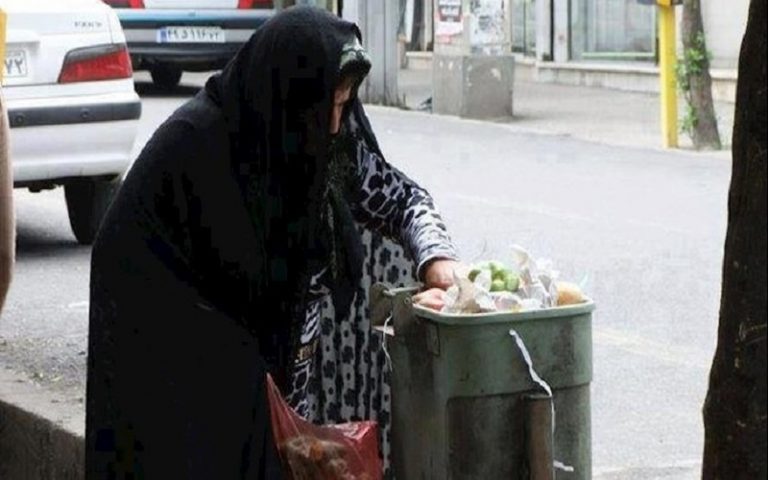
As a result, workers’ purchasing power has sharply declined. Wages, even when nominally increased, cannot keep pace with inflation. The gap between income and living costs has reached a point where a large portion of the workforce is effectively below the poverty line.

War Economy and the Intensification of Stagflation

Unemployment and inflation in this war have ultimately manifested in the classic form of stagflation. On one hand, declining production and investment have pushed economic growth into negative territory, while on the other, high inflation continues. This combination is one of the most destructive economic conditions.

Within this framework, the behavior of economic actors has also changed. Capital, instead of moving toward production, flows into safe assets or unproductive activities. Even producers allocate their resources to purchasing raw materials or hoarding them to profit from rising prices or avoid losses.

This behavioral shift indicates a loss of confidence in the economic future. When economic actors focus on preserving asset value instead of expanding production, it means the economic structure has lost its functionality.

At the same time, rising production costs, stemming from wages, energy, and raw materials—have placed additional pressure on businesses. Many units are unable to continue operating and are forced to shut down or reduce capacity. This trend creates a new wave of unemployment and intensifies the crisis.

Ultimately, unemployment and inflation in wartime present a clear picture of economic deadlock. An economy in which war, structural corruption, and political inefficiency operate simultaneously cannot create a sustainable path for growth and employment.

This situation is not a temporary crisis, but the logical outcome of a structure formed on the basis of concentrated power, lack of transparency, and economic repression. As long as this structure remains in place, any external shock, including war, can push the economy closer to collapse.

Transfer of a death-row political prisoner to solitary confinement in Urmia, Iran

Punitive transfer of death-row political prisoner Mehrab Abdollahzadeh to solitary confinement in Urmia Prison

Mehrab Abdollahzadeh, a political prisoner sentenced to death, was transferred to solitary confinement by order of the head of Urmia Central Prison. According to the Kurdistan Human Rights Network, on Tuesday, April 28, 2026, after about three months of suspension, political and ideological prisoners in Urmia Central Prison were able to have in-person visits with their families. During this meeting, one of the soldiers behaved insultingly toward the prisoners’ families during inspection, which drew protest from Abdollahzadeh.

According to the same source, after the meeting ended and while returning to his ward, this political prisoner was punitively transferred in handcuffs and shackles to solitary confinement by order of Peyman Khanzadeh, the head of Urmia Central Prison.

Iran’s Regime Ramps Up Execution of Baluch Political Prisoners to Control Society

Mehrab Abdollahzadeh, born on March 15, 1998, in Urmia, was arrested on October 22, 2022, during the nationwide 2022 protest uprising at his workplace by agents of the Intelligence Organization of the Islamic Revolutionary Guard Corps (IRGC) and transferred to the detention facility of that body.

According to the report, he was subjected to physical and psychological pressure and torture for 38 days in the IRGC intelligence detention center to force him to confess to participating in the protests and the killing of a Basij member (a paramilitary force affiliated with the IRGC). However, informed sources say that in the video footage of the murder scene held by security institutions, there is no evidence of his presence, and he has consistently denied these accusations. According to an informed source, he rejected the charges at all stages of interrogation and in court and had requested an examination of his mobile phone’s location to prove he was not present at the scene.

Additionally, his family had no information about his whereabouts during the first 38 days of his detention, and he was denied access to a lawyer and family visits during this period.

After the interrogations ended, his case was referred to Branch 7 of the Public and Revolutionary Prosecutor’s Office in Urmia and then, with an indictment issued, was sent to Branch one of the Islamic Revolutionary Court of Urmia. After three court sessions, this court issued a death sentence on September 19, 2024, which was officially communicated to him in prison on October 21 of the same year.

Following the protest by his lawyers, the case was sent to the Supreme Court and referred to Branch nine. On December 18, 2025, the enforcement judge, while notifying him of the confirmation of the death sentence, asked him to sign a request for pardon and clemency.

Ultimately, in mid-February 2026, the request for retrial of this political prisoner was rejected by the Supreme Court.

Restrictions, Pressure, and Detention of Families of Opponents of Iran’s Regime

According to a report by Sky News on April 26, Iran’s regime has intensified its repressive policies against opponents.

In recent weeks, the policies of Iran’s regime toward opposition figures living abroad have seen a noticeable escalation; policies that have not been limited to direct political prosecution but have expanded to include legal, administrative, and financial pressure tools, the imposition of restrictions that prevent them from managing their assets, and also targeting their relatives inside the country. Opponents and observers have described these actions as transnational repression.

Since the start of the war, legal and media reports have documented numerous cases in which repressive authorities of Iran’s regime have detained or summoned family members of opposition figures and activists living abroad; an action viewed as a direct pressure tool to silence dissenting voices.

Iran’s Regime Ramps Up Execution of Baluch Political Prisoners to Control Society

At the same time, officials have moved to tighten restrictions on consular services provided to Iranians abroad, particularly through the electronic services system affiliated with the foreign ministry of Iran’s regime. Mohammad Kazem Movahedi, the regime’s Prosecutor General, announced that the foreign ministry had received an official assignment based on a judicial order indicating the suspension of the ability to prepare and register powers of attorney related to property transfers through this system.

This system is one of the main tools relied upon by Iranians living abroad to carry out their official affairs, including issuing and renewing passports, preparing legal powers of attorney, and following up on various administrative and consular matters.

Confiscation of assets of media figures and opponents

A few days ago, Tehran, by order of the judiciary of Iran’s regime, decided to confiscate registered assets and private property of more than 400 dissidents, claiming that this action was carried out within the framework of what it calls the law on intensifying punishment for espionage and cooperation with hostile countries against national security and interests.

Fars News Agency, affiliated with the Islamic Revolutionary Guard Corps (IRGC), published a list it said was issued by the judiciary, including names of individuals whose financial assets have been frozen or confiscated based on accusations related to supporting the enemy. This list includes a number of journalists and media figures living abroad, along with other public figures.

Some families of Iranian opposition figures in exile say that Iran’s regime detains their relatives and threatens to confiscate their property, as part of a new repression campaign targeting dissenting voices after the start of the war, according to what several of them told the Associated Press.

With the escalation of the war, Iranian officials increased their threats against anyone communicating with foreign media or activists, before this pressure expanded to intimidate activists living in exile as well.

Iranian Political Prisoner Naser Bakrzadeh’s at Risk of Execution

The British newspaper The Guardian reported, citing journalists working at media outlets critical of Tehran, that they are facing increasing intimidation and threats that may escalate to physical violence, amid accusations against Iran’s regime of attempting to silence Persian-language media.

Transnational repression as part of Iran’s regime policies

Nezam Mir Mohammadi, a legal writer and expert on Iran affairs, said that the increase in Iran’s regime’s pursuit of opponents abroad is no longer a series of isolated security incidents, but rather a consistent official policy driven by a transnational repression mindset, based on threats, espionage, incitement to violence, and attempts at assassination and abduction.

Mohammadi, in remarks to the Sky News Arabic website, explained that a regime unable to break the will of its people الداخل tries to shift the battlefield abroad through organized terrorism targeting voices that expose its crimes and offer a democratic alternative. He added that this pursuit is not a defense of national security, but a defense of a power built on repression and exporting crises.

He believes that the measures taken against opposition figures abroad cover a wide range, including espionage operations and intelligence gathering on activists and diaspora communities, attempts to infiltrate ranks through agents and cover identities, direct and indirect threats, pressure on families inside Iran as a tool of coercion, and smear and incitement campaigns that pave the way for physical attacks or assassination attempts.

He emphasized that the most dangerous aspect of the issue is the use of some diplomatic missions of Iran’s regime as operational centers; a matter that makes the protection of opposition figures the responsibility of host countries, rather than a political dispute that can be overlooked.

Iran’s Regime Ramps Up Execution of Baluch Political Prisoners to Control Society

Documented reports from recent years show that the execution of Baluch political prisoners in Iran has become a consistent and recurring pattern. This process begins at the stage of arrest and continues through to the implementation of the sentence. At all stages, there are signs of widespread human rights violations. Data published by the Baluchestan Human Rights Documentation Network presents a consistent picture of this process over the period from 2013 to 2026.

Iran’s ‘No To Execution Tuesdays’ Campaign Marks 118th Week

In these cases, executions have mainly been carried out based on security-related charges. Accusations such as “armed rebellion” (baghi), “enmity against God” (moharebeh), and “corruption on earth” (efsad-e fel-arz) have been raised in most instances. These charges are raised in a closed security environment. Many defendants have not had the opportunity to effectively defend themselves. Names such as Amer Ramesh, Abdolbaset Dehani, and Javid Dehghan Khaled appear among these cases. The handling of these cases has lacked necessary transparency.

Lack of fair trials in the execution of Baluch political prisoners

Review of these cases shows that fair trial standards have not been observed in many instances. In numerous cases, defendants were denied access to legal counsel. Abdolbaset Dahani and Rostam Zeinoddini are among these individuals. Some prisoners were held in a state of uncertainty for years. Hamid Mirbaluchzehi and Meysam Chandani are examples of this situation. In some cases, initial sentences were later changed to execution. These changes were carried out without transparency.

Reports also indicate the use of torture to extract confessions. This issue has been raised in cases such as those of Amer Ramesh and Abdolbaset Dahani. Forced confessions have been broadcast in official media outlets. Three prisoners executed in 2018 also faced such conditions. Mohammad Shahbakhsh, Esmail Shahbakhsh, and Hayatollah Nouti-Zehi are among them. This pattern has been repeatedly observed in the execution of Baluch political prisoners.

Mass executions of Baluch prisoners

Mass executions also form another part of this pattern. In 2013, 16 Baluch prisoners were executed collectively. Similar cases have been reported in subsequent years. The execution of three prisoners in 2023 and another three in 2025 in Mashhad—a major city in northeastern Iran—are among these instances. These executions were often carried out within the framework of joint cases.

Alongside these cases, the rights of families have also been violated. In many instances, families were not informed of the timing of executions. Notification was made only after the execution, often via phone calls. Some families were denied a final visit. In certain cases, the bodies of those executed were returned with delays. These issues have been widely reported in cases involving the execution of Baluch political prisoners.

Reports also point to security pressure aimed at forcing cooperation. In some cases, defendants were offered deals to cooperate. If these offers were rejected, the cases moved toward execution. This issue has been raised in the case of Mohammadkarim Barkezaei Akson and others. Such a process calls into question the judicial nature of these cases.

Extensive use of security charges, lack of fair trials, and use of torture

Overall, examination of these cases shows that the execution of Baluch political prisoners follows a specific pattern. Extensive use of security charges, lack of fair trials, and the use of torture are key features of this pattern. Mass executions and violations of family rights have also been added to this process.

The execution of the sons of the Iranian people is not limited to Baluchestan, and the Iranian regime has launched a widespread wave of executing its opponents, which is expanding day by day. These executions are merely instrumental tools used to ensure the survival of the regime and to control society in order to prevent uprisings and rebellions by the Iranian people aimed at overthrowing the dictatorship.

Iran’s Regime Nearing Oil Export Deadlock

Bloomberg, citing the analytics firm Kpler, reported that the Iranian regime is facing a growing oil storage crisis, with remaining spare capacity to store crude oil expected to last only about 12 to 22 more days.

According to the report, a naval blockade by the United States against ports controlled by the Iranian regime has sharply reduced oil exports, and the loading of crude oil from these ports has dropped by about 70%.

Kpler states that crude oil exports by the Iranian regime have fallen from an average of about 1.85 million barrels per day in March to around 567,000 barrels per day. At the same time, tanker traffic through the Strait of Hormuz has nearly stopped, and the firm reported that it has not observed any tanker successfully bypassing the United States naval blockade around the area.

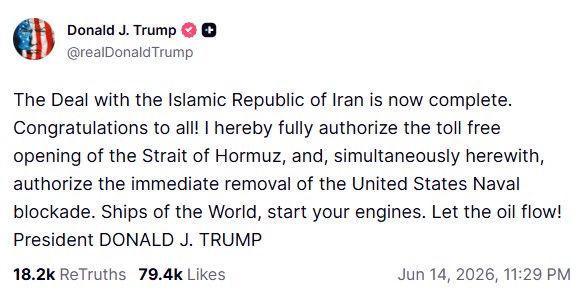
Strait Of Hormuz Declared Open Again; Trump: Naval Blockade Against Iran’s Regime Will Continue

Bloomberg wrote that if this trend continues, the Iranian regime may be forced by mid-May to cut its oil production by an additional 1.5 million barrels per day, even though, according to Goldman Sachs, it has already reduced its daily crude oil production by up to 2.5 million barrels per day.

However, the financial pressure of this crisis will not appear immediately. Kpler notes that oil shipments from the Iranian regime typically take about two months to reach Chinese ports, and buyers then have several additional months to settle payments. Therefore, despite the heavy strain on oil infrastructure, the full impact of this crisis on the regime’s revenues will likely become evident in three to four months.

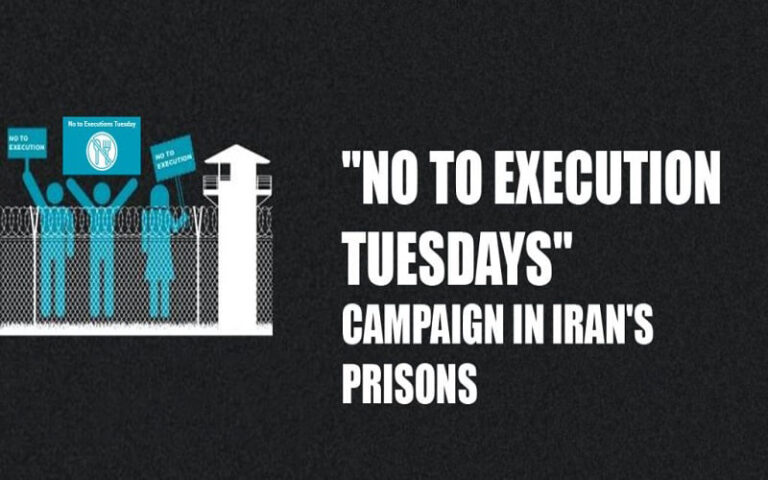
Iran’s ‘No To Execution Tuesdays’ Campaign Marks 118th Week

On Tuesday, April 28, the “No to Execution Tuesdays” campaign entered its 118th week. Prisoners participating in the campaign issued a statement condemning the wave of executions of political prisoners at the beginning of the year and also referring to the harassment and humiliation of political prisoners by security agents. They emphasized: “It is very important and necessary that in these turbulent and decisive days, freedom-loving people of Iran and all activists and advocates of ‘No to Execution’ do not remain silent in the face of the regime’s repression and instead be the voice of prisoners and those sentenced to death.”

The full text of the campaign’s statement follows:

Continuation of the “No to Execution Tuesdays” campaign in 56 different prisons in its 118th week

In its 118th week, the “No to Execution Tuesdays” campaign expresses sympathy with the families of prisoners executed recently and pays tribute to those who lost their lives in the path of freedom and equality.

Iranian Political Prisoner Naser Bakrzadeh’s at Risk of Execution

Over the past week, three political prisoners from January 2026 uprising—Amir Ali Mirjafari from Tehran, Erfan Kiani from Isfahan, and Amer Ramesh from Sistan and Baluchestan province—were executed following an unfair judicial process, and the bodies of two of them were not returned to their families. Undoubtedly, the policy of enforced disappearance pursued by the Iranian regime constitutes a crime against humanity.

The “No to Execution Tuesdays” campaign has recently learned that in various prisons, political prisoners and recent detainees are being openly subjected to beatings, torture, and humiliation. Torturers attempt to degrade prisoners by shaving their heads, using verbal abuse, and insulting them. This shameless and inhumane behavior becomes even worse when prisoners are taken to the gallows.

We are aware that orders from senior officials of the ruling religious dictatorship, based on a wartime posture, have given the judiciary greater freedom to violate the rights of detainees from the January protests and the recent conflict. This means ignoring all their legal rights and issuing heavy sentences without fair and just trials.

The illegitimate rule of the Iranian regime, out of fear of uprisings and public protests, has shown—through its control of city streets, creation of fear in society, and daily executions in prisons—that it considers the people, not any foreign country, as its main enemy. Therefore, it is very important and necessary that in these turbulent and decisive days, freedom-loving people of Iran and all activists and advocates of “No to Execution” do not remain silent in the face of repression and instead be the voice of prisoners and those sentenced to death. Amid internet shutdowns in Iran, the international community and human rights organizations must pay even greater attention to this issue (repression and executions), exert pressure on the Iranian regime by all possible means, and the United Nations fact-finding committee should take serious action to visit detention centers, prisoners, and prisons in Iran.

While condemning these anti-people and authoritarian policies, participants in the “No to Execution Tuesdays” campaign are on hunger strike in 56 prisons across the country on Tuesday, April 28, during its 118th week.