Home Blog Page 136

U.S. Charges Two Individuals Over Iran-Linked Drone Attack That Killed American Soldiers in Jordan

0

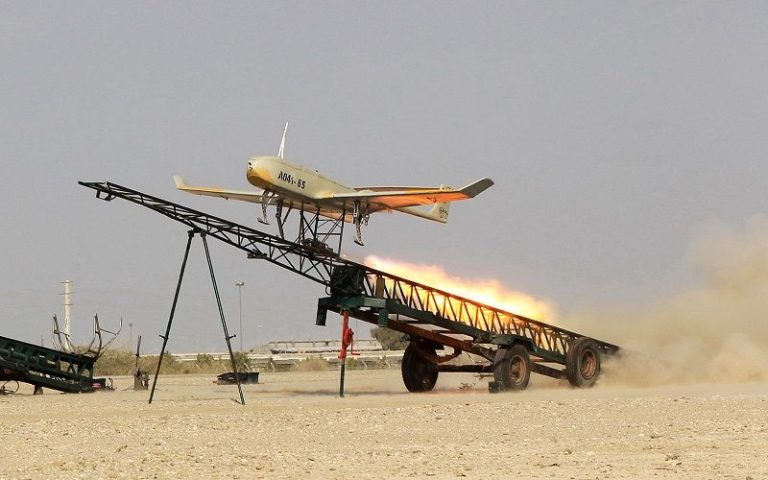
On Monday, December 16, U.S. prosecutors announced charges against two individuals in connection with a drone attack carried out by militias affiliated with the Iranian regime in Jordan, near the Syrian border, which took place in January.

The attack resulted in the deaths of three U.S. service members and injured more than 47 others.

Federal prosecutors in Boston stated that they would announce charges later on Monday at a press conference against an Iranian citizen and a dual Iranian-American national. The charges include violations of export laws and materially supporting the Iranian government in connection with the drone attack.

According to Reuters, one of the individuals, Mahdi Sadeghi, was arrested in Massachusetts and is scheduled to appear in court soon. The other individual, Mohammad Abedini, was arrested outside the United States.

On Monday evening, U.S. officials announced in a press conference that by examining the drone used in the attack on the base hosting U.S. forces in Jordan, they were able to trace how its parts ended up in the Iranian drone used in the January attack.

They stated that Mohammad Abedini, who owns a company in Iran with ties to the government, the Islamic Revolutionary Guard Corps (IRGC), and the armed forces, obtained an American-made component through Mahdi Sadeghi, who worked at the company that manufactured the part. The part was procured via a front company in Europe.

Abedini was arrested in Italy through efforts by the FBI, and U.S. officials are working to extradite him to the United States for trial.

These charges relate to the first deadly attack against U.S. forces since the start of the Israel-Hamas war in October 2023.

regime responsible for the drone attack on U.S. forces, an attack that sent shockwaves throughout the Middle East.

The coalition known as the “Islamic Resistance” in Iraq, consisting of extremist militias affiliated with the Iranian regime, claimed responsibility for attacks on three bases, including one near the Jordan-Syria border.

Enormous Economic Losses for Iran’s Regime Following Assad’s Fall

The collapse of Bashar al-Assad’s regime, symbolized by his flight to Russia on December 8, sparked extensive discussions about the political and geopolitical ramifications of this event, including the diminished credibility and influence of Iran’s regime in the region. However, the economic consequences for Iran’s regime were no less severe than the political ones.

The Congressional Research Service and the Stockholm International Peace Research Institute (SIPRI) report that Iran’s regime spent between $30 billion and $35 billion from the start of Syria’s civil war in 2011 until 2023.

The Center for Strategic and International Studies (CSIS) and the Middle East Institute report that Iran’s regime maintained seven airbases, 15 missile depots, 22 forward command centers, and 85 kilometers of underground tunnels in Syria.

These infrastructures and military bases, following the collapse of Assad’s regime, imposed a heavy burden on an economy already struggling to meet the basic needs of its citizens.

According to the Eurasia Foundation, Iran’s regime spent around $2 billion between 2012 and 2022 on renovating and maintaining Shia religious sites in Syria. This was part of a strategy aimed at expanding soft power and ideological influence in the region, with shrines serving as symbols of this soft power.

With Iran’s funding and initiative, the Zaynab Palace Hotel was reopened in 2016 near the shrine of Sayyida Zaynab. The Middle East Institute estimated the cost of constructing this hotel, which includes 150 rooms, prayer spaces, and hospitality services, at approximately $35 million.

For a few years, Iran’s regime earned income from pilgrimage tourism to these shrines while also promoting its fundamentalist ideology. However, with Assad’s regime’s fall, Iran’s investments in Syria’s religious tourism faced significant risks.

IRGC-affiliated companies invested billions of dollars in key Syrian sectors such as energy and urban reconstruction, thereby expanding their economic and political influence.

Housing Foundation of Islamic Revolution and Investments in Aleppo’s Reconstruction

The Housing Foundation of the Islamic Revolution (Bonyad-e Maskan) made substantial investments aimed at reconstructing housing in Aleppo, Syria.

The Syrian Air Force, with Russian support, extensively bombed and destroyed Aleppo between 2012 and 2016 to recapture it from opposition forces. According to Syria’s Central Bank, Bonyad-e Maskan spent up to $1.5 billion from 2016 to 2021 to rebuild residential neighborhoods in Aleppo.

In another project, Khatam-al Anbiya Construction Headquarters, the largest engineering firm affiliated with the IRGC, participated in reconstructing several strategic roads, such as the Homs-Damascus highway, at a cost of $500 million. Another IRGC-linked company, Iran’s Sadra Marine Industrial Company, invested over $1.2 billion between 2015 and 2020 in renovating the Port of Tartus.

Energy Projects and Strategic Infrastructure

Another major investment was the Iran-Iraq-Syria gas corridor, launched in 2013 at an estimated cost of $8 billion. According to the Middle East Energy Association, the project aimed to transport Iran’s energy resources to the Mediterranean Sea. However, it was halted in 2022.

The goal of these investments was not only construction but also strengthening ties with Syria and expanding Iran’s influence in this key region. However, following the fall of Assad’s regime and the potential alignment of Syria’s new rulers with rival countries, the sustainability of these investments is now at risk.

According to the Tehran Trade Statistics Office, trade between Iran and Syria reached its historical peak of $475 million in 2010.

Syria was a critical market for Iranian goods such as textiles, electrical equipment, and food products, particularly because it allowed Iranian goods to bypass international sanctions and enter other regional markets. Syrian companies acted as intermediaries, exporting Iranian products to Lebanon and even Eastern European countries. This complex operation generated revenue for Iran’s regime.

The Tehran Center for Economic and Trade Research reports that in 2012, nearly 15% of Iran’s manufactured exports to the Middle East were transited through Syria.

The Tehran Trade Statistics Office estimates that Iranian companies could face losses of up to $300 million due to changes in trade policies under Syria’s new government.

The closure of the Syrian market is not just a loss of an export destination; it also disrupts supply chains for goods essential to Iran’s economy. Middle East Trade Monitor speculates that the management of the Port of Latakia, which served as a transit hub for Iranian goods, might be handed over to Turkish or Saudi companies.

Iran’s Central Bank reports that Iranian banks and financial institutions played a central role in financing projects in Syria, extending over $5 billion in consortium loans.

The Central Bank estimates that losses from unpaid loans could amount to 3% of Iran’s GDP.

The collapse of the Assad regime not only cost Iran its sole geostrategic ally in the region but also inflicted enormous economic losses and eliminated a key avenue for generating revenue by circumventing sanctions.


Campaign of “No to Executions Tuesdays”: 40 Executions Last Week in Iranian Prisons

The “No to Executions Tuesdays” campaign, in a statement dated December 17, announced that during the 47th week of hunger strikes by prisoners in 27 prisons across the country, at least 40 people had been executed in Iran over the past few days.

The imprisoned members of the campaign also expressed concern about the possible approval of death sentences for two political prisoners named Mohammad Amin Mahdavi Shayesteh and Saman Mohammadi Khiyareh.

The statement, citing reports, adds that at least 40 people were executed in Iran last week, some of whom were hanged on drug-related charges. This comes while, following the collapse of Assad’s government in Syria, a factory linked to the Iranian regime was discovered, storing and distributing tens of tons of drugs to various parts of the world.

Activists in this campaign stress that executions for the possession of a few grams of drugs are being carried out, while large-scale drug trafficking continues with the involvement of regime-affiliated operatives.

The statement noted that Sistan and Baluchestan province, which has always faced severe pressure and deprivation, was among the regions with the highest number of executions this week, with at least 10 residents of the province executed.

The situation of political prisoners in Ghezel Hesar prison has also raised concerns. Mohammad Amin Mahdavi Shayesteh, who was sentenced to death on charges of “espionage” in a vague trial, has been transferred to this prison, and there is a possibility that his sentence will be approved and carried out.

On the other hand, Saman Mohammadi Khiyareh, another political prisoner who has been imprisoned for 15 years, has been transferred to solitary confinement, raising fears about the execution of his sentence. Security forces told Saman’s parents that they could visit their son for the last time at Ghezel Hesar prison on Tuesday. Saman was also informed that he would be allowed one final phone call before his execution.

Saman was about 20 years old when he was arrested and is now 35. He has a son who was born just days after his arrest; now his son is the same age as the years his father has spent in prison.

The statement also reported that in continuation of protests against the death penalty, prisoners in Tabas prison in South Khorasan and Khurin prison in Varamin announced through letters that they would join the “No to Executions Tuesdays” campaign and hold hunger strikes every Tuesday. According to the statement’s authors, with this move, the number of participating prisons in the campaign has increased to 27.

The “No to Executions Tuesdays” campaign began last year with the goal of abolishing executions and ending state violence, initiated by several political prisoners and gradually expanded with the support of other prisoners.


Domestic Violence Against Women in Iran

Official statistics in Iran indicate that an average of over 74,000 women annually visit forensic medical centers for examinations related to spousal abuse. In other words, one in every 300 married women in Iran seeks assistance from forensic services to report domestic violence. However, not all cases are reported. Estimates suggest that the actual instances of domestic violence against women in Iran are approximately 100 times higher than this figure.

The latest statistics from the World Bank’s gender data section reveal that nearly one-third of women in Iran experience violence from their intimate partners. This rate is the third highest in the region after Afghanistan and Turkey.

Estimates from UN Women, the United Nations agency for gender equality, show that 133 women are victims of femicide every day worldwide, or at least five women per hour.

In Iran, official bodies do not publish accurate statistics on femicide. However, Iranian newspapers occasionally report based on available news. For example, in the summer, the newspaper Shargh analyzed news reports from the crime sections of newspapers and websites, revealing that between June 2021 and June 2023, at least 165 femicides occurred in Iran. In two-thirds of these cases, the perpetrators were husbands, and in one-fifth, they were fathers or brothers.

Sexual abuse and violence

According to estimates by UN Women, one in three women worldwide experiences sexual violence, most often inflicted by their spouse or intimate partner. In international datasets, there are no specific statistics for Iran on this indicator. Sparse studies on sexual assault and harassment in Iran emphasize that such cases are rarely reported. However, Iran’s profile on the UN Women website cites a 2018 study where 18% of women aged 15 to 49 reported experiencing sexual violence at least once in the 12 months preceding the survey.

Forced marriage and childbearing

UN Women, the United Nations agency for gender equality, considers forced marriage and childbearing as forms of violence against women.

The Iranian Statistical Center has stopped publishing birth statistics by maternal age since March 2023. However, available data indicate that between 2016 and 2022, an average of 1,438 births per year in Iran were recorded where the mother was under the age of 15.

According to Iran’s Civil Code, marriage of girls under the age of 13 is permitted only with approval and discretion of a court. However, an analysis of the latest raw data from the regime’s Civil Registration Organization in 2020 reveals that 767 marriages involving girls under 13 years old were officially registered across Iran that year.

Using the international standard of 18 years as the benchmark for child marriage, more than one-fifth of registered marriages in Iran qualify as “child marriages,” according to the latest statistics. This means that out of approximately 557,000 registered marriages in 2020, in 118,000 cases, the bride was under the age of 18.

Increasing Poverty and High School Students Entering the Workforce in Iran

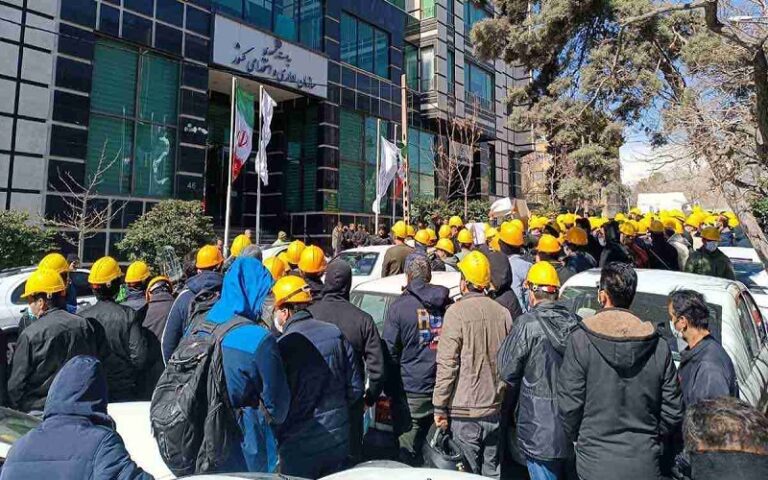
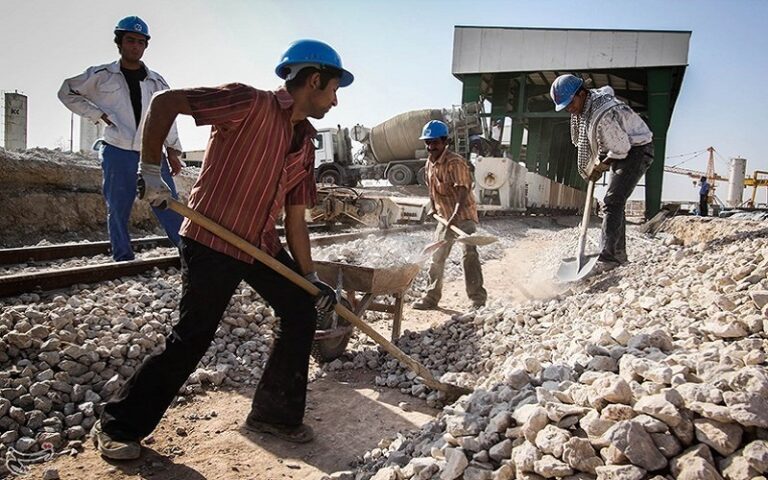
The state-run website Tejarat News published an article, which it removed shortly after without explanation, stating that escalating poverty in Iran has led a significant portion of high school students to join the labor market, often forcing them to drop out of school.

Tejarat News highlighted that “working students are another indicator of poverty in society,” adding that “many students cannot afford school supplies and educational materials.”

According to this report, another issue plaguing the education sector, particularly in public secondary schools, is the absence of students from their classes.

The report stressed that “most of these students are working.” It further explained that “they skip class hours to help cover their family’s living expenses.”

Fereshteh Mirzaee, an education expert, told the outlet, “This issue is not due to parents’ lack of interest but because living costs have risen so much that there is no room left in household budgets for education.”

Mirzaee attributed the neglect of educational equity and free schooling as the reason children’s education is being sacrificed to economic hardships and poverty.

Meanwhile, on December 13, Tasnim News Agency, affiliated with the IRGC, quoted the Secretary-General of the House of Cooperatives saying, “There is a significant correlation between poverty and school dropouts.”

According to Iranian state media reports, the number of school dropouts in Iran is around one million, with 15 to 17-year-olds representing the largest group.

Experts and analysts believe that the trend of dropping out of school ultimately leads to greater social and economic inequality, reinforcing the cycle of poverty.

Economists argue that a low-educated, low-skilled workforce is an obstacle to economic growth and national development. Social activists also warn about the prevailing conditions in the country, believing that school dropouts exacerbate social problems such as rising crime, addiction, and social disorder.

In this context, on September 22, the newspaper Shargh wrote: “Education has lost its economic function. Twenty or even ten years ago, education was the best means of advancement and moving between social classes, but today, higher education no longer enables social mobility.”

The newspaper emphasized: “Students consider dropping out and entering the workforce a win for themselves, while attending classes and studying is seen as a loss.”

Iran’s Weapons Route Obliterated, Hezbollah Leader Admits

0

Naim Qassem, the leader of Hezbollah, stated that the group has lost its primary supply route for weapons from the Iranian regime, which passed through Syria.

This is the first time the Hezbollah leader publicly acknowledged that the fall of Bashar al-Assad’s government in Syria has impacted the group’s ability to procure weapons following heavy Israeli attacks.

Under Assad’s rule, Syria was Iran’s most significant state ally in a regional coalition, which included political groups and militias like Hezbollah. It also served as the primary geographical link for transferring weapons and equipment from Iran to Lebanon.

Assad’s overthrow has jeopardized Syria’s relationship with the Iranian regime and raised questions about its future ties with Hezbollah, which fought alongside Assad against the rebels.

According to the Wall Street Journal, Qassem, in his first public statement after Assad’s fall, said, “Yes, Hezbollah has lost its military supply route through Syria at this stage, but this is just a minor issue within the broader resistance.”

He added, “This supply route may return to normal with the new government, and there are always other ways. The resistance is flexible and can adapt.”

Hezbollah, regarded as the most powerful militia backed by the Iranian regime, suffered significant losses after joining Hamas’s conflict with Israel, including the death of its former secretary-general, Hassan Nasrallah, in an Israeli targeted bombing.

These clashes intensified in the autumn and ended with a ceasefire agreement in late November. Israel targeted weapon smuggling infrastructure in Lebanon and Syria, including border crossings, smuggling convoys, and weapons production facilities, to disrupt Hezbollah’s supply chain.

Moreover, Assad’s fall threatened the Iranian regime’s influence in Syria, especially after Hezbollah forces and Iranian military personnel withdrew from Syria when their inability to sustain Assad’s power against rebel attacks became evident.

Schools in Many Provinces of Iran Closed Due to Cold Weather, Gas Shortages

0

With a drop in temperatures across various regions of Iran, officials in 15 provinces announced the closure of schools to “manage energy consumption.”

Schools in the provinces of West Azerbaijan, East Azerbaijan, Ardabil, Tehran, North Khorasan, Razavi Khorasan, South Khorasan, Zanjan, Semnan, Qazvin, Qom, Kermanshah, Golestan, and Mazandaran were declared closed and shifted to remote learning for Sunday, December 15.

In Khuzestan Province, schools were also closed due to air pollution and a red alert for dust storms.

Government offices and institutions in most of these provinces were also declared closed, with only Semnan and Golestan provinces starting operations with a two-hour delay.

Provincial authorities cited “the arrival of a precipitation system and a cold front in the country, along with the need to manage energy consumption” as the reasons for these closures.

A few days ago, Saeed Tavakoli, CEO of the National Iranian Gas Company, stated that gas reserves are at their lowest levels this year and warned that gas shortages would worsen in the coming days as temperatures drop further.

Meanwhile, Iranian regime President Massoud Pezeshkian urged people to “lower their home heating by at least two degrees” as winter approaches, so his government could conserve more fuel and distribute it more effectively.

Gas shortages have become a serious challenge in Iran in recent years, and it was recently announced that a mazut (heavy fuel oil) shortage has also compounded the problem.

A few days ago, Mohsen Zabihi, Deputy Coordinator for Distribution at Iran’s Power Generation and Distribution Company (TAVANIR), attributed power outages in various regions to “insufficient fuel deliveries to power plants.”

Widespread blackouts have returned to Iranian cities despite the Ministry of Energy announcing less than three weeks ago that “blackouts have ended” and the fuel crisis at power plants had been resolved.

Power outages have caused various issues, including water disruptions in residential buildings. A few days ago, the Ministry of Communications also announced that internet disruptions were due to power cuts.

On the other hand, many social media users have criticized mismanagement in the unscheduled and unannounced power cuts, as well as delays in announcing school closures.

Over the past ten days, air quality indices in Tehran have consistently been recorded as unhealthy or unhealthy for all.

Gas Shortage Crisis in Iran Despite Being the Holder of the World’s Second-Largest Natural Gas Reserves

Iran, with the world’s second-largest natural gas reserves, is recognized as one of the largest potential producers and exporters of this energy resource.


Eleven Baluch, Kurdish, and one female prisoner executed in Iran

Despite repeated warnings from human rights activists, on Sunday, December 15, the death sentences of 11 prisoners, including nine Baluch, one Kurdish, and one woman, were carried out in central prisons of Yazd and Zahedan. These individuals had previously been convicted of charges such as drug-related crimes and murder.

According to the Haalvsh website, five Baluch prisoners, one Kurdish prisoner, and one woman were executed in Yazd prison.

These individuals, many of whom had several children, had been arrested years ago on drug-related charges and sentenced to death.

Local sources reported that Reza Kharkouhi, one of the executed individuals, suffered physical disability due to medical negligence in prison and had been using a wheelchair in the final years of his life.

Four Baluch prisoners were also executed in Zahedan prison. They had been arrested on drug-related charges as well.

Sources indicated that the families of the prisoners had their last meetings with them the day before the executions.

According to the report, the Baluch community, which comprises only 5-6% of Iran’s population, consistently ranks highest in the country’s execution statistics.

Many of these individuals belong to the impoverished and marginalized segments of society, burdened with the responsibility of supporting large families due to economic hardships.

Most of these executions are carried out for drug-related charges, despite repeated calls from international organizations and human rights experts to reform punitive policies and abolish the death penalty for such crimes.

Notably, the Islamic Revolutionary Guard Corps (IRGC) of the Iranian regime is one of the largest drug cartels in the region. Recently, following the fall of Bashar al-Assad’s regime in Syria, warehouses and workshops producing Captagon pills were discovered in Syrian military compounds. The Iranian regime and the IRGC were major supporters of Bashar al-Assad.


Political Prisoner Transferred for Execution Amid Rising Executions in Iran

0

Mohammad Amin Mahdavi Shayesteh, a political prisoner sentenced to death, was recently transferred from Evin Prison to a solitary confinement cell in Qezel Hesar Prison in Karaj for the execution of his sentence.

The Iranian Human Rights Organization, on December 13, announced the transfer of Mahdavi Shayesteh to solitary confinement. They reported that he was tried by Branch 15 of the Tehran Revolutionary Court, presided over by Judge Abolqasem Salavati, and sentenced to death on charges of “insulting Islamic sanctities” and “collaborating with the enemy.”

This human rights organization emphasized that the case against this political prisoner is so lacking in evidence that a “single empty pistol magazine” and “a pepper spray” were used as proof of “collaborating with the enemy” to substantiate the charges.

In recent months, the issuance of death sentences for political prisoners in Iran has increased.

Since the beginning of the nationwide uprising against the Iranian regime in September 2022, the government’s suppression of civil, political, and protest activists has intensified and continues to this day.

The Iranian Human Rights Organization stated in its report that Mahdavi Shayesteh, after his arrest in the fall of 2023, confessed to collaborating with Israel under pressure and torture by Iranian regime security forces during interrogations.

According to this report, these confessions formed the basis for many charges against him, including “insulting Islamic sanctities,” in his indictment.

The human rights organization stressed that the “charge of collaborating with Israel was used to issue a hasty death sentence” based on confessions obtained under torture.

The Iranian Human Rights Organization described the regime’s determination to execute Mahdavi Shayesteh as “a political decision related to recent tensions with Israel” and called on the international community to take timely action to prevent his execution.

The Iranian regime is experiencing the greatest crises in its history and resorts to intimidating its populace by executing defenseless prisoners to prevent public protests and cover up its regional failures. The global community must strive to prevent the execution of prisoners in Iran.

In recent weeks, the issuance of death sentences for political prisoners and the increased execution rate in Iran have sparked widespread protests both domestically and internationally. Over the past two months, the Iranian regime has executed more than 300 individuals.

Also Saman Mohammadi Khiyareh, a Kurdish political prisoner from Sanandaj, who had previously been sentenced to death by the Tehran Revolutionary Court on charges of “enmity against God” (moharebeh) through “membership in opposition groups,” has been transferred to solitary confinement in Ghezel Hesar Prison in Karaj for the implementation of his death sentence. His family has been summoned for a final visit.


Cyberattacks by the Iranian Regime on Critical Infrastructure in the U.S. and Israel

0

Reports indicate that cyber groups affiliated with the Iranian regime have used the IOCONTROL malware to attack critical water and fuel systems in the U.S. and Israel.

This malware, designed to infiltrate internet-connected devices, can control systems such as fuel pumps, routers, and security cameras.

The Internet of Things (IoT) encompasses devices connected to the internet that send and receive data, such as cameras, sensors, and household appliances.

This technology is widely used across industries but can cause widespread disruptions in essential services if infiltrated by malware.

According to a report by the cybersecurity firm Claroty, this malware was discovered in a fuel management system targeted by a group linked to the IRGC. The attackers managed to disrupt fuel services and steal customers’ credit card information.

These attacks are part of the Iranian regime’s broader cyber activities targeting critical infrastructure in various countries over the past years.

Such activities include the 2012 cyberattack on Saudi Arabia’s Aramco oil company and attacks on water and power systems in the Middle East and Europe aimed at disrupting public services.

On December 2, Israel’s domestic intelligence agency, Shin Bet, announced it had identified more than 200 Iranian regime phishing cyberattacks aimed at obtaining personal information from senior Israeli officials.

According to Shin Bet, senior security, political, academic, and media figures in Israel were among the victims of these cyberattacks.

Shin Bet revealed that the hackers crafted personalized messages to avoid arousing suspicion among their targets. In one instance, a hacker posed as a cabinet minister and told the victim they were arranging a meeting between them and the Israeli prime minister.

Shin Bet stated that it had identified the victims of this cyber campaign and notified them accordingly.