Home Blog Page 209

French Parliamentarians Champion Iranian People’s Quest for Democracy

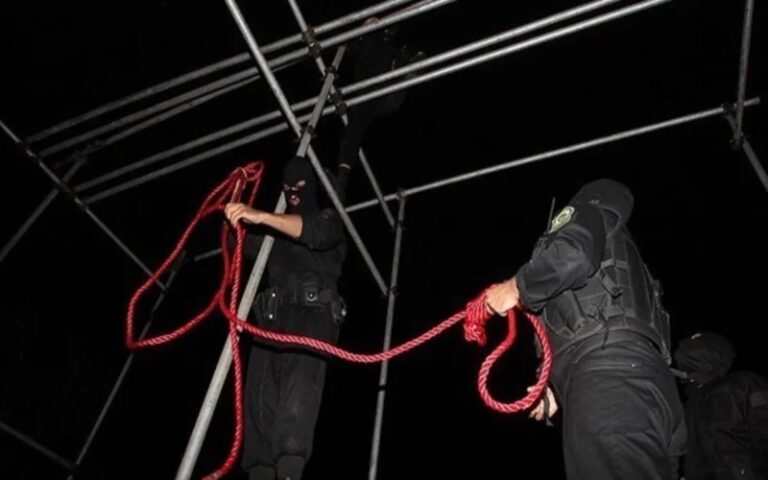
During a conference held on Wednesday, October 11, at the French National Assembly, participants including French parliamentarians, members, and supporters of the Iranian Resistance, alongside human rights activists and politicians, convened to address and engage in discussions concerning the severe human rights conditions prevailing in Iran. The occasion coincided with the World Day Against Death Penalty, emphasizing the urgent need for attention and action.

The President-elect of the National Council of Resistance of Iran Mrs. Maryam Rajavi stated in her speech:

“The world must stand against the mullahs’ warmongering. Instrumentalizing the Palestinian issue is a well-known tactic of this deceitful regime. Today, Khamenei and Raisi want to transform the Iranian people‘s uprising and struggle against religious fascism in Iran into a Muslim-Jewish war.

“Khamenei has openly stated that if the regime does not engage in conflicts in Gaza, Lebanon, Syria, Iraq, and Yemen, it will have to confront the angry people and rebellious youth in Kermanshah, Hamedan, Isfahan, and Tehran.

“The massacre of innocent civilians fuels religious fascism in Iran and serves as a shield and cover to suppress the uprising and avoid its downfall. To achieve peace and freedom, one should target the head of the snake (leadership) in Tehran.

“The time has come to revise European politics.”

André Chassaigne, head of the Communist bloc in the French Parliament, highlighted the MEK Resistance Units’ 414+ operations in Tehran against the regime’s repression during the anniversary of the nationwide uprising. He emphasized their role as the sole unified force opposing the regime and noted that the death penalty in Iran serves as a political tool for widespread suppression.

Ms. Marietje Schaake, a member of the National Assembly from the Socialist Party, stressed the need for France to consistently address the issue of executions in the Parliament and the Senate. She argued that this struggle is ongoing and must be highlighted to showcase opposition to such crimes occurring worldwide.

Émile Blessig, a former senior MP and co-founder of the parliamentary Committee for Democratic Iran, emphasized the crucial role of the NCRI, in the quest for a free and democratic Iran with a separation of religion and state. He stressed that the world cannot ignore the rising number of executions in Iran, and the perpetrators, including the IRGC, will face prosecution.

“By supporting the Iranian people’s struggle, we are also fighting for peace in the world”, Mr. Blessing concluded.

MP Philippe Gosselin, the deputy head of the parliamentary Committee for Democratic Iran, expressed that he has roots with General de Gaulle, and on this international day against executions, like him, “I want to tell you that the flame of resistance that you have lit should not be extinguished.”

“We are all working together to ensure it does not go out, and we stand by you to achieve victory for freedom as soon as possible, victory for Iran and its people against the regime,” Mr. Gosselin added.

MP Cécile Rilhac, from the majority party (Renaissance), expressed pride in supporting the Iranian people’s struggle for a democratic republic. The initiative received widespread support from representatives across political movements. Despite facing opposition from those advocating appeasement with the mullahs.

Mrs. Dominique Attias, head of the European Lawyers’ Foundation, highlighted Ebrahim Raisi’s involvement in the massacre of 30,000 prisoners. Mrs. Attias mentioned that Mrs. Rajavi had been calling for the abolition of executions since 2006.  She also mentioned that with its lies, the regime is attempting to discredit the resistance that Mrs. Rajavi represents.

Professor Aude de Thuin, former president of the Supreme Education Union,  emphasized that the fight in Iran is about fundamental human rights, not just the hijab. Professor de Thuin noted the ongoing revolution of Iranian women, regardless of the hijab. She called on the United Nations to investigate the large number of arrests and disappearances, urging France to support the UN’s investigative mission.

Jean-François Legaret, former mayor of Paris’s first district, noted the resilience of the MEK despite the dreadful and brutal repression. He commended the organization and its efforts.

Jacques Bouthier, a unionist in the educational and university sector, stressed that the struggle for a democratic Iran is the cornerstone of the future of humanity and freedom in all countries.

Tahar Boumedra, the director of the Committee for Justice for the victims of the 1988 massacre (JVMI) and former representative of the United Nations Secretary-General in Iraq for Ashraf, highlighted the need for the Iranian regime’s president Ebrahim Raisi to be prosecuted and tried for his direct involvement in the extrajudicial executions of thousands of political prisoners. He also mentioned the rise in executions in Iran despite global progress in abolishing the death penalty.


10,000 Iranian Healthcare Professionals Migrate Every Year

Evaz Heydarpour, a physician and former member of the Iranian regime’s Majlis (parliament), stated that every day we hear about “a professor or associate professor of medical schools” migrating. He told the regime’s “Khabar Online” website: “Every year, 10,000 individuals from the Iranian medical workforce (physicians, nurses, midwives) migrate.”

He declared that the “best geriatric specialists” are leaving the country due to the wave of migrating doctors. Heydarpour added, “If I were the Minister of Health and witnessed this number of doctors migrating every day, I would resign.”

An advisor to the Minister of Health and Medical Education of the Iranian regime, citing the “Youth, Population, and Family Support Law,” announced that the country’s healthcare system is facing a shortage of 20,000 midwives.

Shahla Khosravi, an advisor to the Minister of Health and Medical Education of the Iranian regime, stated on September 10 to the semiofficial ISNA news agency that the treatment sector requires “12,000 midwives,” and the health sector also needs “8,000 midwives.”

Reza Laripour, the spokesperson for the regime’s Medical Council, had previously stated on September 3 that the “migration of the medical community” had doubled compared to the years before the coronavirus pandemic, and now Iran sends doctors to five continents.

The increase in the migration trend of Iranian healthcare professionals is due to dissatisfaction with the current situation and the disorder in the country’s affairs. During recent years, they have faced intensified confrontation by security and military institutions due to their declarations of opposition, expression of protest, or treatment of injured protesters. Some have also been killed by the Iranian regime’s repressive forces.

Professional and economic pressures on nurses in Iran continue, and the latest report from the semiofficial ILNA news agency highlights the issue of low rates of “mandatory overtime.” According to the report, nurses are required to work 130 hours of overtime for a payment of 19 million rials (approximately $37.25).

The news agency quotes members of the “Nurse House” who state that “nurses work overtime every month according to their duty hours, but the amount they receive is very insignificant.”

Based on an “overtime work deposit” text message, a nurse mentioned in the ILNA report that after several months of delay, the February overtime payment was 19 million rials for 130 hours.

The situation of nurses’ rights and wages has been one of the challenging issues since the beginning of the year. On April 16, the state-run Etemad newspaper quoted a nurse who said that for every 197 duty hours and 155 overtime hours in a month, they received approximately 18 million rials (approximately $35.29) as the nursing service fee.

In March, the continuation of discriminatory and “illegal” payments to Iranian nurses led to protests. Nurses in various provinces held protest gatherings.

In this regard, the Free Workers’ Union of Iran reported on April 17 that nurses in five provinces gathered in protest against the “government’s violation of nursing fees” and chanted slogans calling for the resignation of the “incompetent minister.”

The dire conditions for nurses and the failure to meet their minimum demands ultimately led to the President of the Iranian Nursing Organization mentioning on September 18 that the necessary “attraction and retention” conditions for nurses in the country were not being met and that “five to six Iranian nurses” are migrating daily.

Mohammad Mirzabeygi, speaking about the migration of nurses to the ILNA news agency, stated that between “100 to 150 nurses” migrate abroad monthly, which is a matter of concern for the country.

Iran: Government debt reaching three years’ worth of general budget

In its latest quarterly report on the economic situation in the Middle East and Central Asia, published on October 12, the International Monetary Fund (IMF) has predicted that Ebrahim Raisi’s government’s debt this year will reach 30.6 percent of the country’s gross domestic product.

Iran’s gross domestic product this year, according to the assessment of this international institution, will be approximately $366.4 billion. Therefore, the government’s debt exceeds $112 billion, which is equivalent to more than three years’ worth of the government’s general budget.

According to the IMF’s forecast, Ebrahim Raisi’s government’s debt will increase by approximately another $6 billion next year.

During the past two governments, extensive borrowing from the central bank and other financial institutions of the country was carried out to compensate for budget deficits. This has led to a surge in liquidity and, consequently, rampant inflation.

Since Ebrahim Raisi’s inauguration, he has claimed to halt government borrowing and has also claimed that the government’s general budget will not have a deficit this year.

However, the International Monetary Fund says that the Iranian government needs the price of oil in the global market to be above $307 in order to prevent a budget deficit. This figure is more than three times the current oil prices in the global market.

The international institution also states that liquidity in Iran had a growth rate of 31 percent in the past year but will experience a 47 percent surge this year. This indicates the acceleration of printing banknotes without backing by the regime’s Central Bank.

According to the statistics of the IMF, the inflation rate in Iran was close to 45.8 percent last year, but it will reach its peak at 47 percent this year. Liquidity is the most significant factor in the price growth of goods and services.

For years, the Iranian regime has been compensating for budget deficits by pressuring the central bank to print money without sufficient backing, leading to rampant inflation in the country.

The evaluation by the IMF indicates that Iran’s inflation rate this year will be the highest after Venezuela, Zimbabwe, Sudan, Argentina, Suriname, and Turkey. The IMF estimates that Iran’s accessible foreign exchange reserves this year will be around $21 billion, which is only $1.5 billion higher than the previous year. Iran’s average foreign exchange reserves from 2000 to 2019 were over $70 billion.

New statistics from the Central Bank of Iran reveal that the country’s liquidity reached its peak in July, with a 27.5 percent increase compared to the same month last year, amounting to 66,940 trillion rials (approximately $129.854 billion). The Iranian regime’s Central Bank mentioned the growth of liquidity on August 12 without specifying its volume. However, an examination of last year’s statistics from the bank shows that liquidity reached the threshold of 67,000 trillion rials (approximately $129.854 billion).

Liquidity is the most important factor in inflation. The World Bank recently published a report indicating that Iran has the highest inflation rate for food items after Venezuela, Lebanon, Zimbabwe, and Argentina.

The latest update from the World Bank on global food inflation shows that food inflation in Iran during May of this year was 78 percent.

Since Ebrahim Raisi took office, liquidity in the country has grown by over 70 percent, equivalent to 27,730 trillion rials (approximately $53.792 billion).

The IMF states that in order to prevent a budget deficit this year, the Iranian government would need global oil prices to be $351, which is more than four times the current oil prices in international markets.

For the next year, Iran would require global oil prices to be $375; otherwise, the debt of Ebrahim Raisi’s government would increase by over $9 billion in 2024, and liquidity in Iran would experience a jump of approximately 33 percent.

Iran’s Multi-faceted Crisis During the 44-Year Rule of the Mullahs’ Regime

0

The Mullahs’ regime’s four-decade rule has plunged Iranian society into a web of crises, some of which have reached catastrophic proportions. While it’s challenging to quantify the exact number of crises, experts in social economics within the regime have identified at least seven mega-crises. These encompass issues such as pensions, bank failures, insurance, water and environmental concerns, energy shortages, hyperinflation, and investment pitfalls. Occasionally, additional crises like government debts, the non-oil economy, and unemployment are added to the list, further accentuating the grim statistics.

What’s noteworthy in this context is the intricate interplay and mutual influence of these mega-crises on each other. For instance, inflation and the worsening poverty rate are intimately connected, with rising inflation pushing more families below the poverty line every day. The colossal bank bankruptcy crisis, akin to an iceberg of unknown depth and size, is directly linked to the government’s mounting debts. The government, often portrayed by the regime’s media as treating banks like inexhaustible piggy banks, is ironically the largest debtor within the Iranian banking system.

Moreover, the super-aging crisis is inextricably linked to the pension crisis, with both issues surging in parallel. The aging population is further exacerbating the retirement crisis.

Pension funds represent the sole source of financial security for hardworking individuals who have diligently saved over the years. However, almost all of Iran’s 18 pension funds find themselves in dire straits. Despite legal constraints against withdrawing funds except for retirees’ monthly payments, these funds have become susceptible to theft and embezzlement under the rule of Supreme Leader Ali Khamenei.

A glaring example is the grand embezzlement within the cultural reserve fund, initially reported as an 8 trillion rial corruption case, later revised to 15 trillion rials, and ultimately settled at 14 trillion rials. To understand the culprits behind this astronomical embezzlement, one needs to consider that this fund comprises four holdings in ‘petrochemical and energy, finance and investment, construction and services,’ encompassing over 30 companies in total.

When petrochemicals are mentioned, it’s impossible to overlook the close ties between the IRGC and petrochemical holdings, exemplifying the reach of this entity into every corner of the country’s economy, bolstered by Khamenei’s unwavering support.

Retirees have consistently taken to the streets in recent years to assert their rights. Their protests, borne out of frustration with the government’s indifference to their pleas and legal requests, symbolize an ongoing uprising among the Iranian people. Recognizing that they make no progress within the confines of the government’s bureaucracy, they have adopted the slogan ‘only on the street, we will get our rights’ and united their demands with those of other segments of Iranian society. In recent days, cities across the country have witnessed retiree gatherings.

The state-run daily Ham-mihan aptly states, “None of Iran’s major challenges, including the formidable pension fund crisis, can be resolved in isolation. These mega-challenges are so interconnected that expert methods alone cannot tackle them. They demand comprehensive political solutions. Without such solutions, these crises will only deepen and broaden, rendering conventional remedies increasingly limited and ineffective.”

Therefore, the mega-crisis surrounding retirees and their depleted funds, a consequence of mullah-led embezzlement, finds no resolution within the corrupt structure. Not long ago, a social insurance manager suggested a disturbing solution: “We may have to sell Qeshm and Kish [islands] to pay retirees’ salaries.”

16-year-old Armita Geravand in critical conditions after police assault

An official news agency affiliated with the Iranian regime, in a report that was later deleted, announced that Armita Geravand‘s “vital signs” have “changed and deteriorated to some extent” in the past few days.

On October 1st, the 16-year-old schoolgirl was transferred outside a Tehran subway car while unconscious, moments after entering the subway with her friends. A video released by the Tehran Subway company shows that shortly after Armita Geravand entered the subway car, she was transferred outside by several individuals while she was unconscious. However, news circulating on social media suggests that security agents pushed her because she was not wearing a hijab, resulting in her head hitting a metal bar and becoming unconscious. After the incident, she was transferred to Tehran’s Fajr Hospital, and no one is allowed to approach her.

The regime’s Borna news agency, affiliated with the Ministry of Sports and Youth, announced on October 11 in a brief report based on its “journalist’s investigations” and despite “the continuous efforts of the medical staff at Fajr Hospital” that Armita Geravand’s “relatively stable vital signs have changed and deteriorated to some extent in the past few days.”

Borna later removed this news from its various platforms after its publication. The news agency also stated that “the medical team’s efforts to improve” the condition of this 16-year-old student “are still ongoing.”

Despite the removal of this report, some domestic media outlets in Iran, including regime’s Khabar Online news website, have published this report, quoting the Borna news agency.

In the latest reactions of the regime’s officials regarding Armita’s incident in the Tehran subway, Ahmad Vahidi, the regime’s Minister of Interior, said: “This issue is completely clear and obvious. It was an accident that could happen every day anywhere in the country. The enemies of the country do not want the atmosphere of our country to be calm. They tried to create chaos.”

Armita Geravand, a 16-year-old student who was going to school with two of her friends on October 1, collided with an iron pole as a result of being pushed by a Morality Police officer at the “Shohada” metro station and fell into a state of coma. She has been hospitalized in Fajr Hospital, affiliated with the Army Medical Sciences University, under “security” conditions for the past 11 days.

According to reports, Armita Geravand’s friends and family have been threatened not to speak to any media unless authorized by the authorities.

The area surrounding Fajr Hospital is under “strict security,” and plainclothes forces are stationed there.

Michael McCaul, the chairman of the Foreign Affairs Committee of the U.S. House of Representatives, expressed concern about the attack on Armita Geravand and, while expressing disgust, considered it similar to an attack that led to the killing of 22-year-old Mahsa Amini a year ago, which led to nationwide protests.

The regime’s morality police arrested her on September 13 for allegedly improperly wearing a hijab, the mandatory head covering imposed upon Iran’s women. Two hours after her arrest, she was taken to a hospital where, three days later, she succumbed to skull injuries that had been sustained during her detention.

In addition, Amnesty International also criticized the “cover-up” by the Iranian regime and called for an independent international investigation into the “serious injury” of Armita Geravand. Raha Bahreini, a researcher for the organization, told Voice of America that there is serious concern that this schoolgirl has also become a victim of forced hijab violence.

Canada’s minister of foreign affairs, in a message posted on X, said, “The Iranian regime continues to prove itself as a ruthless and autocratic state with no regard for its own citizens.”

Iran’s morality police returned to the streets earlier this year to enforce mandatory veiling laws.

Amnesty International wrote in a report dated July 26, 2023: “The Iranian authorities are doubling down on their oppressive methods of policing and severely oppressing Iranian women and girls for defying degrading compulsory veiling laws. Countless women have been suspended or expelled from universities, barred from sitting final exams, and denied access to banking services and public transport. Hundreds of businesses have been forcibly closed for not enforcing compulsory veiling. The intensified crackdown exposes the dubious nature of the Iranian authorities’ previous claims of disbanding the ‘morality’ police, amid contradictory official statements over its return to Iranian streets.”


Former Secretary of State Pompeo Urges Support for Iranian Opposition in NCRI Speech

0

In a gathering of the National Council of Resistance of Iran (NCRI) on October 6, former Secretary of State Mike Pompeo delivered a speech commemorating the anniversary of the Iranian uprising and expressing solidarity with the brave Iranians who have fought against the oppressive regime. Pompeo praised the resilience and sacrifice of the Iranian people, acknowledging the atrocities committed by the regime to suppress their voices.

“We are here to mark a special anniversary, and I of course want to acknowledge the bravery and sacrifice of so many brave Iranians over the past year. The brutal regime has committed a great many atrocities to silence their voices,” he said.

Pompeo emphasized the importance of supporting the opposition movement within Iran and recognized the significant progress made over the past year.

“We will never forget the responsibility we have to support what you are doing inside of that country,” Secretary Pompeo said. “I last spoke to you back in July, just three months ago, and yet much has happened since then. It’s a short time, but yet one year after the beginning of the uprising, the regime is in a complete deadlock. It has no way out of the crisis, the conflict between the people and the government, which in fact in those 90 days has only intensified.”

Pompeo stressed that despite the regime’s attempts to quell civil unrest through executions, repression, imprisonment, and torture, the people’s determination has only grown stronger.

“The civil unrest has become more powerful. The regime responded with more executions, more repression, more imprisonment, more torture, exactly what one would expect from a scared set of leaders. This has indeed deepened the divide between the regime and its people, just as we know it would,” he said. “I believe with all my heart for the Iranian people and the resistance informed and encouraged by the folks in this room today is stronger than they are.”

The former Secretary of State highlighted the shared objective of establishing a democratic and free republic in Iran, free from dictatorship.

“We, each of us, everyone around the world must recognize what these uprisings are aimed at. They’re aimed at a democratic, free republic of Iran that is devoid of any form of dictatorship. That’s our objective. Everyone here shares that goal,” he said.

He asserted that the regime is destined to fail and that lasting change can only be achieved by those who have dedicated themselves to the cause over many years.

“First, no matter what the regime does, it is doomed to fail. Second, even as important, change in Iran can only be achieved by those who have been working toward it for decades, those who have paid the price for it and contain the organizational structure to accomplish that objective,” he said.

Pompeo praised the People’s Mojahedin Organization of Iran (PMOI/MEK) for its growing capabilities and its role in impeding the regime’s brutal tactics.

“The organized resistance led by the MEK, every day is increasing its capability. It is delivering an even bigger push. Your work has made it far more difficult for the IRGC to inflict its brutal terror and mayhem on the people of Iran,” Pompeo said.

He acknowledged the organization’s efforts in organizing rallies near the United Nations.

“You all, the MEK, and your supporters have organized rallies abroad, too. One such rally, numbering in the thousands, happened on September 19th. It took place just across the street from the United Nations, protesting Raisi’s visit and in support of President Rajavi and her Ten-Point Plan for the future of Iran,” he said.

Pompeo stressed that appeasement has been a major obstacle to ending Iran’s state-sponsored terrorism.

“That appeasement has been and remains the biggest outside obstacle to ending Iran’s state-sponsored terror, its rogue regional behavior, and its support for the Iranian people’s desire to struggle to bring about change in Iran,” he said. “Appeasement will not work.”

Pompeo expressed concern over the Biden administration’s decision to provide six billion dollars in appeasement to Iran.

“Six billion dollars of appeasement. More evidence that the Biden administration’s recent decision to pay to get Americans home to their families, something that I worked so hard to do for so long,” he said. “We know this. There is zero chance this money is going to benefit the Iranian people. None. You all know this. And they’ll use this money to go after Iranian dissidents both outside of the country and inside of the country. Six billion dollars to fund its brutal oppression of the organized resistance inside of Iran.”

Furthermore, Pompeo revealed that individuals within the United States government took directives from the Iranian regime’s former Foreign Minister Zarif and his associates.

“We now know that operating inside the United States government were people working on behalf of the United States ostensibly, but who were taking guidance from Foreign Minister Zarif and his henchmen inside of Iran,” he said. “This policy to which we have returned, not just to America, but to large European powers as well, it’s totally counterproductive. Iran’s newfound wealth, we’ll see it in the months and years ahead, it’ll fund terror abroad and oppress people at home.”

Pompeo stressed that it is time for the West to listen to the real voice of the Iranian people.

“Listen to the voices of the Iranian people. In over 280 cities across all 31 provinces of Iran, they have rejected the ruling theocracy and made clear that the mullahs are not a permanent feature of this nation,” he said. “Chants, chants like you all have said here today of down with the oppressor, be it the Shah or the Ayatollah, we do not need dictators.”

In conclusion, Pompeo emphasized the importance of supporting the resistance movement both inside and outside of Iran:

“As we seek to support the resistance movement inside Iran and out, we must consider what the future should hold for Iran, what it should look like, and what is it we want. Everyone here wants freedom for the Iranian people. Let’s talk about how we can achieve it, how we can build something that can not only replace the regime but do so in a way that is lasting and secures freedom for everyone inside of that beautiful nation.

“As I’ve said before, Iran will never return to the dictatorship of the Shah, nor will it settle for the current theocracy in Iran. The remnants of the past monarchy have failed to gain any traction during the uprising over the past year. The Shah’s supporters were exposed when they heavily relied on collaboration with the IRGC. What Iran needs is something that looks and feels like the people in this room. People who simply want freedom for all. A governance model that is reflective of the people’s will. We don’t need dictatorships. We need freedom.

“It’s our moment. It’s the time. I’m confident. Our ask should be simple. We should ask every leader to support the brave Iranians who are inside of the country and who stand daily at great risk to themselves and their families against this theocracy. We’ve seen what happens in one year, a year of powerful, unyielding protests. These protests ride on the backs of those who have gone before them, forty years of organized opposition to Iran.”


Iran’s Non-Oil Exports to Japan Are “Approaching Zero”

0

According to the data published by the Iranian regime’s customs, non-oil exports to Japan, which had reached around $1 billion in the mid-2000s and 2010s, have plummeted to about $5 million in the first six months of this year.

The state-run “90eghtesadi” website reported that considering Iran’s non-oil exports to Japan in the previous year amounted to only $12.6 million in total, this figure is “approaching zero.”

The website reported that after the signing of the nuclear agreement (JCPOA) between Iran and the West, Iran’s exports to Japan reached $1.1 billion in 2016, and in 2017 and 2018, they amounted to $422 million and $241 million, respectively.

90eghtesadi stated that this decline indicates that Japan is “adhering most” to the U.S. sanctions against Iran. However, Iran’s inclusion in the FATF blacklist also has an impact in this regard.

According to multiple published reports, Iran’s trade balance has become negative in recent years, with the value of imports surpassing non-oil exports. Customs statistics for the first five months of this year showed that the country’s non-oil exports were nearly $5 billion less than its imports.

Furthermore, from March to July 2023, Iran’s non-oil commodity exports, excluding crude oil, furnace oil, and white oil, as well as luggage trade, decreased by 7.97% and reached $15.906 billion.

Meanwhile, customs statistics from China, Iran’s largest trading partner, indicated that China’s non-oil imports from Iran fell by 43% in the first seven months of this year compared to the same period last year, reaching $2.5 billion. In contrast, China’s exports to Iran have reached a peak of $6 billion, with a growth rate of 17%.

The Iranian regime’s customs has ceased publishing official statistics on its website for the past three years and only provides a general report on non-oil trade for distribution to government media. In this way, the Iranian regime intends to present an inaccurate picture of the economy.

In the same context, the Financial Times reported on September 10 that following the easing of restrictions on the registration of Iranian companies in the United Arab Emirates and the facilitation of visa issuance, bilateral trade between the two countries has experienced significant growth, increasing from $11 billion in 2021 to $24 billion in 2022.

The point here is that according to the statistics from the Chamber of Commerce, this growth is solely due to Iran’s increased imports from the UAE. In the past year, the UAE’s exports to Iran were $18.4 billion, while UAE’s imports from Iran were only $5.7 billion.

Iranian customs statistics also show that in the first five months of this year, Iran had $2.3 billion in exports to the UAE and $7.3 billion in imports from the country.

Consequently, the trade balance heavily favors the UAE, whereas before the U.S. withdrawal from the Iran nuclear deal and the imposition of sanctions against the regime, there was a trade balance between the two countries.

Iran’s inability to revive its export volume to the UAE, despite the improved political climate in 2020 and the Biden administration’s willingness to overlook the regime’s bypassing of sanctions, indicates that Iranian traders still face significant obstacles to export growth to the UAE.

A similar situation exists with India, which was once Iran’s third-largest oil importer and a major exporter of goods to Iran. Indian Ministry of Commerce statistics show that in the first half of this year, India’s exports to Iran were around $420 million, while its imports from Iran were $276 million.

Regarding Turkey, the latest report from the Statistical Center of this country shows that in the first seven months of this year, Turkey had $1.36 billion in imports and $1.66 billion in exports to Iran.

It is not only the imbalance in foreign trade that threatens Iran’s foreign commerce but also the dependence on a few countries for a significant portion of imports and exports, which puts the security of Iran’s foreign trade at risk.

For example, customs statistics from March 21 to July 23 show that during this period, Iran’s non-oil exports were $19.3 billion, of which $14.5 billion, equivalent to 75%, went to just five countries: China, Iraq, the UAE, Turkey, and India. Iran’s imports during the same period were $24.2 billion, of which $18.6 billion, equivalent to 77%, came from only five countries: the UAE, China, Turkey, Germany, and India.

International Community Unites to Address Iran’s Human Rights Crisis

0

On October 5, coinciding with the fifty-fourth session of the United Nations Human Rights Council in Geneva, an important conference was held to address the severe human rights situation in Iran under the rule of the clerical dictatorship. The conference gathered international figures and human rights advocates who pressed for action on two critical issues: the extension of the United Nations Fact-Finding Mission to investigate the suppression of women-led demonstrations in 2022 and the launch of an investigation into the 1988 mass execution of political detainees in Iran.

The Grave Human Rights Situation in Iran

Antonio Stango, the President of the Italian Federation for Human Rights (FIDU) and the conference moderator, shed light on the alarming human rights situation in Iran. With his extensive experience in monitoring human rights violations globally, Mr. Stango expressed deep concern over the widespread repression within the country. He emphasized the extensive crackdown on dissent, including numerous executions and mass imprisonment of individuals participating in peaceful demonstrations. Mr. Stango referred to the events of the past year as a wave of protests akin to a revolution, underscoring the urgent need for international attention and action.

Impunity and Repression in Iran

Sonja Biserko, the President of the Helsinki Committee for Human Rights in Serbia and a former member of the UN Commission of Inquiry on Human Rights Violations in North Korea, highlighted the persistent issue of impunity in Iran. She drew attention to international reports that underscored the lack of accountability for human rights abuses committed by Iran’s security forces. Mrs. Biserko specifically emphasized the need for justice regarding the 1988 mass execution of political prisoners, where thousands lost their lives in a matter of weeks. She stressed the importance of renewing the UN Human Rights Council’s fact-finding mission to investigate the ongoing protests and called for a comprehensive investigation into the 1988 massacre. Mrs. Biserko emphasized the role of international criminal law, access to justice, and accountability in achieving peace and justice for all.

Iran’s Pattern of Denial and Repression

Tahar Boumedra, the Director of the Justice for Victims of the 1988 Massacre in Iran (JVMI) and a former Chief of UNAMI Human Rights Office, highlighted Iran’s pattern of denial and repression in response to human rights concerns. He cited the recent passing of a new hijab and chastity bill in Iran, which further restricted individual freedoms, particularly for women. Mr. Boumedra mentioned the tragic case of Mahsa Amini, a young woman who died in police custody, sparking nationwide protests. He emphasized that Iran remains bound by the International Covenant on Civil and Political Rights, ICCPR, which it signed and ratified in 1975. Mr. Boumedra called for accountability regarding the 1988 extrajudicial executions and cited the recommendations of distinguished former international judges who supported holding the perpetrators accountable. He urged the UN Human Rights Council to renew the mandates of the fact-finding mission and expand its investigation to include the 1988 massacre.

The Role of Switzerland and Urgent Global Action

Laurence Fehlmann Rielle, a Member of the National Council of Switzerland, expressed deep concern over the continued repression and lack of freedom in Iran, particularly affecting women. She highlighted the uprising following the murder of Mahsa Amini, which challenged the regime’s propaganda of resolute power. Mrs. Rielle stressed the urgency of global action to fight for the abolition of the death penalty and called on the international community to exert genuine pressure on Iran. She emphasized Switzerland’s commitment to abolishing the death penalty and urged the country to play a more robust role. Mrs. Rielle also called for a comprehensive international investigation into recent events in Iran and commended the courage of Iranian women in their pursuit of human rights and democracy.

The Urgent Need for Accountability

Kirsty Brimelow, a renowned human rights advocate and former chair of the Criminal Bar Association and the Bar Human Rights Committee of England and Wales, emphasized the urgent need for accountability regarding the 1988 massacre in Iran. She decried the extrajudicial nature of the killings, labeling them as crimes against humanity. Mrs. Brimelow pointed out that many perpetrators still hold high-ranking positions in Iran, while witnesses are disappearing and mass graves are being destroyed. She said families of the victims demand accountability and closure, urging international action. She called on the UN to establish an international tribunal for a formal investigation, emphasizing the importance of collecting evidence for potential prosecutions.

The speakers emphasized the persistent issue of impunity, the pattern of denial and repression by the Iranian regime, and the urgent need for global action. The speakers stressed the importance of accountability, access to justice, and the role of the international community in addressing the human rights situation in Iran.

The Soaring Cost of Living and the Economic Quagmire in Iran

As the cost of living in Iran continues to surge, an increasing number of Iranians are facing the daunting challenge of making ends meet. Basic necessities such as food, housing, and healthcare have become increasingly elusive for a significant portion of the population.

Farshad Momeni, an economist within Iran’s regime, recently made a stark observation during a roundtable discussion with Hossein Raghfar, another economist, in September. He drew upon the economic ideas of John Maynard Keynes, particularly Keynes’ book ‘The Economic Consequences of the Peace,’ to emphasize the gravity of the situation: “When inflation surpasses conventional limits and persists, it threatens the very foundation of society. Therefore, it is imperative that those in power understand they are, in essence, digging their own graves. Large segments of the population are enduring suffering, poverty, and misery, and as a result, the social fabric is under severe strain.”

Before delving deeper into the issue, Momeni refers to the book ‘Transition to Egalitarian Development’ by Keith Griffin and Jeffrey James, highlighting that “a structural problem demands a structural solution.” He is specifically addressing the rampant double-digit inflation that has taken hold of Iran’s economy. He asserts, “When inflation persists in a country for over 50 years, it indicates a structural problem. Purely economic manipulations cannot remedy this situation. To address it effectively, there must first be a political will, which is unattainable in a system where the government and its power structure exhibit unfairness.”

In simple terms, Iran’s economic problems, which have persisted for over four decades, cannot be resolved through economic measures alone. These crises are deeply rooted in the flawed foundation of the Velayat al-Faqih system, and a comprehensive, structural solution is required.

Momeni refrains from defining the term ‘structural solution’ explicitly, suggesting that it falls outside his purview and is a sensitive topic. Instead, he contends that the government and its power structure lack the political will to address this critical issue.

This statement implicitly acknowledges that resolving Iran’s economic and social woes hinges on challenging the very political structure of Velayat-e Faghih—a sentiment expressed by the People’s Mojahedin Organization of Iran (PMOI/MEK) since the inception of this regime. Despite changing governments, from the so-called reformist faction to the principlists, the core structure of this system, characterized by corruption and systematic looting, remains unchanged. Momeni makes this point clear:

“For more than 30 years, successive governments in Iran have displayed starkly different appearances and slogans from their predecessors. Yet, they have all implemented the same economic policy package. This is not haphazard; it is a calculated move. Iran’s economy is ensnared in a triple alliance dominated by shortsightedness and mafia-style dealings. Rentier, unproductive, and mercenary sectors readily sacrifice long-term national interests for short-term gains, while nationalist neoclassicals provide justifications for these mafia-like relationships. Consequently, it is evident that if a reckoning were to occur, the fallacies propagated in the name of marketism in Iran, which serve to legitimize these corrupt relationships, would crumble.”

The root cause of these issues, as pointed out by the regime’s supreme leader Ali Khamenei, is the “seven-headed dragon of corruption.”

Furthermore, Momeni sheds light on the role of counterfeit money in Iran’s economy, relying on official reports: “For the past two decades, fake currency has accounted for between 75% and 85% of Iran’s economy. The most alarming aspect is the enormous scale of this counterfeit money, with 75% of deposits belonging to just 1% of depositors. This glaring and unjustified wealth disparity is a testament to the deeply abnormal distribution of wealth.”

Recognizing the “most terrible, most violent, and most blatant justified inequality” within Iranian society, he expresses his apprehension about the potential consequences: “In a situation where unjustified inequalities surpass conventional limits, no one is safe—neither the rulers, the wealthy, nor the marginalized.”

Perhaps one of the most enlightening moments of the roundtable is Momeni’s advice to those in power: “Take heed of what Keynes emphasizes, for he is the savior of the capitalist system. He is simply warning that those who have vested interests in inflationary policies are essentially preparing an all-encompassing grave to bury a civilization.”

It is evident that such well-intentioned advice alone will not resolve the regime’s myriad problems. The tremors of multiple nationwide uprisings foreshadow a seismic shift in Iranian society. The main power brokers have, in many ways, sealed their own fates long ago.

Freedom House: Iran Further Declines in Worldwide Internet Freedom

In a report, the non-governmental organization Freedom House announced that Iran had the worst decline in internet freedom worldwide in 2023, with a score of negative five out of 100 on the scale. The report indicates that digital repression in the country has intensified.

According to the report, following the murder of Mahsa (Zhina) Amini in the custody of the “Morality Police,” the Iranian regime experienced the greatest regression in internet freedom evaluation worldwide. This regression was attributed to the internet shutdown, blocking of WhatsApp and Instagram, increased surveillance, and monitoring to suppress anti-government protests.

Furthermore, Iran, along with Myanmar, was identified as a country where authorities have imposed the death penalty for citizens expressing their opinions online. The report also mentioned the execution of two Iranians for blasphemy following the publication of materials on Telegram channels.

The report highlights the cases of Yousef Mehrdad and Sadrollah Fazeli Zare, two active social media users who were executed on May 8th on charges of “insulting Islamic sanctities” and insulting the “Prophet of Islam”. Human rights sources emphasized that these individuals were merely criticizing religious superstitions.

The state-run Mizan News Agency, affiliated with the regime’s judiciary, reported the execution of these two individuals, stating that Yousef Mehrdad was arrested in Ardebil and Sadrollah Fazeli Zare was arrested in Yasuj, both after the formation of a case in the Revolutionary Court in Arak in 2020. Yousef Mehrdad was the father of three young children, and Sadrollah Fazeli was the caretaker of his elderly mother.

According to the report, in terms of the decline in internet freedom in 2023, following Iran, the Philippines had a score of negative four, and Belarus, Costa Rica, and Nicaragua each had a score of negative three.

Based on this report, in 55 out of the 70 countries surveyed, individuals faced legal prosecution for expressing their opinions online, and in 41 countries, people were physically attacked or killed for expressing their opinions in the online space.

Furthermore, governments of 41 countries blocked websites that should be allowed to operate under the standards of freedom of expression outlined in international human rights law.

The report concluded that the decline in internet freedom worldwide has continued for the thirteenth consecutive year, with 27 countries experiencing a worsening situation and only 22 countries showing improvement.

In the previous year’s Freedom House report, it was stated that Iran, after China and Myanmar, imposed the most restrictions on the internet.

While Iran’s economy is declining and the lives of a large part of the population is spiraling into poverty, the regime continues to invest vast sums into internet censorship and surveillance. After the 2019 nationwide uprising, the regime spent a huge budget in creating a complex infrastructure for cutting off internet access during protests. At the same time, the regime is trying to replace popular messaging applications with local insecure apps that allow authorities to peer into the communications of users. All of these endeavors are being paid for from the pockets of the Iranian people.

Iran's score in internet freedom in 2023 (on a scale of 100 points) is negative 5 (per Freedom House).
Iran’s score in internet freedom in 2023 (on a scale of 100 points) is negative 5 (per Freedom House).