Home Blog Page 30

Concerns Over the Execution of Protesters by the Iranian Regime

As concerns grow over the fate of those arrested during the recent protests and the sentences issued against them, news of the imminent execution of a young protester named “Erfan Soltani” has sparked a wave of widespread reactions and alarm.

According to information published on social media, Erfan Soltani has been denied access to a lawyer, and no charges have so far been formally communicated to him. No court session has been held to review his case. Erfan’s family has been warned that any public disclosure or stance regarding the case could lead to the arrest of other family members.

It is said that Erfan Soltani was arrested on Thursday, January eight, and was scheduled to be executed on Wednesday, January 14.

Erfan’s family has reported that they were informed of the imminent execution of their son within three days, yet what was conveyed to them is inconsistent with any principles of legal due process under the Iranian regime and represents a serious sign of security-driven procedures and the intimidation of families.

According to a source close to the family, the exact details of his arrest remain unclear, and the family has so far received no clear information about the moment he was detained.

Erfan is twenty-seven years old and had previously worked as a clothing shop salesman, but in recent months he had been employed at a private company.

Erfan was arrested on the evening of Thursday, January seven, near his place of residence in the “Fardis area of Karaj,” a city west of Tehran. On Sunday, January 10, after three days of complete lack of information, security agents contacted Erfan Soltani’s family by phone, confirmed his arrest, and announced that his execution sentence had been issued and was to be carried out on Wednesday, January 14. After repeated requests by the family, they were only allowed a ten-minute meeting with Erfan prior to the execution, a meeting that authorities told the family would be their final visit before the sentence was carried out.

Erfan’s family is under the most severe threats and has been warned to refrain from any form of information sharing or speaking about the case. Even one of Erfan’s close relatives, who is a licensed attorney, sought to review the case and assume Erfan’s legal defense but was barred from entering the case and threatened by security agents. Security officials told this lawyer that there was no case to review, stating that they had announced that anyone arrested during the protests would be sentenced to death and that Erfan’s sentence, issued under the charge of moharebeh, was final and would be carried out.

It is said that prior to his arrest, Erfan had received threatening messages from security sources, yet he continued to emphasize his struggle and activities and took part in the protests. He had informed his family that he was under surveillance and, despite the threats, had not retreated from his positions.

Reports and Horrific Accounts of the Massacre of Protesters and Coup-De-Grace Shots In Hospitals

New images released from the grounds of the Kahrizak Forensic Medicine building in Tehran show the bodies of people killed on Thursday and Friday, January 8 and 9. The bodies of men who were shot—in the head, abdomen, or chest—are seen, along with hundreds of family members waiting to receive the remains of their loved ones.

In these images, the bodies of killed women are not seen. In the mentioned footage, a member of the forensic medical staff says that before handing over the bodies of women, the uterus must be opened, which is described as a routine process for issuing death certificates. While such horrific images have only been released from Tehran, reports from other parts of Iran—from north to south—indicate that many protesters have been killed, a process that Human Rights Watch, an international human rights organization, has described as “widespread killing.”

Iranian Regime’s Security Forces Attack Another Hospital

Until Tuesday, January 13, only very limited communications from Iran had been possible with the help of Starlink satellite internet technology. Now, however, as more citizens inside Iran have gained phone access to outside the country, they are calling either to report that they are safe or to inform others about the killing, injury, or arrest of relatives, family members, neighbors, or coworkers.

Although there is still no clear picture of the number of people killed in the protests in Iran, human rights organizations have confirmed the killing of hundreds of protesters and say the actual number is far higher than what has been reported so far. The People’s Mojahedin Organization of Iran has announced the figure as more than 3,000 people, while sources told CBS, the US television network, that the number is 20,000.

According to reports, the Iranian regime demands up to one billion tomans—equivalent to 10 billion rials (approximately 7,000 dollars)—from families in order to hand over the bodies of the dead. Some reports indicate that Iranian regime security forces pursued the wounded into hospitals and shot them there.

Videos circulated on social media show Iraqi Popular Mobilization Forces (Hashd al-Shaabi), a state-backed militia group, returning to Iraq after participating in the suppression of protesters in Iran. The Hashd al-Shaabi also held a rally in the city of Basra in support of the Iranian regime and called for intervention in Iran’s protests.

The issue of demanding money in exchange for handing over bodies has been raised in various media for days and has also occurred during previous periods of protests in Iran.

According to the Telegram channel ir_protest, Gelaleh Mahmoudi Azar was killed during the protests on the evening of Thursday, January eight, in Tehran, after being directly shot by Iranian regime repression forces.

Gelaleh Mahmoudi Azar

In exchange for handing over Gelaleh’s body, government institutions received one billion tomans—equivalent to 10 billion rials (approximately 7,000 dollars)—from her family.

According to the Hengaw website, following the killing of a 25-year-old man named Arshia Hozouri on Shaghayegh Street on Ferdows Boulevard in Tehran, government institutions demanded 700 million tomans—equivalent to 7 billion rials (approximately 5,000 dollars)—from his family in exchange for handing over his body. Hengaw reported that Arshia was shot in the forehead from a distance of 40 meters and died immediately.

An eyewitness who is a taxi driver, quoting a doctor who had been his passenger, says the doctor tearfully told him that when the wounded were brought to hospitals, agents would quickly enter and separate the injured who were affiliated with the security forces.

The scale of this deadly crackdown is only gradually reaching outside Iran’s borders. According to a government official who spoke to Reuters, the number includes more than two thousand deaths.

The Iranian regime has shut down the internet since January 8, and access to Starlink has also become impossible.

Forbes: Iran Protests May Finally End the Regime; ‘Resistance Units’ Better Prepared as Khamenei’s Aura of Invincibility Shatters

A new analysis published by Forbes suggests that the nationwide uprising in Iran may finally lead to the end of the Ayatollah’s regime. The report highlights that while the government resorts to its “old playbook” of repression and sowing division, the protesters—led by organized “Resistance Units”—are better prepared than ever to confront a ruling system that is now economically destitute and politically isolated.

“Best Chance to Advance Real Change”

According to the article by Natasha Lindstaedt, the protests that began on December 28, 2025, have spread to more than 185 cities and all 31 provinces. These demonstrations, described as the Iranians’ “best chance to advance real change,” feature tens of thousands of protesters chanting slogans such as “Death to the dictator” and “Death to Khamenei”.

While the opposition claims more than 3,000 people have been killed, “Resistance Units” have formed inside the country and are “better prepared to confront the regime,” fighting back even amidst internet blackouts lasting more than 132hours.

Regime Tactics: Sowing Division with “Monarchy” Chants

The report exposes a specific tactic used by the regime to fracture the opposition. Sensing the challenges it faces, the regime has “tried to sow doubt and confusion” about the protesters’ aims.

The article states: “Agents have been sent out to chant for a return to the monarchy to create divisions in the protest movement, which could discourage minority groups who were repressed by the Shah from demonstrating”. Additionally, State TV is broadcasting chilling images of dead bodies as a warning to those who dare oppose the regime.

Economy in “Free Fall” and a “Failed State”

Forbes describes Iran’s economy as being in “free fall” due to high corruption, global isolation, and poor management. With the rial declining by roughly 84% over the past year and food inflation hitting 72%, the country is dealing with energy crises and water shortages, “looking more and more like a failed state”.

Sixteenth Day of Uprising: PMOI Reports Death Toll Surpasses 3,000

Khamenei in Hiding

The analysis notes that Supreme Leader Ali Khamenei’s “aura of invincibility has also been shattered”. The 86-year-old reportedly lives in hiding, and his traditional base of support, the “Bazaar” or merchant class, has turned on him. The article mentions reports that Khamenei “may flee to Moscow” if the protests continue.

IRGC Weakened

Furthermore, the regime’s security apparatus is compromised. The IRGC, which controls vast swaths of the economy, has seen many commanders “killed or marginalized,” and its regional proxies like Hamas and Hezbollah have been “seriously debilitated”.

The report concludes that the “writing may finally be on the wall for Khamenei,” as the regime is at its weakest point while its citizens are “much more fed up and better organized”.

German Chancellor: The Suppression of Protesters Is a Sign of the Iranian Regime’s Weakness

European Leaders Condemn Violence and Call for IRGC Terrorist Designation Amid Nationwide Crackdown

Friedrich Merz, the Chancellor of Germany, described the Iranian regime’s repressive actions against protesters as disproportionate and brutal, emphasizing that adopting such an approach reflects the weakness of the ruling authorities.

Merz said on Monday, January 12, during his visit to India, that since the start of protests across Iran, more people from all segments of society have been taking to the streets every day, peacefully demonstrating in pursuit of freedom and a better life.

He added that this is not only their undeniable right, but that the courage with which these people resist the disproportionate and brutal violence of Iran’s security forces deserves the highest respect and recognition.

The German Chancellor called on Ali Khamenei, the supreme leader of the Iranian regime, to protect his own people instead of threatening them.

He said that we strongly condemn the violence that the ruling authorities in Tehran are using against their own people, adding that this violence is not a sign of strength, but rather a sign of weakness.

Shortly after the start of the demonstrations on the evening of January 8, the Iranian regime completely shut down the internet across Iran.

Reports from Iran and statements by human rights organizations indicate that the widespread crackdown on protesters, especially after the internet shutdown, has intensified.

European Union ready to impose new sanctions

Kaja Kallas, the European Union’s foreign policy chief, said on January 12 in an interview with Politico magazine that the bloc is considering the possibility of imposing new sanctions against the Iranian regime in response to the brutal suppression of protesters in Iran.

She stressed that the European Union has already imposed extensive sanctions on Iran over human rights violations, nuclear activities, and Tehran’s support for Russia’s war against Ukraine.

These remarks are considered the strongest stance taken by a senior European Union official regarding the latest wave of repression of protests in Iran.

Earlier, Ursula von der Leyen, President of the European Commission, said Brussels is monitoring developments in Iran, and Roberta Metsola, President of the European Parliament, stated that Europe must understand its responsibility in this regard and take action.

Reactions of European leaders

Micheál Martin, the Prime Minister of the Republic of Ireland, also on January 12 strongly condemned the savage and violent suppression of protesters in Iran, which has left hundreds of dead.

Dick Schoof, the Prime Minister of the Netherlands, also condemned the crackdown on protesters in Iran and said that the Netherlands is calling on the Iranian regime to stop the violence.

The nongovernmental organization UN Watch, referring to the Iranian regime’s suppression of protesters, called for an emergency United Nations meeting on Iran.

Ali Khamenei, the dictator in Tehran, and other officials of the Iranian regime have in recent days attempted to attribute the Iranian people’s national revolution to “enemies” as well as to the United States and Israel. On January 9, Khamenei called the protesters “foreign mercenaries” and emphasized the continuation of the crackdown on the people.

Abbas Araghchi, the foreign minister of the Iranian regime, on January 12 reiterated the positions of other regime officials, denied the Iranian regime’s role in the killing of protesters, and said that armed terrorists had fired at security forces, police, and civilians.

Marie-Agnes Strack-Zimmermann, chair of the European Parliament’s defense committee, on January 12 expressed support for the people of Iran and emphasized that the Islamic Revolutionary Guard Corps must be placed on the European Union’s list of terrorist organizations at the fastest possible time.

She said that the fact such a step has not yet been taken is a major failure, adding that contrary to previous claims, this move is entirely feasible and that sufficient evidence and documentation clearly exist.

Sixteenth Day of Uprising: PMOI Reports Death Toll Surpasses 3,000

Iran has entered its sixteenth day of the popular uprising as the People’s Mojahedin Organization of Iran (PMOI/MEK) announced that the number of individuals killed by security forces has now exceeded 3,000.

According to the PMOI, the total number of martyrs from December 28 to January 11 spans across the entire country. These figures were compiled through extensive investigations involving local sources, hospitals, the Legal Medicine Organization, and the families of those killed or disappeared across 195 cities.

In an attempt to manage the narrative, the Iranian regime has been forced to display several bodies on state-run television. However, officials have falsely attributed these deaths to “rioters” and protesters. These broadcasts follow earlier reports of bodies being surreptitiously piled in large warehouses to conceal the true scale of the massacre.

Regime Disinformation and Diplomatic Spin

While the crackdown continues, the regime’s propaganda machine is working to shift blame. State-run television is currently broadcasting staged street displays involving government agents to portray the uprising as a violent movement.

Simultaneously, the regime’s Foreign Minister, Abbas Araghchi, reportedly gathered foreign ambassadors to claim that the violence was initiated by the protesters themselves, a move widely seen as an attempt to stave off further international isolation.

Information Blackout and Internet Shutdown

NetBlocks, the independent internet monitoring organization, confirmed on Monday morning that the nationwide internet shutdown has now surpassed 84 hours.

To counter this censorship, NetBlocks has proposed several emergency communication methods for Iranians, including:

  • Shortwave and HAM radio
  • Utilizing cell towers at border regions
  • Starlink terminals
  • Direct-to-Cell satellite communication

The regime’s primary objective in severing telecommunications is to prevent evidence of the crackdown from reaching the international community and to disrupt the coordination of protesters on the ground.

Escalating Domestic Repression

Reports from the capital indicate a new wave of domestic surveillance. Regime agents have begun a systematic campaign to confiscate satellite dishes from citizens’ homes in various districts of Tehran.

Furthermore, security forces are patrolling neighborhoods and commercial hubs to seize footage from private security cameras, aiming to identify and arrest participants in the demonstrations.

International Community Reacts to “National Uprising”

The European Union announced on Monday that it is considering new and tougher sanctions against the Iranian regime. A spokesperson for the bloc stated that the EU is prepared to take further action following the “violent crackdown on the people’s national uprising.”

Global Condemnation:

  • Australia: Prime Minister Anthony Albanese declared firm support for the Iranian people, stating, “We stand with those standing up for their human rights and dignity.” He characterized the regime as a “repressive” force both domestically and internationally.
  • United Kingdom: Nigel Farage, leader of the Reform UK party, called for the immediate designation of the Islamic Revolutionary Guard Corps (IRGC) as a terrorist organization, adding his support for military strikes against the IRGC to assist the revolution’s victory.
  • Travel Warnings: Malaysia, Japan, and New Zealand have all issued urgent advisories. Japan and New Zealand have urged their citizens to leave Iran immediately, citing the “deadly” nature of the ongoing protests.

European Parliament Bans Iranian Officials

In a historic move, European Parliament President Roberta Metsola announced an immediate ban on all Iranian diplomats and officials from entering European Parliament premises in Brussels, Strasbourg, and Luxembourg.

“This move reflects the Parliament’s solidarity with the Iranian people,” Metsola stated, noting the decision was a direct response to the regime’s use of arbitrary detentions and communication shutdowns to silence the population.

Day 15 of Iran Uprising – Strikes Expand, Security Forces Flee, More Martyrs Identified

Sunday, January 11, 2026

The nationwide uprising against Iran’s clerical regime has entered its fifteenth day, with citizens across the country continuing to defy the authorities despite brutal crackdowns and a near-total internet blackout. What began as protests against economic hardship has evolved into a full-scale political movement demanding the overthrow of the regime.

Tehran: Security Forces Flee
In the capital, signs of the regime’s weakening grip were evident in the Sadeghiyeh district, where security forces failed to suppress demonstrations and were forced to retreat. Protesters seized the moment to destroy abandoned regime vehicles, signaling a rare public display of defiance in the heart of Tehran. Night rallies also continued in districts such as Punak, marking 15 consecutive nights of anti-regime gatherings.

Western and Southern Cities: Mourning and Resistance
The violence extended to western and southern Iran. In Abdanan, security forces attacked mourners at the funeral of 16-year-old Alireza Seidi, one of the latest martyrs of the uprising. Meanwhile, in Kermanshah, protesters set fire to a regime facility used for suppressing dissent, demonstrating a direct attack on the machinery of state repression.

Strikes in Shiraz and Shahr-e Kord
Civil resistance continued on the economic front. Merchants in Shiraz and Shahr-e Kord kept their shops closed, joining nationwide strikes that paralyzed commerce in major urban centers. These actions underscore the solidarity of Iran’s middle class with the ongoing protests, despite the risks posed by regime retaliation.

Digital Blockade Intensifies
The Iranian regime has escalated its efforts to control information. Forbes reports that military jammers have been deployed to block Starlink satellite internet, while NetBlocks confirms that internet connectivity remains at roughly 1% of normal levels. The blackout, now entering its fourth day, aims to prevent protesters from communicating and to obscure the scale of repression from the outside world.

New Martyrs and Calls for Accountability
The People’s Mojahedin Organization of Iran (PMOI/MEK) announced the identities of 10 additional martyrs, including Alireza Seidi and a woman, many of whom were killed in Tehran and Kermanshah. Most of the victims were shot in the head, pointing to a shoot-to-kill policy by regime forces.

Mrs. Maryam Rajavi, President-elect of the National Council of Resistance of Iran (NCRI), condemned the regime’s actions, declaring: “They cannot escape public accountability. A future democratic Iran will bring to justice those responsible for grave crimes.” She also called on the international community to designate the IRGC as a terrorist organization, shut down the regime’s embassies, and expel its agents.

As Iran enters the third week of nationwide unrest, the resilience of its people continues to challenge the regime’s authority. Despite the regime’s brutal tactics, economic disruption, and digital blackout, the protests show no signs of abating.

UN Fact-Finding Mission Calls for End to Crackdown in Iran

The United Nations Fact-Finding Mission, expressing grave concern over the escalation of violence against protesters, called on the Iranian regime to immediately end the suppression of protests, fully restore internet and mobile communications, and respect citizens’ fundamental rights, including the right to peaceful protest.

In a statement published on Saturday, January 10, the United Nations Fact-Finding Mission said it had received credible reports indicating that security forces had been ordered to confront protesters without restraint and in a “decisive” manner, as nationwide protests entered their third week.

According to the statement, on the evening of January 8, internet and mobile communications in Iran were cut off, a move that, alongside rising violence, has severely restricted citizens’ access to information.

The statement said the protests began on December 28 following the sudden collapse in the value of Iran’s national currency.

According to a statement by the National Council of Resistance of Iran, the protests have since spread to at least 192 cities across Iran and 120 locations in Tehran.

The Fact-Finding Mission said that as of January 7, more than 40 people, including at least five children, had been killed in provinces such as Qom, Yasuj, Kermanshah, Ilam, and Lorestan. At the same time, Iran’s parliament has also reported the deaths of a number of security forces.

The statement, reads in part:
“The Fact-Finding Mission reiterates that Iranian women, men, and children deserve to live safely, with dignity, and with full respect for their rights, including the right to peacefully protest, and to do so without oppressive violence, intimidation or repression by the State.”

The Fact-Finding Mission also emphasized that threats or acts of unilateral military intervention by other governments are contrary to international law and, according to the body, should not be used as a pretext for violating citizens’ rights or escalating violence inside Iran.

The Mission further called on officials of the Iranian regime to respect freedom of expression and peaceful assembly and to unconditionally release all individuals who have been arbitrarily detained solely for exercising their legal rights.

The Fact-Finding Mission said it is reviewing videos and images circulated from Iran that show security forces opening fire on protesters.

Iran Protests Reach Fourteenth Day Amid Internet Blackout and Nationwide Clashes

At the same time, the body also pointed to images showing some individuals setting fire to buildings and vehicles in public areas.

Another area of concern for the Mission is the widespread use of force in regions inhabited by ethnic minorities, where, according to reports, security forces’ responses have been particularly violent.

In one reported case, security forces raided a hospital in Ilam, used tear gas, and assaulted patients and medical staff.

The Fact-Finding Mission stressed that the current pattern of repression closely resembles the crackdown on protests in 2022, which erupted after the death of Jina Mahsa Amini, a 22-year-old Kurdish woman.

Those protests were accompanied by widespread reports of serious human rights violations and the systematic impunity of those responsible for the repression.

The body recalled that the Fact-Finding Mission was established by the United Nations Human Rights Council in 2022 and is mandated to investigate human rights violations related to protests in Iran, particularly those involving women and children.

The Mission’s mandate was extended for another year in April 2025 to also investigate new and ongoing cases of serious human rights violations in Iran.

Internet Shutdown in Iran and Disruption of Starlink; Concerns Over Repression Amid Expanding Protests

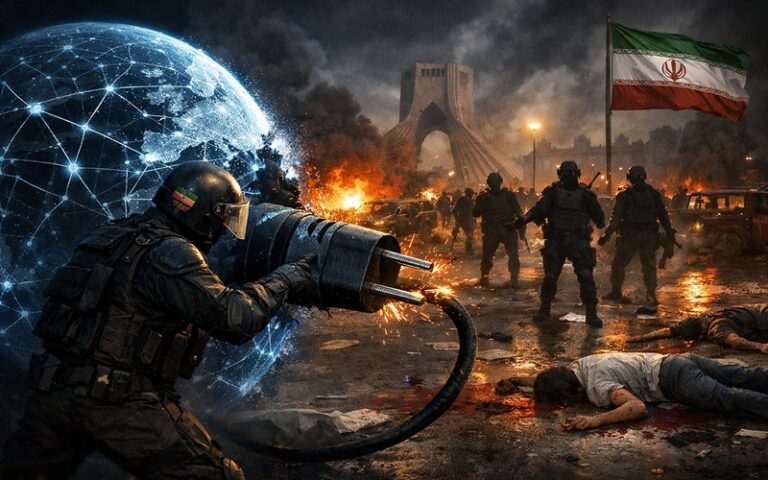
At the same time as the nationwide internet shutdown in Iran, signs of widespread disruption in the Starlink satellite internet service have also been observed; a move that has severely limited citizens’ access to the outside world and heightened concerns about the violent suppression of the nationwide uprising.

Shortly after 8 p.m. on Thursday, January 8, Iran’s regime cut internet and telephone communications, effectively disconnecting about 85 million people from the global information network.

This action follows a pattern that the Iranian regime has previously employed both during domestic protests and in wartime conditions; a pattern described as aiming to sever citizens’ communication with Iranians abroad in the United States, Europe, and other regions.

Until now, even amid severe sanctions related to Iran’s nuclear program, citizens were able to access blocked applications and websites by using VPNs.

However, the new decision has sharply reduced the ability to publish images and firsthand accounts from the nationwide protests linked to the economic crisis; protests that observers say have become the biggest challenge facing the Iranian regime in recent years.

The internet shutdown could pave the way for intensified repression, especially as the U.S. government has warned about the consequences of the continued killing of protesters.

This situation, coinciding with a warning by the Iranian regime’s prosecutor general who labeled participants in the protests as “mohareb,” has caused deep concern among the families and relatives of protesters abroad.

This marks the third time Iran’s regime has carried out a widespread internet shutdown. The first was in 2019, alongside protests over gasoline price hikes, which resulted in the killing of hundreds of people.

The second occurred in 2022, following the death of Mahsa Amini in the custody of the police; protests whose suppression left more than 750 people dead.

During the 2022 protests, Starlink played an important role in the transmission of information. Now as well, despite the use of this service being considered “illegal” in Iran, the number of its receivers has reached tens of thousands of devices.

Many of these receivers are in the hands of merchants and individuals who need connections abroad for economic activity, but some of them are now being used to send images and videos of the protests.

However, experts report serious disruptions in Starlink’s performance. In addition to interfering with GPS signals, the Iranian regime is likely using more advanced methods, including mobile jammers, to weaken satellite communications; a method that has previously been used to disrupt satellite receivers.

Although using Starlink carries serious risks for Iranian citizens, including arrest and harsh punishment, cutting off this communication channel could mean silencing the voice of protests at one of the most critical junctures in Iran’s developments.

Iran Protests Reach Fourteenth Day Amid Internet Blackout and Nationwide Clashes

January 10, 2026

Iran’s nationwide protest movement entered its fourteenth day on Saturday as demonstrations continued across multiple regions despite a prolonged internet blackout and an intensified security presence in major cities.

According to reports from inside the country, clashes between protesters and security forces were recorded in several cities, including Tehran, Tabriz, Rasht, and Kazerun. In southern Iran’s Kazerun, security forces were reported to have fired indiscriminately at shops and residential buildings, heightening fears among local residents.

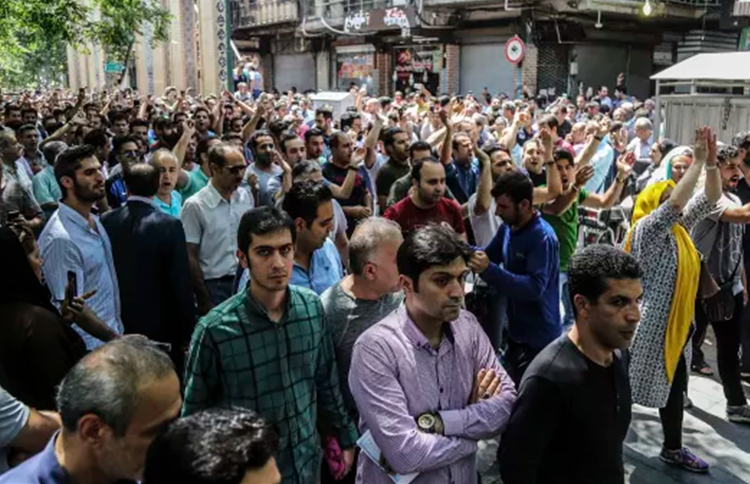
In the capital, Tehran, security forces maintained a heavy presence throughout the day amid concerns over renewed protests. Despite these measures and the continued disruption of internet access, large nightly demonstrations were reported across numerous districts, including Heravi, Chitgar, Ekbatan, Qeytarieh, Punak, Sattarkhan, Jannat Abad, and several major intersections. Protesters chanted slogans calling for the removal of the country’s leadership and the end of clerical rule.

In the northwest, Tabriz witnessed fresh clashes between protesters and security forces as large crowds gathered for another night of demonstrations. Protesters were heard chanting slogans emphasizing unity across ethnic lines, including calls for cooperation between Turkic- and Persian-speaking communities. Nightly rallies were also reported in Rasht, where demonstrators continued to chant anti-government slogans despite the security crackdown.

Internet monitoring organization NetBlocks reported that Iran had remained offline for approximately 48 hours, confirming the continuation of a nationwide internet blackout. The group noted that while ordinary citizens remained largely cut off from communication, state officials continued to publish statements online, deepening concerns about information suppression.

Opposition figures abroad commented on the ongoing unrest, stating that protests had spread to nearly 190 cities nationwide over the past two weeks. They reported continued confrontations in major urban centers, including Tehran and Mashhad, as well as in provincial cities such as Isfahan, Shiraz, Karaj, Zahedan, Kerman, Kermanshah, and Yazd.

As Iran’s protest movement completes its second week, demonstrations continue to defy security measures and communication restrictions. Authorities have not released official casualty figures or addressed reports of property damage, live fire, or the scope of the internet shutdown. With protests persisting across the country, the situation remains volatile and unresolved.

Tasnim Admits Death of Seven Basij Forces in Razavi Khorasan

The state-run Tasnim news agency, affiliated with the terrorist Quds Force of the Islamic Revolutionary Guard Corps (IRGC), reported on Friday, January 9, the death of seven forces affiliated with the Basij paramilitary organization and the intelligence apparatuses of the Iranian regime in Razavi Khorasan Province in northeastern Iran.

According to Tasnim, the so-called “Martyr” Foundation, a regime-affiliated body that handles affairs related to killed regime forces, announced that these individuals were killed during what the Iranian regime calls “the recent unrest,” coinciding with the nationwide uprising of the Iranian people, in the cities of Mashhad and Joghtay.

According to the report, the names of six of those killed in Mashhad are: Mohammad Hadi Sobhani-Far, Mehdi Aliabadi, Asghar Niazi, Hadi Yazdani, Farajollah Shooshtari, and Amir Sadegh Javanshiri.

The state-run Tasnim news agency also reported the killing of another individual named Mostafa Keyvanloo Shahrestanki in recent days in Joghtay County.

This report was published as, in recent days, alongside the expansion of public protests and demonstrations across various parts of the country, numerous reports have emerged of clashes between protesting citizens and the regime’s repressive forces.