Home Blog Page 308

Turkey Arrests Iranian Diplomat for Murder

0

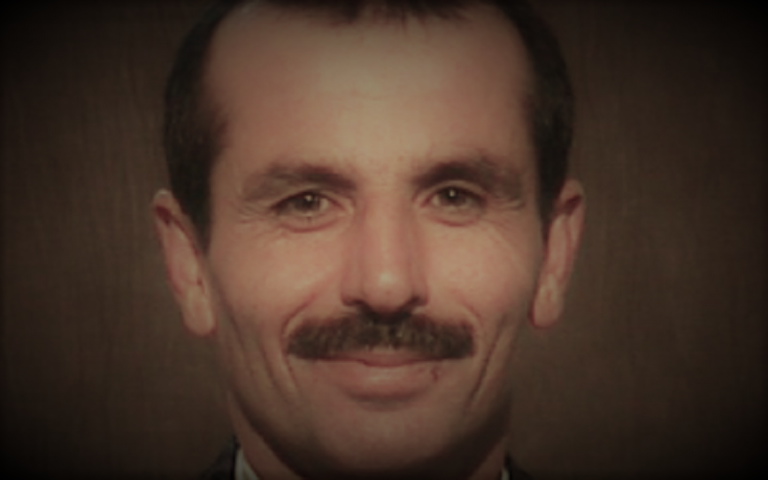
Turkish Daily Sabah website on Thursday, February 11, reported that authorities have detained an Iranian diplomat Mohammad Reza Naderzadeh, 43, for involvement in the murder of Iranian dissident Massoud Molavi Vardanjani in November 2019.

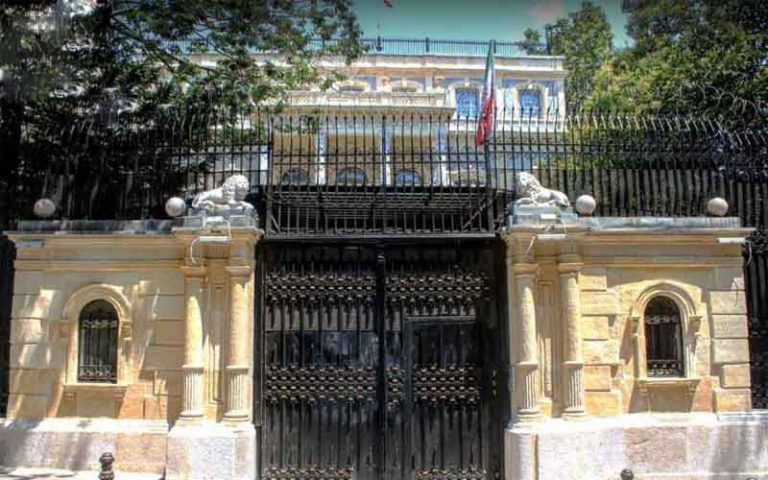
Naderzadeh as a staff member of the Iranian Consulate in Istanbul had forged travel documents for Ali Esfandiari, who had masterminded the assassination of Massoud Molavi and then fled to Iran.

Molavi was a “former intelligence operative for Iran before he moved to Turkey and launched a social media crusade to expose corruption involving the Iranian administration and the Quds Force, a subsidiary of Iran’s Islamic Revolutionary Guard Corps (IRGC),” the Turkish website wrote.

Iranian Officials Use Stock Market to Plunder People’s Money

Investigating the murder, Turkish security forces revealed that Esfanjani met Molavi’s killer Abdulvahhab Koçak on the murder day. Koçak is also lieutenant of fugitive Iranian drug lord Naji Sharifi Zindashti.

Esfanjani and Koçak met in a shopping mall and talked for about half an hour. Then, Esfanjani met Molavi and the two started walking on the street when Koçak approached from behind and fired 11 shots at Vardanjani.

“The investigation also shows Abdulvahhab Koçak – who was later captured by police – hid out in a residence owned by Naji Sharifi Zindashti after killing Vardanjani. Koçak’s brother Ali was also a suspect in the Istanbul murder of Saeed Karimian, owner of a Persian-language TV station,” Daily Sabah added.

Zindashti was also implicated in the disappearance of Habib Chaab, another Iranian dissident who disappeared in October 2020. Chaab, who had been living in exile in Sweden, was allegedly lured to Istanbul by Iranian intelligence and was smuggled into Iran.

“Files show how Iranian dissident Habib Chaab was kidnapped in Turkey after ‘honeytrap by Iran,’” reported Sky News on December 17, 2020. “Sky News has been given exclusive access to Turkish counter-terrorism files which show how Iranian opposition activist Habib Chaab was lured into the trap and smuggled back into Iran.”

The above-mentioned instances are the tip of the iceberg, showing the Iranian government’s exploitation of diplomatic coverage to implement terror attacks in other countries.

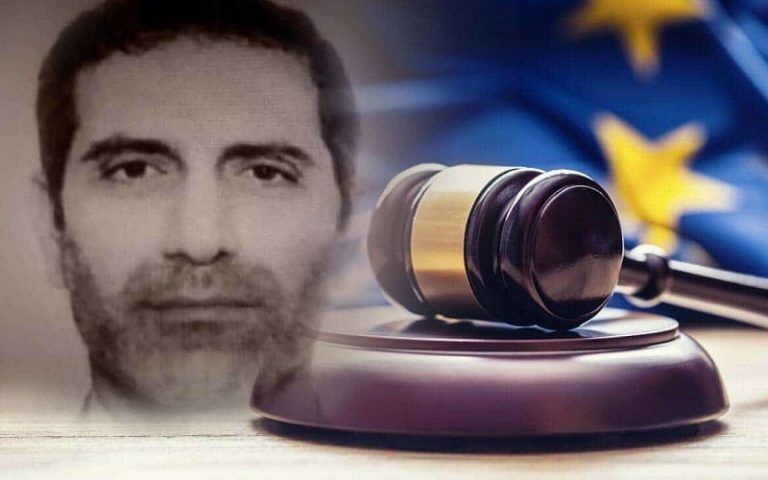
Last week, a court in Antwerp, Belgium, sentenced a senior Iranian diplomat Assadollah Assadi to 20 years in prison for bombing against the Free Iran 2018 gathering hosted by the Iranian opposition coalition National Council of Resistance of Iran (NCRI). Investigations carried out by the European prosecutors revealed that Assadi had transferred 1lb of TATP explosive material and detonate device on a civil airport under diplomatic status.

Don’t Ignore Iran Terror Plot

He later traveled to Luxembourg and delivered the bomb and instructions to operatives. They had planned to target the NCRI President-elect Maryam Rajavi. However, the operation was foiled at the last moment.

During their investigation, European law enforcement discovered an expanded network of the Iranian Ministry of Intelligence and Security (MOIS) on European soil. In his green booklet, Assadi had written around 300 notes, including receipts and appointment places. The NCRI had already disclosed that Assadi was the head of Iran’s intelligence station in Europe.

Back in March 2018, Albanian authorities foiled another plot orchestrated by the Iranian embassy in Tirana. Terrorists wanted to blow up the opposition Mojahedin-e Khalq (MEK) gathering marking Nowruz, the new Persian year. Following the intelligence services’ investigation, the government expelled Iranian ambassador Gholamhossein Mohammad-Nia and his first deputy Mostafa Roudaki for involving the plot.

Mohammad-Nia, who was expelled, is a close figure to Iranian Foreign Minister Mohammad Javad Zarif. The ‘ambassador’ was also a member of Iran’s negotiating team during talks that led to the Iran 2015 nuclear deal, formally known as the Joint Comprehensive Plan of Action (JCPOA).

In the past 42 years, Iran’s Foreign Ministry was directly involved in terrorism. Tehran’s embassies in Baghdad and Kabul purged nationalists those who were opposing the ayatollahs’ meddling in their countries’ affairs. Tehran’s new ambassador to Houthis-controlled Sana Hassan Irlu was one of former IRGC Quds Force Qassem Soleimani’s closest associates. Moreover, Iraj Masjedi, Iran’s ambassador to Iraq, and his predecessors, all were high-ranking commanders in the Quds Force.

This is time to end Iranian officials’ exploitation of diplomatic coverages for terrorism, dissidents say. Iran’s Foreign Ministry, in fact, plays the role of a broker to make advantages for the government’s hostage-taking operations. However, giving concessions to the Iranian government only emboldens it to take more hostages and jeopardize global peace and security by terrorism and nuclear extortions.

Iranian Ministry of Foreign Affairs, a Cover for State Terrorism
We May Produce Nuclear Weapons if We Are Forced To

0

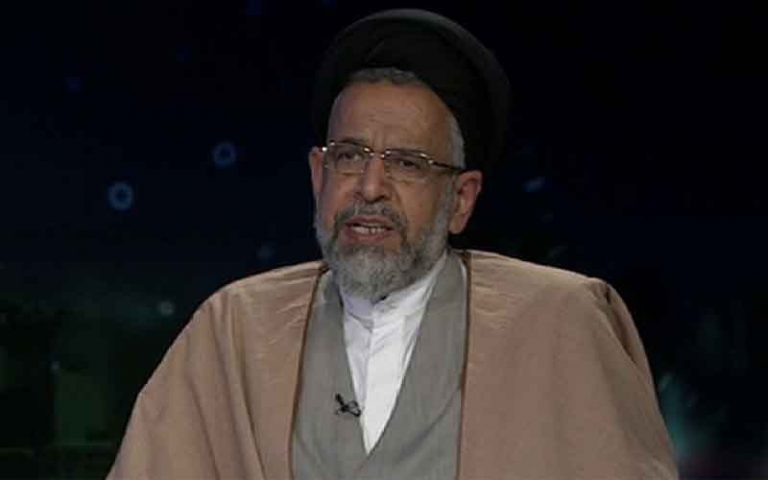
“In his Fatwa, the Supreme Leader [Ali Khamenei] announced that the production of nuclear weapons is Haram [forbidden] and contrary to Sharia, and the Islamic Republic would not pursue them. However, if [foreigners] caught a cat in an awkward corner, it may behave unlikely to a free cat. If they pushed Iran to that path, then [the production of nuclear weapons] is not Iran’s fault,” said Iran’s Minister of Intelligence and Security (MOIS) Mahmoud Alavi in an interview with the state-run TV Channel Two on February 8. 

Cornered Cat 

In his unprecedented remarks, the Intelligence Minister described the establishment as a cat to show the country’s dire conditions. Given recent developments and the Iranian government’s concerns about the next events, Iranian authorities are seemingly right. 

Alavi raised these remarks while Tehran suffers from economic pressure and isolation as a result of the ayatollahs’ aggressive and outlaw behavior. Only four days earlier, MOIS agent Assadollah Assadi, who had disguised himself as a senior diplomat in Vienna, was sentenced to 20 years in prison in Belgium for masterminding a bomb plot against the opposition gathering in June 2018.

Window of JCPOA Closing, But in Which Direction?

On the other hand, “the threshold of society’s tolerance is going to end,” according to state-run media, which poses serious risk at the Islamic Republic’s survival. In December 2017 – January 2018 and November 2019, economic grievances sparked nationwide protests. Currently, citizens face far worse financial conditions in comparison to the past years and government-linked sociologists warn about the “erosion of the state’s social acceptance.” 

Furthermore, members and supporters of the Iranian opposition Mojahedin-e Khalq (MEK/PMOI) have recently intensified their anti-establishment activities, inciting the people to voice their protests against the government. Following the MEK domestic network’s activities, there has been no day without protests, rallies, and strikes on behalf of impoverished citizens. 

In such circumstances, Tehran is deeply concerned about international developments. Before January 20, when Joe Biden took office as the 46th U.S. President, Iranian officials were hopeful that they could immediately receive financial reliefs and resume their bankrupt economy. However, Biden and his nominees declared that they would not grant privileges to the Iranian government for free, particularly while Tehran has breached many restrictions and limitations under the 2015 nuclear deal, formally known as the Joint Comprehensive Plan of Action (JCPOA). 

Tehran’s Propaganda for Coercing the U.S. to Rejoin the JCPOA 

Notably, following the revelations by the Iranian opposition coalition National Council of Resistance of Iran (NCRI) about Tehran’s attempts for achieving nuclear weapons, Khamenei claimed, “We believe that the production of nuclear is Haram.” 

“We do not believe in Atomic bombs and nuclear weapons, and we would not pursue them. According to our ideological beliefs, our religious basics, using these mass destructive devices are forbidden and Haram. They would lead to destroying earth and human generations,” Khamenei said in February 2009. 

However, the Supreme Leader currently tries to terrify the international community to make his government’s advantages. This is another flipside of the Iranian government’s hostage-taking method to gain its required privileges. In other words, Tehran follows its renowned blackmailing policy by jeopardizing global peace and security. 

On the other hand, Iranian Foreign Minister Mohammad Javad Zarif warned his counterparts about the Islamic Republic’s decisions. “Time is running out for the Americans, both because of the parliament bill and the election atmosphere that will follow the Iranian New Year,” Zarif said on February 6, pointing to the Parliament (Majlis) recently passed legislation that ordered the government to leave the Nuclear Nonproliferation Treaty (NPT) on February 21. 

In response, the U.S. State Department Spokesperson Ned Price described Alavi’s remarks as very concerning. I would say that we, of course, took note of those remarks. They are very concerning. Would also note – and I referenced this yesterday as well – that Iran has an obligation under the Nuclear Nonproliferation Treaty – the NPT – never – never, never, never – permanent prohibition to acquire nuclear weapons, and it reaffirmed that commitment under the JCPOA. I think that’s where we’d leave our reaction,” Price said during the February 9 press conference. 

Also, in his first visit to the Department of Defense on February 10, Biden announced, “I would never hesitate to use force to defend the vital interests of the American people and our allies around the world when necessary. 

In this respect, Iranian state-run media slammed Alavi for his recent remarks, displaying the government’s fragile conditions and baseless claims. It should be asked of the Intelligence Minister were [his remarks] a personal opinion or a part of the state’s strategy to confront the democrats?” wrote Mashreq daily, affiliated with the Khamenei’s faction. 

“The Intelligence Minister’s remarks prepared the atmosphere for a massive wave of propaganda against Iran’s nuclear program. The Islamic Republic’s foes immediately exploited Mahmoud Alavi’s unconsidered comments—which were contrary to the Supreme Leader’s orders— and claimed that [Khamenei’s] fatwa is flexible, and Iran will strive to produce nuclear weapons under special circumstances,” Jahan News daily wrote. 

Iran watchers believe that the Intelligence Minister’s recent comments and Zarif’s concerns reveal the Iranian government’s need for negotiations. Furthermore, they indicate that both the Iranian government and the international community are in a new balance of power. It seems that the world has realized that Tehran’s blackmailing and hostage-taking techniques are a sign of its weakness, which should be confronted by firmness and power. 

Iran Executes 113th Woman Under Rouhani

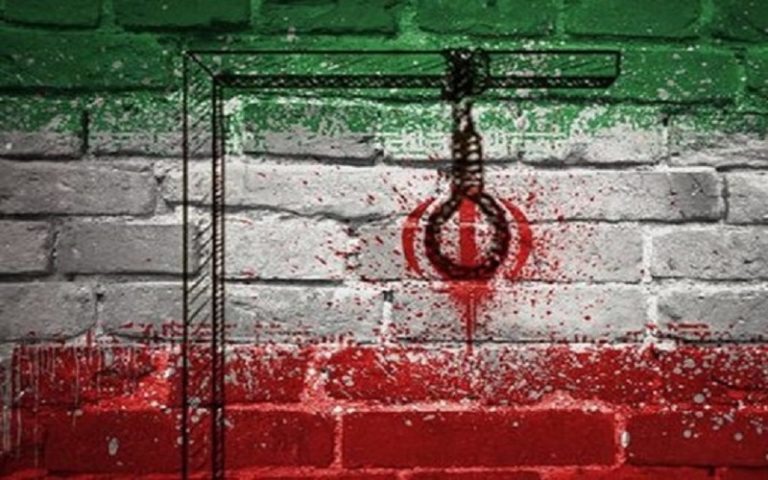
With the execution of an unidentified 23-year-old woman in Ardabil Prison on Monday, the Iranian regime has executed at least 113 women during the presidency of Hassan Rouhani, a supposed moderate. 

This comes just over a month after the execution of Zeinab Khodamoradi in Sanandaj Central Prison on December 27 and follows on from at least 27 executions in January. 

The Women’s Committee of the National Council of Resistance of Iran (NCRI) has noted that most women in Iran are executed for murder, but this is actually another example of how the regime fails women because they are mostly victims of domestic abuse who kill in defence of themselves or their children because they have no legal recourse to end an abusive marriage. 

This is backed up by political prisoner Golrokh Ebrahimi Iraee  who wrote in 2019 that these women, “had murdered their husbands —instantly or based on a pre-meditated plan—after years of being humiliated, insulted, battered and even tortured by them and because of being deprived of their right to divorce” and that if they were allowed to divorce, they may never have committed murder. 

In other countries, they would be granted leniency based on their circumstances, but not in Iran where murder is not separated by degrees. This, of course, does not even touch upon those executed for crimes that are not capital offences under international law, like drug offences, or for non-crimes, like political activism.

Iranians Furious Over Ignored Domestic Abuse

The Committee wrote: “The Iranian regime open-handedly uses the death penalty as a form of punishment. In many cases, the religious and ethnic minorities, political dissidents, and women are targets of the death penalty in a discriminatory manner.” 

Number one in executions 

Iran is the world leader in executions per capita, as well as executions of women and juvenile offenders. Over 4,300 people have been executed since Rouhani took power in 2013, with the number of overall executions and those of women actually believed much higher because of the fact that most executions take place in secret without witnesses. 

The NCRI Women’s Committee has produced a list of the 113 executed women, using information from Iran’s state-run media, human rights activists, and reliable sources inside the country to fill in as much information as possible about those women. 

The Iranian Resistance has called in their 10-point plan for a Free Iran for the death penalty to be abolished and for women to have equal rights in many areas, including divorce. 

Iran’s Economic Crisis – What Is the Cause?

The economic crisis in Iran has been the focus of media attention around the world, with the regime and its apologists blaming foreign sanctions, but the Iranian Resistance states that the problem lies with the regime itself and even some regime officials have backed up the stories of economic mismanagement and institutionalized corruption. 

Indeed, Parliament Speaker Mohammad Bagher Ghalibaf said last month that the budget infrastructure was “damaged” because it indicates a “36% difference between salaries and expenses”. But the Resistance highlighted that Isa Sharifi, a former deputy of Ghalibaf when he was the mayor of Tehran, was actually sentenced to 20 years in prison for stealing almost five trillion tomans. 

Iranian Workers’ Salaries Don’t Reach the Poverty Line

Even the state-run is reporting on the economic struggles of Iranians and how their situation is only getting worse, with the Hamdeli daily reporting that the poorest in society are only earning a quarter of what would put them just above the poverty line. 

Other news agencies wrote about how, while Iranians live in poverty, the regime is embezzling billions to enrich themselves, something that former Minister of Roads and Urban Development Abbas Akhundi, spoke about. 

The ILNA news agency wrote on February 3 that even doubling the pay of workers would not lift them out of poverty, which has left many living in tents and unable to afford food. 

All of this just ridicules the idea that the economic problems are linked to sanctions, with even the state-run Arman daily admitting that it is “far too optimistic” to assume that a lifting of US sanctions would bring about a change in the Iranian people’s economic outlook. 

After all, there was no let-up in poverty during the period 2016-2018, when sanctions were lifted. And despite widespread poverty, Iran still found  “$600 million” for the “expansion at the Imam Hussein shrine” in Iraq in December.    

Sanctions relief only benefits the regime by providing money for their malign actions, like for instance the type of international terrorism that Iranian diplomat Assadollah Assadi has just been found guilty of in Belgium. Evidence produced in the trial found that he had spent plenty of money to finance a spying and terror network across Europe. 

The Iranian Resistance wrote: “World leaders should provide incentive packages to the regime. They should maintain and increase sanctions on the regime for its support of terrorism and human rights violations. Iranian people underlined their desire for regime change and pointed to the regime as Iran’s only problem during the major protests in 2018 and 2019. The time has come for the international community to support the Iranian people’s desire for regime change, democracy, and equality. 

Iran HRM: January Report on Iran Human Rights Violations

0

As the coronavirus death toll in Iran surpasses 210,000, the regime has still not bought any of the approved vaccines, following a ban on the import of vaccines from the US or UK by supreme leader Ali Khamenei last month. 

Khamenei claimed that the vaccines were “completely untrustworthy” and suggested that they were being tested on Iranians, even though most Western countries already have their vaccination efforts well underway. 

At the same time, the regime has increased repression against the people, with Deputy Police Chief Qasem Rezaei ordering officers not to leave so-called “troublemakers” unharmed during arrests last month and MP Nasser Mousavi Laregani calling for “petty thieves” to be punished with amputations. 

Iran Human Rights Monitor said, in their report for human rights violations in January, that the regime is using repressive measures to prevent escalation of popular uprisings. Here, we will look at the violations in January, but we recommend that you look at the full report here. 

Executions 

There were at least 27 executions in Iran in January, including: 

  • 16 for murder 
  • Six for drug offenses 
  • Four for political activism 
  • One for rape

Iranian Authorities Secretly Bury Executed Political Prisoners in Ahvaz

Importantly, 11 of those people did not commit crimes that are punishable by death under international law and there is severe problems with how Iran handles murder cases, including failing to categorise murder by degree. 

Torture 

The regime tortured 35-year-old Bahman Oghabi to death at an Islamabad police station, but told his family that he died of an overdose. 

Meanwhile, seven Turkic minority rights activists were given a total of 380 lashes, with five of them facing prison time. 

Denial of prisoners’ rights 

Several prisoners of conscience have gone on hunger strike over mistreatment at their prisons and the authorities failure to address demands. These are Abolfazl Ghasali, Yousef Kari, Abbas Lesani, Siamak Mirzaei, Ali and Reza Vaseqi, Jasem Heydari, Ali Khasraji, Hossein Seilavi, Ali Motiri, and Ali Mojaddam. 

While many prisoners, especially political prisoners, have been denied medical treatment for existing conditions, injuries sustained under torture and COVID-19. These include Khaled Pirzadeh, Ali Nouri, Raheleh Ahmadi, Monireh Arabshahi, Seyed Tabib Taghizadeh, Reza Khandan and Fatemeh Mosanna. 

Labour activist Shapour Ehsani Rad, held at the Greater Tehran Penitentiary, was also banned from family visits because he protested poor prison conditions. While the Marivan Intelligence Service revoked the temporary leave for political prisoner Tahsin Dadres. 

The regime also added another 11 months onto the imprisonment of political prisoner Saeed Sangar, who has spent 20 years behind bars. 

What West Should Do Following Assadi Verdict

0

The Belgian court found Iranian diplomat Assadollah Assadi guilty on terrorism charges last Thursday and sentenced him to 20 years in prison for attempting to bomb the 2018 Free Iran rally in France. 

His three accomplices, Nasimeh Naami, Mehrdad Arefani, and Amir Saadouni, were also found guilty and sentenced to 18, 17, and 15 years of imprisonment, respectively. 

This historic case, which is the first time an Iranian diplomat has been tried for terrorism, was the result of a two-and-a-half-year investigation by Belgium, especially momentous considering how the regime falsely tried to claim diplomatic immunity and used every tool in their arsenal to stop him facing accountability from lobbyists to lawyers to threats of future terrorist attacks. 

Iranian Ministry of Foreign Affairs, a Cover for State Terrorism
Of course, the regime has complained about the verdict, calling it “illegal” and “unjustifiable”, but they are just scared of what actions the West may take next because the Belgian prosecutors asserted that Assadi was working on behalf of the regime. 

The Iranian Resistance wrote: “This verdict ended this false and hollow notion that terrorism is limited to some “rogue” elements or factions of the regime. It demonstrated the close collaboration between the regime’s Ministry of Intelligence and Security (MOIS) and the Ministry of Foreign Affairs. Thus, it became clear that the entire regime, from the Ministry of Foreign Affairs and its Minister Mohammad Javad Zarif, the so-called “moderate” government of Hassan Rouhani, and the MOIS, are generally involved in terrorism and particularly in the 2018 bomb plot, under the supervision of the regime’s Supreme Leader, Ali Khamenei. 

They called on Western countries, especially those in Europe, to take a firm stance on Iran and not appease the mullahs, lest it emboldens another terrorist attack. The Resistance advised that the West also take on board the regime’s demonisation campaign against the Resistance, which has long sought to undermine the freedom fighters at home and abroad. 

Maryam Rajavi, the President-elect of the National Council of Resistance of Iran (NCRI), said: “The time has come for the European Union to take action. Silence and inaction under whatever pretext will only embolden the mullahs’ regime to continue its crimes and terrorism. The Iranian people expect that the EU revises its Iran policy and hold ruling theocracy accountable.” 

The Resistance said that the West should stop negotiating with Iran and its officials, close the embassies, and expel Iranian agents from their soil if they want to stop the regime from committing another atrocity. 

No Sanctions Relief for Iran Unless It Is Earned With a Change of Behavior

The Islamic Republic of Iran keeps doubling down on its demands for unearned relief from US sanctions, but so far the Biden administration has responded appropriately by saying that Tehran must be the one to make the first move. It is vitally important that the administration remains firm in that position, lest it end up providing the mullahs with further incentive to threaten the international community and expand upon its various malign behaviors. 

The latest Iranian statements suggest that the conflict over this issue may be drawn out for some time to come. But it can only last as long as the Iranian economy can avoid succumbing to the pressure that was ramped up by Biden’s predecessor. And regardless of how long that may be, the effects of that pressure include a substantial increase in leverage on the US side, which must not be given away without cause. 

Window of JCPOA Closing, But in Which Direction?

On Sunday, Iran’s Supreme Leader Ali Khamenei delivered remarks to military leaders which were carried by state media. After outlining the regime’s expectation of full and immediate relief from US sanctions, Khamenei said that only afterward would Iran return to full compliance with the restrictions on nuclear activity that were put into place by the Joint Comprehensive Plan of Action. “It is the irreversible and final decision and all Iranian officials have consensus over it,” he added. 

President Joe Biden did not immediately respond to those remarks, but in a separate media interview on the same day, he reiterated that the US takes the opposite position: Iran must resume compliance with all the formal terms of the JCPOA, and only then will sanctions relief be phased back in. 

Iran has been violating those terms since early 2019, at in January 2020 the regime announced that it would comply with none of them. This led to the deal’s European signatories – Britain, France, and Germany – triggering a dispute resolution mechanism, but the European Union’s head of foreign policy soon expressed willingness to draw that process out indefinitely. Josep Borrell’s remarks reinforced perceptions of the US as standing alone in its hardline approach to Iran policy, and the longevity of that situation was promptly called into question by the American presidential election. 

In the run-up to Biden’s election, then-President Donald Trump argued that that outcome would be a boon for Iran, given that Biden had expressed an interest in returning to the JCPOA as written. Before pulling out of the nuclear deal in 2018, Trump described it as one of the worst ever negotiated, on account of its arguably weak restrictions on Iran’s nuclear program and its failure to address adjacent issues like the regime’s ballistic missile development and its regional imperialism. 

To justify a strategy that he described as “maximum pressure,” Trump suggested that a faltering Iranian economy would force the Iranian regime to come back to the negotiating table and accept stricter limits on its nuclear activity as well as restrictions on other categories of malign behavior. The administration maintained its commitment to that strategy even after Trump’s electoral debate, putting new sanctions into place even in the few weeks immediately prior to Biden’s January 20 inauguration. 

To date, Biden has not removed any of those sanctions. On some level, this can potentially be regarded as tacit acknowledgement of their value. Trump believed that Iran’s economy was on the verge of collapse prior to the election, and that Tehran was looking to a Biden presidency as a possible source of last-minute reprieve. It is not entirely clear whether the new administration’s shares the previous one’s assessment of how dire the situation is for Iran, but during his first three weeks in office, Biden has made it clear that he is in no rush to provide the expected lifeline. 

This is as it should be, and it’s how things should remain for the foreseeable future, regardless of whether or not Iran’s economy is indeed teetering on the brink of collapse. While there may be some uncertainty on that matter, there is no doubt whatsoever about the provocative steps Iran has taken in its attempt to shift things back toward the status quo as it existed prior to Trump. These include the resumption of uranium enrichment to 20 percent fissile purity, the full resupply of nuclear stockpiles, and the start of work on uranium metal that would be a core component of a nuclear warhead. 

But Iran’s provocations also extend beyond the nuclear sphere and include last month’s seizure of a South Korea-flagged vessel and threats against the lives of various dual nationals and falsely accused spies like the Iranian-Swedish medical researcher Ahmadreza Djalali. Some of these gestures are aimed at extracting concessions from the US specifically, while some are aimed at US allies, often in the interest of encouraging them to act as proxies for Tehran and to ramp up their own pressure in favor of American concessions. 

The Biden administration must stand fast against both these forms of pressure, on the understanding that it is the right thing to do not only for US interests but also for those of other Western nations and for the Iranian people themselves. Giving into Iran’s demands would be foolish under almost any circumstances, and it would be especially foolish at a time when those demands are being issued ineffectually in response to a massive increase in American leverage. 

By acquiring sanctions relief while sacrificing nothing on its end, the Iranian regime would come away from this situation believing that threats of nuclear weapons development and politically motivated execution are both successful strategies, which it can fall back on the next time it comes under international pressure. 

Regardless of what one thinks about the Trump administration’s maximum pressure campaign, there is no giving up on it now unless we want Iran’s provocations to grow worse and more frequent. The time may still come when that campaign can be ended safely, but it will only come after the Iranian regime has changed its behavior following the conclusion that tit-for-tat threats cannot work against the United States of America. 

Iranian Authorities Secretly Bury Executed Political Prisoners in Ahvaz

0

Political prisoners executed in various prisons in Ahvaz, a city in the southwest of Iran, are buried in complete secrecy in a secret cemetery. The purpose of this is for families not to learn where their children are buried or to move their bodies.

The regime refuses to deliver the bodies of the executed political prisoners to their families:

“Most political prisoners are executed in Sheiban Prison without the knowledge of their families,” said a source who asked not to be identified. Judicial and intelligence agents do not deliver the body of an executed prisoner to his family at all. They are buried without the presence of his family and friends. The prisoner’s family must also promise that they will not hold any ceremonies for their loved ones.”

The source added: “The place where the executed prisoners in Ahvaz are buried is a mausoleum that people call the ‘Tomb of the Martyrs.’ But the agents of the murderous government, out of resentment against these political prisoners, have named this unknown shrine the ‘Damned Place’.”

It should be noted that similiar events occurred in most cities of the country in the 1980s. The burial place of Baha’i people or other minorities was called the damned place, and then the executed political prisoners who were mainly from the opposition MEK/PMOI and other leftist organizations were buried there.

Iran’s Human Rights Abuses in 2020

Families are blindfolded and taken to their loved ones’ graves

The report on Ahvaz added: “Executed Iranian Arab political prisoners are not handed over to their families and are secretly buried. Cement is poured on the body and iron plates are placed. Then they bury them under the soil, and in order is given for the families not to be able to exhume the bodies of their children and take them out of the grave. They only put a metal plate with a number on each grave, and there is no trace of the executed person on the grave.”

Continuous torture of the families

A report on Ahvaz states that up to 48 hours after the execution of the executed prisoner, guards are placed around the burial place of the executed prisoner so that the family cannot find the burial place of their loved one. They even take the family blindfolded to the grave so that they do not learn the location of their child’s grave. These actions fit the pattern for what Amnesty International has called am ongoing crime. Keeping the family unaware of the time of execution and the burial of the executed person is a continuous torture of the person’s family.

The report further states that in the area called the damned place, government agents installed CCTV cameras so that none of the citizens and families can or dare to approach the graves.

It is said that this place was in fact the graveyard for people of other religions and minorities. But later they removed a piece from it and dedicated it to the burial place of political prisoners. The collection related to minorities and other religions has a painting of Ferdows Garden. But there are no plaques on the tombs of executed political prisoners. Each tomb has an iron plate that characterizes it.

Rajavi Urges Biden To Take Firm Policy on Iran

The leader of the Iranian opposition is urging US President Joe Biden to hold Iran accountable for human rights violations, stressing that the mullahs are now at the “weakest point” since its inception in 1979. 

Maryam Rajavi, the President of the National Council of Resistance of Iran (NCRI), said: “The Iranian regime is at its weakest point in its history of the last 42 years. It is economically bankrupt. The national currency is in a free fall, and corruption has penetrated every aspect of the regime.” 

The NCRI, which is an umbrella organisation of several democratic groups that seek mullahs’ overthrow in Iran, has a 10-point plan to transform Iran from a religious dictatorship to a secular democracy. 

Iran Media Warns of Protests Over Crises

Iran has seen increased pressure from the international community and its own citizens over the past few years, including economic sanctions and two national uprisings. These uprisings began over economic matters but soon became about regime change, before the authorities cracked down brutally and killed over 1,000 people in the November 2019 protests alone. 

While the protests were stopped because of the coronavirus, which has killed over 210,000 in Iran, the people’s anger is still there and its growing thanks to the authorities’ lacklustre response. Indeed, many believe that the government is intentionally mishandling the pandemic to subdue uprisings. 

Rajavi said: “The Iranian people are extremely embittered and angry. The November 2019 and January 2020 uprisings clearly demonstrated the people’s desire for regime change. Due to the regime’s criminal policies, so far at least 210,000 people have lost their lives to the coronavirus, and there are no global comparables in this regard. This has intensified the people’s dissatisfaction even more.” 

The Biden administration previously suggested that it wished to re-enter the 2015 nuclear agreement, but an official said that this deal would need to be reworked to include other issues of concern. He has also not made any move towards re-joining via an Executive Order, which is how the US first joined and then left the deal. 

So far, Rajavi said, there has been no contact between the NCRI and the Biden administration, but she stressed that when he deals with the Iran situation, he must prioritise the creation of a democracy. 

She said: “Any policy vis-à-vis the clerical regime must take into account the desire of the overwhelming majority of the Iranian people as expressed in the clearest form during the 2019 uprising; and that is to end the religious tyranny and to establish a democratic government. Human rights must be placed at the front and centre of this policy. And, the Iranian regime must be held to account for gross violations of the Iranian people’s fundamental human rights.” 

On a related note, a court a Belgium issued 20 years imprisonment for Iran’s incarcerated diplomat Assadollah Assadi, who had attempted to bomb NCRI’s rally in 2018. Rajavi said this came on the orders of Supreme Leader Ali Khamenei and President Hassan Rouhani. 

She said: “This trial demonstrates that it is high time to end the policy of appeasement and adopt a firm policy in its place. This regime can only understand the language of firmness.” 

Political Prisoners Denied Medical Care in Iran

0

One of the longest detained political prisoners in Iran is suffering from severe and painful burns on his neck and back after being suddenly covered in boiling water whilst taking a shower, but the prison authorities refused to take him to the hospital, which has led to the infection of the blisters. 

Gholam-Hossein Kalbi, 61, who has now spent 21 years in prison, was arrested in January 2000 in Dezful. He was held in solitary confinement for 14 months in Ahvaz’s Ministry of Intelligence building and subject to brutal torture before being sentenced to life in prison in 2002 and moved to Ward 209 of Evin Prison. 

His only crime is support for the Mujahedin-e Khalq (MEK/PMOI) and a refusal to publicly demonise them as part of the government’s propaganda. 

Kalbi, who is currently held in Sheiban Prison in Ahvaz, is also suffering from a variety of health complaints, including severe infections in his gums and both ears, alongside hearing loss in one ear. 

The Secretariat of the National Council of Resistance of Iran (NCRI) urged the United Nations and all human rights defenders to take immediate action to ensure that Kalbi receives medical treatment for his burns and illnesses outside or prison, stating that the denial of necessary medical care indicates the intentional nature of the incident designed to torture him. 

Iran Executes Eight Prisoners in One Week

In a related story, political prisoner Mohammad Ashtiani is being denied medical treatment for low blood oxygen levels that, in addition to his asthma, almost suffocated him on January 26 and 27 following construction in the Central Prison of Karaj that increased dust levels. 

On January 28, he asked for treatment at the prison dispensary, where his oxygen levels were recorded as 80, but he was not taken to hospital or given treatment, which resulted in severe chest pain, heavy coughs, and a sense of suffocation. Without treatment, his life is in grave danger. 

Ashtiani, 57, also suffers from high blood lipid and GI problems. 

The father-of-two, who was a political prisoner in the 1980s, was arrested in March 2019 and interrogated under torture at the Department of Intelligence. He was then moved to the Central Prison of Karaj after being sentenced to three years and a heavy fine for “propaganda against the state”, “insulting [Supreme leader Ali] Khamenei”, and supporting the MEK. He is detained amongst violent criminals in violation of the principle for separating prisoners based on their crimes.