Home Blog Page 43

Iran’s Regime Carries Out 335 Executions in November, Highest Toll in 37 Years

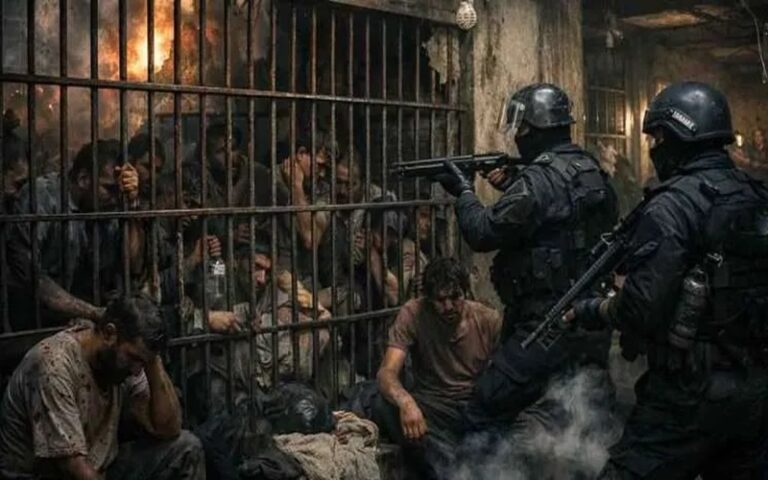
In a shocking record, Iranian regime authorities hanged 335 prisoners, including 7 women, in November.  This includes more than sixty people in various prisons between November 22 and 27. The issuance and approval of death sentences against political prisoners have accelerated, and at least eight prisoners have faced imminent execution in the past two months after their sentences were upheld. This renewed wave is part of the regime’s strategy to intimidate protesters and political dissidents.

A worrying surge in death sentences

Since early November, the Supreme Court of Iran’s regime has upheld the death sentences of eight political prisoners—an indication of the sharp rise in the use of capital punishment as a political repression tool. At least 42 political prisoners now face execution, and dozens more face similar security-related charges that could also lead to death sentences.

Iran: 304 Executions in One Month, 1,735 In 2025 So Far

Most of these sentences were issued after opaque judicial proceedings, forced confessions, denial of access to lawyers, and extensive violations of due-process rights.

Eight prisoners at immediate risk of execution

The names of the eight political prisoners whose death sentences have been upheld by the Supreme Court are:

Manouchehr Falah and Peyman Farahavar (a poet) from Lakan Prison in Rasht,

Seyed Mohammad-Javad Vafaee Thani from Vakilabad Prison in Mashhad,

Ehsan Faridi from Tabriz Prison,

And four other prisoners: Reza Abdali, Masoud Jamei, Alireza Meadasi, and Farshad Etemadi-far from Sheiban Prison in Ahvaz.

These individuals represent only prominent examples of a wider pattern that has placed dozens of other prisoners at similar risk.

Ambiguous charges, forced confessions, and absence of fair trials

Many cases resulting in death sentences are built on charges such as “enmity against God” (moharebeh) and “corruption on earth,” terms systematically used to suppress political dissent.

Iran’s ‘No To Execution Tuesdays’ Campaign Marks 94th Week

Such rulings lack judicial legitimacy and expose those issuing or approving them to possible international prosecution under the principle of universal jurisdiction.

At the same time, widespread protests have erupted inside Iran’s prisons over violent treatment of prisoners on death row. On November 12, more than two hundred political prisoners in Evin Prison went on hunger strike to protest the violent transfer of Ehsan Afreshteh—a death-row prisoner. This action is part of the “No-to-Execution Tuesdays” campaign, which has now spread to more than fifty-five prisons.

New legislation expanding the scope of executions

The adoption of the “Law on Intensifying Punishment for Espionage and Cooperation with Hostile States” this year has opened the door to more death sentences. The law expands and ambiguously broadens the definition of “espionage,” enabling its use against political activists, cultural figures, journalists, and even social-media users.

This development, alongside the rising number of executions, reveals a governing strategy: spreading fear and repression to control a society already on the brink due to poverty, nationwide protests, and political crises.

International pressure and United Nations warnings

Iran’s regime has one of the highest execution rates in the world. In 2025 alone, more than 1,790 people have been executed—the highest number since 2015.

The UN High Commissioner for Human Rights has described Iran’s increasing use of the death penalty as “alarmingly high” and called for its immediate halt. A UN fact-finding mission also stressed that many of these executions occur after proceedings that violate fair-trial standards.

Executions as a tool of political intimidation

The latest wave of confirmed death sentences against political prisoners, along with dozens now on death row, paints a clear picture of injustice, torture, forced confessions, and politically motivated decisions within Iran’s judicial system. While the regime aims to suppress protests and cultivate fear, such actions may backfire in the current climate and further fuel public anger.

Iranian Security Forces Block Families of Executed Political Prisoners from Entering Cemetery

Security agents blocked the families of political prisoners executed in the 1980s from visiting their loved ones’ graves in Khavaran Cemetery. Khavaran is a burial site in southeast Tehran, notorious for containing mass graves of political prisoners executed by Iran’s regime, especially during the 1988 massacre.

Security agents of Iran’s regime prevented the families of political prisoners executed in the 1980s from accessing their graves in Khavaran.

The families of political prisoners executed in the 1980s—particularly during the bloody summer of 1988—went to Khavaran on Friday, November 28, to honor their loved ones. However, security agents kept the cemetery gates closed and prevented the families from reaching the graves.

Iranian Regime Figure Tied to 1988 Crimes Against Humanity Reemerges in Academic Circles

In the summer of 1988, Iran’s regime carried out a mass execution of political prisoners, most of them members and supporters of the People’s Mojahedin Organization of Iran (PMOI/MEK). It is estimated that around 30,000 prisoners were executed that year.

The families gathered beside the outer walls of Khavaran Cemetery and placed flowers on the photos of their loved ones behind the locked gates to commemorate them.

Meanwhile, security and military forces tried to scatter the families and push them away by removing and disrupting the flowers placed at the site.

For more than four decades, Iran’s regime has spoken to the survivors of its repression and massacres—whether in prisons or on the streets—only through violence, intimidation, and threats. The regime has not even recognized the families’ basic right to visit the graves of their loved ones. Yet it has always faced the steadfast resistance of these families.

For more than 40 years, the Khavaran families have never stopped honoring the memory of their loved ones. Even by gathering behind the locked gates of Khavaran, they have ensured that the execution of political prisoners in the 1980s—especially the 1988 massacre—will not be forgotten.

In this context, a group of families of political and religious prisoners who died in the 1980s wrote a letter in September 2024 to Masoud Pezeshkian, the current president of Iran’s regime, stating that for more than eleven months they had been barred from entering Khavaran Cemetery and that the agents’ insulting behavior had doubled their suffering. Pezeshkian has not responded to this letter.

These families—including those whose loved ones were executed in the summer of 1988—had demanded in their letter the “halt of burying new deceased individuals in this cemetery” and the “removal of all obstacles and restrictions preventing them from visiting and commemorating their loved ones.”

They had written: “For eleven months, Khavaran Cemetery has been closed to us. We have repeatedly visited and written to various officials, offices, and institutions of Iran’s regime, requesting the reopening of the cemetery to allow us our right to mourn and freely visit the graves of our loved ones, but we have received no response.”

The families and survivors of political and religious prisoners who died in the 1980s added that their letter of grievance—after months of going from one institution to another—was forwarded by the Tehran Provincial Security Council to the Ministry of Intelligence. After several weeks and further follow-up, officials at the Ministry of Intelligence responded with “an insulting attitude and explicitly emphasized that they would not be providing any answers.”

In a letter published on January 25, 2025, addressed to Pezeshkian, the families wrote: “We have repeatedly and patiently sought justice through legal means—writing letters and making repeated visits to responsible institutions, the municipality, the city council, and the security office of Behesht Zahra Cemetery—but to no avail. Once again, we demand the most basic human, social, and legal right of survivors to visit the graves of their loved ones, namely the ‘right to mourn.’”

Meanwhile, the global Bahá’í community reported in March 2024 that the graves of more than thirty deceased Bahá’í citizens, who had been buried in a mass grave in Khavaran Cemetery in Tehran, had been destroyed.

Tehran’s Subsidence and Drying Wetlands Reveal New Dimensions of Iran’s Water Crisis

0

As the water crisis deepens and Iran’s regime fails to manage resources, parts of Tehran—especially District 18—have entered a phase of “rapid subsidence.” More than 80% of Iran’s wetlands have also been lost. Experts warn that this trend could expose the entire Iranian plateau to environmental and economic instability.

The state-run ISNA news agency wrote on Friday, November 28, that during a panel discussion on the water crisis it was emphasized that Iran is experiencing one of the most complex periods in its water history—characterized by wetland destruction, unprecedented drops in air humidity, reduced cloud cover, and intensified land subsidence—painting a troubling picture of the country’s climatic future.

Tehran, Mashhad, And Kerman in Emergency Status as Iran’s Water Crisis Deepens

Wetlands that were once the “breathing arteries” of the Iranian plateau have now in many regions turned into salt flats or cracked basins, and their destruction has been described as a “civilizational threat.”

This crisis is unfolding while some officials of Iran’s regime, instead of reforming water management policies, link it to religious issues and compulsory hijab.

On November 27, as the water crisis intensified, Ali Khamenei, the supreme leader of Iran’s regime, referred to the water and energy crisis and asked the public to speak to God for rain and “pray earnestly.”

On November 9, Mohsen Araki, a member of the Assembly of Experts, claimed that failure to observe the regime’s compulsory hijab in the streets is the cause of the water crisis, drought, and decreased rainfall in Iran.

Rapid subsidence

Mehdi Zare, a professor at the International Institute of Earthquake Engineering and Seismology, said that wetland drying and reduced humidity are among the “new risks” the country is inadvertently creating instead of controlling.

U.S. State Dept: Iran’s Water Crisis Is Result of Decades of Regime Mismanagement

Zare said the water crisis “has been a historical issue,” but excessive extraction of groundwater and disregard for regulations have pushed the crisis to the point where “even cities like Tehran now face annual land subsidence—a completely new phenomenon caused by severe pressure on water resources.”

He emphasized: “As long as governance is not orderly, patient, and persistent, no comprehensive plan—no matter how well designed by experts—will be able to control the crisis.”

Regarding the latest subsidence figures for Tehran, he said: “A report by the National Cartographic Center shows that land subsidence in Tehran’s District 18 has exceeded 30 centimeters per year, and this trend has continued in 2025. This is the beginning of a process that will affect various parts of the city by the end of this decade.”

Zare added that Lake Urmia, now dried out, “is a wound on Iran’s body”: “This wound can disable the entire body; meaning the damage to Lake Urmia can affect the entire Iranian plateau.”

Ali Beitollahi, head of engineering seismology and risk at the Road, Housing, and Urban Development Research Center, said on November 22: “Land subsidence is rapidly expanding across Iran and threatens 40% of the population.”

He added: “In the past two years, the rate of subsidence in southern Tehran has tripled.”

Root of the water crisis

Reza Sepahvand, secretary of the Energy Commission in Iran’s regime parliament, noting decades of accumulated problems in water governance, said: “We do not lack laws in the field of water governance; the question is why they are not implemented and in some cases violated. The cause is the absence of a governmental belief in the importance of water.”

Sepahvand warned: “As long as pricing, laws, education, consumption culture, and decision-making structures are not aligned, public attitudes will not change.”

He added that current desalination practices are not cost-effective and said: “We must follow the model of the United Arab Emirates and Saudi Arabia, where in addition to water, valuable by-products such as magnesium are produced, generating high added value. Only in that case will desalination technology become economically viable.”

Ahad Vazifeh, head of the National Center for Climate and Drought Crisis Management, also warned on November 28 about water transfer projects, saying “Water transfer only transfers the crisis; both the source and the destination are harmed,” adding that “sustainable solutions lie in consumption management and climate adaptation, not in moving water around.”

Meanwhile, as some citizens have faced days-long water outages, reports from the city of Baneh indicate that security agencies have summoned and threatened journalists, banning them from reporting on the water crisis.

The Hengaw news site, quoting an informed source, wrote that security agents have accused media activists of “disturbing public opinion” and threatened them with judicial and security action if they continue reporting on the water crisis.

Eighty percent of wetlands have been lost

Hooman Liaghati, a faculty member at Beheshti University, noting that “per capita annual water consumption is between 1,100 and 1,200 cubic meters,” said: “These figures show we are in the crisis zone; the crisis threshold is about 1,500 cubic meters, and below 1,000 means catastrophe.”

Regarding water recycling in Tehran, he said: “Existing economic regulations impede investment, and issues related to return on investment and currency conversion hinder the implementation of efficient technologies.”

Liaghati warned: “Lakes and wetlands are part of an ecosystem with specific rules, and their loss has extensive consequences.”

Referring to the drying of wetlands in Urmia and Gavkhouni, he said: “We have now lost 80% of our wetlands. An important question we must seriously consider is: who has control over the country’s water?”

Iran’s Regime and Venezuela Are the Largest Users of Shadow-Fleet Oil Tankers

Lloyd’s List, a British publication specializing in shipping and maritime trade, reported that Iran’s regime and Venezuela are the largest users of shadow-fleet oil tankers. Both countries are under extensive international sanctions, including U.S. economic and oil sanctions.

Lloyd’s List wrote in its report published on Friday, November 28, that the volume of Iranian and Venezuelan sanctioned crude stored on tankers has reached its highest level, while the number of vessels still unidentified and unsanctioned has decreased.

Iran’s Floating Crude Oil Storage Has Increased

According to the report, this situation has increased pressure on the shadow fleet, yet tanker movement between Iran, Venezuela, and Russia continues.

The shadow fleet refers to a network of tankers, front companies, and covert logistical operations used by countries like Iran to evade international sanctions on their oil exports.

According to Lloyd’s List, the shadow fleet consists of 1,423 tankers with a combined capacity of 152.2 million tons, 65% of which are sanctioned by the United States, the United Kingdom, or the European Union.

The publication tracked at least nine newly added tankers to the shadow-fleet trade last month, six of which entered the market for Iranian sanctioned oil.

Thus, most newly added shadow-fleet tankers have been used for transporting Iranian oil, although Venezuela has experienced the largest increase in capacity.

With the start of Donald Trump’s second presidential term, a renewed U.S. “maximum pressure” campaign against Iran’s regime began.

For example, in the first one hundred days, the Trump administration imposed 17 rounds of Iran-related sanctions targeting 40 individuals, 117 companies and entities, and 77 tankers.

Sanctioned oil exports from Iran and Venezuela continue

The number of non-sanctioned tankers in the shadow fleet has decreased due to extensive sanction programs.

Delia He, an analyst at the energy firm Vortexa, told Lloyd’s List that due to the large volume of Iranian oil sitting on water—signaling offloading challenges—Iran’s shadow fleet is likely operating at near-full capacity.

According to Vortexa data, Iran’s crude oil and condensate exports in 2025 have ranged between 1.5 and 1.7 million barrels per day, nearly 6% higher than last year and about 25% above recorded 2023 volumes.

Indonesia To Auction Seized Iranian Oil Tanker Carrying 1.2 Million Barrels of Crude Oil

The analyst added that despite tougher enforcement of sanctions and Western regulatory oversight this year, this sustained growth reflects increasingly sophisticated sanction-evasion tactics by Iran.

In September, before the activation of the snapback mechanism, the Research Center of Iran’s regime parliament stated that its assessments show snapback activation would have “no serious economic impact” on Iran and that the regime, relying on sanction-evasion experience and the opposition of China and Russia, could manage it.

At the same time, Mohsen Paknejad, Iran’s regime oil minister, responded to the activation of the snapback mechanism by saying the government has “the necessary expertise to bypass” sanctions.

Vortexa data shows that Iran’s utilization rate of oil-carrying vessels in November reached its highest level in twenty-seven months, up 40% from last year.

Lloyd’s List wrote that Venezuela faces a similar situation: despite a large volume of its crude sitting on water, Caracas continues to export crude at high levels.

Russia’s situation

Lloyd’s List reported that Russia has attracted fewer tankers for its oil shipments over the past two months, and tankers move between sanctioned oil markets depending on market incentives.

For example, one tanker involved in ship-to-ship transfers of Iranian oil off Malaysia in August delivered its cargo to China, then sailed to the Baltic Sea and is now loading at Russia’s Port of Primorsk.

According to the report, tanker movement between the Iranian and Venezuelan oil markets is also possible.

The role of Chinese, Hong Kong, and Emirati companies

Lloyd’s List reported that China and Hong Kong ranked first in September and October for registering companies entering the shadow fleet, accounting for nearly half of the companies managing newly added vessels.

The British publication added that Hong Kong has traditionally been a major destination for the shadow fleet, with 15% of the current fleet registered there.

In November of last year, a group of U.S. lawmakers wrote to then-Treasury Secretary Janet Yellen expressing concern about Hong Kong’s growing role as a financial hub for money laundering, sanction-evasion, and illicit activities involving Iran, China, North Korea, and Russia, calling for policy changes toward Hong Kong.

Lloyd’s List also reported that the United Arab Emirates has the largest share in the technical management of tankers, with 19% managed by UAE-based firms. China ranks third with 16%.

In September, the U.S. Treasury Department sanctioned Waleed Khalid Hamid Al-Sameraei, an Iraq-born businessman based in the UAE, for involvement in Iranian oil smuggling and for managing a network of shipping and oil-trading companies.

Food Inflation in Iran Soared to 66% in November

Food prices have increased by more than 66% over the past year, with some sub-categories experiencing even higher growth. Bread and cereals rose by 100%, fruit and nuts by 108%, vegetables by 69%, beverages by 68.3%, fish and shellfish by 52.3%, and milk, cheese, and eggs by 48.6%.

Data from the Statistical Center of Iran’s regime shows that in November, the highest inflationary pressure fell on the “food, beverages, and tobacco” category, which grew by 4.7%—more than double the increase of the “non-food goods and services” category.

Iranian Regime’s Failure to Curb Inflation Fuels Economic Anxiety and Distrust

According to these statistics, year-on-year inflation—measuring price changes relative to November 2024—reached 49.4%.

The non-food sector also continued its upward trend, recording a 2.6% increase.

This means Iranian households had to spend nearly 50% more to purchase a basket of goods comparable to that of November last year.

According to the Statistics Center’s report, average annual inflation in November 2025 reached 40.4%, reflecting the increase in average prices of goods and services over the 12 months leading to November, compared with the same period the previous year.

The report states that year-on-year inflation over the past year reached: 57% for tobacco, 42.6% for clothing and footwear, 35.8% for housing, water, electricity, gas and other fuels, 33.4% for rent, 78.3% for water, electricity and fuel, 50.4% for housing maintenance services, 50% for furniture and household goods, 48.2% for healthcare, 42.5% for transportation, 40% for vehicle purchases, 37% for personal transport, 54.6% for public transport, 32.4% for communications, 46.3% for recreation and culture, 46.1% for education, and 43% for hotels and restaurants.

Year-on-year inflation for consumer goods and services

The data also shows that annual inflation varies across expenditure deciles: the first decile—lowest income—recorded the highest inflation at 41.7%, while the tenth decile—the wealthiest—experienced the lowest inflation at 39.5%.

The inflation gap between income deciles reached 2.2 percentage points, an increase of 0.3 percentage points compared to the previous month.

During this period, the Consumer Price Index (CPI) increased by 49.4 percentage points compared to last November—0.8 percentage points higher than in October.

Monthly inflation in November 2025 was reported at 3.4%, indicating a rise in the price index compared with October.

The release of these statistics coincides with the approval of a three-tier gasoline pricing system, sharply intensifying concerns about continued inflationary waves in the coming months.

Mohammad Jafar Ghaempanah, the executive deputy to the president of Iran’s regime, said on Thursday, November 18, “Managing energy consumption, reforming gasoline prices, and strengthening the coupon program are the most important strategies for reducing livelihood pressures and inflation on the people.”

He added, “Essential items such as meat, chicken, rice, pasta, oil, legumes, and cheese can be provided through the coupon system so that household food security is preserved and the inflationary impact of rising costs is reduced.”

On November 18, Fatemeh Mohajerani, the government spokesperson, acknowledged the livelihood hardships faced by citizens, saying that they recognize the increase in prices and “have no problem apologizing to the people wherever necessary, and we know our inflation rate has risen somewhat in recent months.”

This comes while the base monthly salary of a worker with two children barely reaches 130 dollars.

Vitali Klitschko Calls for Urgent Intervention to Stop Execution of Iranian Political Prisoner

0

Vitali Klitschko, the mayor of Kyiv and a former world boxing champion, issued a letter calling for the halt of the execution of Mohammad Javad Vafaei-Sani, a thirty-year-old boxer and political prisoner held in Vakilabad Prison in Mashhad. Vafaei-Sani was arrested after the nationwide and bloody pro-democracy protests of November 2019 and sentenced to death by the Mashhad Revolutionary Court.

The mayor of Kyiv expressed solidarity with, and joined, the joint statement issued by Iranian and international athletes opposing the death sentence of Vafaei-Sani. He strongly condemned Iran’s regime for confirming the sentence on October 3, 2024.

In his letter, Klitschko emphasized the role of sports in human societies, stating that sports should inspire hope, unity, and courage. He wrote that executing an athlete for his political views is a direct attack on these values and a warning to every athlete who dares to speak out.

He called on the United Nations, international sports federations, and governments to immediately act to save Vafaei-Sani’s life, adding that the world must not remain passive while Iran’s regime silences its champions. He said, “We stand with Mohammad Javad. We stand for justice.”

Earlier, on November 6, 2024, a group of well-known Iranian and international athletes had issued a joint statement addressed to the United Nations, international sports federations, and various governments, warning that Vafaei-Sani’s execution was imminent and urging action to save his life.

The statement emphasized that Mohammad Javad has been imprisoned for more than five years under torture and long stretches of solitary confinement solely for participating in the pro-democracy protests of November 2019 and for supporting the democratic opposition group, the People’s Mojahedin Organization of Iran (PMOI/MEK).

The mayor of Kyiv warned in another part of his letter that in recent months Iran’s regime has executed many other protesters on similar fabricated charges and without any accountability. According to him, this is a ruthless attempt to spread terror and silence a population that is no longer willing to accept a corrupt and repressive rule.

Klitschko added that Vafaei-Sani’s case is not an isolated tragedy and that Iran has a dark record of executing athletes for their beliefs. He cited the executions of Habib Khabiri, the captain of Iran’s national soccer team, and Forouzan Abdi, the captain of the women’s national volleyball team, who was executed alongside 30,000 political prisoners during the 1988 massacre. He also mentioned Navid Afkari, the wrestler executed in 2020 for participating in the peaceful protests of 2017.

Babak Paknia, Vafaei-Sani’s lawyer, announced on October 4, 2024 that the death sentence of his client had been upheld by Branch Nine of the Supreme Court despite what he described as “numerous flaws.” Previously, the Supreme Court had overturned the boxer’s death sentence multiple times.

Security forces of Iran’s regime arrested Vafaei-Sani in March 2020, following the bloody November 2019 protests in Mashhad, and transferred him to Vakilabad Prison.

Approximately two years later, in January 2022, the Mashhad Revolutionary Court sentenced this protesting citizen to death on the charge of “corruption on earth through arson and destruction of public property.”

At present, in addition to prisoners jailed for non-political charges who are executed daily in Iran’s prisons, around 70 political prisoners across the country are at risk of having their death sentences confirmed or carried out.

More than 100 others face the risk of receiving death sentences on similar politically motivated charges.

Australia Officially Designates IRGC As Terrorist Entity

Penny Wong, Australia’s foreign minister, announced on Thursday, November 27, that the Australian government has placed the Islamic Revolutionary Guard Corps (IRGC) on its list of “state sponsors of terrorism.” This decision was made following extensive security and intelligence assessments and reflects a significant shift in Canberra’s approach toward the destabilizing actions of Iran’s regime both inside and outside the country.

This decision comes after Australian Prime Minister Anthony Albanese had earlier, in September, accused Iran’s regime of orchestrating two antisemitic attacks and the arson of properties belonging to the Jewish community in Sydney and Melbourne. He also announced that Australia would expel the Iranian regime’s ambassador. Albanese further emphasized that Australia’s embassy operations in Tehran had been suspended and that all Australian diplomats had been relocated to a third country for their safety.

IRGC Seizes Oil Tanker in Persian Gulf Waters

Mike Burgess, director-general of the Australian Security Intelligence Organisation (ASIO), also stated that thorough and detailed investigations by the agency had proven the IRGC’s direct involvement in these attacks and established that this entity had orchestrated at least two — and likely more — attacks against Jewish interests in Australia. Following these revelations, the Australian government declared Ahmad Sadeghi, the Iranian regime’s ambassador, along with three other regime officials, as “persona non grata” and ordered them to leave the country within seven days.

The IRGC’s record of terrorism

The IRGC, particularly its Quds Force, has for years been recognized as one of the most active state-sponsored terrorist organizations in the world. It has played a direct role in financing, organizing, and carrying out violent operations across the region, including in Iraq, Syria, Lebanon, and Yemen, and has used proxy militias to advance the repressive policies of Iran’s regime. According to numerous reports from international media outlets and human rights organizations, the IRGC has been central to assassinating Iranian dissidents abroad, conducting bombings, building terrorist networks, and participating in attacks against civilian targets. As a result, it has been sanctioned and listed as a terrorist entity in many countries in recent years.

The IRGC is already designated as a terrorist organization by the United States, and many countries — including Canada and the European Union — are under pressure from their parliaments to do the same. However, the policy of engaging in deals with Iran’s regime has so far prevented its formal designation in those jurisdictions.

Hospital Visits for Respiratory Infections Up 30% In Iran

0

Ruhollah Shirzadi, head of Tehran’s Children’s Medical Center Hospital, said that visits related to respiratory infections such as COVID-19 and influenza have increased by twenty to thirty percent in recent weeks compared to previous months.

Shirzadi said on Wednesday, November 26, in an interview with the state-run ISNA news agency, that despite this rise, ICU admissions due to influenza and COVID-19 have not yet increased.

Seasonal factors, being indoors with closed doors and windows, increased close contact due to spending more time in enclosed environments, and children being present in schools all contribute to the higher spread of contagious respiratory illnesses during this season.

Air Pollution Among Five Leading Causes of Death in Iran

Shirzadi explained that the seasonal waves of influenza, coronaviruses, rhinoviruses, and parainfluenza begin in November and continue until March.

He emphasized that although the number of severely ill patients visiting the Children’s Medical Center has increased, the figures related to influenza and coronaviruses are not alarming at this time.

Alongside air pollution, the rise in influenza cases has also led to school closures and a shift to remote classes in several provinces of Iran.

The Ministry of Health had earlier announced that the percentage of positive influenza cases has risen significantly since the first week of November, and although all age groups are affected, children and teenagers account for the majority of cases.

According to the ministry’s statement, high fever is the most common symptom among children brought to medical centers, and in rare cases where the fever is not controlled in time, there is a possibility of seizures.

The Ministry of Health’s Center for Infectious Disease Management also announced on November 23 that influenza transmission has surpassed the alert threshold.

Despite the spread of influenza in Iran, no official statistics have yet been released regarding possible deaths caused by the illness.

Several specialists, including Shirzadi, have recommended that individuals with underlying conditions, those with cardiovascular diseases, transplant recipients, people with progressive lung diseases, pregnant women, and adults over sixty must receive the influenza vaccine.

In addition to influenza, the renewed spread of the COVID-19 virus in Iran has also been confirmed.

Qobad Moradi, head of the Ministry of Health’s Center for Infectious Disease Management, said on November 19 that the share of COVID-19 among current respiratory infections is about 2%.

13 Prisoners Executed in Iran in 3 Days

Thirteen prisoners were executed in different cities across Iran. One of the prisoners was executed publicly in the city of Bastam. These executions took place between Saturday, November 22, and Tuesday, November 25.

Execution of Gholamali Eftekhari in Neyshabur Prison

On the morning of Tuesday, November 25, Gholamali Eftekhari was executed in Neyshabur Prison. He had been charged with drug-related offenses.

Iran: 304 Executions in One Month, 1,735 In 2025 So Far

Public execution of a prisoner in Bastam

According to the state-run Mizan News Agency, at dawn on Tuesday, November 25, a prisoner was executed publicly in Bastam. He had been accused of rape. His first name was Mostafa, and he was twenty-seven years old.

Execution of Amin Chahar-bashi in Gorgan Prison

At dawn on Tuesday, November 25, Amin Chahar-bashi was executed in Gorgan Prison. He had previously been arrested on murder charges and sentenced to death.

Execution of three prisoners in Yazd Prison

On the morning of Tuesday, November 25, three prisoners were executed in Yazd Prison. They had been charged with drug-related offenses. Their identities are under review.

Execution of two prisoners in Kashan Prison

At dawn on Sunday, November 23, two prisoners were executed in Kashan Prison. Their identities are as follows:

– Hamid Amini, twenty-five years old, who had been arrested five years earlier on murder charges and sentenced to death.

– Ashkan Shahrabi, who had also been arrested on murder charges and sentenced to death.

Execution of Arslan Behbehani in Sabzevar Prison

At dawn on Sunday, November 23, Arslan Behbehani was executed in Sabzevar Prison. He had previously been arrested on drug-related charges and sentenced to death.

Execution of two prisoners in Adelabad Prison of Shiraz

On the morning of Sunday, November 23, two prisoners were executed in Adelabad Prison of Shiraz. They had been charged with drug-related offenses. One of the prisoners was Shahmorad Dehqani; the identity of the second prisoner is under review.

Execution of Mehran Saqa’i in Dorud Prison

At dawn on Sunday, November 23, Mehran Saqa’i was executed in Dorud Prison. He had been charged with murder.

Execution of Ghasem Sarlak in Aligudarz Prison

On the morning of Saturday, November 22, Ghasem Sarlak was executed in Aligudarz Prison. He had been charged with murder.

Iran’s Floating Crude Oil Storage Has Increased

Data from Kpler, a global shipping-analytics firm, shows that the volume of Iranian crude stored on floating tankers has reached 52 million barrels, the highest level in two and a half years, indicating falling demand from its main buyer, China.

According to Bloomberg, nearly half of this oil is located near Malaysia.

The report, published on Tuesday, November 25, stated that this amount is nearly twice the volume stored one month ago and far above the five to 10 million barrels stored on floating tankers in January.

Indonesia To Auction Seized Iranian Oil Tanker Carrying 1.2 Million Barrels of Crude Oil

The buildup of cargoes has increased the discounts on grades such as Iran’s light crude.

Traders familiar with the market—who requested anonymity due to the sensitivity of the dealings—have said that the discount has reached as much as eight dollars below Brent crude, whereas three months earlier it had been about four dollars.

On September 17, Reuters reported—citing six commercial sources—that the Iranian regime has been selling oil to small Chinese refineries (known as “teapots”) at deeper discounts. Iran’s stored oil volumes in China have reached a new record, while end-of-year import-quota restrictions have increased, prompting the regime to offer even steeper discounts.

According to that report, the discount on Iran’s light crude for October cargoes exceeded six dollars per barrel relative to Brent. Two weeks earlier it had been around five dollars, and in March roughly three dollars.

OilPrice.com also reported on August 9 that despite the tempting discounts, Chinese buyers were not purchasing Iran’s oil, leaving more than 30 million barrels stranded near Malaysia.

Despite sanctions, until the start of Donald Trump’s second presidential term in January 2025, some small Chinese “teapot” refineries continued buying Iranian oil because of the regime’s extremely high discounts. But once Trump took office, this pattern gradually became disrupted.

According to Kpler data from that period, Iran’s floating crude inventories rose from nine million barrels in mid-January to 33.4 million barrels in early August.

Most of these stranded tankers are anchored in the waters of Singapore and Malaysia—key hubs for Iran’s ship-to-ship transfer operations—and storing such large volumes at sea imposes heavy costs on the Iranian regime.

Additionally, following the twelve-day conflict, Iran’s regime, fearing strikes on its onshore oil storage facilities, has moved a large portion of its stored oil onto tankers.

Chinese “teapots”

Under sanctions, the main buyers of the Iranian regime’s oil were China’s small independent refineries, known as “teapots.”

Iranian Oil Discounts to China Reach Highest Level in Over a Year

From the outset of his term, the Trump administration imposed unusually strict pressure on buyers of the regime’s oil.

Malaysia has also come under U.S. pressure to crack down on the accumulation of Iranian oil in its waters.