


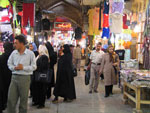
 AFP: Many shops in Tehran’s main trade hub remained closed on Tuesday, even after a government compromise in a row over taxes.
By Hiedeh Farmani
TEHRAN (AFP) — Many shops in Tehran’s main trade hub remained closed on Tuesday, even after a government compromise in a row over taxes.
Last Tuesday most store owners in Tehran’s traditional bazaar went on strike, saying the government was trying to impose a 70-percent tax hike in a year of slow business.
After days of negotiations with the traders’ representatives, the government agreed to a 15-percent tax rise, with over half the sum payable in installments, the head of Iran’s tax office Ali Asgari said on state television Tuesday.
But in downtown Tehran large sections of the cavernous bazaar that is crammed with shops selling carpets, fabrics, jewellery and home appliances among other things, remained closed, with some merchants insisting the government should further reduce taxes.
Some told AFP they needed assurances from the government that it would not demand more in taxes later in the year.
“We will remain closed for another week if our demands are not met,” said a fabric trader who only gave his first name as Saeed, sitting outside his closed store, drinking tea and smoking with colleagues.
However, for Nasser M., who did not join the strike, “it is pointless not to open the shops.
“Most of us are not heavyweight traders and have families to feed,” said the 42-year-old shopkeeper, who switched to selling lingerie after two generations in the carpet business due to a stagnant market.
Iran’s economy is heavily dependent on oil exports, and the government of hardline President Mahmoud Ahmadinejad, who first came to power in 2005, enjoyed windfall revenues before oil prices fell last year amid a global financial crisis.
His widely criticised economic policies have included tax hikes and a plan to scrap petrol subsidies from late September.
Strikes are rare at Tehran’s bazaar but in October 2008 merchants went on a week-long closure over a newly introduced value added tax, returning to work only after the government backed down.
Bazaar merchants, who played a crucial role in the 1979 Islamic revolution, are still regarded as a wealthy and powerful business group.
But they face growing control over Iran’s economy by the elite Revolutionary Guards who are key allies of Ahmadinejad.


