


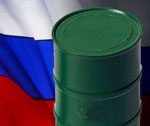
 Reuters: Russia, the world’s largest oil producer, must carve a careful path between its efforts to improve ties with Washington and its historic relationship with Iran, a fellow oil and gas power.
MOSCOW, July 22 (Reuters) – Russia, the world’s largest oil producer, must carve a careful path between its efforts to improve ties with Washington and its historic relationship with Iran, a fellow oil and gas power.
WHAT IS RUSSIA DOING IN IRAN’S ENERGY SECTOR?
Russia’s main energy project in Iran — the Bushehr nuclear power plant, which is under construction by Russian firms — is also at the crux of U.S. fears that the Islamic Republic could acquire nuclear weapons.
Russia has long said the reactor is purely for civilian electricity supply, but President Dmitry Medvedev recently said Iran was close to acquiring nuclear weapons, sparking speculation that Russia was distancing itself from Iran.
In hydrocarbons, state-controlled Gazprom’s contribution to a $2 billion consortium investment in Iran’s giant South Pars gas field is a major cross-border investment.
Its oil arm also has a memorandum of understanding to develop two Iranian fields.
But Gazprom has indicated that deals can be finalised only when it is not at risk of sanctions.
One Russian company was engaged in business specifically targeted by the sanctions regime — LUKOIL, the country’s No.2 oil producer. Earlier this year it ceased deliveries of petrol (gasoline) to Iran, leaving Tehran bereft of a key supplier of the fuel it subsidises heavily.
WILL THE THREAT OF SANCTIONS DRIVE RUSSIA OUT OF IRAN?
LUKOIL is an example of a Russian company with extensive business in the United States. It has 2,000 U.S. petrol stations, with its logo on pumps just a few kilometres (miles) from the White House, as well as a large investor base including U.S. institutions.
“It is clear that this law is designed to force foreign oil and energy companies to chose between doing business in the United States and doing business in Iran,” said Dechert partner Tom Bogle, a Washington lawyer who practices in the area of U.S. sanctions.
Iran is also pressing its partners to choose. Last week, the National Iranian Oil Company announced it would blacklist companies that abandon their business with Tehran, starting with LUKOIL.
Whether the U.S. administration would take action against Russia, a valued back-door channel to Tehran, is an open question, however. The U.S. president can waive sanctions if he can argue it is in U.S. national interests.
“Even prior to its adoption, the support that was given by Russia and China to the Security Council on the next wave of sanctions would support a finding by the president to invoke waiver authority,” Bogle said.
“My own instinct is that it would be likely to do so … You can’t enhance multinational efforts against Iran without support from Russia,” he added.
DOES RUSSIA NEED IRAN?
Russia took steps to soothe Tehran last week when Oil Minister Massoud Mirkazemi came to Moscow to meet Russian Energy Minister Sergei Shmatko and sign a “road map” for energy cooperation, preserving a key diplomatic link.
Closer to Russia’s own heart — and its state coffers — are Iran’s gas reserves and its potential role as a rival supplier to Europe.
“As long as Iran remains in the corner, Nabucco cannot be implemented. But if things change on this front, that might be a major headache for Russia,” said Sergei Lukyanov, editor of Russian in Global Affairs magazine.
Russia, which supplies a quarter of Europe’s gas, has repeatedly said the European Union-backed Nabucco, a rival to Russia’s South Stream pipeline project, lacks gas to become a commercially viable project unless Iran joins it.
SO RUSSIA IS TAKING THE LONG VIEW?
If Iran’s Russian partners are looking far enough ahead, they may be contemplating a different political landscape and opportunities unencumbered by sanctions.
Russia may simply be hoping that, by maintaining friendly ties with the current political regime, as it tried to do with Saddam Hussein’s Iraq, it might be first in line to develop Iran’s untapped resources when the sanctions threat lifted.
“Not only Russian but all international companies will step up, and it will be the same as in Iraq,” Troika Dialog analyst Valery Nesterov warned. “It will be very strong competition.” (Reporting by Melissa Akin and Dmitry Zhdannikov, editing by Jane Baird)


