


 Reuters: Iran’s top nuclear negotiator replied on Tuesday to a letter from the EU foreign policy chief on a resumption of talks over Tehran’s atomic programme, saying they must be held without pressure, state television said.
By Parisa Hafezi and Reza Derakhshi
TEHRAN (Reuters) – Iran’s top nuclear negotiator replied on Tuesday to a letter from the EU foreign policy chief on a resumption of talks over Tehran’s atomic programme, saying they must be held without pressure, state television said.
The United States and its allies suspect Iran is trying to develop atom bombs under the cover of its declared civilian uranium enrichment programme. Tehran says it needs nuclear technology only to meet booming domestic demand for electricity.
In a letter responding to Catherine Ashton’s letter sent three months ago, Iranian chief nuclear negotiator Saeed Jalili “underlined that the (next) talks should be just and with no pressure exerted,” the state-run Iranian Arabic-language television channel al Alam reported.
Analysts said references to “just” and “no pressure” are Iranian code meaning no discussions of enrichment, which Tehran sees as its sovereign right. President Mahmoud Ahmadinejad said again on Monday that Iran would not give ground on enrichment.
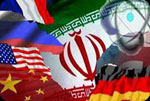
After talks with Ashton in February, Iranian Foreign Minister Ali Akbar Salehi said he hoped there would be further meetings with the “P-5+1,” the five permanent members of the U.N. Security Council — the United States, Russia, China, France and Britain — plus Germany. However, no date was set.
Negotiations held in Istanbul in January failed after Tehran again ruled out suspending enrichment in defiance of several U.N. Security Council resolutions passed since 2006.
In Paris, the French Foreign Ministry called on Tehran to react positively.
“We hope that after almost three months since Iran received (Ashton’s) letter, the Iranians will finally offer a constructive response to our proposals, go back on the preconditions for dialogue that they set in Istanbul and that they will make it possible to have real negotiations with the six (powers),” ministry spokesman Bernard Valero said.
“We are waiting for the Iranians finally to chose the path of dialogue and cooperation.”
NEXT TALKS IN ISTANBUL?
Al Alam reported that the letter responding to Ashton had been handed over in Vienna by Iran’s ambassador to the EU.
“I am happy you are returning to talks on cooperation over common points. Respecting nations’ rights and avoiding use of pressure are the two main pillars of cooperation,” Jalili said, according to a statement faxed to Reuters by the Supreme National Security Council, which he heads.
Ahmadinejad said on Monday that the next round of nuclear talks would be held in Istanbul, without giving a date.
The six powers may be unwilling to rush back to talks without any prospect of agreement, especially since many Western diplomats say it is in Iran’s interests to drag out negotiations while it increases its stockpile of enriched uranium.
Iran says the other countries must respect its “nuclear rights” and its enrichment activities are not negotiable.
In March, the six world powers said “the door remains open” for dialogue with Iran, but made clear the Islamic Republic must engage in substantive negotiations to find a diplomatic solution to a long-running dispute over enrichment-related activities.
The same month, IAEA Director General Yukiya Amano said that information his office had recently received added to concerns about possible military aspects to Iran’s activities.
Nuclear proliferation expert Shannon Kile at the Stockholm International Peace Research Institute (SIPRI) said he saw no sign of readiness from Iran to bend to international demands to rein in its nuclear activity.
“There is such a consensus now in Iran about the nuclear issue … that they shouldn’t compromise on this, this is about Iran’s sovereignty, it is about its modernity as an Islamic power,” Kile told Reuters. “I just don’t see any possibility that Iran is going to, for example, be willing to suspend its uranium enrichment programme.”
Enriched uranium can be used to run nuclear power plants or provide the fissile material for atomic bombs if refined to a much higher degree. Iran’s stockpile of low-enriched uranium is continuously growing, officials say, despite technical problems, toughened international sanctions and the Stuxnet computer worm.
(Additional reporting by Fredrik Dahl in Vienna, writing by Parisa Hafezi, editing by Mark Heinrich/David Stamp)


