


 AFP: Al-Qaeda affiliates pose a rising threat exploiting poverty and upheavals in the world’s most vulnerable regions even as the core network is on the decline, the US State Department warned Tuesday. By Jo Biddle
 WASHINGTON (AFP) — Al-Qaeda affiliates pose a rising threat exploiting poverty and upheavals in the world’s most vulnerable regions even as the core network is on the decline, the US State Department warned Tuesday.
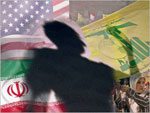
In its Country Reports on Terrorism 2011, the department also branded Iran “the world’s leading sponsor of terrorist activity” providing funds and support “for terrorist and militant groups throughout the Middle East.”
Hailing the killing of Al-Qaeda leader Osama bin Laden in a US commando raid on his Pakistani compound in May 2011, the report noted he had “remained deeply involved in directing (the group’s) operations and setting its strategy.”
“The loss of bin Laden and these other key operatives puts the network on a path of decline that will be difficult to reverse,” the annual report to Congress said.
But, while the core group of Al-Qaeda may have been weakened over the past year, “we have seen the rise of affiliated groups around the world.”
“There’s no question there’s cause for concern,” the State Department’s coordinator for counterterrorism, Daniel Benjamin, told journalists, adding “we just can’t relax.”
He stressed though that the core Al-Qaeda group had been the most “capable part of the organization” with the ability to carry out “catastrophic attacks on a scale that none of the affiliates have been able to show.”
He pointed to Al-Qaeda in the Arabian Peninsula as “the most dangerous of the affiliates,” although he praised the efforts of new President Abdrabuh Mansur Hadi to crack down on the militants.
AQAP had gained territory in southern Yemen, and “was exploiting unrest in that country to advance plots against regional and Western interests,” the report charged.
Meanwhile Al-Qaeda’s north African branch, known as AQIM, “historically the weakest of the affiliates, saw its coffers filled in 2011 with kidnapping ransoms,” it added.
Al-Qaeda affiliates were also at work in Iraq, capitalizing on the withdrawal of US forces from there.
Despite suffering recent leadership losses, the Iraqi branch was “resilient” and “believed to be extending its reach into Syria and seeking to exploit the popular uprising against the dictatorship of Bashar al-Assad.”
According to the report there were more 10,000 terror attacks around the globe in 2011 in 70 countries leading to over 12,500 deaths. However, the figures represent a five-year low, having dropped by almost 12 percent from 2010 and by 29 percent from 2007.
Benjamin called 2011 “an extremely significant year in counterterrorism” not just because of the death of bin Laden, but also because of the Arab Spring, with millions demanding change in the Middle East without reference to “Al-Qaeda’s incendiary world view.”
He warned of “attendant perils” though in which “terrorists could still cause significant disruptions for states undergoing” transformation.
The number of Al-Qaeda fighters in Syria was believed to be small, he said.
“But there is a larger group of foreign fighters, many of whom are not directly affiliated with AQ, who are either in or headed to Syria. And clearly, this is a matter of concern for all who fear greater violence in Syria and for regional stability.”
The other main terror threat to the United States remained Iran, which was designated by the US as a State Sponsor of Terrorism in 1984.
“Iran remained an active state sponsor of terrorism in 2011 and increased its terrorist-related activity,” the report said, which came the same day as US President Barack Obama imposed new economic sanctions on Iran’s oil export sector.
The Islamic Republic was likely seeking “to exploit the uncertain political conditions resulting from the Arab Spring, as well as in response to perceived increasing external pressure on Tehran.”
A plot uncovered in September to kill Saudi Arabia’s ambassador to the US “underscored anew Iran’s interest in using international terrorism — including in the United States — to further its foreign policy goals.”
Tehran was also continuing to provide arms and training to militant groups such as Hamas and other Palestinian extremist groups, as well as Hezbollah.
The report also charged that Iran was allowing Al-Qaeda members to use its territory as a pipeline to funnel funds and operatives into South Asia.
And it highlighted concerns about Boko Haram militants in Nigeria, said to have Al-Qaeda ties, and the situation in Egypt’s Sinai Peninsula.


