


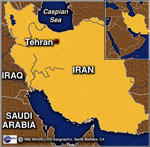
 AP: Despite unprecedented global penalties, Iran’s nuclear program is advancing. The United States and other Western nations fear the Islamic republic is determined to develop nuclear weapons and fundamentally reshape the balance of power in the Middle East.
The Associated Press
By BRADLEY KLAPPER
The issue:
 With the Iraq war over and Afghanistan winding down, Iran is the most likely place for a new U.S. military conflict. Despite unprecedented global penalties, Iran’s nuclear program is advancing. The United States and other Western nations fear the Islamic republic is determined to develop nuclear weapons and fundamentally reshape the balance of power in the Middle East, while posing a grave threat to Israel. Iran insists its program is solely designed for peaceful energy and medical research purposes.
Where they stand:
Since taking office, President Barack Obama has adopted a two-pronged Iran policy while stating unequivocally that he will prevent Iran from acquiring nuclear weapons. His administration has imposed crippling oil and financial penalties to press Iran into halting its uranium enrichment activity. At the same time, he’s offered the prospect of closer ties with the rest of the world if the Shiite government ends enrichment. Diplomacy hasn’t curbed Tehran’s nuclear ambitions, but Obama insists military action should only be a last resort. He has pressed Israel to allow more time for sanctions and negotiations, putting him at odds with a close U.S. ally that has been the most aggressive advocate of a military response.
Mitt Romney accuses Obama of being weak on Iran. He says the U.S. needs to present a credible threat of military action and should work with insurgents to bring down Iran’s government, not coax it into better behavior through engagement. His aides have spoken of the need to prevent Iran from even acquiring the capability to develop nuclear weapons, a criterion that could lower the bar for a military response. Romney’s Iran policy dovetails with his argument that he’d be a sturdier ally of Israel. He says he’d support the Jewish state if it decides to attack Iran.
Why it matters:
Nuclear weapons in the hands of Iran would destabilize the entire Middle East and potentially spark a new nuclear race. Israel would fear for its very existence. Iran’s Sunni rivals Saudi Arabia, Turkey and Egypt might seek their own nuclear deterrents. Iraq and Lebanon would risk falling further under Iran’s sway. The risk of anti-U.S. militant groups such as Hamas and Hezbollah acquiring nuclear weapons would be a danger Washington couldn’t accept.
Timing counts. Israel fears its window for action is narrowing as Iran shifts more operations underground. At some point, only the U.S. would have the technological capacity to reach Iran’s deeply buried nuclear facilities.
Attacking Iran is no light matter, however. That is why neither candidate is clearly calling for military action. Tehran can retaliate by disrupting global fuel supplies from the Persian Gulf, through which about one-fifth of the world’s oil flows. It can hit U.S. allies in the Gulf or support proxies such as Hezbollah in acts of terrorism. It can draw the United States into a major war at a time of staggering U.S. debt and continued economic struggles.
It’s unclear what a war would ultimately accomplish. Intelligence assessments have suggested that an attack could set back Iran’s nuclear program, but not kill it. Military action could end up driving Iran’s pursuit of a nuclear weapons and rallying the country behind an unpopular government. It could also divide the U.S. and Western allies that prefer continued diplomacy.
On the other hand, Iran has shown no evidence that it is willing to seriously negotiate over its nuclear program.


