


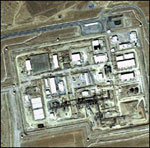
 AFP: UN nuclear experts inspected Iran’s Arak heavy water plant on Sunday for the first time since summer 2011, amid international concern that the half-built site may have a military purpose.
Tehran (AFP) — UN nuclear experts inspected Iran’s Arak heavy water plant on Sunday for the first time since summer 2011, amid international concern that the half-built site may have a military purpose.
No details were immediately available from the one-day inspection of the site 240 kilometres (150 miles) southwest of Tehran.
The visit was made possible after a mid-November agreement that also granted the International Atomic Energy Agency access to another nuclear-related site.
Iran’s atomic energy organisation spokesman Behrouz Kamalvandi said the two IAEA inspectors, including the head of the agency’s Iran task force Massimo Aparo, would leave for Vienna later Sunday.
They arrived on Saturday and went straight into talks with Iranian nuclear officials.
After the meeting Kamalvandi said Tehran had provided the agency with “required information on ongoing research” about its new generation of centrifuges that enrich uranium by spinning it at supersonic speed.
The small heavy water research reactor at Arak is of concern to the international community because Tehran could theoretically extract weapons-grade plutonium from its spent fuel if it also builds a reprocessing facility.
Arak has been plagued by a series of delays, however, and its stated completion date of 2014 is expected to slip back even further.
But a year after it eventually comes on line, it could provide Iran with an alternative to highly enriched uranium used for a nuclear bomb.
Tehran insists that its activities are entirely peaceful, and says the Arak reactor would create isotopes for medical and agricultural use.
Fate of Arak remains key
Although the IAEA does not have a permanent presence in Iran, it regularly checks work on the Arak reactor. It has also been pushing Tehran to disclose any new design detail on the reactor since 2006.
Before Sunday, its inspectors had not been to heavy water plant at the facility since August 2011.
Sunday’s inspection comes just weeks after Iran clinched a landmark deal with world powers under which it will freeze or curb some of its nuclear activities in return for limited relief from crippling international sanctions.
The interim six-month accord struck in Geneva is meant to buy time for diplomacy to ease Western and Israeli suspicions that Iran’s nuclear drive has military objectives, despite repeated denials.
Concern about the Arak reactor was one of several sticking points in the negotiations, since several UN Security Council resolutions require Iran to suspend work at Arak.
Based on the agreement, Iran is obliged to “not commission the reactor or transfer fuel or heavy water to the reactor site” or instal remaining components at the unfinished facility.
It also agreed to increase cooperation with the IAEA.
A “roadmap” agreement was signed in mid-November between IAEA chief Yukiya Amano and Iran’s nuclear chief Ali Akbar Salehi in Tehran after years of unsuccessful negotiations.
The IAEA will now also have access to the Gachin uranium mine near the Strait of Hormuz and off the Gulf.
Kamalvandi said Sunday that Iranian representatives and the UN would next week probably discuss an IAEA visit to Gachin.
“Details have not been discussed, but it is highly likely that the framework and a timeline for a visit to Gachin will be discussed in the talks in Vienna on Wednesday,” he told the ISNA news agency.
Another nuclear site causing international concern is the Parchin military facility where the IAEA suspects Iran may have experimented with atomic weapon development.
Tehran has so far denied the agency access to Parchin, saying that its military nature makes it off limits.
However, the new developments in negotiations with world powers and the IAEA have raised the possibility of a visit to the site.


