


 AFP: UN chief Ban Ki-moon strongly criticised Iran Wednesday for doing too little to improve its human rights record, noting more executions, the detention of regime opponents and discrimination against women.
Geneva (AFP) — UN chief Ban Ki-moon strongly criticised Iran Wednesday for doing too little to improve its human rights record, noting more executions, the detention of regime opponents and discrimination against women.
The United Nations’ concerns about rights violations in the Islamic republic include “amputations, flogging, increased application of the death penalty, arbitrary detention and unfair trials,” Ban said in a new report.
The UN secretary general among other things called for “the immediate release” of two opposition leaders, Mehdi Karoubi and Mir Hossein Mousavi, and for “their urgent and adequate access to medical care.”
The two men have been held incommunicado under separate house arrest since February 2011, accused of orchestrating massive street protests sparked by a disputed presidential election in 2009.
They have both been denied medical care despite suffering serious health problems, Ban said in his report, which is to be presented to the UN Human Rights Council on March 26.
Several Iranian officials reacted angrily to the report.
Ban was “the weakest UN secretary general”, said Ali Akbar Velayati, international affairs adviser to Iran’s supreme leader, Ayatollah Ali Khamenei.
“He is completely under the orders of the United States,” Velayati charged, quoted by Fars news agency.
And judiciary chief Ayatollah Sadegh Larijani condemned the report, while accusing the West itself of violating fundamental rights.
He also criticised EU foreign policy chief Catherine Ashton’s meeting with rights activists during her weekend visit to Tehran as “contrary to the security and interests of the country”.
“If this is repeated, the judiciary will intervene and the foreign ministry will be held responsible for the consequences,” he said.
In parliament, 40 MPs called for the foreign minister to be questioned over the incident.
Dozens of protesters, meanwhile, held a demonstration on Wednesday in front of the embassy of Austria, which arranged Saturday’s meeting between Ashton and the activists, who had spent time behind bars.
Ban did however hail the government of reputed moderate President Hassan Rouhani for taking “some commendable steps in the area of human rights,” including the release of more than 80 political prisoners since last September, among them high-profile activist Nasrin Sotoudeh.
But he stressed that many others remained in prison, demanding for instance the liberation of human rights defenders Abdol Fattah Soltani, Mohammad Ali Dadkha and Mohammad Seifzadeh, “detained solely for exercising their rights to freedom of expression, association and assembly.”
– Free expression curtailed –
Freedom of expression in Iran is still severely curtailed, Ban said, with some 35 journalists in prison at the end of 2013 and up to 50 million Internet websites blocked and the general population barred from using social media sites such as Facebook and Twitter.
Ban raised concerns about discrimination and prosecution of women and minorities, pointing out that “laws that permit gender discrimination and promote violence against women continue to be introduced.”
He cited a 2013 law allowing for marriage between children as young as nine and a legal guardian.
Last year’s presidential election was also marred by “the disqualification of a large number of candidates, including all women candidates,” he added.
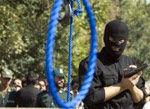
Ban said he was “alarmed at the sharp rise in executions” in Iran, including of political prisoners, especially during the second half of 2013.
He said at least 500 people had been executed last year, including 57 in public and reportedly 27 women and two children.
The surge has continued this year, with more than 40 people reportedly executed during the first half of January alone, Ban said, adding that the majority of the executions were of people convicted of drug-related offences.


