


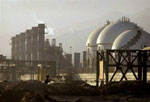
 Bloomberg: Iran’s petrochemical exports are still hampered by western sanctions even as an embargo on sales of the products are suspended during negotiations with global powers to limit the country’s nuclear program, an official said. Transferring payments for sales and securing insurance for exports remain the biggest hindrances for petrochemical producers.
Bloomberg
By Golnar Motevalli
Iran’s petrochemical exports are still hampered by western sanctions even as an embargo on sales of the products are suspended during negotiations with global powers to limit the country’s nuclear program, an official said.
Transferring payments for sales and securing insurance for exports remain the biggest hindrances for petrochemical producers, Mohammad-Hasan Peyvandi, Vice President of Iran’s National Petrochemical Company, said in an interview at his Tehran office yesterday.
“There are problems with exporting petrochemicals, but they relate to issues surrounding insurance,” Peyvandi said. “It has gotten better. In the past three to four months, we’ve had between 4 to 6 percent” increases in production and exports. Chemical output rose from the 40.6 million tons and exports from the 13 million tons achieved in the Iranian calendar year through March 2014 due to better industry management, economic conditions and lower inflation, he said.
Foreign investment in Iran’s chemical and energy industry is restricted by western sanctions designed to dissuade the Islamic republic from pursuing a nuclear program the U.S. and its allies say may lead to atomic-weapons technology. Iran, which says its nuclear plans are peaceful, and six global powers have given themselves until Nov. 24 to agree on limits to the nuclear program in return for lifting sanctions.
Under the agreement governing the talks, insurers can underwrite ships transporting Iranian goods and European and U.S. companies can again purchase Iranian petrochemicals. The short window for sanctions relief — initially meant to last only six months before last month being extended another four to November — has made it harder to benefit from eased restrictions on chemical sales and banking, Peyvandi said.
Iran’s planned $20 billion petrochemical hub at Chabahar on its southeast coast may be open to foreign investment once restrictions are lifted, Peyvandi said. The port has direct access to the Arabian Sea and Indian Ocean and sits at the end of a natural gas pipeline to Pakistan, across the border.
The country is investing to tap global markets and could triple petrochemical production capacity to 180 million metric tons, Deputy Oil Minister and National Petrochemical President Abbas Sheri-Moqaddam said in an interview June 7. Output at that level could bring in revenue of at least $90 billion, he said, without specifying a time frame for the expansion.
National Petrochemical, a branch of the Oil Ministry, gives strategic direction to the industry. Foreign companies have little involvement in domestic operations, which is mainly operated by private firms, Peyvandi said.
Peyvandi said there have been no formal approaches from foreign companies seeking to invest in the industry.
“We haven’t insisted,” he said. “This is so that a problem doesn’t arise for anyone. Right now at least the industry has reached a good level of self-sufficiency.”


