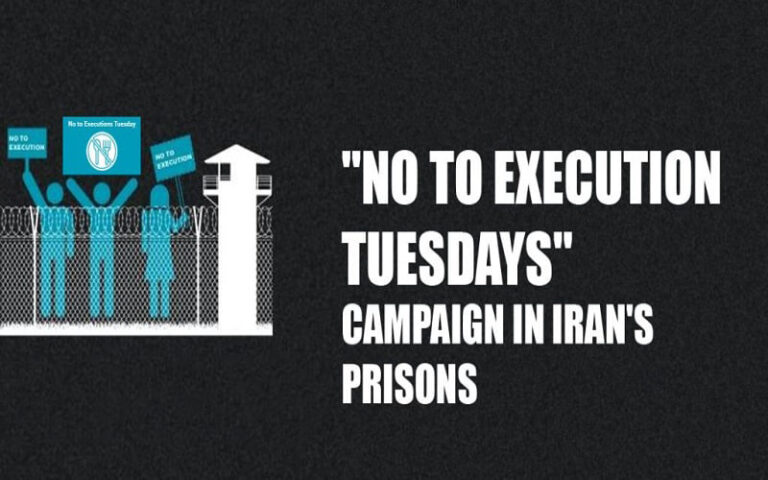
The “No To Executions Tuesdays” campaign has warned about the rising number of executions in Iran and called for urgent action to prevent the execution of non-political prisoners on death row at Ghezel Hesar Prison, as well as support for political prisoners sentenced to death, particularly those arrested during the January 2026 protests.
In the 129th week of the “No To Executions Tuesdays” campaign, political prisoners in 58 prisons across Iran held a hunger strike on Tuesday, July 14, once again expressing their opposition to the continued issuance and implementation of death sentences. Over the past two years, the campaign has become one of the broadest, most sustained, and most influential protest movements inside Iran’s prisons. Despite security pressure, threats, communication restrictions, and punitive measures, it continues its activities, with more prisoners joining every week.
The full statement issued during the 129th week of the “No To Executions Tuesdays” campaign is as follows:
Continuation of the “No To Executions Tuesdays” campaign in 58 prisons during its 129th week.
Borujen Prison joins the campaign
Call to save the lives of non-political prisoners on death row in Ghezel Hesar Prison and warning over the escalation of death sentences against political prisoners.
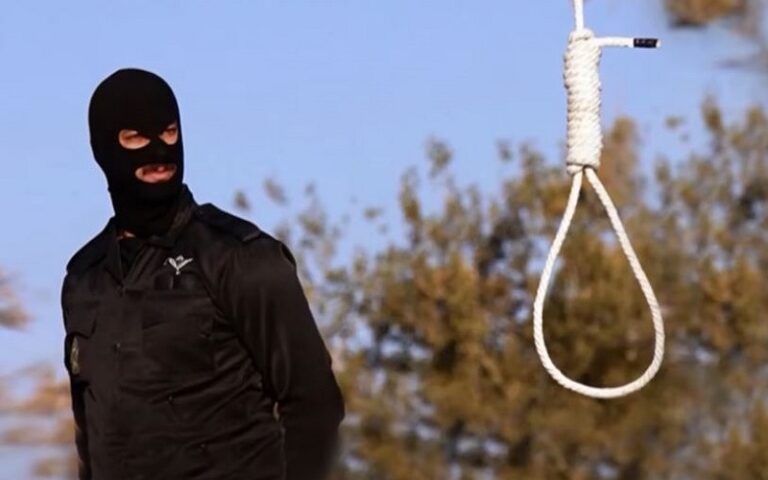
Two years after Masoud Pezeshkian, the appointed president of Iran’s regime, took office, the number of executions has risen alarmingly, with at least 3,888 people executed so far.
According to reports, a 52-year-old female prisoner was hanged at Adel Abad Prison in Shiraz last week.
As this campaign of executions and repression continues, harsh sentences and death penalties are being imposed on prisoners, particularly those arrested during the January 2026 uprising. In addition to the dozens already executed in connection with the uprising, more than 100 other political prisoners whose names have been made public are currently under death sentences.
According to the latest reports, the following death sentences have been issued for 12 prisoners in the case known as the “Alikhani Square Case” in Isfahan:
Alireza Sepahi, born in 2001, sentenced to death four times.
Abolfazl Sepahi, born in 2003, sentenced to death three times.
Alireza Raeisi, born in 2004, sentenced to death twice.
Ghaem Hosseini, born in 2005, sentenced to death twice.
Gol Mohammad Mohammadi, born in 2002, an Afghan citizen, sentenced to death twice.
Amirhossein Safari, born in 1998, sentenced to death.
Amirhossein Maleki, born in 2006, sentenced to death.
Ali Dashti, born in 2006, sentenced to death.
Amirhossein Ebrahimi Analoujeh, born in 2006, sentenced to death.
Shervin Bagherian, born in 2007, sentenced to death.
Erfan Esfandiari, born in 2007, sentenced to death.
Abolfazl Ebrahimi, born in 2007, sentenced to death.
Three of these political prisoners were children under the Convention on the Rights of the Child at the time of their arrest.
In another repressive and misogynistic action, on Sunday, July 12, guards at Evin Prison attacked the women’s political ward and cracked down on female prisoners protesting the overcrowding of the ward.
According to information received by the campaign, since Monday, July 13, prisoners in Unit 2 of Ghezel Hesar Prison have been protesting and holding a hunger strike in response to the transfer of six fellow inmates to solitary confinement for execution.
It should be noted that last August, 1,500 prisoners in this unit held a week-long strike in protest against the execution of fellow inmates. Their action succeeded in halting the executions of prisoners convicted on drug-related charges at the prison, and prison authorities promised to reconsider those executions.
An unequal struggle is underway inside Iran’s prisons. Iran’s regime resorts to executions to prevent popular protests while simultaneously using external conflict to justify domestic repression.
In response, prisoners and members of the “No To Executions Tuesdays” campaign have held hunger strikes and protests every Tuesday for 129 consecutive weeks against the crime that Iran’s regime carries out daily in its prisons, remaining steadfast throughout this struggle.
This week, a group of prisoners at Borujen Prison in South Khorasan Province also joined the “No To Executions Tuesdays” campaign.
Campaign members warn of the imminent execution of prisoners at Ghezel Hesar Prison and call on everyone to be the voice of those sentenced to death in connection with the January uprising.
Prisoners participating in the “No To Executions Tuesdays” campaign are on hunger strike on Tuesday, July 14, during the campaign’s 129th week in 58 prisons across the country.