Home Blog

The Gallows: The Real Story of Iran Behind the Oslo Ceremony

0

In an article published on June 8, the Norwegian newspaper Fædrelandsvennen sought to draw public attention to a different issue—one that, in its view, represents the reality of Iran today more than any other event: the “gallows.”

At the beginning of the article, the author refers to years of work and contact with Iranian refugees and activists. These are individuals who, after leaving Iran, now live in Norway but still carry memories of interrogations, imprisonment, and security pressures. According to the author, many of them continue to live with the psychological effects of years of repression, and their experiences show that Iran’s regime has not only targeted human lives but has also sought to destroy hope and the future.

In the article, the author refers to a ceremony in Oslo where Noor Pahlavi, granddaughter of the ousted shah, was welcomed by attendees. The event received media coverage and included discussion of the legacy and continuity of the Pahlavi family. However, the author argues that while these images were being highlighted, another reality was unfolding in Iran—a reality that, according to the author, was overshadowed by media attention.

The Pahlavi Restoration: A Legacy of Torture and Revisionism

The Gallows and the Execution of Prisoners

The author notes that several prisoners were executed in Iran within just a few days. He refers to political prisoners who have faced the death penalty because of their demands for political and civil rights. In the author’s view, the gallows in Iranian cities is an image that should accompany any political narrative about the country’s future.

The article emphasizes that public attention should not be focused solely on well-known political figures or historical symbols, but should also be directed toward the situation of prisoners, civil activists, and individuals facing the threat of execution.

Criticism of the Monarchy Narrative as an Alternative

Another section of the article criticizes the view that presents the Pahlavi family as the natural future alternative for Iran. The author argues that Iran’s regime has, over the years, attempted to create the impression that the only available alternative to the current system is the restoration of the monarchy.

He argues that the prominence given to members of the Pahlavi family in Western media and political circles, while the gallows of the clerical regime remain active in Iran, can reinforce this perception. The author also notes that for part of Iranian society, the Pahlavi era is associated with memories of political repression and the activities of SAVAK, the former intelligence and security organization under the monarchy, and therefore cannot simply be equated with democracy.

Within this framework, the author raises questions about the political legitimacy of Reza Pahlavi. He asks what democratic mechanism has led to his being presented as a representative of the Iranian people and what election has conferred such a position upon him.

The Less-Heard Voices of the Opposition

In the final section, the author emphasizes the situation of thousands of political and civil activists who have opposed Iran’s regime over the past decades. These are individuals who have experienced imprisonment, torture, or even death by the gallows, yet whose names and stories have received little attention in international media.

He believes that Western countries, including Norway, have no responsibility to determine Iran’s future leaders. In his view, that choice must be made by the Iranian people. Nevertheless, media organizations and political institutions can decide which voices to amplify and which narratives to give greater opportunities to be heard.

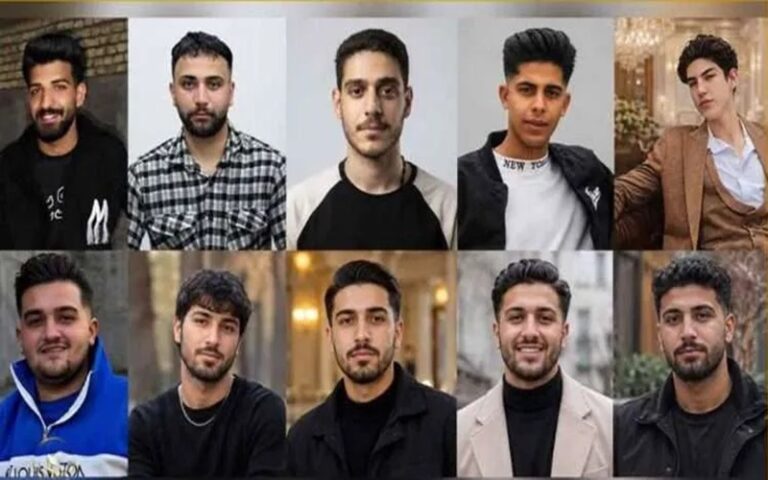
At the conclusion of the article, the author stresses that the young people currently facing the risk of execution in Iran’s prisons are not seeking special recognition or celebration. They simply ask not to be forgotten and for their voices not to be lost amid political and media narratives.

By placing the “gallows” at the center of its narrative, the article seeks to redirect the attention of Western audiences from symbolic ceremonies and well-known political figures toward the human rights situation and executions in Iran. The author argues that the reality of Iran today is best understood through the fate of political prisoners, victims of repression, and families who continue to pay a heavy price for freedom and democracy.

Lebanese President Expresses Clear Opposition to Iran’s Regime

Recent remarks by Lebanese President Joseph Aoun regarding the role of Iran’s regime in developments in Lebanon have received widespread coverage in regional and international media. At a time when Lebanon continues to struggle with the consequences of war, economic crisis, and political tensions, he accused Tehran of using Lebanon as a tool to advance its objectives in negotiations with the United States.

According to a Reuters report published on June 6, Joseph Aoun stated that using Lebanon as a bargaining chip in foreign negotiations is unacceptable. He emphasized that the Lebanese people are paying the price for wars and conflicts that have no connection to the country’s national interests.

Direct Criticism of Iran’s Regime’s Role in Lebanon

In his remarks, Lebanese President Joseph Aoun said that Lebanese citizens are paying the cost of war for Iran’s interests. He added that the Lebanese people are exhausted by the conflict between Israel and Hezbollah and that the continuation of this situation has placed a heavy burden on the country’s society and economy.

These remarks come as Lebanon has witnessed escalating tensions along its southern border in recent months. Clashes between Israel and Hezbollah have caused extensive damage to infrastructure and residential areas and have forced thousands of people to leave their homes. At the same time, the economic crisis continues to cast a shadow over the daily lives of Lebanese citizens.

Reuters described these comments as Joseph Aoun’s strongest criticism of Iran’s regime and Hezbollah since the beginning of his presidency. The significance of this position lies in the fact that a substantial part of Lebanon’s political structure has been influenced by Hezbollah’s presence and influence over the past decades.

Lebanon Between Crisis and Regional Rivalries

In recent years, Lebanon has faced a combination of overlapping crises. Economic collapse, the depreciation of the national currency, rising poverty, and large-scale emigration on one hand, alongside security tensions on the other, have created extremely difficult conditions for the country.

In this environment, debate over the role of foreign actors in Lebanon has once again become one of the central issues in political disputes. Critics of Iran’s regime argue that Tehran’s policies and its support for Hezbollah have turned Lebanon into an arena for regional competition. In contrast, Hezbollah’s supporters view the group as part of the country’s defensive structure.

Joseph Aoun’s remarks can be regarded as one of the most explicit official positions taken by the Lebanese government against the influence of Iran’s regime and Hezbollah’s role in the country’s affairs. These comments were made at a time when Lebanon continues to bear the heavy costs of political, economic, and security crises. The Lebanese president’s recent position has once again brought attention to the extent of Tehran’s influence over Lebanon’s internal decisions and the consequences of that influence for the Lebanese people.

Rationing and Sharp Increases in Bread Prices Across Iran

The livelihood crisis and intensifying economic pressures in Iran have now affected one of the most basic daily necessities for people: bread. Reports and messages received on Tuesday, June 9, from Tehran, Karaj, Isfahan, Khorasan Razavi, Mazandaran, and several other provinces indicate that, in addition to official and unofficial increases in bread prices in many cities, some bakeries receiving government-subsidized flour have begun rationing bread sales and are selling only a limited number of loaves to each customer.

These reports come as public disputes have intensified in recent days among the government, state-run media outlets, and officials of Iran’s regime over responsibility for the economic crisis.

Food Basket Share Reaches 71% of Iranian Workers’ Minimum Wage

In some areas of Tehran, bakeries receiving government-subsidized flour have informed customers that it is not possible to sell more than three barbari loaves or two sangak loaves (a traditional Iranian bread) to each person. At the same time, some residents have reported restrictions on purchasing bread using bank cards.

According to a directive communicated to some bakeries, purchasing more than three loaves of bread with a single bank card is not permitted, and customers must use another bank card if they wish to buy more. This has caused confusion and protests among many people.

Inflation, rising prices, and economic pressures have spiraled out of control. Sangak bread, which cost 70,000 rials just three months ago, is now sold for more than 200,000 rials, and each bakery charges its own price.

The reduction in government flour allocations and rising production costs have placed many bakeries in a difficult situation. Labor costs, shop rents, electricity bills, and raw material expenses have multiplied. Flour allocations have also been reduced, and some bakeries genuinely struggle to pay their workers’ wages.

In recent days, bread price increases have also been officially announced in various provinces across Iran. In Zanjan, the deputy governor reported an average increase of about 60% in bread prices, while in Yazd, new rates were communicated to bakeries starting on June 8. In North Khorasan Province, bread prices increased by an average of up to 80%.

In Mashhad, trade officials also reported an approximately 50% increase in bread prices. Government officials in Markazi Province likewise confirmed that the prices of some bread varieties have risen by more than 80% for consumers.

Meanwhile, field reports indicate that official price controls are effectively not being enforced in Tehran, and many bakeries producing sangak, barbari, and taftoon bread are selling their products at prices far above government-set rates.

Rising production costs in the agricultural sector have also fueled the latest wave of price increases. According to a report by the state-run Donya-e-Eqtesad newspaper, the cost of supplying certain chemical fertilizers has increased by as much as 600% this year, driving up the prices of wheat and other essential products and placing additional pressure on household budgets.

As the livelihood crisis intensifies, divisions within the ruling establishment have become more visible. While Masoud Pezeshkian, the president of Iran’s regime, has attributed part of the economic problems to external pressures and the consequences of war and has urged the public to be aware of the costs of resistance, media outlets aligned with rival factions and some officials from the previous administration identify the government’s economic policies as the primary cause of inflation.

In recent days, these disputes have even escalated into clashes between Pezeshkian’s associates, managers of state media outlets, and officials of IRIB, Iran’s state broadcaster, on social media and in state-run media.

These developments come as many people in Iran say the issue is no longer merely the rising price of a single commodity or restrictions on purchasing a specific product. Rather, it is about the continuous decline in purchasing power and the shrinking capacity of household budgets. What is now visible in bakery lines is only a sign of a broader crisis in Iran—a crisis that began with inflation, the devaluation of the national currency, resource shortages, and the consequences of war, and has now reached even bread, the most basic staple consumed by millions of Iranians.

Internet Shutdowns Have Devastated the Livelihoods of Millions of Iranians

Following widespread and repeated internet shutdowns in Iran ordered by regime officials, reports by trade and professional organizations show that the economic consequences of these decisions have pushed the livelihoods of millions of Iranians to the brink of collapse. Those affected range from Instagram sellers and content creators to knowledge-based companies, home-based businesses, local enterprises, students, researchers, physicians, and anyone whose work, customers, or audiences depend on stable and unrestricted internet access for even the most basic academic, professional, or commercial activities.

As runaway inflation continues and the value of the Iranian rial declines further amid a wartime atmosphere, on Tuesday, June 9, the U.S. dollar reached a new record high of 1.8 million rials in Iran’s market.

Under such circumstances, internet shutdowns mean the loss of the last remaining source of income for millions of people, the closure of businesses, and complete exclusion from the labor market. Messages received from various cities across Iran confirm this reality.

Iran’s Regime Grudgingly Backs Down from its Longest Internet Shutdown

Admissions by Regime Officials

The crisis is not limited to small businesses. Alireza Esteghamati, dean of the School of Medicine at Tehran University of Medical Sciences, stated that internet restrictions had disrupted the university’s scientific and educational activities. Professors were forced to take turns using the available internet services. He emphasized that many academic tasks, including preparing classes and lectures—work usually carried out at home during evening hours—had been hindered by internet disruptions.

The Iranian regime has also criminalized the use of Starlink satellite internet. Reports from the judiciary indicate that hundreds of people have been arrested solely for purchasing Starlink equipment. As a result, many citizens seeking unrestricted internet access are forced either to buy expensive and insecure VPN services or to risk arrest and prosecution.

Even some officials of the Iranian regime have been compelled to acknowledge the scale of the crisis. Among them is Abdolkarim Hosseinzadeh, vice president for rural development and deprived areas under Iranian regime president Masoud Pezeshkian, who said that internet shutdowns have created serious difficulties for many home-based businesses, local producers, and women entrepreneurs in securing even basic livelihoods.

He stressed that the internet is no longer merely a tool for entertainment but a source of livelihood for many households. He added that providing special “pro” internet access to entrepreneurs alone cannot solve the problem because customers also need access to unrestricted internet.

$80 Million in Daily Losses

Online business operators have repeatedly stated that an internet business cannot survive merely because the seller remains connected. If customers cannot access a page, place orders, make payments, or send messages, sales effectively come to a halt.

Etemad, a Tehran-based newspaper, reported on May 4 that the direct losses caused by internet restrictions were estimated at $30 million to $40 million per day. Including indirect consequences, the figure could reach as high as $80 million daily.

According to Etemad, the livelihoods of more than 10 million people have been affected directly or indirectly by these conditions.

Reza Alfatnasab, head of the Union of Virtual Businesses, told Khabar Online that sales at some large businesses had fallen by 40% to 50%, while small and medium-sized enterprises had experienced declines of 50% to 70%. He noted that around 2,000 companies in Iran have the capacity to survive only one to two months under current conditions, while micro-businesses can endure even less.

The Iranian news website Eghtesad News has also confirmed that internet outages have significantly reduced employment opportunities and intensified competition among workers. According to the report, jobs tied to the digital economy—including startups, content creators, and online service providers—have suffered the most from internet shutdowns, with some companies laying off more than 50% of their workforce. Women have been particularly affected, as female employment has declined by 233,000 jobs and their labor force participation rate has fallen to 12.2%.

Alongside this crisis, the VPN market has become a lucrative black-market economy for some individuals linked to senior regime officials. The state-run news website Rouydad24 reported that as restrictions intensified, VPN services became an essential household expense, with the market’s turnover reaching tens of trillions of rials.

Experts say that some VPN services that continue to function easily despite restrictions would not be able to operate without access to special infrastructure and substantial bandwidth. This has reinforced unofficial reports that groups connected to the internet-filtering apparatus are profiting from the VPN market.

Ettela’at newspaper, whose editor-in-chief is appointed by the Iranian regime’s supreme leader Ali Khamenei, warned in an editorial that several-hundred-percent increases in the prices of essential goods, stagnation in the labor market, disruptions in parts of the production chain, and internet shutdowns—which had served as the foundation for many online businesses—have created a severe crisis that cannot be ignored through platitudes or vague statements.

Internet shutdowns are a tool used by the Iranian regime, and whenever society moves toward unrest and protest, the regime attempts to suppress the population by cutting access. An example cited is January 8 and 9, when, according to the text, the Iranian regime shut down internet and media access and killed thousands of people in order to conceal the scale of the killings.

Iran’s ‘No to Executions Tuesdays’ Campaign Enters 124th Week

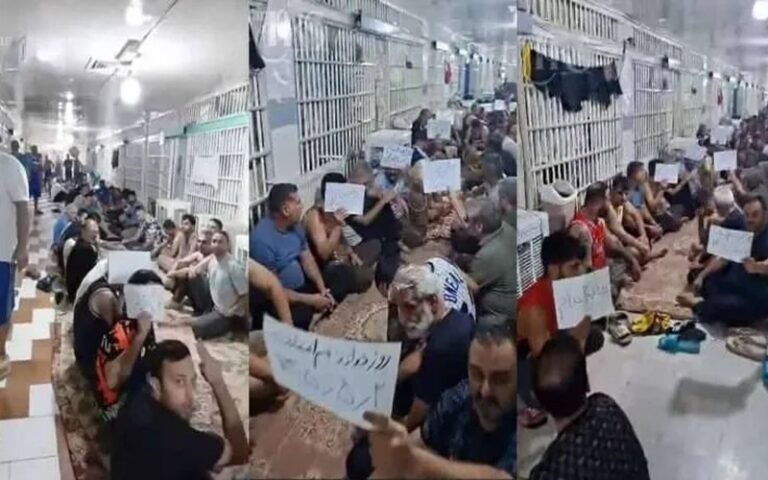
On Tuesday, June 9, the “No to Executions Tuesdays” campaign entered its 124th week and once again emphasized its demand for an end to all executions. On this occasion, the prisoners issued a statement stressing that they call on all segments of society and their fellow compatriots to raise their voices in seeking justice against the issuance and implementation of unjust death sentences and to express their opposition in the strongest possible terms.

Full Text of the “No to Executions Tuesdays” Campaign Statement

Continuation of the “No to Executions Tuesdays” Campaign in Its 124th Week Across 56 Prisons

During the past week, aware and informed students took to the streets in various cities to defend their rights and demonstrate that they have grown weary of government policies in the field of education, which stand in clear contradiction to educational justice. The “No to Executions Tuesdays” campaign supports these brave and aware students. Without a doubt, Iran’s future will be bright with such passionate individuals.

Since May 22, the regime has hanged at least 49 people and, as part of its continuing campaign of intimidation and repression, has once again upheld the death sentence of political prisoner Yaghoub Derakhshan in Lakan Prison in Rasht. It has also issued death sentences against political prisoners Yasin Shahbakhsh, Hassan Mosallavi, and Ali Kamali.

In addition, four other political prisoners—Farshad Etemadifar, Alireza Mardasi, Masoud Jamei, and Reza Abdali—are facing the imminent implementation of their death sentences in Sheiban Prison in Ahvaz, and their lives are in danger.

The members of the “No to Executions Tuesdays” campaign, who have stood against these inhumane executions for the 124th consecutive week, and whose members have faced execution or various forms of pressure from prison authorities and security agencies, are once again raising their voices more strongly than ever in defense of the fundamental right to life. This right is the source of all human rights, and safeguarding it is a sign of the maturity, equality, freedom, and humanity of any society. Therefore, they call on all segments of society and their fellow compatriots to raise their voices for justice against the issuance and implementation of unjust death sentences and to express their opposition in the strongest possible manner.

Freedom and justice are the right of every human being, and true justice is achieved not through death and the deprivation of the right to life, but through respect for human rights. Therefore, to obtain these rights from oppressive and authoritarian rulers, one must struggle and resist.

Political prisoners participating in the “No to Executions Tuesdays” campaign are on a hunger strike on Tuesday, June 10, during the 124th week of the campaign across 56 prisons throughout the country.

Food Basket Share Reaches 71% of Iranian Workers’ Minimum Wage

Studies show that the cost of providing essential food items for a family of four in May 2026 exceeded 210 million rials (approximately $117), accounting for 71.5% of the minimum wage. The figure was 53.9% in May 2025, indicating increasing pressure on the living standards of low-income households.

The state-run Donya-e-Eqtesad newspaper reported on Sunday, June 7, that if inflation continues to rise and the minimum wage remains unchanged in 2026, the entire monthly income of minimum-wage earners could be consumed by food expenses in the coming months.

Experts Warn About Declining Dairy Consumption and the Risk of Expanding Malnutrition in Iran

According to the report, if the government food voucher program is eliminated, the share of food expenses in the minimum wage of a four-person household would rise to 82.7%.

Donya-e-Eqtesad, citing data from the Statistical Center of Iran, reported that inflation for food and beverages in May was approximately 130% compared to the same period a year earlier.

However, calculations based on the basket of 11 essential goods used in the food voucher program show that inflation for these items reached 144.8%.

By comparison, the minimum wage of the head of a four-person household increased by only about 60% compared to last year.

Including the value of food vouchers, the increase in total household income exceeds 84%, a figure that still falls far short of the 144.8% rise in the prices of essential goods.

Surge in Essential Goods Prices; Cooking Oil Leads the Increase

According to Donya-e-Eqtesad, after covering food expenses, less than 30% of the minimum wage remains for all other goods and services.

Solid cooking oil recorded the highest price increase among essential goods at 431%, followed by liquid cooking oil at 354%, eggs at 343%, and chicken at 287%.

According to estimates by Iran’s Ministry of Cooperatives, Labour and Social Welfare, the monthly cost of purchasing the basket of 11 essential goods for a family of four reached 212.12 million rials (approximately $118) in May this year.

On the other hand, the total monthly income of the head of a four-person household, based on the decision of the Supreme Labor Council, stands at 256.47 million rials (approximately $143). As a result, even when food vouchers are included, more than two-thirds of household income is spent on food.

According to the Statistical Center of Iran, inflation for six commonly consumed food items among urban households exceeded 200% in May.

In its report, Donya-e-Eqtesad identified the rising exchange rate, war, damage to infrastructure, maritime blockades, disruptions to foreign trade and shipping, increased costs of imported livestock and agricultural inputs, higher foreign demand for certain domestically produced goods, and protectionist restrictions as factors behind the surge in food prices.

Explaining the role of protectionist policies, the newspaper wrote that, for example, imports of certain oilseeds have been banned to support domestic farmers, making it impossible to stabilize cooking oil prices through imports. Likewise, rice imports are prohibited during the domestic harvest season in order to protect local producers.

According to the report, economists consider the primary causes of inflation to be growth in the money supply, budget deficits, and the government’s monetary and fiscal policies. They believe that sustainable inflation control will not be possible until these factors are addressed.

The continuous rise in prices has made it increasingly difficult for many households to meet their basic needs. The consequences are evident in reduced food consumption, postponed medical treatment, and the elimination of expenses such as education from daily life.

Iran Regime and Israel Resume Intense Reciprocal Attacks

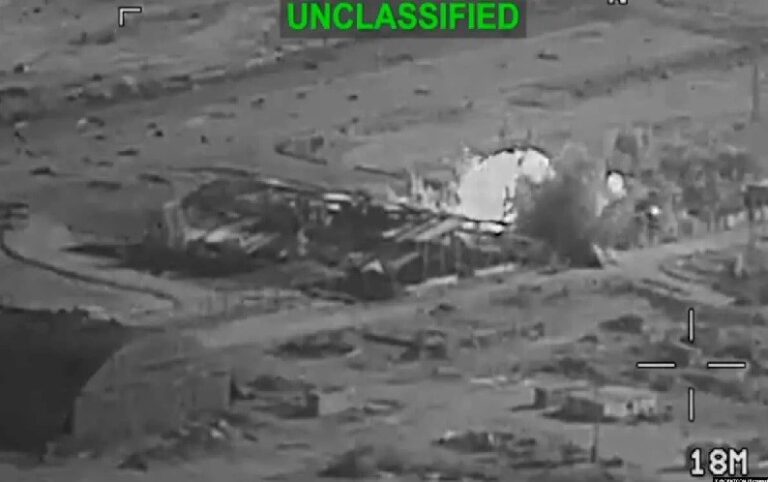
Early Monday morning, as the Israeli military announced the launch of airstrikes against military targets in western and central Iran, multiple reports emerged of explosions in several provinces across the country.

In a statement, the Israeli military said that its air force had targeted military sites belonging to the Iranian regime in various areas of western and central Iran. Israeli media outlets also reported the continuation of air operations against targets inside Iranian territory.

Following the strikes, various sources reported hearing explosions in Tehran, Isfahan, Tabriz, Karaj, Urmia, Kurdistan Province, and several other cities. State-run news agencies also confirmed multiple explosions. The state-run Fars News Agency, citing local sources, reported explosions in Tehran, East Azerbaijan, and Isfahan provinces, adding that blasts were heard in western areas of Tehran Province as well as in the city of Fardis near Karaj.

The state-run IRNA news agency also reported at least two powerful explosions in Tehran and three explosions in Isfahan. Akbar Salehi, the security deputy to the governor of Isfahan Province, said that a location in Najafabad had been targeted but that the incident caused no casualties.

On social media, citizens began reporting around 4:40 a.m. local time that explosions had been heard and buildings had shaken in various areas. These reports came from western and central Tehran, Eslamshahr, Karaj, Malard, Robat Karim, Parand, Najafabad, Tabriz, Urmia, and parts of Kurdistan Province.

At the same time, some channels affiliated with the Islamic Revolutionary Guard Corps (IRGC) claimed that the cities of Shiraz and Kermanshah were also among the targets. Meanwhile, Israel’s Channel 12 reported that Tehran’s Mehrabad Airport had also been struck in an air attack.

In response to these developments, the IRGC issued a statement claiming that Israel had used air-launched ballistic missiles to strike targets inside Iran during the operation. However, the Israeli military has not yet released details about the weapons used.

The Israeli newspaper Maariv also reported that more than 15 targets across Iran had been attacked during the operation. According to the report, a drone production facility, Tehran’s international airport, and several strategic oil installations were among the targets. The newspaper emphasized that precise information about the extent of the damage was not yet available.

Meanwhile, the spokesperson for the Tehran Fire Department announced that emergency response forces had been placed on full alert but stated that residential and urban areas of Tehran had not been directly targeted.

These attacks took place only hours after the Iranian regime, in its first military action following a fragile ceasefire, launched a wave of missiles toward Israel, describing the strike as a response to recent Israeli attacks in Lebanon. It was also reported that U.S. President Donald Trump had asked Israeli Prime Minister Benjamin Netanyahu in a phone call to refrain from carrying out an immediate retaliatory attack against Iran.

Iran’s Regime Upholds Death Sentences of Five Political Prisoners in Ahvaz

Karoon Human Rights Organization reported that the death sentences of five political prisoners held in Sheiban Prison in Ahvaz have been upheld and formally communicated. According to the report, the sentences were issued through a process marked by denial of access to independent legal counsel, pressure during interrogations, and reliance on forced confessions.

According to the report, on Wednesday, November 12, 2025, Iran’s Supreme Court upheld double death sentences against Masoud Jamei, Alireza Mardasi, known as Homeydavi, and Farshad Etemadifar, and notified their lawyers through the Sana judicial notification system. The three prisoners are currently being held in Ward Five of Sheiban Prison.

The Execution Machine of Iran’s Regime Runs Without Pause

Their case was heard in Branch One of the Ahvaz Revolutionary Court, presided over by Judge Ehsan Adibimehr. The charges brought against the prisoners included “corruption on earth,” membership in groups opposed to Iran’s regime, propaganda against the regime, assembly and collusion, and other security-related accusations. In the same case, Saman and Davoud Hormatnejad were sentenced to 12 and 15 years in prison, respectively.

In a separate case, Hassan Tarfi, an Arab civil and cultural activist, received notification of his death sentence in prison in June 2026. He has been detained since 2022. Previously, Branch One of the Revolutionary Court in Mahshahr sentenced him to death in absentia. The sentence was upheld in March 2025 by Branch 39 of Iran’s Supreme Court.

Reza Abdali, a 35-year-old political prisoner held in Ward Eight of Sheiban Prison in Ahvaz, is the fifth prisoner in these cases whose death sentence was upheld and formally communicated by Iran’s Supreme Court on Thursday, November 6, 2025. He was arrested in February 2025 and, in June 2025, was sentenced by Branch One of the Ahvaz Revolutionary Court to death and 15 years of discretionary imprisonment.

Karoon Human Rights Organization has warned that the lives of these five political prisoners are in serious danger and has called for an immediate response from international human rights organizations and institutions to prevent the implementation of these sentences.

Political Prisoner Yahgoub Derakhshan Sentenced to Death for a Second Time

Yahgoub Derakhshan, a political prisoner and supporter of the People’s Mojahedin Organization of Iran (PMOI/MEK) held in Lakan Prison in Rasht, has once again been sentenced to death by Iran’s regime judiciary. The sentence was issued by Branch Two of the Rasht Revolutionary Court, presided over by Mohammad Ali Darvish-Goftar, and has been formally communicated to him.

According to published reports, the proceedings in Yahgoub Derakhshan’s case were conducted via videoconference, and he was denied access to legal counsel during the trial. Human rights sources have described the process as lacking the standards of a fair trial.

Yaqub Derakhshan, 51, was arrested in April 2025 and several months later, in August 2025, was sentenced to death on the charge of baghi (armed rebellion against the state) by Branch One of the Rasht Revolutionary Court, presided over by Ahmad Darvish-Goftar. That trial was also conducted remotely via videoconference.

Following the initial ruling, Iran’s Supreme Court referred the case in November 2025 to Branch Two of the Rasht Revolutionary Court for reconsideration. However, the new branch ultimately upheld and reissued the death sentence.

Human rights activists and organizations have expressed concern about the situation of this political prisoner and warned that the renewed confirmation of the sentence has increased the risk of his execution. Meanwhile, the National Council of Resistance of Iran (NCRI), an Iranian opposition coalition, has called for intervention by international human rights bodies and urgent action to prevent the implementation of the sentence.

Widespread Student Protests Across the Country; Opposition to Educational Policies

Student protests against the educational policies of the Iranian regime, particularly the issue of the mandatory impact of grade point averages on the national university entrance examination (Konkur), continued on Saturday, June 6, in several cities across the country. Reports indicate that protest gatherings were held in cities including Tehran, Mashhad, Shiraz, Isfahan, Kermanshah, Tabriz, Karaj, Khorramabad, Arak, and Birjand.

In Mashhad, a group of students gathered in front of the Department of Education. According to published reports, the protesters were later directed into the department’s premises, and restrictions were subsequently imposed on the departure of some individuals. Reports also indicated a heavy presence of police forces and special units at the site, along with the detention of several participants. Nevertheless, students attending the gathering stated that they would continue their protests until their demands were addressed.

A similar gathering was also held in Shiraz in front of the Fars Province Department of Education. Participants criticized the educational policies of the Iranian regime and called on officials to answer questions regarding the impact of recent decisions on students’ academic futures. They stressed that instead of repeated promises, they expected practical solutions.

At the same time, students in Tehran, Kermanshah, and several other cities held protest gatherings calling for a review of educational policies. Protesters chanted slogans including “Don’t be afraid, don’t be afraid, we are all together” and “We haven’t seen justice, we’ve heard too many promises,” protesting what they described as injustice within the educational system.

In Markazi Province, including the cities of Arak and Birjand, the main focus of the protests was criticism of the mandatory impact of academic grades on university entrance examination results and students’ educational futures. Participants believe that repeated changes to educational regulations and assessment methods have created widespread concerns among students and their families.

According to published reports, Saturday’s protests were held simultaneously across multiple provinces; a development that reflects growing dissatisfaction with the educational policies of the Iranian regime and the emergence of the university entrance examination and the role of academic records as a nationwide demand among students.

These gatherings continue amid increasing criticism of the Iranian regime’s educational policies in recent months. Many students and families are calling for a review of decisions that they believe directly affect the academic future and educational opportunities of the younger generation.