


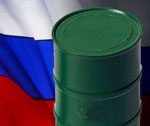
 Reuters: Iran and Russia are negotiating an oil-for-goods swap worth $1.5 billion a month that would enable Iran to lift oil exports substantially, undermining Western sanctions that helped persuade Tehran in November to agree to a preliminary deal to curb its nuclear program.
By Jonathan Saul and Parisa Hafezi
LONDON/ANKARA (Reuters) – Iran and Russia are negotiating an oil-for-goods swap worth $1.5 billion a month that would enable Iran to lift oil exports substantially, undermining Western sanctions that helped persuade Tehran in November to agree to a preliminary deal to curb its nuclear program.
Russian and Iranian sources close to the barter negotiations said final details were in discussion for a deal under which Russia would buy up to 500,000 barrels a day of Iranian oil in exchange for Russian equipment and goods.
“Good progress is being made at the moment with strong chances of success,” said a Russian source. “We are discussing the details, and the date of signing a deal depends on those details.” The Kremlin declined comment.
“Our desire is to sign the deal as soon as possible,” said a senior Iranian official, who declined to be named. “Our officials are discussing the matter with the Russians and hopefully it will be inked soon, regardless of whether we can reach a (nuclear) agreement in Geneva.”
It is not clear whether the deal would be implemented before the finalization of a nuclear agreement outlined in Geneva in November between Iran and six world powers.
Nor is it clear how Russia would justify to other powers a barter deal that could jeopardize the nuclear negotiations by easing the economic pressure on Iran.
“It depends on whether the Russians agree to implement this deal before there is a final resolution of the nuclear issues. That would obviously be a very negative signal,” said Gary Samore, former nuclear non-proliferation czar for President Barack Obama and now an academic and president of pro-sanctions group United Against Nuclear Iran.
“It could very well be they just want to have this ready to go the day after a nuclear deal is completed and they would then be prepared to execute a barter arrangement.”
U.S. Representative Eliot Engel, the top Democrat on the House Foreign Affairs Committee, said he was deeply troubled by the report of the Iran-Russia talks. “This reckless and irresponsible move raises serious questions about Russia’s commitment to ending Iran’s pursuit of nuclear weapons,” Engel said in a release.
Russia is one of the countries involved in the nuclear talks but, unlike the United States and the European Union, has not imposed sanctions on Iran.
Technical nuclear talks between Iran and the European Union, representing six world powers, started on Thursday.
The November deal was designed to halt Iran’s nuclear advances for six months to buy time for a final settlement.
U.S. and European sanctions have cut Iran’s oil exports by more than half over the past 18 months to about 1 million barrels a day.
Russian purchases of 500,000 bpd of Iranian crude would lift Iran’s oil exports by 50 percent and provide a major boost to its struggling economy. With current oil prices near $100 a barrel, Iran would earn about an additional $1.5 billion a month.
“Iran has to find a way to accommodate more exports: this is the reason behind this,” an Iranian official said. “Both sides should rush for it. Russia will be able to guarantee a large amount of trade with its neighbor and Iran will be able to overcome its export difficulties.”
No details were available about the equipment and goods on offer from Russia.
Given Russia is a major oil exporter, the Iranian oil would likely be exported from Iran on Russia’s account, with Russian goods and equipment bartered in exchange.
Most Iranian oil goes to Asia.
Iran’s biggest oil buyer is China, which imported about 420,000 bpd in 2013. Unlike Iran’s other oil buyers, China has not cut purchases much, despite urging by the United States to persuade.
Other major Asian buyers of Iranian oil, including Japan, South Korea and India, have cut imports sharply under pressure from Washington. Turkey also cut imports, while South Africa eliminated them.
(Additional reporting by Timothy Gardner in Washington; Editing by Richard Mably, Giles Elgood and Steve Orlofsky)


