


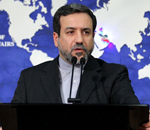
 AFP: Iran has received the first instalment of $4.2 billion in frozen assets as part of a nuclear deal with world powers, Deputy Foreign Minister Abbas Araqchi told ISNA news agency Saturday.
Tehran (AFP)— Iran has received the first instalment of $4.2 billion in frozen assets as part of a nuclear deal with world powers, Deputy Foreign Minister Abbas Araqchi told ISNA news agency Saturday.
Unblocking the funds under the landmark deal in which Iran agreed to roll back parts of its nuclear programme and halt further advances is expected to breathe new life into its crippled economy.
“The first tranche of $500 million was deposited in a Swiss bank account, and everything was done in accordance with the agreement,” Araqchi said.
Iran clinched the interim deal in November with the P5+1 group — Britain, China, France, Russia, the United States and Germany — and began implementing the agreement on January 20.
Under the agreement, which is to last six months, Iran committed to limit its uranium enrichment to five percent, halting production of 20 percent-enriched uranium.
In return, the European Union and the United States have eased crippling economic sanctions on Iran.
A senior US administration official told AFP last month that the first $550-million (400-million-euro) instalment of $4.2 billion in frozen assets would be released from February.
“The instalment schedule starts on February 1 and the payments are evenly distributed” across 180 days, the US official said.
Iran and the P5+1 will also hold a new round of talks in Vienna on February 18 in a bid to discuss a comprehensive solution to Tehran’s contested nuclear programme.
Major world powers and Israel fear that Iran is trying to develop an atomic bomb, but Tehran insists its nuclear programme is peaceful.
Also on Saturday, the official IRNA news agency quoted the head of the civil aviation authority, Alireza Jahanguirian, as saying that Iran will soon receive spare parts for its ailing civilian fleet.
Jahanguirian said the parts would arrive within two weeks as part of the sanctions relief agreed in Geneva in November.
But the November deal foresees an easing on sanctions imposed on several sectors, including Iran’s car industry and petrochemical exports, as well as allowing civil aviation access to long-denied spares.


