


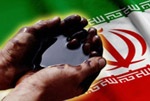
 Wall Street Journal: Foreign oil companies hoping to invest in Iran as sanctions are relaxed won’t be able to count Iranian reserves among their assets under the draft terms of new contracts. The ability to book reserves is an important valuation metric for oil companies.
The Wall Street Journal
At the last meeting of the Organization of the Petroleum Exporting Countries, Iran took center stage. As relations between the Islamic Republic and the West looked like thawing, a queue of oil company executives formed outside the Iranian oil minister’s hotel room.
Royal Dutch Shell, Vitol, OMV and Eni all got face time with Bijan Zanganeh, just to test the water in case sanctions are eased. That was December. In January, in the privacy of Davos, the process took a step up the ladder—Iran’s President Hasan Rouhani joined his oil minister in meeting executives.
There is some mutual interest at stake here: Iran’s oil and gas sector needs $100 billion in investment over the next five years. OPEC statistics put Iran’s proven crude reserves at 157 billion barrels, more than Iraq.
Now, as The Wall Street Journal’s Benoît Faucon reports, Iran has outlined the terms on which it will do business, but they aren’t quite what that queue of executives were after.
Foreign oil companies hoping to invest in Iran as sanctions are relaxed won’t be able to count Iranian reserves among their assets under the draft terms of new contracts. The ability to book reserves is an important valuation metric for oil companies.
Still these are the first moves in a long process. Iran could sweeten some of its investment terms to attract Western investors to its oil sector; foreign oil companies will be able to buy Iranian state-owned oil services companies. Iran is even keen on expanding its interests overseas.
Given the still-high levels of opposition to lifting sanctions, particularly on Capitol Hill, and the uncertainty that hangs over the negotiating process, everyone might just be getting ahead of themselves. For now.
GOOD NEIGHBORS
The energy industry doesn’t always get the best press. It tries to send out its best message—that it is providing the keys to the future, that it is tackling the challenges of the new energy future, even that it has gone beyond petroleum.
But trainloads of crude are still going to have to trundle through neighborhoods, pipelines are still going to burst. Accidents will happen. For many, fracking is a dirty word.
With protests turning up on the doorsteps of oil employees, the oil industry is reaching out. This is no longer a noisy fringe protest. Everyday people have real concerns about the impact the energy industry is having on their lives.
That’s why listening to neighbors is becoming a must, the Journal’s Lynn Cook explains.


