


On August 24, an international conference titled “Crimes Against Humanity: Time for Accountability and an End to Impunity” brought together former UN officials, legal experts, and human rights advocates to emphasize the necessity of justice for the victims of the 1988 massacre in Iran. The conference, which included participation from Maryam Rajavi, President-elect of the National Council of Resistance of Iran, underscored ongoing efforts to hold Iranian regime officials accountable for their past and present crimes.
Maryam Rajavi’s speech focused on the continuing human rights abuses in Iran, urging international action against the regime. She contrasted the principles of the Universal Declaration of Human Rights with the actions of the Iranian regime, which she described as reliant on human rights suppression and violence. Rajavi highlighted the 1988 massacre, where 30,000 political prisoners, predominantly members of the People’s Mojahedin Organization of Iran (PMOI/MEK), were executed, calling it one of Iran’s most significant human rights violations. She emphasized the justice-seeking movement fueled by this atrocity and showcased a book documenting 5,000 of the PMOI victims.
Professor Javaid Rehman, the UN Special Rapporteur on human rights in Iran from 2018 to 2024, presented a detailed report on the Iranian regime’s atrocities, including the 1988 massacre. He highlighted the systematic and widespread attacks on civilians, resulting in mass executions and enforced disappearances, particularly targeting PMOI members. Rehman argued that these actions were carried out with genocidal intent, as the regime viewed the PMOI as a deviant religious group, justifying their extermination. He called for an international investigative and accountability mechanism to address these crimes, stressing the importance of preventing further violations and ensuring justice for the victims.
Dr. Chile Eboe-Osuji, former President of the International Criminal Court (ICC), stressed that international law no longer grants immunity to government officials who commit atrocity crimes. He pointed out that the ICC has jurisdiction over crimes in its member states if those states fail to act. Eboe-Osuji commended Professor Rehman for exposing the truth about the 1988 massacre and suggested that the targeted killings of PMOI members could meet the legal definition of genocide, further emphasizing the need for international action.
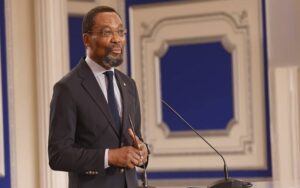
Professor Leila Nadya Sadat, former Special Adviser on Crimes Against Humanity to the ICC Prosecutor, discussed the urgent need for accountability for the 1988 massacre and other crimes committed by the Iranian regime. She warned that impunity for the 1988 crimes has emboldened the regime to continue its oppressive practices. Sadat advocated for the establishment of an international investigative mechanism to collect evidence and facilitate prosecutions, similar to those established for Syria and Myanmar. She also highlighted the importance of universal jurisdiction, urging countries to prosecute perpetrators within their borders. While acknowledging the challenges in legally defining the 1988 massacre as genocide, Sadat argued that pursuing such charges is essential to mobilizing global support and pressing the international community to act.
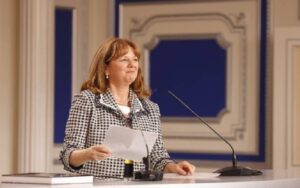
Dr. Mark Ellis, Executive Director of the International Bar Association, emphasized the importance of universal jurisdiction in prosecuting crimes such as genocide and crimes against humanity. He highlighted the precedent set by the trial of Hamid Noury in Sweden, the first legal proceeding related to the 1988 massacres, and urged other nations to adopt similar frameworks. Ellis called on European countries to use universal jurisdiction to investigate and prosecute Iranian officials for their crimes, emphasizing that the suspects and victims are well-known, and that decisive action is needed.
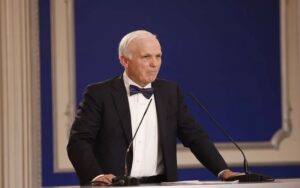
Tahar Boumedra, President of JVMI and former Head of the UN Human Rights Office in Iraq, delivered a powerful testimony about the atrocities he witnessed against Iranian dissidents at Camp Ashraf. Boumedra recounted his experiences during his time with the UN mission in Iraq, where he had unrestricted access to the camp, home to many PMOI members. He described his role in documenting the crimes against the residents and criticized the UN’s inaction, which ultimately led to his resignation. Despite attempts by the UN to silence him, Boumedra continued to speak out about the abuses he witnessed. He expressed his support for Professor Rehman’s efforts to document the regime’s crimes. Boumedra’s remarks underscored the ongoing need for accountability and international solidarity with the Iranian people.
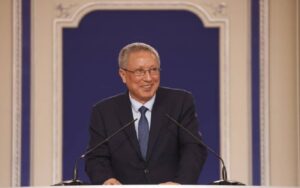
The conference also featured the testimonies of the families of the 1988 massacre victims. They shared their personal experiences and grievances, holding up pictures of their lost loved ones and highlighting the immense suffering they have endured. Their stories emphasized the human cost of the regime’s brutality and reinforced the urgent need for justice and accountability from the international community.


