

Rafael Grossi: Iran Continues Uranium Enrichment at High Levels
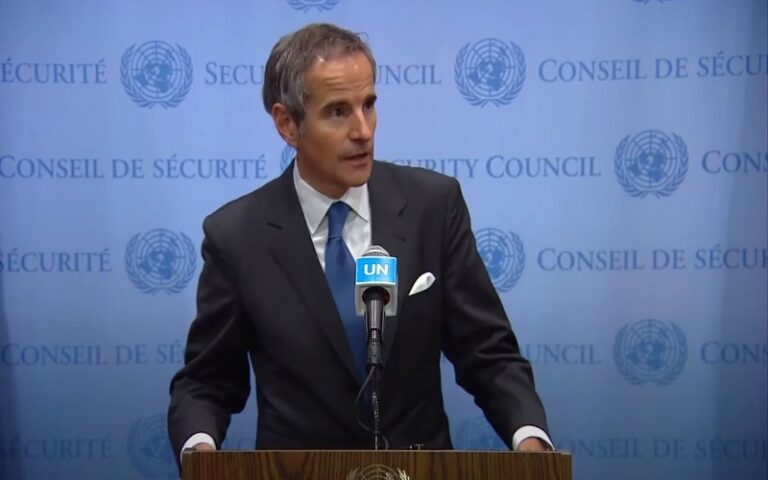
On February 19, Rafael Grossi, the head of the U.N.’s nuclear watchdog (IAEA), stated that Iran is continuing uranium enrichment at levels higher than commercial needs. He added that he intends to visit Iran next month for the first time in the past year.
Mr. Grossi, in an interview with Reuters, stated that ”while the pace of uranium enrichment had slowed slightly since the end of last year, Iran was still enriching at an elevated rate of around 7 kg of uranium per month to 60% purity.”
Enrichment of uranium to 60% is close to the level required for the production of nuclear weapons and is not necessarily applicable for commercial or non-military purposes. Iran insists that it is not pursuing nuclear weapons, but no country has undertaken uranium enrichment at this level without consideration of nuclear weapon production.
Under the 2015 nuclear agreement known as the Joint Comprehensive Plan of Action (JCPOA), Iran’s regime could only enrich uranium up to 3.67%.
The IAEA had previously reported that Iran reduced uranium enrichment from June to November of the previous year but increased it to 9 kilograms by the end of the year.
“This slowdown, speedup thing is like a cycle that for me does not alter the fundamental trend, which is a trend of constant increase in inventory of highly enriched uranium,” said Grossi.
In late 2023, the International Atomic Energy Agency had warned that if Tehran enriches uranium above 60%, it would possess the necessary materials for producing three nuclear bombs.
“There is a concerning rhetoric, you may have heard high officials in Iran saying they have all the elements for a nuclear weapon lately,” Grossi said.
Grossi further expressed concern, considering the current situation in the Middle East, particularly with the ongoing conflict in Gaza.
Recently, Ali Akbar Salehi, the former head of the Atomic Energy Organization of Iran, likened Iran’s capability to build nuclear weapons to a car with different components. He stated that Iran has produced all these components separately for its own purposes and has not connected them.
These statements prompted a response from Rafael Grossi, who mentioned that Iran is “not entirely transparent” about its nuclear program.
Ahvaz Steelworkers Banned From Entering Company After Protesting Poor Work Conditions
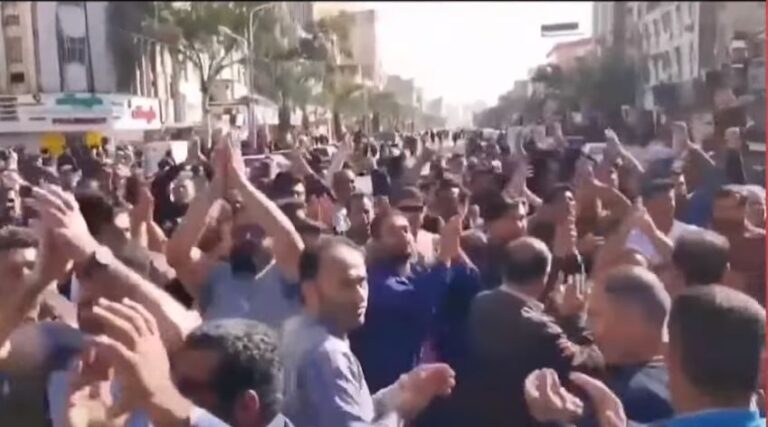
Following their recent round of trade union protests that began on February 13, a number of workers from the Iran National Steel Industrial Group (INSIG) in Ahvaz have had their access cards blocked, preventing them from entering the company.
Bank-e Melli owns INSIG, and workers of this complex have repeatedly demanded a change in ownership.
The confrontation with some of the workers of INSIG occurred while the protesting workers were calling for a review of the job classification plan, addressing fundamental shortcomings and deficiencies in certain aspects of it, as well as aligning wages with similar steel companies.
Workers of INSIG in Ahvaz had previously gone on strike in January for a week to address their demands.
Simultaneously, protesters criticized the “enslavement” of workers by provincial, banking, and corporate officials in Khuzestan province in a statement, declaring the managers’ dithering as insulting.
On December 29, 2023, in a report quoting Hamid Haj Ismaeili, an expert in the field of labor and workers’ activism, Mehr News Agency wrote that the wage level in Iran is relatively low compared to the world, stating, “If we look optimistically, we don’t have a rank better than 150 out of 180 countries.”
According to ILNA News Agency, the average hourly wage in European and American countries ranges between 23 to 26 euros, but in Iran, this figure barely reaches 160 to 170 dollars for 192 hours of work per month.
This is occurring while the minimum cost of living in Tehran has exceeded 300 million rials (approximately $527), and in Iran as a whole, it has reached 220 million rials (approximately $386).
In recent years, the number of labor and trade union protests in Iran has been expanding. These protests, in the form of strikes, gatherings, and protest marches, include issues such as delayed wage payments, privatization, worker layoffs, non-implementation of the job classification plan, and low wage levels.
Iran’s Regime Sentences PMOI Supporters To 35 Years in Prison
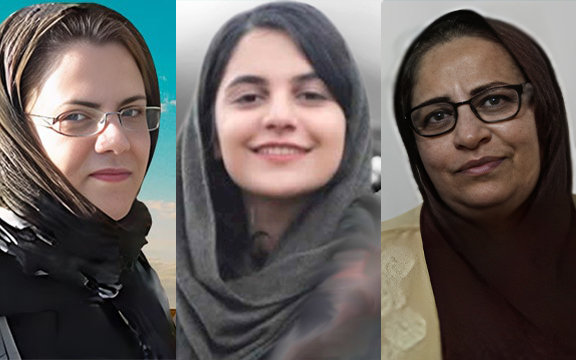
Forough Taghipour, Marzieh Farsi, and Zahra Safaei, supporters of the People’s Mojahedin Organization of Iran (PMOI/MEK), who are currently imprisoned in Evin Prison, have collectively been sentenced to 35 years in prison. Forough Taghipour and Marzieh Farsi have each been sentenced to 15 years, while Zahra Safaei has been sentenced to 5 years.
On February 16, the Campaign for the Defense of Political Prisoners wrote that the sentences for Ms. Farsi and Ms. Taghipour were issued “in absentia” and “in a joint case.”
Forough Taghipour, 29 years old with a bachelor’s degree in accounting, was arrested for the second time on August 21, 2023, in Tehran. She was first arrested in March 2019, along with her mother Nasrin Jabariyanha, on charges of connection with the Mojahedin and anti-government propaganda. She remained in prison until February 2022.
Marzieh Farsi, a 56-year-old mother of two who had previously spent three years in prison and is suffering from cancer, was also arrested on August 21, 2023, in Tehran.
Zahra Safaei, a 60-year-old mother of two, has been imprisoned for the third time. She spent eight years in prison in the 1980s due to her support for the Mojahedin. In March 2019, she was arrested for the second time with her daughter, Parastoo Moeini, and was released in February 2022.
On December 9, 2023, Forough Taghipour and Marzieh Farsi were charged at Evin Courthouse with “membership in opposition groups” under the accusation of “rebellion.”
In the laws of the Iranian regime, the charge of “rebellion” is defined as “armed uprising against the system,” and is usually punished with execution.
In recent months, the security and judicial forces of the Iranian regime have detained and sentenced many civil activists to heavy penalties.
8 Iranian Banks At Risk of Dissolution, Central Bank Warns
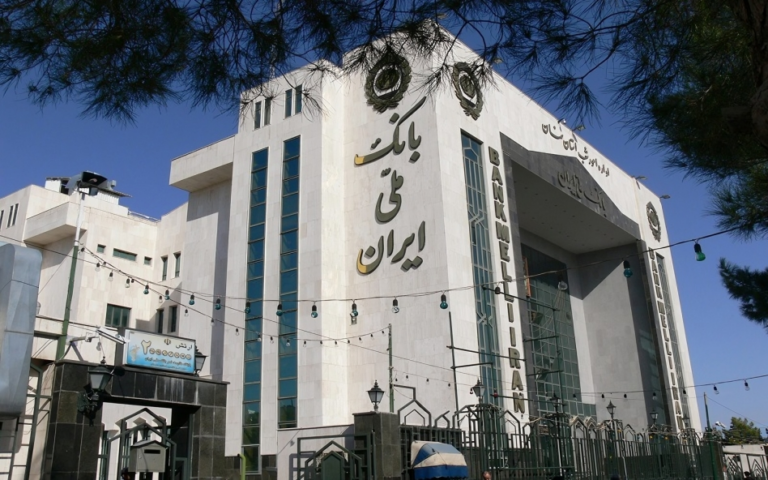
Mohammad Reza Farzin, the head of the Iranian regime’s Central Bank, announced during an economic conference that a reform program for eight banks will be implemented next year, stating, “If they are not reformed, we will move towards dissolution and merger.”
According to this official, the responsibility for cleaning up the banks’ balance sheets is on the agenda, and the dissolution of three credit institutions has been implemented with minimal cost and difficulty.
An important point in Farzin’s statements is the number of non-performing banks, whose names have not been disclosed. However, an earlier report by the Fardaye Eghtesad website in May 2023 had mentioned indirectly that, although the names of these banks are not directly disclosed, using criteria such as “capital adequacy ratio” and “accumulated losses,” it can be inferred to some extent which banks are not in good condition.
This economic analysis website had reported that, according to the latest statistics, 10 banks have a negative capital adequacy ratio, among which Sarmayeh and Ayandeh banks have a worse situation than the others. In this report, Day and Iran-Zamin banks were ranked third and fourth.
Fardaye Eghtesad website mentioned Shahr, Melli, Parsian, and Mellat banks as four others out of the eight non-performing banks at risk of dissolution and merger.
In August 2023, the Central Bank, as the first step in this regard, transferred 60% of the shares of Ayandeh bank to the Ministry of Economy and announced that the next phase of the same program for other banks with similar conditions would continue.
Ayandeh bank is important in the economy of Iran because its owner, according to published reports, is close to influential political and military circles in the Iranian government and is considered one of the financial tools of this part of the ruling system.
One of the irregularities of this bank is spending close to 80% of its capital, the majority of which has been invested in the Iran-Mall project. Iran-Mall, created by the Ansari family as the main shareholders of the bank, was introduced as a bank asset to compensate for the losses incurred by the bank due to inflation and the increase in the value of this vast collection.
Ali Ansari, born in 1962 in Tehran, has frequently been mentioned in recent years as one of the wealthy individuals in Iran in the Iranian media. His investments in the establishment of the Iranian carpet market, the Iranian mobile market, Iran Mall, Ayandeh Bank, and Tat Bank are part of his activities that have been highlighted in recent years.
Most experts believe that the performance of this bank has had a negative impact on Iran’s economy, but despite all these negative consequences, there is still no power capable of dealing with it.
The Iranian government’s official newspaper also wrote in this regard that in 2022, Ayandeh bank, with the withdrawal of a loan of 700 trillion rials (approximately $1.228 billion) from the Central Bank, practically allocated 25% of the total monetary base growth in that year to itself.
According to the Iranian newspaper, Ali Ansari, the major shareholder of this bank, has paid the majority of Ayandeh bank’s payments to his own companies.
The newspaper emphasized in its report that Ayandeh bank, by printing money, shifts the financial burden of Ansari’s companies onto the people through inflation.
Iran’s Regime is One of the Largest Exporters of Low-Cost Weapons
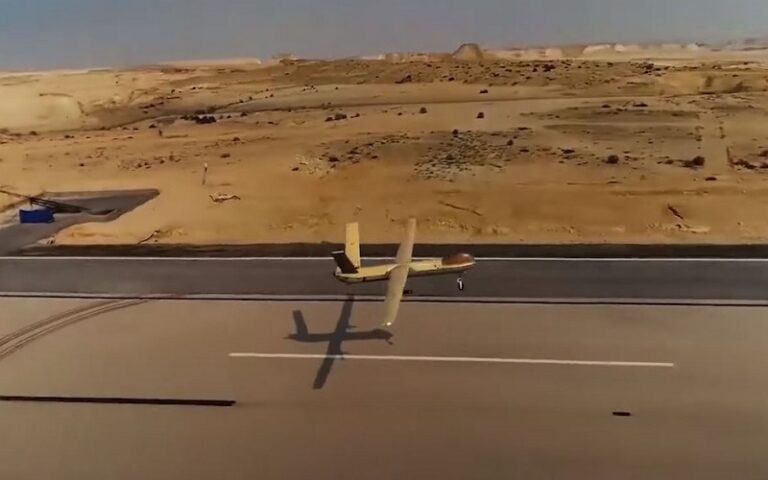
In a report on the rise of the Iranian regime as one of the global arms suppliers, The Wall Street Journal states that buyers of low-cost weapons with advanced technology view the Iranian government as a threat to the interests of the United States and its allies in the Middle East, Ukraine, and beyond.
According to the report, published on February 17, the transformation of Iran’s arms industry, which accelerated with the sale of thousands of drones to Russia in 2022 and altered the battlefield dynamics in Ukraine, aided the regime in supporting quasi-military groups in the Middle East. These groups have intensified their attacks concurrently with the conflict between Israel and Hamas in Gaza.
The Wall Street Journal, citing U.S. officials, writes that one of Iran’s most significant arms exports is the suicide drones, exemplified by their use in the January 28 attack by an Iraqi paramilitary group that killed three American soldiers in Jordan.
On February 15, the United States announced that on the same day, the U.S. Coast Guard seized over 200 weapon shipments originating from Iran and destined for Yemen.
The U.S. Central Command (CENTCOM), responsible for military operations in the Middle East, stated that the seized cargo included missile components and guided underwater and surface unmanned vehicles.
A report from the U.S. Defense Intelligence Agency, published earlier this month, revealed that models from the same family of drones used to kill American soldiers in Jordan were employed in various fronts, including by Yemen’s Houthi rebels, Iraqi paramilitary groups targeting Israel, and by Russia in the war against Ukraine.
Mehdi Farahi, Deputy Minister of Defense for the Iranian regime, stated in November of last year that Tehran had sold approximately one billion dollars’ worth of weapons in 2022, triple the figure from the previous year.
According to the Stockholm International Peace Research Institute, a calculation excluding arms trafficking statistics indicates that in 2022, Iran became the sixteenth largest arms seller globally with $123 million in exports. This marks a significant leap compared to 2017 when Iran was the thirty-third largest arms exporter with $20 million worth of sales.
The Wall Street Journal previously reported, citing U.S. officials, that Russia is planning to purchase short-range ballistic missiles from the Iranian regime, and Iran has also sent ammunition to Russia.
Iran’s Islamic Revolutionary Guard Corps (IRGC), which controls the defense industry, provides free weapons to its allies in the Middle East, including Hamas and Hezbollah in Lebanon, to support their activities.
Iran’s representative to the United Nations stated on Monday, February 12, to the Wall Street Journal, “We assist Palestinians in achieving military capability to resist independently against attacks.” The statement added, “Based on international laws and UN Security Council resolutions, Iran faces no restrictions or prohibitions on buying and selling weapons.”
The trade restrictions on Iran’s arms were lifted last year by the United Nations, but the United States and the European Union continue to enforce these restrictions.
Iranian suicide drones gained international recognition in 2019 when one of its paramilitary groups conducted a missile and drone attack on Saudi oil facilities.
The production of drones increased after the sale of more than 2,000 Shahed drones to Russia in 2022. According to Iranian officials, with a price of around $20,000 each, the Iranian government received a minimum of $40 million.
The Wall Street Journal had previously reported on another agreement between Moscow and Tehran to establish a factory for producing around 6,000 drones in Russia as part of a billion-dollar arms deal between the two countries.
A few days after the drone attack on January 28 against U.S. forces in Jordan, President Joe Biden blamed Iran, stating that Iran was responsible for supplying these drones.
A few days later, the U.S. Treasury Department imposed new sanctions against companies supplying components and parts for drones and missiles to Iran.
The growth of the arms industry has been a major source of income for the Iranian regime, which has been isolated due to sanctions and restrictions on oil sales and banking transactions.
Internal Documents Reveal Damning Information About Iran’s Parliament
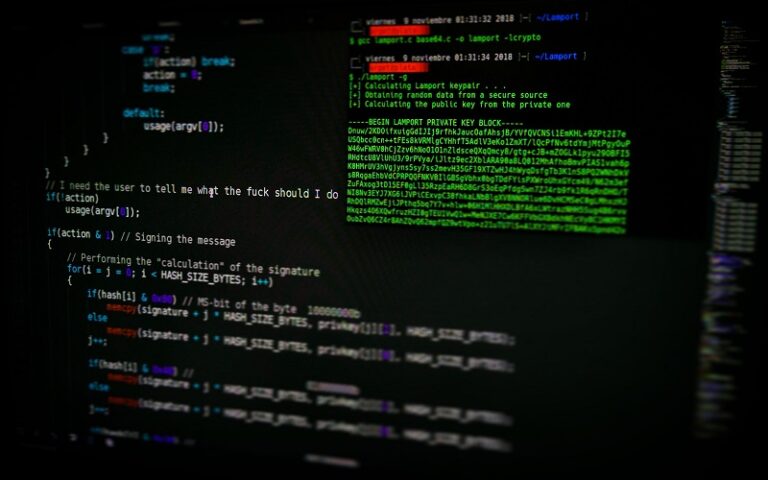
The dissident group “Ghiam ta Sarnegouni” (meaning “Uprising Until Regime Overthrow”) has taken responsibility for disabling the news agency of Khaneye Mellat, the news agency of the Iranian regime’s parliament (Majlis). This group claims to have disabled more than 600 servers of the regime’s Majlis.
The Parliament’s public relations, in a statement, confirmed the defacing of its websites. The opposing group “Uprising until Overthrow” stated in its announcement that the main servers of the parliament, commission servers, main hall servers, parliament support servers, parliament database servers, and some other servers related to the secretariat, deputies, and representatives’ offices have been disabled.
One of these documents pertains to the approvals of the Supreme National Security Council regarding methods to circumvent sanctions.
The group has also published some internal documents of the parliament, including the list of representatives’ salaries in June 2023, on their Telegram channel.
In the initial response, the Parliament’s public relations rejected the authenticity of these documents and stated, “Preliminary examination of the images indicates that some of these documents have been tampered with and are not credible.”
The announcement mentioned that “hackers probably manipulated real documents with limited access to some documents. As an example, in a file titled ‘Representatives’ Salaries in June 2023,’ a column titled ‘Final Sum’ contains unreal figures that do not exist in the parliament’s payment records.”
The disabling of the Parliament’s news agency comes two weeks before the upcoming parliamentary elections. The twelfth parliamentary elections, like previous rounds, have been accompanied by widespread disqualification of candidates and are scheduled to be held on March 1.
After defacing the parliamentary systems, the “Uprising until Overthrow” group published a collection of internal and confidential documents on their Telegram channel.
In recent years, this group has repeatedly targeted Iranian government agencies. In June 2023, they defaced the Presidential system in Iran and exposed numerous documents from this institution, revealing some of the Revolutionary Guard’s activities in equipping and suppressing protests.
Despite the leakage of such information from the servers of government institutions, Gholamreza Jalali, the head of the Passive Defense Organization, stated on October 23, 2023, “From last year until now, 10 major cyber attacks on the country’s vital infrastructure have been discovered and thwarted.”
Population Growth in Iran Near Zero Due to Poor Life Quality
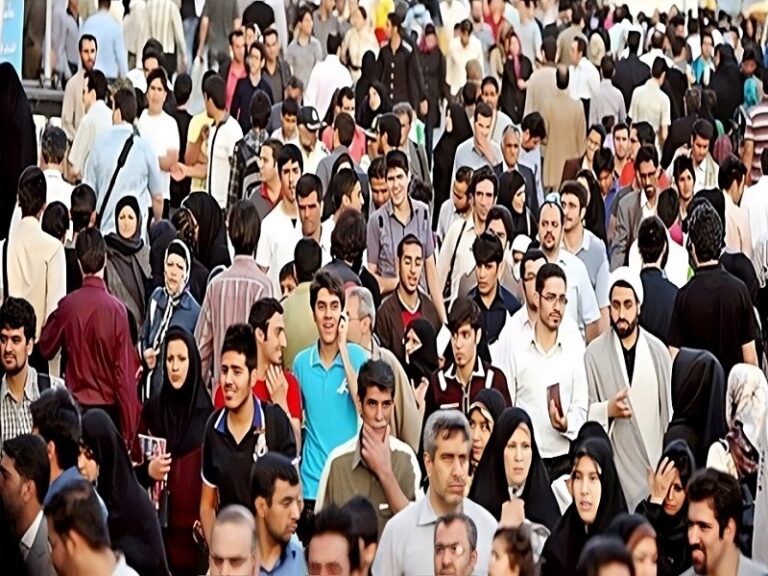
The state-run Donya-ye Eghtesad newspaper, in its analysis of economic conditions and their correlation with population growth and fertility rates, wrote that the decline in the quality of life has brought Iran to the bottom of the global table, with the population growth reaching six-tenths of a percent.
Donya-ye Eghtesad, on February 15, reported that the population growth rate in Iran in 2022 reached 0.6%, and the fertility rate also reached 1.66 units.
The newspaper emphasized that the fertility rate was over 6.4% in 2016, and the average annual population growth between 1976 and 1986 was 3.91%.
The report highlighted that measures such as childbearing loans, car lotteries, subsidies, and increasing the marriage loan amount by the government have not led to improvements in fertility.
According to the Donya-ye Eghtesad, the Quality-of-Life Index, which measures individuals’ living conditions in various aspects, ranked Iran 80th out of 84 countries in 2023. In such circumstances, households naturally lean towards having fewer children.
The report also noted that economic conditions have negatively impacted marriage and divorce statistics.
In this regard, the Etemad newspaper, in May 2023, reported on a study examining the cumulative statistics of “divorce, marriage, and birth” over the past 14 years, indicating a more pronounced role of economic factors in the fluctuations of these statistics than in the past.
The Etemad report showed that based on statistics published in 2008, there were over 110,000 divorces, more than 881,000 marriages, and over 1.3 million births recorded. These numbers decreased in the fall of 2022 to 146,000 divorces, 391,000 marriages, and 810,000 births.
A review of economic statistics indicates that in 2008, the poverty index was over 35%, the unemployment rate was 10.5%, and the inflation rate was 25.4%. These figures rose in the fall of 2022 to a 52% inflation rate, an 8% unemployment rate, and a poverty index of over 60%.
Some experts believe that the current poverty index has exceeded 60%, and the reduction in the unemployment rate is not due to the government creating jobs but rather because of a decrease in the participation rate influenced by job search discouragement and the unattractiveness of wages.
Western universities collaborated with Sharif University on drone technology research.
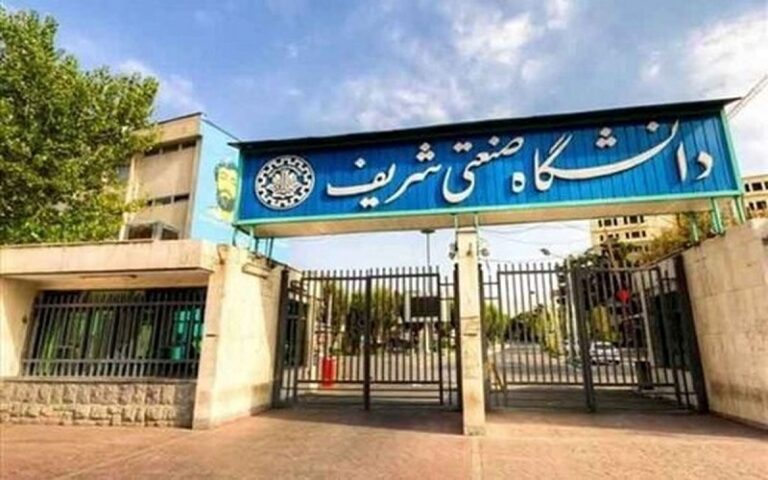
The United Against Nuclear Iran organization (UANI) disclosed a study in which researchers from universities in Britain, Australia, and the United States collaborated with Sharif University on drone technology. The Guardian also investigated the dimensions of this research collaboration in a report.
The research, published in 2023 on the platform of the Institute of Electrical and Electronics Engineers (IEEE), involved the participation of the University of Southampton in Britain, the University of New South Wales in Australia, University of Houston in the United States, and Sharif University in Iran.
Financial backing for this research came from research councils associated with the European Union, as well as the governments of Britain and Australia.
A security expert told The Guardian that the research had direct military applications, and another security expert described its nature as highly dangerous.
Referring to the direct connection between the researched technology and military applications, one security expert mentioned that this technology enables the creation of a new communication channel if enemy forces disrupt signals.
He stated that this capability is directly relevant to current drone warfare in the war in Ukraine.
Another security expert told The Guardian that given the “very dangerous” nature of this research, no university should participate in such projects.
Sharif University is under financial sanctions from Britain and the European Union.
According to a report by the Washington Institute in May and April 2022, Sharif University’s support has played a role in advancing Iran’s drone program.
Daniel Roth, the research director of the UANI, stated that the Iranian regime strategically uses knowledge from domestic and foreign universities to strengthen its security priorities.
In June 2023, according to findings from the Jewish Chronicle, British universities collaborated with the regime on the development of technologies for drones and fighter jets. At least 11 universities in Britain, including the University of Cambridge and Imperial College London, participated in these studies.
In the summer of 2023, the British government initiated an investigation into allegations that some of its universities collaborated with their Iranian counterparts on drone research.
In January 2024, the Canadian government released a list of universities in Iran, China, and Russia directly or indirectly associated with military and security entities of these countries. According to Canada’s announcement, researchers collaborating with these universities will not receive government funding.
The list includes Sharif University, Pasteur Institute of Iran, University of Tehran, Aerospace Research Institute, Baqiyatallah University of Medical Sciences, Institute for Defense Studies and Research, Imam Hussein University, Institute for Research in Fundamental Sciences, Explosion Research Center, Physics Research Center, and the Air Force University Star in Iran.
In the past five years, the use of Iranian-made drones has intensified in various military engagements worldwide, including Ukraine, Iraq, and Syria, as well as the Red Sea.
On January 28, in a drone attack by Iran-affiliated paramilitary forces on the U.S. forces base in Jordan, three American soldiers were killed, and more than 40 were injured.
Iran’s Former Nuclear Chief Alludes to Tehran’s Nuclear Weapons Capability
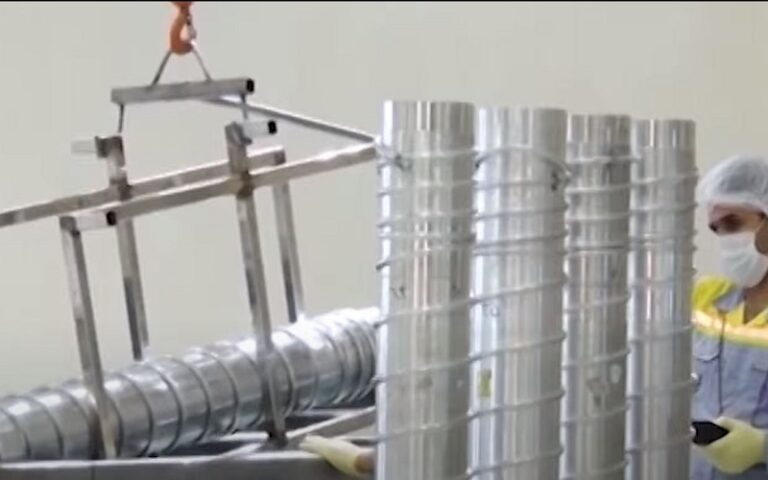
Ali Akbar Salehi, the former Minister of Foreign Affairs and the former head of the Atomic Energy Organization of Iran, confirmed the implicit achievement of the Iranian regime in the ability to build an atomic bomb, stating, “We have all the thresholds of nuclear science and technology.”
Nuclear negotiations between Iran and global powers have been suspended for several months.
In a television interview, Salehi refrained from giving a direct answer to a question about whether the Iranian regime has reached the ability to build nuclear weapons or not, adding, “We have all the thresholds of nuclear science and technology. I’ll give you an example. What does a car want? It wants a chassis, an engine, a steering wheel, and a gearbox. You tell me, did you make the gearbox? I say yes. Did you make the engine? Yes, but each one is for its own purpose.”
In addition to serving as the Minister of Foreign Affairs, Salehi has also headed the Atomic Energy Organization of Iran for a while and is considered one of the close figures to the Iranian regime’s Supreme Leader, Ali Khamenei.
This is not the first time that regime’s officials claim to have achieved the ability to build an atomic bomb.
In July 2022, Kamal Kharrazi, the head of the regime’s Strategic Council for Foreign Relations and an advisor to Ali Khamenei, stated in an interview with Al Jazeera that Iran has the technical capabilities to build a nuclear bomb but has no intention of doing so.
Regarding the regime’s capabilities to build a nuclear bomb, Kharrazi, in the interview with Al Jazeera, added: “In just a few days, we increased the uranium enrichment level from 20% to 60%, and it can easily be raised to 90%.”
Earlier, Mohammad Eslami, the current head of the AEOI, did not rule out the possibility of enriching uranium to the level required for making a bomb in an interview with the same network and stated that the decision for 90% enrichment depends on the “relevant authorities.”
Khamenei commands all the armed and military forces of the country and is the ultimate decision-maker in the field of the regime’s nuclear activities.
Regime officials have repeatedly stated that, based on a decree (Fatwa) by Khamenei, building an atomic bomb is not on Tehran’s agenda. However, this regime has a long history of reversing its own edicts when its interests require it.
Salehi continued in his recent television interview about secret negotiations with the United States in Oman during his tenure, saying that these negotiations took place with the permission of the Supreme Leader of the Iranian regime.
He added that then-president Mahmoud Ahmadinejad opposed these negotiations.
Nuclear negotiations between Iran and global powers, which resumed after the inauguration of U.S. President Joe Biden, have not yet reached a conclusion.
Following the U.S. withdrawal from the JCPOA during the presidency of Donald Trump, the Iranian regime repeatedly called for guarantees to prevent a repeat of the U.S. withdrawal from the JCPOA if it is revived.
Some experts at the beginning of the Biden era had said that providing such a guarantee from the U.S. government is not possible due to the power structure in the country.
In late December 2023, the International Atomic Energy Agency announced that the Iranian regime had increased the production of enriched uranium with a purity of up to 60% to about 9 kilograms per month.
According to the agency, this amount of uranium is produced at the Fordow and Natanz sites.
Iran’s Regime Faces Political Turmoil As It Approaches Parliamentary Elections
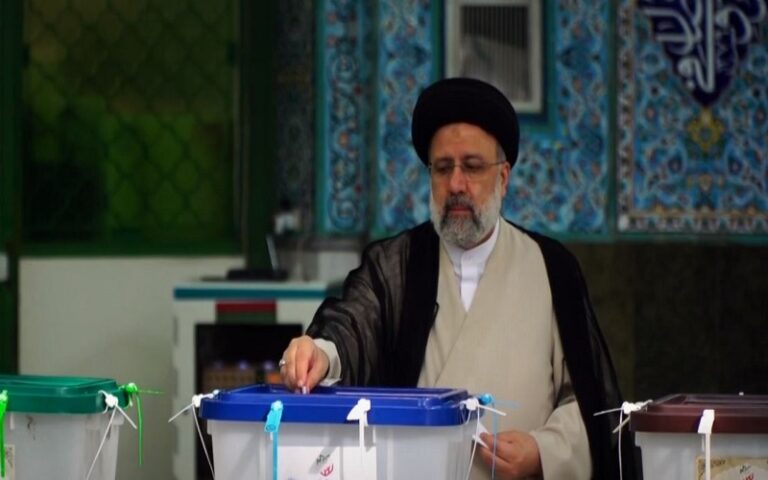
Iran’s forthcoming parliamentary and Assembly of Experts elections, scheduled for March 1, are shrouded in predictability and controversy, underscoring a regime grappling with internal discord and widespread public disillusionment. The National Council of Resistance of Iran (NCRI) has highlighted the regime’s deep-seated crises in its latest analysis. The report dives into the unprecedented election boycott anticipated by the regime, the disqualification of key regime figures, and an overarching inability to address its multifaceted crises.
The election boycott represents a significant challenge to the regime’s legitimacy. The NCRI article points out a record-high anticipated boycott, driven by a broad societal disenchantment. Abdolvahed Mousavi Lari, a former Minister of Interior, expressed concerns that “people’s anger towards the ballot boxes may be more serious than in 2019,” a year when voter turnout plummeted to the lowest since the mullahs’ rise to power in 1979. This anticipated boycott underscores a pervasive belief among the populace that abstention is a more principled stance than participation in a flawed electoral process.
Further complicating the regime’s predicament is the major disqualification of security veterans and political figures. Notably, the exclusion of Hassan Rouhani, a two-term president and long-time member of the Assembly of Experts, along with three former intelligence ministers and other high-profile officials, signals a significant purge within the regime’s own ranks. The NCRI article underscores the severity of these disqualifications: “The most prominent person to be eliminated from the race is Hassan Rouhani.” This wave of exclusions reveals deep internal rifts and a strategy aimed at consolidating power, eliminating dissent, and ensuring the survival of the ruling clique.
Amidst these challenges, the regime’s inability to resolve its crises becomes glaringly apparent. Iran is entangled in a web of interconnected and intricate crises, with economic and social turmoil, political grievances, and regional and global isolation threatening the regime’s stability. The NCRI describes a regime that “cannot afford any missteps or criticism,” relying heavily on repression and a shrinking circle of loyal officials to maintain its grip on power. This approach, however, fails to address the underlying issues, instead exacerbating the regime’s isolation and the public’s discontent.
Attempts by regime supreme leader Ali Khamenei to leverage the elections to project strength and legitimacy is indicative of a broader strategy to navigate these crises. By engineering the electoral process to ensure a high turnout, the regime seeks to present an image of social support and stability. However, the NCRI highlights the inherent flaws in this strategy, noting that “in Iran’s ruling religious dictatorship, genuine partisanship and ideological divides that prioritize public interest are nonexistent.” This lack of genuine political competition and the suppression of dissenting voices only further alienate the populace and undermine the regime’s credibility.
The disqualifications and the anticipated election boycott are not merely symptoms of a political system in distress; they are indicative of a deeper, systemic inability to engage with the public’s demands for change. Ahmad Zeydabadi, a state-affiliated analyst, warns of a “very, very dangerous downhill slide,” highlighting the regime’s precarious position and the urgent need for a fundamental shift in approach.
The NCRI’s report reveals a regime that is facing insurmountable challenges. The unprecedented election boycott, the disqualification of key figures, and the regime’s overarching crises are interwoven elements of a system struggling to maintain its legitimacy and control. As the regime tightens its grip, it inadvertently highlights its vulnerabilities, driving the country further into turmoil.
“Despite his efforts to purge his own ranks ‘for purity’ to stave off the overthrow of his regime, Khamenei overlooks the very fact that his regime becomes weaker by the day, while the people and the Iranian Resistance become bolder and more determined,” the NCRI writes.
