

Iranian Nurses Protest Unpaid Outstanding Claims
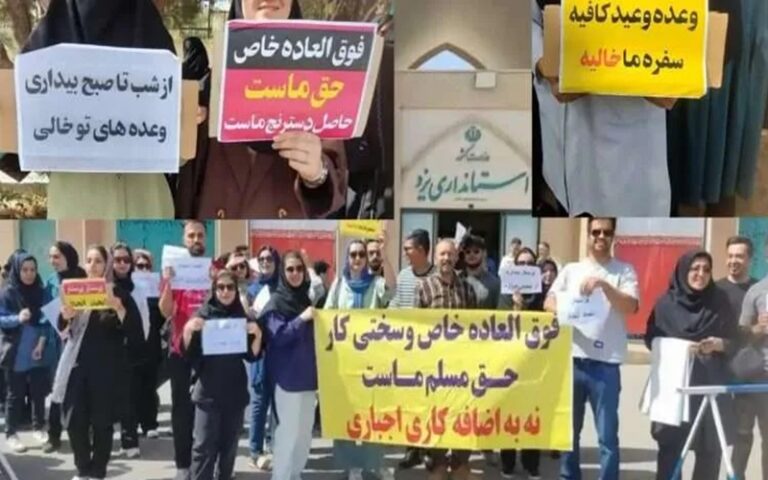
On May 30, a group of nurses in Yazd Province held a protest rally outside the Governor-General’s Office, demanding payment of their outstanding claims. The gathering took place as participating nurses stated that they had not received payments for nursing service tariffs for approximately six months, despite repeated follow-ups that have so far yielded no results.
According to reports from the protest site, nurses carrying placards and handwritten signs identified their primary demand as the immediate payment of overdue claims and clarification regarding accumulated debts owed to them. Some participants also protested working conditions and ongoing delays in the payment of salaries and benefits.
Physician Migration, A Warning Alarm for Iran’s Healthcare System
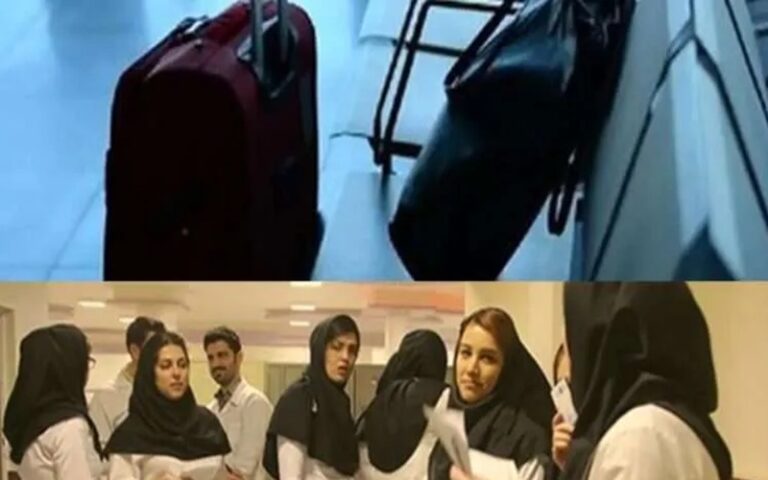
With physicians and nurses emigrating abroad, the human resources crisis in Iran’s healthcare system has entered a new phase. The findings of a research report announced on May 30 by the spokesperson of the Iranian Psychiatric Association in the state-run Khabar Fouri news outlet show that a large proportion of medical residents intend to leave the country, and many regret choosing their specialty training path. These figures are being released amid numerous reports in recent years about the emigration of physicians, nurses, and other healthcare professionals.
Physician Migration; The First Choice for Many Residents
Amirhossein Jalali Nadoushan, spokesperson for the Iranian Psychiatric Association, stated on May 30 that according to the results of a multicenter survey conducted at four medical universities across the country, 81.5% of 254 medical residents expressed a desire to emigrate.Iranian Regime Medical Council Confirms Arrest of Doctors After ProtestsAccording to the study, 79.5% of participants said that if they had known the actual conditions of residency training before entering their specialty programs, they would have preferred emigration over becoming residents. These figures indicate that dissatisfaction with educational and professional conditions among a segment of young medical professionals has reached an unprecedented level. Jalali Nadoushan emphasized that about 28% of participants had moderate to serious plans to emigrate. Nevertheless, he described the level of physician migration as highly significant.
The Erosion of Hope Among Medical Residents
The spokesperson for the Iranian Psychiatric Association believes that the gap between the desire to emigrate and concrete plans to leave reflects a deeper issue. He stressed that the matter is not solely physician migration, but also diminishing hope for professional prospects and a lack of confidence in the possibility of improving working conditions in the country. According to the same study, 81.1% of residents reported having little or no hope for improvement in the current situation. Healthcare experts view this figure as a potential sign of a broader human resources crisis within the healthcare system. Jalali Nadoushan warned that if this trend continues, it could directly affect the quality of healthcare services, public access to specialist physicians, and the level of burnout among healthcare workers in the coming years.Heavy Workloads and Controversial Policies
One of the most important issues highlighted in the report is the working conditions of medical residents. Nadoushan also criticized certain policies in medical education, stating that some decisions made in recent years have not only failed to solve existing problems but have worsened the crisis, ultimately contributing to physician migration. According to him, at a time when some specialists are leaving the country or exiting the healthcare workforce, expanding educational capacity without providing the necessary resources could undermine the quality of medical education.Expanded Enrollment and Concerns About Educational Quality
Jalali Nadoushan said in another part of his remarks: “Medical education requires specialized infrastructure, hospital facilities, and appropriate educational equipment, and increasing capacity without providing these resources can have extensive consequences for the healthcare system.” He warned that decisions made in this area have not only failed to reduce existing crises but have also created new problems, including physician migration.Physician and Nurse Migration; A Crisis Beyond Statistics
In conclusion, the spokesperson for the Iranian Psychiatric Association referred to the ongoing departure of nurses and healthcare workers from the country. According to him, large numbers of trained Iranian nurses have been recruited by European and North American countries in recent years. He emphasized that when physicians emigrate, replacing professionals who have been trained for years within the country’s healthcare system is not easily possible. These individuals possess experience, expertise, and social understanding that will take considerable time to pass on to future generations. The statistics showing widespread interest among residents in emigration are more than just numbers or survey results. They portray a deeper crisis, one in which some of the country’s youngest and most highly trained professionals are seeking their future beyond Iran’s borders. When more than 80% of medical residents are disillusioned with current conditions and many prefer emigration over continuing their careers in the country, the issue extends beyond physician shortages or educational problems; it reflects an erosion of confidence in the future.Dissatisfaction Has Spread Across All Segments of Society
At the same time, growing labor and social protests among various groups—including workers, teachers, retirees, nurses, and physicians—suggest that dissatisfaction with current conditions is not limited to any single segment of society. Many critics believe that fundamental change in Iran will not come through repeated promises or unsuccessful reforms, but through social organization, the expansion of resistance, and the role of forces seeking change.Denmark Accuses Iran’s Regime of Terrorism Threat
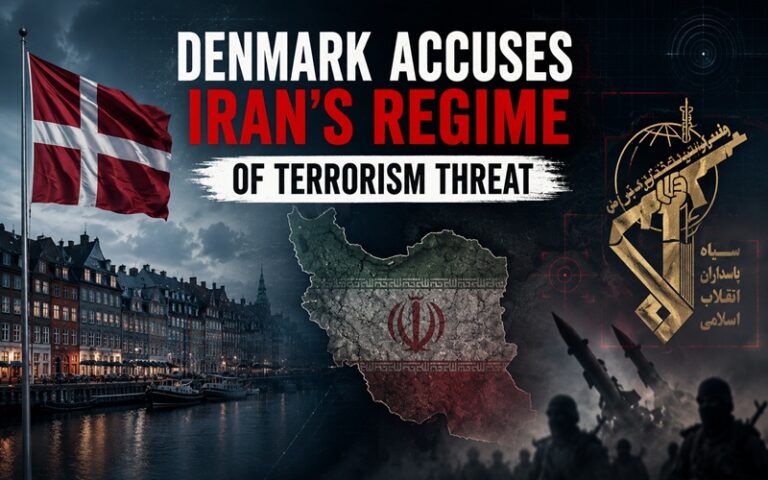
According to Al Arabiya, Denmark’s Security and Intelligence Service (PET) announced that Iran’s regime has played a more prominent role in terrorist threats against the country in recent years. In its latest assessment of Denmark’s security situation, released on Friday, May 29, the agency stated that the overall terrorism threat level remains at 4 out of 5. However, Danish security officials emphasized that the nature of these threats has changed compared to the past and has taken on new dimensions.
The new PET report states that the activities of foreign state actors in terrorist threats against European countries have increased. Danish security officials specifically named Iran’s regime and stated that Tehran has had a more active presence in security operations and threatening activities on European soil in recent years.
IRGC Threatens Public with a Harsher CrackdownThe terrorist threat posed by Iran’s regime in Europe has been repeatedly raised by European countries over the years. Denmark had previously accused Iran’s regime of planning assassination operations against dissidents on Danish soil. In 2018, Danish police announced that they had foiled a plot to assassinate an Arab activist opposed to Iran’s regime. That case led to a new phase of tensions between Copenhagen and Tehran.
Espionage Operations, Threats Against Political Opponents, and Planning Targeted Attacks
In its new report, Denmark’s Security and Intelligence Service stated that the terrorism threat is not limited to religious extremist groups. The agency emphasized that foreign governments now play a significant role in security threats against Europe. Danish officials said that espionage operations, threats against political opponents, and planning targeted attacks are part of these threats. The report also points to increased pressure on opponents of Iran’s regime in European countries. Many Iranian political and media activists have reported threats, surveillance, and security-related pressure over recent years. European intelligence agencies have repeatedly warned about the activities of networks linked to the Islamic Republic.Iran’s Regime and Terrorism Threats in European Countries
The terrorism threat associated with Iran’s regime in recent years has not been limited to Denmark. The Netherlands, Germany, France, and the United Kingdom have also, at various times, reported uncovering networks linked to Iran’s regime or thwarting security plots. Some European governments have even expelled Iranian regime diplomats due to security-related activities. Security experts in Europe say that growing domestic pressure on Iran’s regime and the expansion of public protests have led the regime to place greater emphasis on controlling opponents abroad. Many opponents of Iran’s regime live in Europe and have repeatedly been subjected to threats over the past several years. The report by Denmark’s Security and Intelligence Service was released at a time when relations between Iran’s regime and European countries are experiencing one of their most tense periods. The suppression of protests, widespread human rights violations, and the detention of dual nationals are among the most significant points of contention between Tehran and Europe.Terrorism Threats Among Europe’s Primary Security Concerns
Terrorism threats have now become one of Europe’s most significant security concerns. In recent years, European governments have sought to increase monitoring of networks linked to Iran’s regime. Many European security agencies believe that Tehran uses security apparatuses and tactics to silence critical voices.Workers At Iran’s Makran Steel Face Nine Months of Unpaid Wages
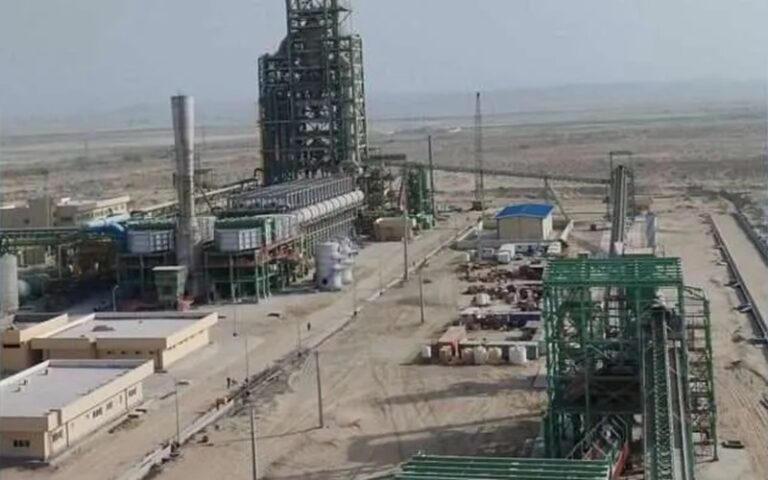
The ongoing crisis of unpaid workers’ wages in contracted projects has once again made headlines at Makran Steel in Chabahar. A number of workers at the company say they have not received any wages for nine months and are enduring difficult conditions without legal support or transparent responses from management. This situation has placed a heavy burden on workers’ families and pushed many to the brink of economic collapse.
According to a report published by local media outlets in the region on Thursday, May 28, a group of workers at Makran Steel in Chabahar reported that their outstanding wages remain unpaid. The company operates across from the fuel station on the Konarak Road along the Chabahar route and is active in the electrical sector. The project’s contractor has been identified as Savan Sanat Company.
The Vicious Cycle of Poverty in IranThe workers say their wages have not been paid since last July. They have repeatedly contacted company officials and followed up on their claims but have received no results. According to the workers, project managers have offered only repeated promises and have continuously postponed wage payments. The issue of unpaid workers’ wages in this project has now become a serious crisis. According to reports, 13 workers remain on the company’s official payroll, yet they have not received even one month’s wages during the past nine months. The workers emphasize that they have received neither a clear explanation about the project’s financial situation nor a specific timeline for the payment of their claims.
Unpaid Wages and Severe Economic Pressure
Makran Steel workers say they have faced extensive financial difficulties during this period. The costs of rent, healthcare, food, and their children’s education have placed their lives under severe strain. According to the workers, part of the project’s financial obligations has already been paid by the employer to the contractor, but workers’ wages remain unresolved. This issue has increased workers’ frustration and concern and raised serious questions about the management of the project’s financial resources. The workers also describe an insecure working environment at the project. They say fear of dismissal and the lack of effective legal protections have eliminated the possibility of openly protesting. Many workers feel compelled to remain silent to avoid losing even their unstable jobs.Contracting Projects and the Recurring Crisis of Unpaid Workers’ Wages
What has occurred at Makran Steel in Chabahar is an example of the broader situation facing workers in contracted projects across Sistan and Baluchestan Province. In recent years, numerous reports have documented lengthy delays in wage payments. Baluch workers in many projects face temporary contracts, inadequate insurance coverage, and difficult working conditions. Labor activists say the contracting structure used in many projects has created conditions that facilitate violations of workers’ rights. Under such circumstances, workers have very limited ability to pursue their claims and often choose to endure harsh conditions rather than face unemployment. The crisis of unpaid workers’ wages in Chabahar continues as inflation and rising living costs have further intensified economic pressures. Many working-class families are now facing severe livelihood challenges, and the continuation of this situation could have far-reaching social consequences.Trump Leaves Advisors’ Meeting Without Reaching a Final Decision

A meeting between U.S. President Donald Trump and his senior national security and political team regarding the course of negotiations with the Iranian regime ended after more than two hours of consultations without reaching a final decision.
The New York Times reported early Saturday, May 30, citing a senior U.S. administration official who spoke on condition of anonymity, that Trump was unable to reach a definitive conclusion during the meeting regarding the proposed memorandum of understanding with the Iranian regime.
Before the meeting began, Trump had said that the Friday session in the White House Situation Room was intended to make a final decision regarding the outcome of several weeks of negotiations with Tehran. He also emphasized that any agreement aimed at reducing tensions must include a commitment by the Iranian regime to keep the Strait of Hormuz open and to eliminate its stockpiles of enriched uranium.
Meanwhile, hours after Trump’s remarks, a spokesperson for the Iranian regime’s Foreign Ministry also stated that no final understanding had yet been reached between the two sides and that negotiations were still ongoing.
This comes as conflicting reports have emerged in recent days regarding the fate of the talks between Washington and Tehran, and uncertainty about the possibility of reaching a final agreement continues to persist.
Iran’s Regime Grudgingly Backs Down from its Longest Internet Shutdown

The widespread shutdown of international internet access, which began in January 2026 alongside the escalation of the nationwide uprising, has finally forced the Iranian regime into retreat after months of social pressure, economic crisis, and political isolation. The government of Iranian regime president Masoud Pezeshkian has now ordered the full reopening of international internet access while society remains gripped by severe political and economic unrest.
According to a resolution approved on Monday, May 25, during a meeting of the regime’s cyberspace headquarters chaired by Mohammad Reza Aref, the Ministry of Communications has been instructed to restore international internet access to its status prior to the January massacre. The decision came after months of severe restrictions and the near-total disconnection of Iran from the global internet network.
Netblocks: Iran’s Internet Faces Heavy Filtering Despite Restored Connectivity
The Purpose of the International Internet Shutdown Was to Conceal the IRGC’s January Massacre
The shutdown of international internet access in Iran began during the first days of the nationwide uprising. The Iranian regime attempted to halt the flow of information about the protests by completely cutting communications. As internal crises intensified, the scope of the blockade expanded further. With the launch of the U.S. military operation called “Epic Fury,” the regime raised the level of restrictions to its highest point. Reports published by international organizations indicate that this blockade has been the longest digital siege imposed by a dictatorship in modern history. The international organization NetBlocks stated in several reports that Iran experienced one of the most severe cases of international internet shutdown in recent months. This situation deprived millions of citizens of free access to information. In recent months, the economic pressure caused by the international internet shutdown increased to an unprecedented level. Thousands of online businesses were effectively destroyed. Technology companies, online stores, and digital sector activists faced a widespread financial crisis. Many users were also forced to rely on expensive and unsafe tools to gain limited access to the global internet. At the same time, social protests against restrictions on international internet access intensified. Students, media activists, business owners, and even parts of the regime’s own establishment had warned against the continuation of this situation. Nevertheless, the regime insisted for months on maintaining its policy of blockage.International Internet and the Regime’s Fear of a Social Explosion
The new decision by Pezeshkian’s government has been announced at a time when political and economic crises in Iran have reached a critical stage. Soaring inflation, the collapse of the national currency, expanding strikes, and growing public protests have created an extremely volatile political atmosphere in the country. The Iranian regime is facing a series of simultaneous crises and no longer has the ability to continue the complete siege of international internet access. Many observers describe this decision not as a policy change, but as a forced retreat under societal pressure. In recent weeks, numerous reports had emerged regarding rising public dissatisfaction. Social media users had also repeatedly reported the gradual restoration of some access. Now, with the official implementation of this resolution, the regime has effectively abandoned part of its nationwide blockage policy. Despite this, many internet freedom activists believe that the structure of censorship and control remains intact. They say the regime has merely been forced into a temporary retreat under the pressure of crises, and the possibility of renewed restrictions still exists. The shutdown of internet access in recent months was not merely a security tool. It became a symbol of the regime’s fear of the spread of protests and the free flow of information. The cracking of this wall of censorship is now viewed as a clear sign of the severity of the crisis within the ruling political structure. While Iranian society remains in turmoil, the reopening of international internet access appears less a sign of stability than a reflection of a regime retreating under the pressure of protests, economic crisis, and widespread isolation, temporarily setting aside part of its digital repression policy.20,000 Iranian Cargo Containers Stranded in Pakistani Ports
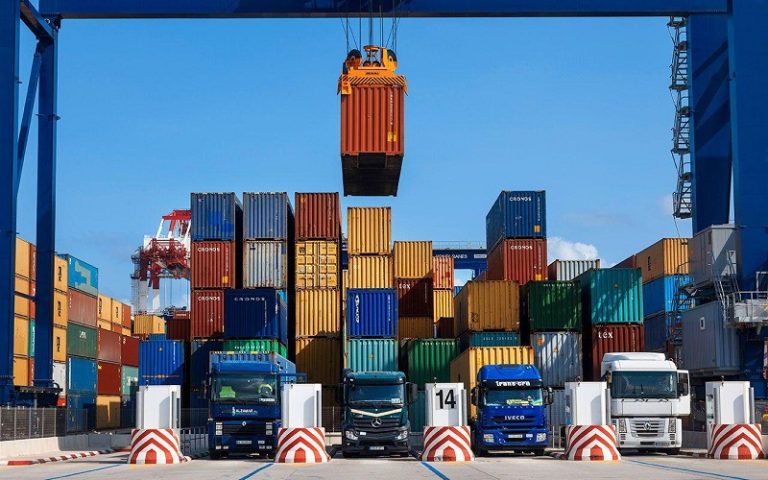
Ehsan Malekzadeh, chairman of the board of the Iranian regime’s Association of International Transportation Companies, reported a large accumulation of imported goods in regional ports and said that around 20,000 containers belonging to Iran are stranded in Pakistani ports, with no stable and low-cost route yet available for transferring them into the country.
In an interview with the state-run Mehr news agency, Malekzadeh referred to conditions following the recent war and stated that some goods being transported to Iran were unloaded at the first safe transit ports due to wartime conditions and international maritime transportation regulations. According to him, this has caused Iranian shipments to become stranded in ports such as Karachi, Jebel Ali, Khor Fakkan, Jeddah, and several ports in India.
U.S. Treasury Sanctions Shamkhani Oil NetworkHe added that in the case of Pakistan, due to domestic laws and international restrictions, no secure and clearly defined route has yet been established to transfer this volume of containers to Iran. According to him, in the United Arab Emirates as well, despite a significant portion of the goods being unloaded at Jebel Ali port, restrictions and high costs have prevented their direct transfer to Iran, and only a limited number of shipments have entered the country through Oman and Iraq. Malekzadeh warned that if the current situation continues, many of these shipments could be considered abandoned goods, especially in Pakistan, where the storage period is limited to 60 days. He also reported a sharp rise in demurrage, warehousing, and so-called war risk costs, which have imposed significant pressure on importers and ultimately consumers. Referring to efforts to resolve the crisis, Malekzadeh said that Iran’s International Transportation Association is in talks with domestic institutions, neighboring countries, and embassies to establish stable transportation routes. In another part of his remarks, he pointed to structural problems in the country’s transportation fleet and said that restrictions on fleet modernization, difficulties in obtaining visas for Iranian drivers, and the failure of some domestic trucks to meet international standards are among the main obstacles to Iran’s foreign trade. According to him, while around 500,000 trucks are operating in the country, a significant portion of the fleet remains outdated, and trucks manufactured or assembled domestically largely do not meet the standards required for travel on European routes. Malekzadeh concluded by emphasizing that without restructuring the transportation fleet and removing international transportation obstacles, the cost of Iran’s foreign trade will continue to rise.
US Imposes New Restrictions on Iranian Airlines
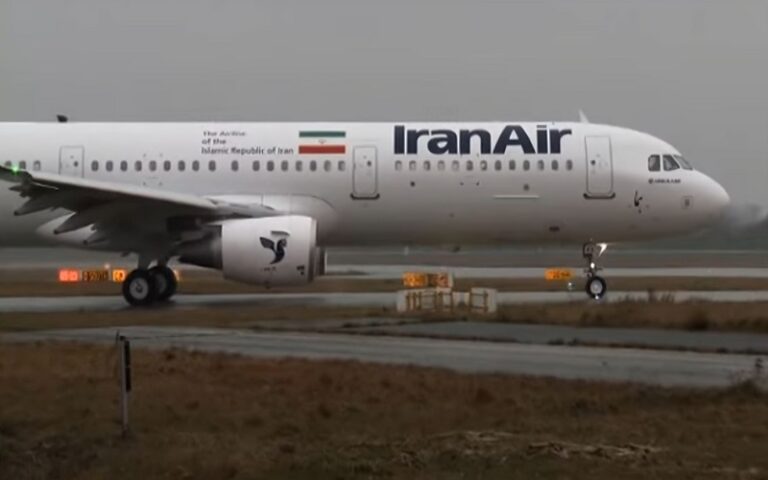
The Wall Street Journal, quoting U.S. Treasury Secretary Scott Bessent, reported that Washington has warned that any cooperation by companies with Iranian airlines could expose them to U.S. sanctions.
According to the report, Bessent emphasized that foreign companies and governments must refrain from providing services such as fuel supply, airport services, ticket sales, and other operational support to Iranian airlines; otherwise, they may face punitive measures by the United States.
The U.S. Treasury Secretary also reposted the report on his X account and wrote that, within the framework of severe economic pressure, the U.S. Treasury Department will implement its maximum pressure policy against Iran and will not hesitate to take action against any third party that trades with Iranian entities or facilitates such trade.
He also announced on X:
This warning comes as part of Washington’s ongoing economic pressure campaign against Iran and amid intensified sanctions targeting the transportation and energy sectors. The report also stated that, alongside rising tensions in the region and discussions regarding the situation in the Strait of Hormuz, the United States is seeking to further restrict financial and operational networks connected to Iran. Bessent also warned in separate remarks that only reaching a satisfactory agreement in negotiations can prevent the continuation of this pressure and sanctions campaign. These remarks come as political and security tensions in the Persian Gulf region and the Strait of Hormuz continue, while discussions regarding the course of negotiations between Iran and the United States are also ongoing.The United States Government will not tolerate any effort to impose a tolling system in the Strait of Hormuz. Oman, in particular, should know that the U.S. Treasury will aggressively target any actors involved – directly or indirectly – in facilitating tolls for the Strait and…
— Treasury Secretary Scott Bessent (@SecScottBessent) May 28, 2026
The Vicious Cycle of Poverty in Iran
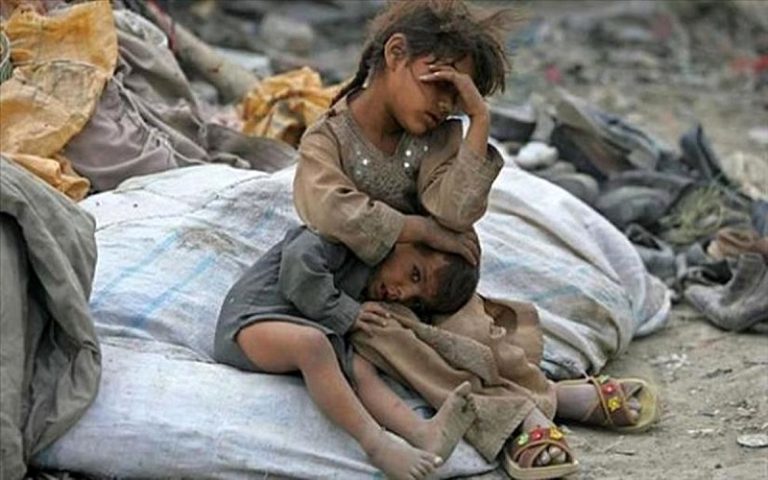
Over the past more than a decade, Iran’s economy has been trapped in chronic stagnation, structural inflation, and a continuous decline in purchasing power. Reports from the World Bank, the International Monetary Fund, and even domestic media indicate that Iranian society has entered a stage of persistent poverty. In this situation, households have neither the ability to save nor the possibility to invest, nor hope for a sustained improvement in their living conditions.
What makes this crisis more dangerous is the transformation of poverty into a self-reinforcing cycle. In Iran’s vicious cycle of poverty, rising costs of housing, food, healthcare, and transportation reduce purchasing power. The decline in purchasing power, in turn, destroys effective demand.
Urban Poverty in Iran: The Collapse of the Economy of Life in Major CitiesAccording to published data, the population living below the poverty line has increased at an unprecedented rate over the past two decades. If around 9 million people were below the poverty line in the mid-2000s, now tens of millions are either in poverty or at risk of absolute poverty. Even state-run media in Iran have spoken of a sharp rise in absolute poverty; a phenomenon once limited to deprived regions but now affecting the urban middle class as well.
Rent-based economy and the continuous reproduction of poverty
One of the main reasons for the formation of the vicious cycle of poverty in Iran is the economy’s dependence on oil revenues and rent-seeking policies. Rather than leading to sustainable development, the oil-based economy has become a tool for expanding corruption, opaque distribution of resources, and strengthening unaccountable institutions within the Iranian regime. In such a structure, productive investment has been replaced by speculation, brokerage, and non-productive activities. In recent years, a large portion of social capital has shifted toward non-productive markets such as foreign currency, gold, land, and housing. The reason is clear: production in the economy controlled by Iran’s regime lacks security and returns. Independent investors face constant uncertainty, systemic corruption, and a lack of legal protection. As a result, capital is diverted from production into activities that only generate more inflation and inequality. The housing market is a clear example of this crisis. Over recent years, housing prices have multiplied several times, while household incomes have never kept pace. The result of this gap has been the gradual exclusion of millions of people from the housing market. Many families have been forced to move to city outskirts, live in smaller homes, or spend a large portion of their income on rent. Sanctions have also played an important role, but the current crisis cannot be reduced solely to sanctions. Many countries have been under external pressure, yet transparent and accountable economic structures have prevented the collapse of people’s livelihoods. The main problem in Iran is the combination of sanctions with mismanagement, institutionalized corruption, and the prioritization of political and security objectives over the economic interests of society.Erosion of the middle class and the expansion of social insecurity
The vicious cycle of poverty in Iran is not limited to declining incomes; it has now led to widespread social erosion. The middle class, once the pillar of economic and cultural stability in society, is gradually collapsing. Families that previously could afford housing, proper education, and healthcare are now facing crises in meeting basic living expenses. Official statistics show that the share of food expenses in household budgets has sharply increased. This means people are spending a larger portion of their income simply to survive. At the same time, nutritional quality has declined and consumption of essential goods has fallen. Reduced caloric intake alongside rising food prices is a clear sign of expanding food poverty in the country. The labor market situation has become even more critical. The expansion of informal employment, temporary contracts, and lack of insurance has turned millions of workers into precarious labor. Many workers and employees, despite being fully employed, live below the poverty line. This phenomenon, known as the “working poor,” is one of the most dangerous signs of economic collapse. Rising internal migration is another part of this crisis. Households migrate to smaller cities or outskirts to escape the high cost of living in major metropolitan areas. However, this relocation often means lower quality of life, weaker public services, and the expansion of informal settlements. As a result, poverty shifts from city centers to the periphery, creating a broader social crisis. The reality is that Iran’s economy is no longer merely facing a period of recession or inflation. What has emerged is a stable structure to produce poverty. A structure in which social inequality is reproduced, economic opportunities become more limited, and the gap between a small, privileged minority and the majority of society grows wider every day. The World Bank has referred to Iran’s “lost decade” of economic development; a decade in which millions of people fell below the poverty line. However, the main issue is not only the decline in incomes. The deeper crisis is the gradual destruction of the possibility of economic recovery within the current framework. When a political and economic structure is built on monopoly, corruption, and repression, poverty is no longer a temporary crisis; it becomes part of the governing system itself.Netblocks: Iran’s Internet Faces Heavy Filtering Despite Restored Connectivity
NetBlocks, the global internet monitoring organization, says that Iran’s internet, despite being reconnected, is still subject to severe filtering.
NetBlocks announced on the social media platform X that three months ago on this day, Iran cut off access to the global internet.
“Three months ago today #Iran shut off access to the global internet. While connectivity has now largely returned, metrics indicate that users still face heavy filtering, similar to the interim period between the January protests and the start of the war.” The organization is referring to the period after the January protests, when internet access was briefly restored. Following the gradual restoration of global internet access in Iran, data from Kentik shows that international internet traffic, after weeks of severe restrictions, had reached 53% of its pre–January 2026 protest levels by 7:30 a.m. today.🗓️ Three months ago today #Iran shut off access to the global internet. While connectivity has now largely returned, metrics indicate that users still face heavy filtering, similar to the interim period between the January protests and the start of the war. pic.twitter.com/3Hqw4IWZb5
— NetBlocks (@netblocks) May 28, 2026
Iranian Media Report Approval of Resolution to Restore International Internet AccessAccording to Kentik, this trend is somewhat similar to the partial reconnection of the internet after December–January protests. At that time, despite partial access to the global internet, the connection was highly unstable and accompanied by intermittent disruptions. It is unclear whether access will return to its previous state or remain in this unstable condition. Ahmad Rastineh, spokesperson for the Cultural Commission of the Iranian regime’s parliament, reacting to decisions by regime president Masoud Pezeshkian regarding the review of the internet situation, said that some of the duties and responsibilities of this taskforce overlap with those of the Supreme Council of Cyberspace. He says that the ruling of the Administrative Court of Justice to suspend the activities of this taskforce is, from a legal standpoint, “correct and precise.” According to this member of parliament, reopening the internet is “against the law.” Following the internet shutdown since the start of the war in Iran in February, Masoud Pezeshkian formed the “Taskforce for Organizing and Strategic Management of Cyberspace” to review the return of international internet access. The taskforce’s decision regarding the reopening of the internet has faced strong reactions from its opponents. After that, the Administrative Court of Justice announced that “following complaints requesting the annulment of the document establishing this taskforce, the Specialized Board for Industries and Commerce, having recognized the urgency of the matter, has issued an order to suspend the implementation of the resolution until a final review is conducted.” Despite this measure, international internet access has been restored for users since two days ago, after more than 80 days.
