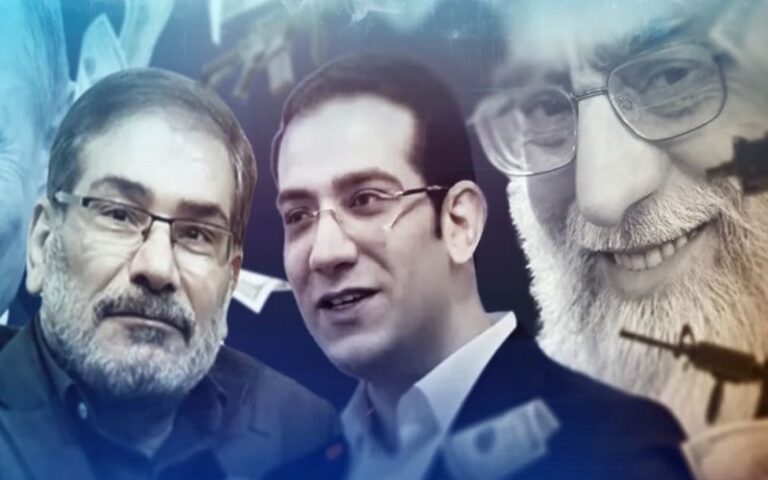
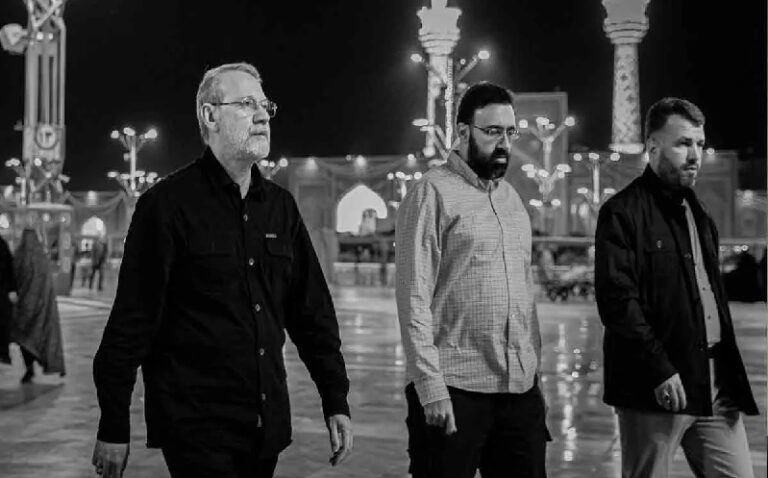
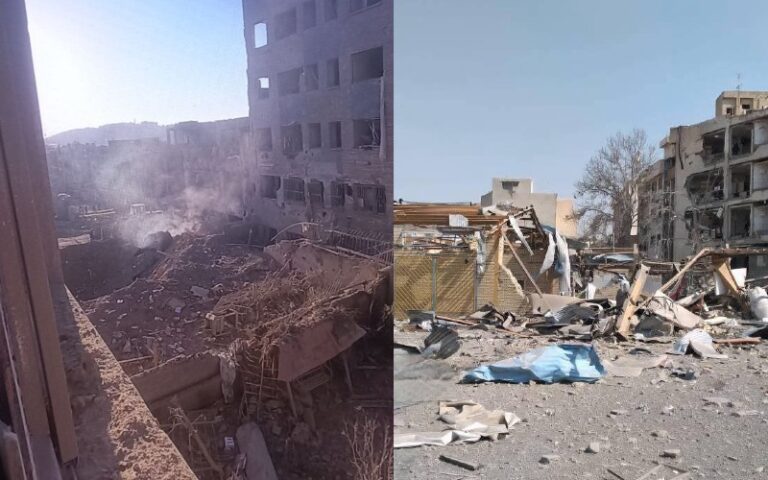
The Organized Crime and Corruption Reporting Project (OCCRP) reported that Hossein and Abolfazl Shamkhani, sons of Ali Shamkhani—a senior Iranian regime official—used aliases and Dominican passports to purchase a portfolio of high-value properties worth $29 million in Dubai, and that their activities have also extended to Europe.
Hossein Shamkhani was placed under sanctions by the United States, the United Kingdom, and the European Union in July 2025 for generating billions of dollars in oil revenue for Iran’s regime and Russia.
The U.S. Department of the Treasury identified him as “Hugo Hayek,” a citizen of Dominica.
The OCCRP announced on Thursday, March 19, that Abolfazl Shamkhani also holds a Dominican passport under the alias “Sami Hayek.” However, he has not been sanctioned so far.
According to previous reports, Hossein Shamkhani and his associates used Dominica’s citizenship-by-investment program and, by obtaining passports from that country, attempted to gain access to the international banking system.
Four luxury villas in Dubai worth $29 million
Property records from the United Arab Emirates obtained by the OCCRP show that the Shamkhani brothers own at least four luxury villas in Dubai, valued at approximately $29 million at the time of purchase.
These assets have been registered under their Dominican identities.
According to the report, the Shamkhani brothers initially purchased the Dubai luxury properties under their Iranian names; “Mohammad Hossein Shamkhani” and “Abolfazl Ali Shamkhani” were registered as buyers of two villas in the exclusive “Golf Place” development in July 2019.
According to reports, the ownership documents for these villas are now registered under the names listed in their Dominican passports, “Hugo Hayek” and “Sami Hayek.” Although the exact timing of this change is unclear, the brothers’ subsequent purchases were also made directly under these aliases.
Shamkhani and Ali Khamenei were killed during the February 28 attacks by the United States and Israel.
Purchase of luxury properties on Jumeirah Island
According to UAE property data, Hossein purchased a villa in July 2022 on “Jumeirah Bay Island,” a seahorse-shaped luxury area off the coast of Dubai, using his Dominican passport. Abolfazl also acquired a luxury residence in the same area in October of that year under the name “Sami Hayek.”
These properties are still held under those same names.
It is unclear whether the two brothers still hold Dominican passports, although reports indicate that authorities in that country revoked Hossein Shamkhani’s passport following U.S. sanctions.
Dominica is a small country in the Caribbean Sea, known for its pristine nature, rainforests, and volcanic landscapes.
In addition to its natural attractions, the country has drawn international media attention for its citizenship-by-investment program, known as the “golden passport.”
Traces of the Shamkhani brothers in Europe
The Shamkhani brothers’ use of the “Hayek” aliases has not been limited to personal real estate assets and has taken on broader dimensions.
Abolfazl’s alias, “Sami Hayek,” also appears in European corporate records. According to company registration documents in Cyprus from November 2024, he was registered as a limited partner in the Saleya Fund, an investment fund in Cyprus, using his Dominican passport and his residence address at the “Golf Place” villa in Dubai.
The brothers’ Dominican identities also appear in the records of another company—a firm in Turkey that the U.S. Treasury has sanctioned for involvement in the illegal transfer of oil for Russia and Iran’s regime.
According to records, Hugo and Sami Hayek were founding shareholders of Green Energy Chemical Industries, a company registered in Turkey in 2021. They transferred their shares to Dubai-based Milavous in November 2023.
Earlier, in September 2024, Bloomberg revealed that Dubai-based Milavous, where Hossein Shamkhani is a senior executive, has profited billions of dollars from the sale of goods originating from Iran, Russia, and several other countries.
On Saturday, March 21, on the 22nd day of the war, and following escalating military and security tensions in the Middle East, a series of political and military developments occurred at the international level, including at the United Nations Security Council, indicating the expansion of the crisis and growing concerns about energy security and regional stability.
The Security Council’s order to reopen the Strait of Hormuz
Antonio Guterres, Secretary-General of the United Nations, announced that the Security Council has ordered the reopening of the Strait of Hormuz in response to escalating conflicts. After meeting with European Union leaders in Brussels, he warned that continuation of this situation could push the crisis out of control. Referring to the global consequences of the closure of this vital passage, Guterres emphasized that it would place widespread pressure on people around the world. He also called for a halt to attacks by the United States and Israel and an end to the Iranian regime’s military actions against countries in the region and warned about targeting energy infrastructure—an act that, according to him, could constitute a war crime.
Ten-million-dollar reward for information on IRGC commanders
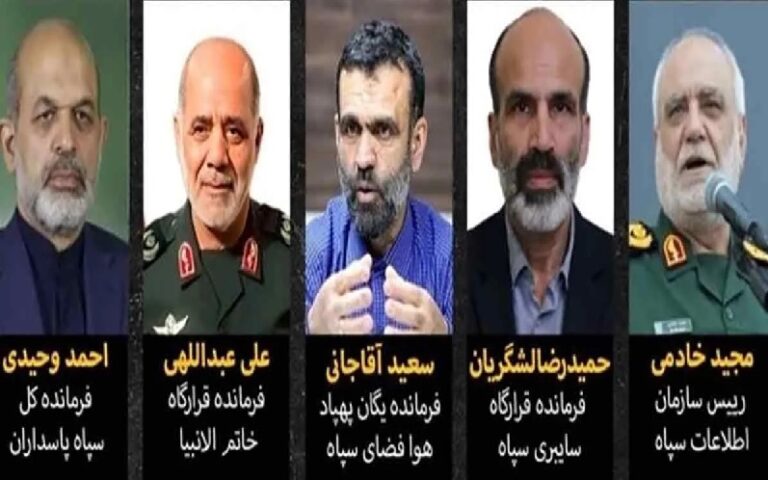
The U.S. Department of State, continuing its maximum pressure policy, has announced rewards of up to 10 million dollars for information on senior commanders of the Islamic Revolutionary Guard Corps (IRGC), the Iranian regime’s main military force. This action is part of the Rewards for Justice program and includes key individuals in military, intelligence, and cyber sectors. The statement emphasized that these individuals have played roles in designing and executing regional and international operations. It also noted that those who provide information may receive, in addition to financial rewards, assistance in relocating. This measure continues a trend that has previously targeted other senior officials.
According to this announcement, rewards of up to 10 million dollars have been set for information on Ahmad Vahidi, Ali Abdollahi, Saeed Aghajani, Hamidreza Lashgarian, and Majid Khademi—individuals active in various branches of the IRGC, including aerospace, cyber, and intelligence sectors.
Continuation of retaliatory attacks and regional threats
In the early hours of the Iranian New Year, reports emerged of U.S. and Israeli airstrikes on cities such as Tehran, Karaj, and Isfahan. At the same time, the IRGC announced the start of a new round of missile attacks against Israel. In another development, this military body threatened to target the city of Ras Al Khaimah in the United Arab Emirates and urged residents to leave the area. These threats come as tensions are increasingly spreading to other countries in the region.
The United States’ dual stance on continuing the war
Donald Trump stated that Washington is considering a gradual reduction of military operations, but at the same time emphasized that it has no interest in establishing a ceasefire. He claimed that much of the Iranian regime’s military capability has been destroyed and that key U.S. objectives—such as weakening missile capabilities and preventing access to nuclear weapons—are close to being achieved. Trump also stressed full alignment with Israel, stating that both sides seek total victory.
The United Kingdom’s alignment and reactions of Western allies
UK Prime Minister Keir Starmer, reversing his previous position, authorized the United States to use British military bases to strike targets related to the Strait of Hormuz. This decision was made following attacks by the Iranian regime on the interests of London’s allies. However, the British government has still emphasized the need to reduce tensions. At the same time, several European countries, along with Japan and Canada, issued a joint statement condemning attacks on commercial vessels and expressing readiness to ensure safe passage through the Strait of Hormuz.
Overall, these developments indicate that the current crisis has entered a sensitive and complex phase—one in which efforts to contain the conflict are being pursued simultaneously with escalating military actions by various actors, leaving its future uncertain.
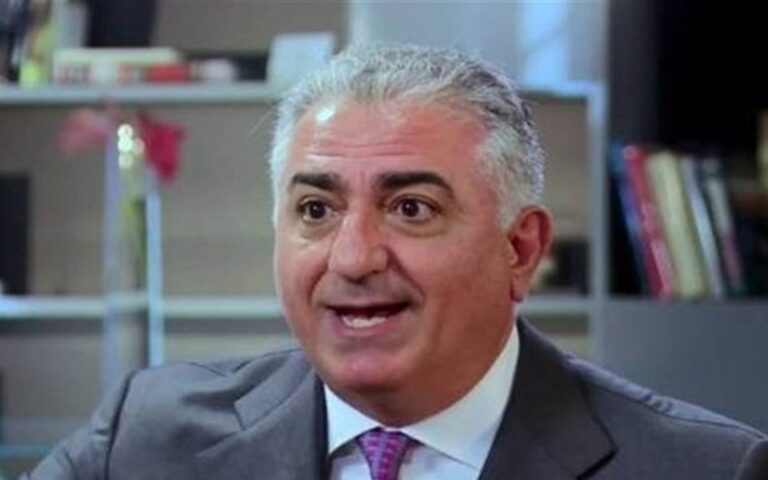
While the Iranian clerical dictatorship faces unprecedented internal erosion and external pressure, the exiled son of the ousted Shah, Reza Pahlavi, has been thrust into the spotlight through a highly curated media and cyber campaign. Despite this manufactured visibility, the political infrastructure supporting him is facing a crisis of legitimacy. Former aides suggest that the Pahlavi circle is replicating the very authoritarian dynamics it claims to oppose, ultimately undermining the broader objective of a democratic transition.
The most damning evidence of this decline comes from within the Pahlavi camp itself. Figures who were once central to Pahlavi’s operations, such as former collaborator Alireza Nader and longtime adviser Shahriar Ahi, have distanced themselves from his orbit. Nader’s 2026 assessment describes a movement that has traded collective action for a narrow, personality-driven agenda. He argues that Pahlavi’s decision to abandon the Georgetown coalition was not a strategic pivot but an attempt to assert himself as the sole arbiter of the opposition.
Structural Fragility and the Exit of Core Collaborators
According to these critics, the direction of the Pahlavi circle is largely attributed to a small group of advisers, most notably Amir Etemadi. Reporting suggests that the movement has adopted aggressive tactics both online and offline to suppress non-monarchist dissidents. Journalists and activists who raise legitimate questions regarding Pahlavi’s leadership are frequently targeted with coordinated harassment and labeled as “terrorists” or “separatists.” These labels are not merely rhetorical; they serve to justify the vitriol directed at anyone who refuses to subscribe to the “Pahlavi or the regime” binary.
Amir Taheri, a veteran monarchist, was publicly sidelined and attacked by Pahlavi’s digital supporters after he critiqued the “Emergency Phase Booklet.” This refusal to engage with substance, opting instead for personal attacks and social media excommunication, signals a movement that cannot tolerate insider critic.
Furthermore, the tactics employed by this inner circle have had a chilling effect on the broader diaspora. Former associates describe an environment where doxxing and misogynistic threats are used as tools of political discipline. This behavior has become so pervasive that observers outside the movement have expressed concern over the safety of those who participate in opposition politics.
The Radicalization of the Inner Circle
One of the most concerning aspects of the current Pahlavi strategy is the reliance on unverified metrics to project strength. A primary example is the “National Cooperation Platform,” launched via QR codes on Iran International. While Pahlavi’s aides claimed that over 100,000 members of the Iranian security forces used this channel to pledge allegiance or defect, no independent verification has ever been provided. Faramarz Dadras, a former officer in the Shah’s Imperial Guard, has openly criticized this initiative as a potential “spy project,” suggesting it lacks the security infrastructure to protect participants inside Iran.
The lack of transparency regarding these “phantom defectors” highlights a broader pattern of exaggeration and unfulfilled promises. Alireza Nader has noted that while Pahlavi frequently references these numbers in international forums, he avoids providing evidence when pressed by journalists. This strategy of “hype without substance” may serve to attract temporary attention from foreign policymakers, but it does little to weaken the regime’s grip on power. Instead, it creates the false expectation that regime defectors will eventually side with the people or help arm the opposition during an uprising, luring many into a fatal miscalculation. What follows is betrayal by reality itself: unarmed and unprotected, people are left to face the regime’s ruthless security apparatus and its unrestrained repression on their own.
The exclusionary rhetoric was on full display during the February 2026 Munich press conference. Pahlavi’s assertion that those who do not support him are either “MEK”, “terrorists” or “separatists” was a strategic blunder that served the regime’s interests. By framing the opposition in such a divisive manner, he validated the regime’s own narrative that there is no viable, democratic alternative to the current clerical rule.
Unverified Success and the Rhetoric of Exclusion
The cumulative effect of these failures is a movement that is increasingly isolated from the realities of the struggle inside Iran. While the Pahlavi circle focuses on branding and media promotion, the actual work of resistance is being carried out by organizations and individuals with deep roots on the ground.
As testimony from former insiders continues to surface, the false image of Pahlavi as a unifying transitional figure is collapsing under the weight of a much harsher reality: a narrow, exclusionary, and authoritarian operation that is proving more useful to the ruling establishment than to the cause of democratic change. By deepening fragmentation, spreading illusion, and hostile attacks against democratic forces, this camp objectively benefits the regime, which thrives whenever the opposition is divided and politically misled. No movement can credibly claim to oppose dictatorship while reproducing its instincts internally. Yet that is precisely what the Pahlavi camp has displayed: authoritarian control, deceptive projection, and hostility to accountability. At a moment when the Iranian people urgently need a coherent path forward, this circle remains not a force for liberation, but a source of paralysis and division that the regime is all too happy to exploit.
On Friday, March 20, coinciding with Nowruz (the Persian New Year) in Iran, and on the twenty-first day of the war, political, military, and security developments continued at a rapid pace. A combination of international positions, military attacks, and domestic consequences presented a complex picture of the ongoing situation.
Donald Trump, the President of the United States, stated in a sharp tone that no effective leadership remains in Iran with whom negotiations would be possible. These remarks were made as U.S. and Israeli attacks on targets linked to the Iranian regime continued, indicating a diminishing prospect for a diplomatic solution under current conditions.
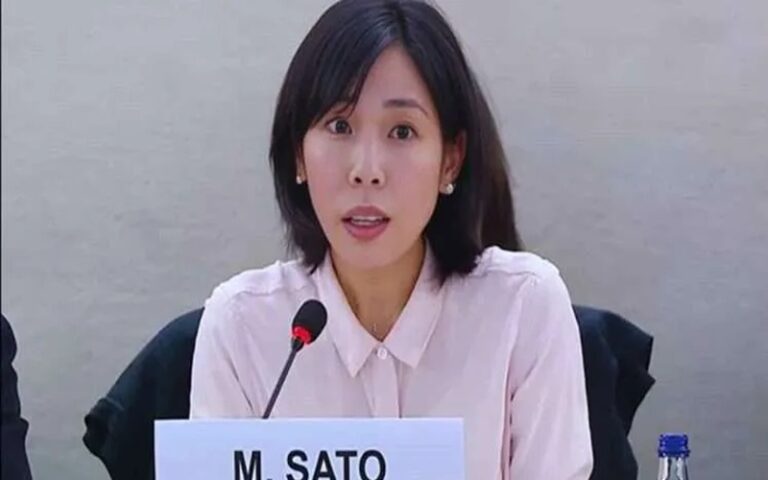
At the same time, Mai Sato, a United Nations human rights expert, emphasized that the human rights crisis in Iran is deeply rooted and not limited to the recent war. According to her, this crisis will persist even after the conflict ends, further intensifying international concerns about Iran’s internal situation.
Reports indicate that several officials and commanders associated with the Iranian regime’s military structure have been killed. Among them, the deaths of Esmail Ahmadi, a Basij commander (a paramilitary force under the IRGC), and Gholamreza Soleimani have been confirmed. In addition, the death of Ali-Mohammad Naeini, spokesperson for the Islamic Revolutionary Guard Corps (IRGC), has also been announced.
At the same time, the scope of the conflict has expanded to a regional level. Drone and missile attacks on Persian Gulf countries, including the United Arab Emirates, Kuwait, Saudi Arabia, and Bahrain, have been reported, and these countries are working to counter these threats. In this context, attacks on Fujairah port in the UAE and the Mina Al-Ahmadi refinery in Kuwait caused fires and disruptions in energy operations. Qatar also reported several billion dollars in damage to the Ras Laffan gas facilities, one of the world’s most important centers for liquefied natural gas production.
Efforts to control the economic consequences of the war are also ongoing. A report published by The Wall Street Journal, a major U.S. newspaper, indicates that the United States and its allies have intensified operations to keep the Strait of Hormuz open. This move aims to prevent disruptions in global energy flows and to secure one of the most vital oil transit routes in the world.
The U.S. Department of Justice announced the seizure of four websites linked to the Iranian regime’s intelligence entities. This action was taken as part of efforts to counter cyberattacks and threatening activities against opponents. There are also reports of arrests of individuals connected to networks affiliated with the Iranian regime in several Persian Gulf countries, reflecting growing concerns about the cross-border activities of these networks.
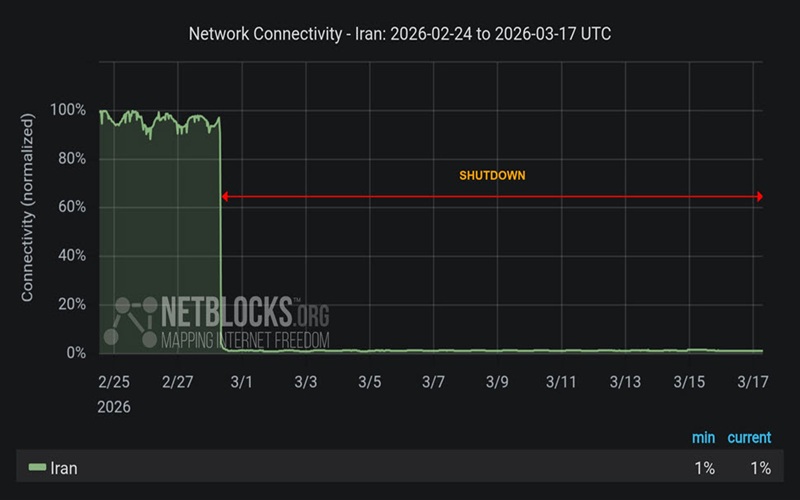
Inside Iran, the situation—especially in terms of communications and social conditions—is critical. A report by NetBlocks, an organization that monitors internet access worldwide, shows that the widespread internet shutdown has entered its twenty-first day, placing the country in a state of “digital darkness.” This situation, coinciding with the Iranian New Year, has heightened concerns. Additionally, multiple reports indicate a rising wave of arrests across various cities. Observers say these measures are being taken in response to fears of expanding public protests and the potential emergence of new uprisings.
The state security apparatus of the United Arab Emirates announced the identification and dismantling of an organized network which, according to officials, was involved in money laundering and terrorism financing and had ties to Lebanon’s Hezbollah and the Iranian regime. According to the UAE’s official news agency, members of this network—who operated under the cover of commercial companies—have been arrested. UAE security officials emphasized that the group, with foreign direction and support, had attempted to infiltrate the country’s economic structure and target financial stability. Such actions, they stated, constitute a direct threat to national security and will be met with a decisive response.
Meanwhile, another report on developments along the Iran–Turkey border indicates that the Iranian regime has imposed restrictions on citizens leaving for Turkey. According to Turkish officials, since the beginning of the conflict, the number of Iranians entering Turkey has significantly decreased to about one-quarter to one-third of previous levels. Turkey’s Interior Minister stated that while Turkish citizens can enter Iran without obstacles, Iranians face restrictions when attempting to leave.
In another development, continuing military attacks inside Iran have reportedly resulted in the deaths of 13 Basij forces during an attack on a checkpoint in the Qaramalek area of Tabriz. According to regime sources, the attack—caused by the impact of a projectile—also injured 18 individuals. In a separate attack at the entrance of Malekan County (in East Azerbaijan Province), one military personnel and one civilian were killed, and three others were wounded.
Mai Sato, the United Nations Special Rapporteur on the situation of human rights in Iran, warned in a new message about the continuation of the human rights crisis in Iran and emphasized that this crisis is not limited to recent developments and conflicts.
با فرا رسیدن نوروز ــ جشنی باستانی که نماد نو شدن، همدلی و امید است و میلیونها نفر در ایران و فراتر از مرزهایش آن را برگزار میکنند ــ بسیاری ناچارند سال نو را زیر آتش بمباران، آواره از خانههای خود و در سوگ عزیزان از دسترفته سپری کنند. من از همه طرفین میخواهم که فوراً به…
Ahead of the Iranian New Year, this United Nations official stated in a message on X (formerly Twitter) that the human rights situation in Iran neither began with the recent U.S. and Israeli attacks nor will it end with the possible conclusion of these conflicts. According to her, the roots of this crisis go back many years and continue to persist.
In part of her remarks, Sato referred to the condition of citizens who have been affected during recent developments and said that these individuals are the same people who had previously played a central role in nationwide protests. With this reference, she emphasized the continued pressure on civil society and ordinary citizens.
The UN Special Rapporteur further listed executions, repression of minorities, detention of political prisoners, and violence against women as examples of human rights violations in Iran, noting that these issues existed even before the war and still require urgent attention from the international community.
Mai Sato also called for a halt to the conflict and a move toward diplomatic solutions, urging the parties involved to pursue dialogue. In another part of her message, referring to the arrival of Nowruz (the Persian New Year), she described it as a time for solidarity and being with family.
In this regard, she called on officials of the Iranian regime to end internet restrictions, enable free communication for citizens, and release all arbitrarily detained individuals, especially those connected to nationwide protests.
At the same time, reports on social media indicate that many citizens, due to ongoing internet shutdowns and disruptions, have been unable to obtain information about their families on the eve of Nowruz, a situation that has further increased humanitarian and social concerns.
On Thursday, March 19, the twentieth day of the war, clashes among main and regional actors entered a new phase of tension and geographic expansion. Alongside increased air and missile attacks, diplomatic reactions and mutual threats have intensified, and signs of the potential expansion of the war to broader levels are visible.
Air and ground attacks inside Iran
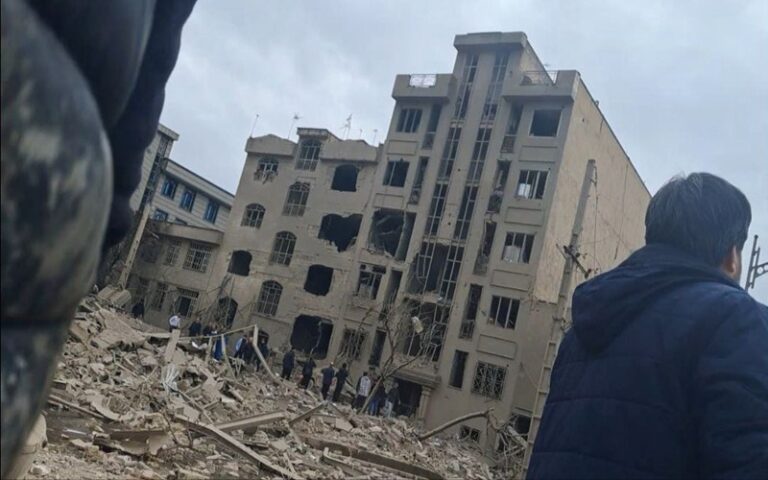
In the early hours of Thursday, March 19, reports and videos published on social media indicated multiple airstrikes in the city of Shiraz. According to these images, several locations, including the city’s electronics industries, were targeted, and loud explosions were heard across different areas. The attacks were reported to have occurred around 12:57 a.m., but no official report on the extent of damage or possible casualties has yet been released.
At the same time, the Israeli military announced that over the past 24 hours it had struck more than 200 targets inside Iran. According to this body, the targets included storage and launch facilities for ballistic missiles, drones, air defense systems, and infrastructure for producing military equipment. These attacks, particularly in western and central Iran, were carried out through dozens of offensive sorties.
Expansion of clashes in the Persian Gulf and threats to energy security
In the Persian Gulf, a commercial vessel near Ras Laffan in Qatar was struck by an unidentified projectile. According to British maritime sources, the incident occurred four nautical miles off the coast, and fortunately all crew members are safe. This event comes as maritime security in the region has been heavily affected by military tensions.
Meanwhile, missile attacks by the Iranian regime on Qatar’s energy facilities in the Ras Laffan area have caused significant damage to liquefied natural gas infrastructure. QatarEnergy announced that the strikes caused fires in several industrial units, although no human casualties have been reported so far. This marks the second attack on this industrial zone in two consecutive days.
Strong regional reactions against the Iranian regime
Following these attacks, reactions from regional countries have increased significantly. Qatar’s Ministry of Foreign Affairs announced that in response, it has declared the military and security attachés of the Iranian regime’s embassy persona non grata and given them 24 hours to leave the country. Doha described these actions as a clear violation of international law and crossing all red lines.
On a broader level, the foreign ministers of 12 Arab and Islamic countries, in a meeting in Riyadh, called for an immediate halt to the Iranian regime’s attacks. The statement strongly condemned attacks on civilian infrastructure and residential areas in regional countries and emphasized the need to adhere to international law.
Saudi Arabia has also taken a strong stance. The country’s foreign minister stated that Riyadh reserves the right to a military response and emphasized that trust in the Iranian regime has been completely lost. According to Saudi officials, recent missile attacks have targeted some of the country’s infrastructure and injured several individuals.
Movements and positions of the United States
In the United States, reports indicate that new military options regarding the war with the Iranian regime are under review. Reuters news agency reported that the administration of U.S. President Donald Trump is considering deploying thousands of troops to the Middle East. These plans include securing the Strait of Hormuz, deploying forces along Iran’s coasts, and even a possible presence in certain strategic locations.
At the same time, a budget request of over 200 billion dollars for continuing the war has been raised, indicating a significant increase in military spending. In the first week alone, war costs have exceeded 11 billion dollars.
Donald Trump also warned in remarks that if the Iranian regime repeats attacks on Qatar’s energy facilities, the United States may directly target the South Pars gas field. This threat is considered one of the strongest positions announced by Washington in recent days.
Intelligence assessments and concerns about continuation of threats from Tehran
The U.S. Director of National Intelligence stated that although the Iranian regime has been weakened by recent attacks, it still retains the capability to threaten U.S. interests and its allies. According to him, Iran’s nuclear program has been heavily damaged, and parts of its facilities destroyed, but concerns about covert activities remain.
At the same time, the International Atomic Energy Agency (IAEA) announced that key questions about the status of some of Iran’s underground facilities remain unanswered.
Expansion of the conflict to other countries
In another development, a missile attack by the Iranian regime on the West Bank resulted in the deaths of three Palestinian women. This is considered the first instance of Palestinian casualties in this war. The attack has sparked widespread reactions in the region.
In Iraq, several attacks on military bases have also been reported. Among them, an airbase in Kirkuk was targeted, resulting in a fire but no casualties. There have also been reports of drone attacks on maritime facilities near the port of Umm Qasr.
Diplomatic efforts to contain the crisis
The President of France announced that he has held talks with the U.S. president and the Emir of Qatar regarding attacks on energy infrastructure and emphasized the need for an immediate halt to strikes on civilian targets.
Developments on the twentieth day of the war show that the conflict has not diminished but has significantly expanded. The increase in retaliatory attacks, the entry of new actors, threats to critical infrastructure, and the intensification of political positions all indicate a more complex crisis.
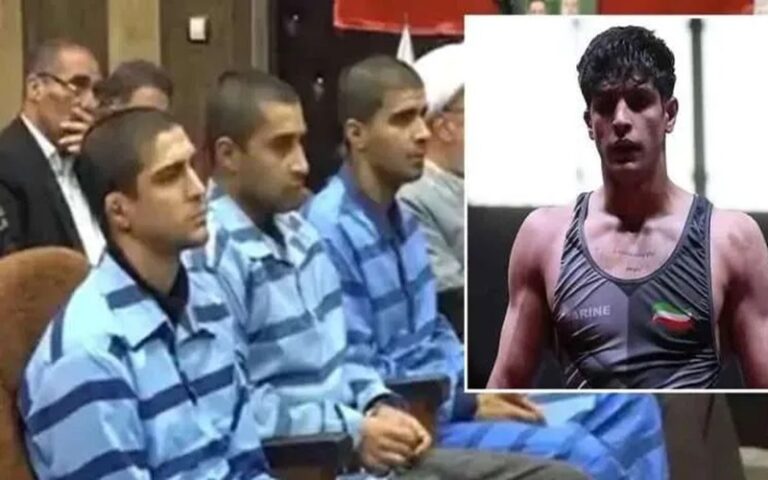
The judiciary of Iran’s regime announced the execution of three individuals detained during the nationwide protests in January; among them, the execution of Saleh Mohammadi, a teenage wrestler, has sparked widespread reactions due to allegations of torture and forced confessions.
As the wave of executions continues alongside wartime conditions, the judiciary announced that three detainees from the January 8 protests—Saleh Mohammadi, Saeed Davoudi, and Mehdi Ghasemi—were executed at dawn on Thursday, March 19. These three were executed amid reports that confessions were extracted under torture and that their cases were handled rapidly, raising concerns about violations of the defendants’ rights.
Official announcement of the execution of Saleh Mohammadi
Mizan News Agency, affiliated with the judiciary of Iran’s regime, reported that three detainees from the January 8 protests were executed on charges of killing two security agents of the regime in the city of Qom. According to the report, the names of those executed are Mehdi Ghasemi, Saleh Mohammadi, and Saeed Davoudi.
According to this source, these individuals had been convicted on charges including “enmity against God” (moharebeh), and the process of their arrest, interrogation, and judicial proceedings was carried out swiftly. Judicial authorities emphasized that the defendants confessed to their crimes at various stages of interrogation and trial.
The execution of Saleh Mohammadi has drawn particular attention. He was a young wrestler who had won a medal in international freestyle wrestling competitions in Russia in 2024 and had only recently turned 19.
Saleh Mohammadi was arrested on January 15, just days after the nationwide protests. His case is one of several that were processed rapidly in connection with the protests.
According to reports, the process from his arrest to the issuance of the death sentence was completed in a short period, raising questions about adherence to fair trial standards
Allegations of torture and forced confessions
One of the most significant issues raised in Saleh Mohammadi’s case is the allegation that his confessions were obtained under torture. Reports indicate that he was forced to confess against himself during interrogation and preliminary investigations.
Saleh Mohammadi stated in court that his confessions were obtained under pressure and torture, but the court rejected this claim and relied on his confessions as one of the main pieces of evidence in the case.
The court also cited crime scene reconstructions and eyewitness reports. However, the issue of forced confessions has been raised in many cases related to the nationwide protests, with numerous reports indicating pressure on detainees to confess.
Executions amid war; a signal of intensified repression
The recent executions have taken place while the country is simultaneously engaged in war and under bombardment. Carrying out death sentences under such circumstances conveys a message of intensified internal control and repression.
While public attention is focused on wartime developments, the implementation of harsh sentences, including executions, is interpreted as a tool to contain protests and create a deterrent atmosphere in society.
Rapid legal process and growing concerns
One notable aspect of Saleh Mohammadi’s case is the speed of the judicial process. From arrest to execution, the process was brief, which may have prevented thorough examination of the case and full access by the defendant to his legal rights.
Additionally, reports have emerged regarding restrictions on the defendants’ access to independent legal counsel and a lack of transparency in the judicial process, further increasing concerns.
On Wednesday, March 18, as the war between Iran, the United States, and Israel continues, a new wave of attacks, reactions, and security incidents has been reported across various parts of the region—developments that indicate an expansion of the conflict and rising tensions in the Middle East.
Airstrikes and direct clashes
Inside Iran, domestic sources have reported hearing multiple explosions and the activation of air defense systems in central Tehran. It has also been announced that a projectile struck the grounds of the Bushehr nuclear power plant, although officials claim the incident did not cause serious damage. In Yazd, airstrikes targeting the airport and military centers were also reported, damaging infrastructure but causing no casualties.
At the same time, the Iranian regime attacked Qatar’s Ras Laffan refinery—the world’s largest gas condensate complex—causing extensive damage
At the same time, the U.S. military has reported attacking Iranian missile sites near the Strait of Hormuz using bunker-buster bombs. According to U.S. Central Command (CENTCOM), these positions were targeted due to threats against international shipping.
On the other side, Israel reported a new wave of missiles launched from Iranian territory. Several explosions caused by missile interceptions were observed in the skies over Jerusalem, and air raid sirens sounded in parts of the city.
Attacks on regional countries
The scope of the conflict has extended to other countries in the region. In Iraq, reports have emerged of an explosion near the U.S. embassy in Baghdad. These attacks occurred in the Green Zone, where diplomatic institutions are located, indicating ongoing insecurity in the country.
In the Persian Gulf, Saudi Arabia and Kuwait have announced that they are facing drone and missile attacks, and their defense systems are intercepting these threats. Additionally, the Prime Minister of Australia reported that a projectile struck near his country’s military base in the United Arab Emirates, causing only minor damage.
In Lebanon, Israeli airstrikes on central Beirut have left at least 6 people dead and 24 injured. These attacks targeted residential areas, increasing concerns about rising civilian casualties.
U.S. President Donald Trump stated that military operations against Iran are progressing faster than planned and may conclude within one to two weeks. He said the objective of these operations is to counter Iran’s nuclear programs.
In response, Abbas Araghchi, the foreign minister of the Iranian regime, emphasized regarding the killing of Ali Larijani—an Iranian political and security figure—that the country’s political structure is not dependent on individuals and that the removal of one official does not affect the system’s continuity. He also attributed attacks on certain areas to the presence of U.S. forces and placed responsibility for potential damage in urban areas on the opposing side.
In one of the most significant domestic developments, the killing of Ali Larijani, a senior Iranian political and security figure, has been confirmed. He was targeted in an attack along with his son and several other officials. This event could have a significant impact on the country’s security structure.
It has also been reported that a prisoner accused of spying for Israel has been executed in Iran—an action that has drawn criticism from human rights organizations and is seen as a sign of an increasingly securitized domestic environment.
Strategic and economic dimensions of the war
Alongside the military clashes, concerns about the economic impact of the war have also increased. The Strait of Hormuz, one of the world’s most critical oil transit routes, has been disrupted, contributing to rising global oil prices. Some analysts have also warned that vital resources such as water could become a new factor in regional tensions.
Overall, recent developments show that the conflicts have not diminished but are expanding in a multi-layered manner—a situation that could have broader consequences for regional security and stability.
The Secretariat of the Supreme National Security Council of Iran’s regime announced on the evening of Tuesday, March 17, after about 12 hours of delay, the killing of Ali Larijani, the council’s secretary. This comes after the Israeli military had earlier reported targeting him, and speculation about his fate had increased in recent hours.
According to the official statement, Larijani was killed in the attack along with his son Morteza, Alireza Bayat, the deputy for security affairs at the Secretariat of the Supreme National Security Council, and several of his bodyguards. The exact location of the attack has not yet been fully disclosed, but some regime-affiliated sources have stated that the operation took place at a residential location in the Pardis area near Tehran.
State-run media outlets, including Tasnim News Agency, which is affiliated with the Islamic Revolutionary Guard Corps (IRGC), also confirmed the deaths of Larijani and his son by publishing images. However, the time gap between the initial reports and the official confirmation once again indicates confusion and a lack of coordination in the regime’s information apparatus.
Ali Larijani was considered a well-known and influential figure within Iran’s political and security structure. Over the years, he held key positions, including serving as Speaker of the Majlis (parliament) and occupying important security roles, and was regarded as one of the influential figures at the highest levels of the regime’s power structure.
His killing comes at a time when the power structure at the top of the regime is facing increasing challenges and tensions. The removal of one of the main figures of this structure may be seen by observers as a sign of growing pressure and vulnerability within the regime’s security and political leadership.
On Tuesday, March 17, on the eighteenth day of the large-scale military war between the United States, Israel, and Iran, military and diplomatic developments continue intensely. The war, which began in late February, has now entered a critical phase and is accompanied by precise targeting of the Iranian regime’s leadership, increased domestic restrictions, and global concerns over an energy crisis.
European Union diplomatic efforts to reduce tensions
Kaja Kallas, the European Union’s High Representative for Foreign Affairs, said in an interview with Reuters in Brussels on Tuesday that she called for an immediate end to the conflict and emphasized that the war benefits none of the parties. She stated that the European Union is consulting with Middle Eastern countries to find a diplomatic solution and is ready to help reduce tensions through diplomatic channels. Referring to the critical situation in the Strait of Hormuz, Kallas said Europe does not rule out participating in efforts to restore freedom of navigation, but this must be pursued within a diplomatic framework.
She also expressed regret that Europe had not been consulted before the war began, stating that if such consultations had taken place, efforts would have been made to prevent the conflict. Kallas warned that continued tensions in the Strait of Hormuz could lead to an energy and food crisis and widespread disruption of global trade. The European Union has stressed that this is not Europe’s war and has shown no willingness to expand its naval mission to the Strait of Hormuz.
Israeli airstrikes on Tehran and targeting of senior commanders
In early Tuesday airstrikes on Tehran, Israel dealt a heavy blow to the Iranian regime’s security structure and leadership. Israel’s Defense Minister Israel Katz announced that Ali Larijani (Secretary of the Supreme National Security Council) and Gholamreza Soleimani (commander of the IRGC Basij militia) were killed in the attacks. Katz said that he and Israeli Prime Minister Benjamin Netanyahu had ordered the continued targeting of the regime’s leadership cadre. Israeli media and four Israeli officials confirmed the news to Reuters, while Iranian officials have remained silent so far. Tasnim News Agency, affiliated with the IRGC, claimed Larijani would release a message, but what was published was only an undated image of his old handwriting referring to the funeral of sailors from the Dena destroyer. These claims have not yet been officially confirmed or denied by Tehran.
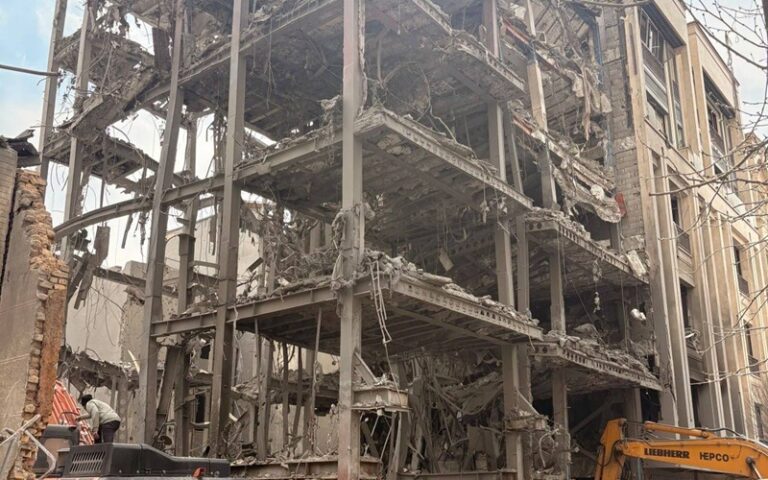
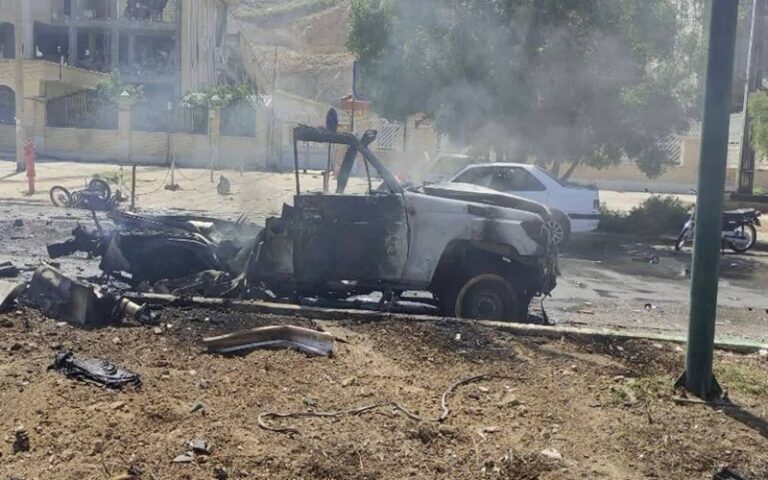
Additionally, images and videos of precise strikes have been منتشرed, including the bombing of the Foundation of Martyrs building (a major state institution) on Bahar and Taleghani streets in Tehran, and a drone strike on a special police unit vehicle in Enghelab Square, which destroyed the vehicle and killed the driver. These attacks indicate Israel’s focus on security and military targets in the capital.
Nationwide internet shutdown in Iran
and internal repression
The internet shutdown in Iran has entered its eighteenth day, and citizens remain deprived of free access to communications. The regime’s Ministry of Intelligence claimed it had discovered and confiscated hundreds of Starlink systems (allegedly directed by the United States and Israel). This comes as the authorities have restricted internet access and maintained it only for regime-aligned networks. The shutdown is being used as a tool of repression to prevent the spread of news and images of the attacks and to control the flow of information. International reports indicate that this blackout began in January and internet traffic has dropped to about 1% of normal levels.
Broader consequences of the war
The day was accompanied by rising global energy prices as the threat to the Strait of Hormuz persists. While Israel focuses on targeting the Iranian regime’s leadership, Iran is responding with missile and drone attacks. Developments indicate the war remains a war of attrition, with no signs of an immediate ceasefire. The European Union emphasizes diplomacy, but its reluctance to engage in direct military involvement has kept the pressure on the United States and Israel.
The eighteenth day of the war once again demonstrated that the conflict is not only military but also has deep economic, communication, and humanitarian dimensions, and it has profoundly affected the future of the region.