

Iran-Linked Hackers Intensify Attacks on U.S. Financial and Military InfrastructureIn this campaign, the hackers used NorthVPN to access victims’ email inboxes and sent emails containing malicious attachments. These emails included Word documents that, once “macros” were enabled, executed harmful code and installed version four of the Phoenix backdoor malware on victims’ systems. According to the company’s findings, the malware was executed using an injection tool known as “FakeUpdate,” after which it connected to a command-and-control (C2) server to collect target data and receive new commands. Experts from the company stated that the code structure, control servers, and tools used in this operation match previous MuddyWater campaigns, identifying the group with “high confidence” as the main actor behind the recent attacks. The report added that the group’s control infrastructure includes remote management tools and a password-stealing software designed to extract stored credentials from browsers such as Chrome, Brave, and Opera. The malware was disguised as a calculator application to avoid suspicion. On October 22, Israel’s National Cyber Directorate also reported detecting a wave of cyberattacks against Israeli IT service companies, which are believed to be linked to the Iranian regime. The agency stated that a failed cyberattack on Shamir Medical Center during Yom Kippur, which led to the exposure of emails containing sensitive patient information, was an attempt by Iran to disrupt the hospital’s operations. However, the attack was contained before the hospital’s central medical record system was affected. Group-IB emphasized that MuddyWater, attributed to the Iranian regime, remains one of the most active cyber-espionage actors in the region, with its operations expanding beyond the Middle East to Europe, Africa, and North America. The report stated: “MuddyWater demonstrated an enhanced ability to integrate custom code with commercial tools for improved stealth and persistence.” Experts warned that given the group’s focus on government targets and the ongoing geopolitical tensions in the region; similar operations are expected to continue in the future.
Iranian Regime Hacking Group Targets Over 100 Entities in Espionage Operation
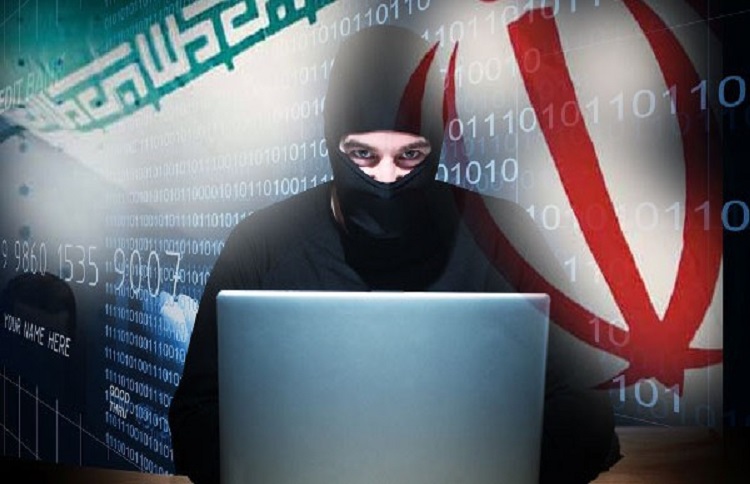
The Singapore-based cybersecurity company Group-IB announced that a hacking group affiliated with the Iranian regime, known as “MuddyWater,” has targeted more than 100 organizations across the Middle East and North Africa in a sophisticated phishing campaign.
In a report published on Wednesday, October 22, Group-IB wrote that the attackers used a compromised email account to distribute malware among various organizations, including government institutions.
The main objective of the operation was identified as gathering political and security intelligence from international organizations.
Iran: 88 Public Executions In 12 Years
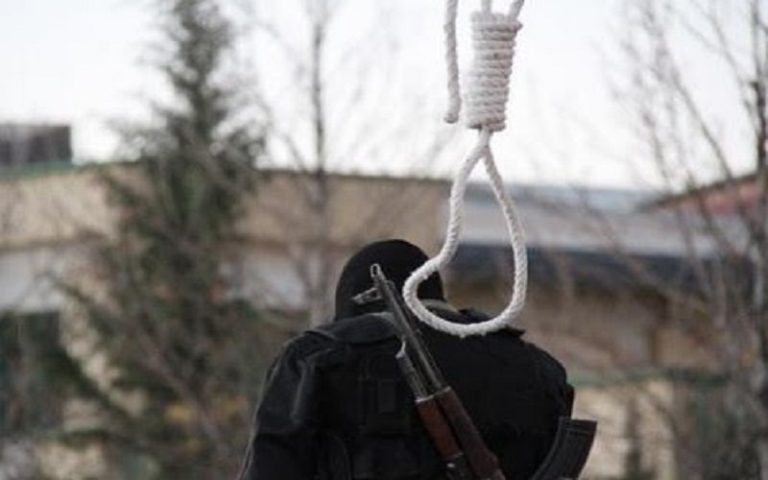
The state-run daily Shargh, citing “collected statistics,” reported that “between 2011 and 2023, at least around 88 public executions were carried out in the country.” Quoting two legal experts and a psychologist, the newspaper emphasized that public executions no longer have a deterrent effect.
On Wednesday, October 22, Shargh published a report titled “Public Display of Harsh Punishments,” writing that “Fars, Khorasan, and Kermanshah provinces have the highest share of public executions.”
According to the report, other cities such as Yasuj, Arak, Ahvaz, Marvdasht, and Isfahan also have smaller shares.
UN Fact-Finding Mission Expresses Concern over Unprecedented Rise in Executions in IranThe newspaper added: “According to the news, public executions have mainly been carried out in provincial centers with large populations or areas with high-profile criminal cases.” Shargh did not provide further explanation. Referring to the fact that “the peak of executions occurred in the early 2010s, with over 30 cases in the first three years before declining,” the paper added: “In 2021, the number dropped to zero. However, since 2022, public executions have once again appeared in the news.” The report mentioned the public execution of two people “for murder” in August this year in “Larestan County and Golestan Province.” In another part of the report, Shargh emphasized that after reviewing the news from these years, it appears that the implementation of public executions “has had no impact in reducing violent crimes.” Quoting social science and psychology experts, the newspaper wrote that public executions contribute to the “normalization of violence” and that “the public nature of punishment not only fails to promote deterrence or social calm but has an entirely opposite effect.”
Public Executions No Longer Have a Deterrent Effect
According to Shargh, attorney Abdolsamad Khorramshahi stated that under Iran’s judicial principles and criminal laws, executions should generally not be carried out publicly. He explained that according to Article 4 of the regime’s so-called Islamic Penal Code, public execution is permissible only under special circumstances and with the proposal of the prosecuting attorney and the approval of the attorney general. Khorramshahi emphasized that public executions can have widespread negative effects on society — they are not deterrents but instead reinforce violent behavior and harm the mental health of children and adolescents. Shargh further wrote that in today’s conditions, with the expansion of social media, public executions have lost their deterrent power and have become a form of public spectacle for some segments of society.Public Execution Does Not Lead to a Sustainable Reduction in Violence
Social psychiatrist Amir Hossein Jalali Nadooshan told Shargh that the presence of spectators at the scene of executions might evoke fear or a sense of social order in the short term, but in the long term it does not reduce violence because it is inconsistent with the cultural structure of society. He added that repeating such scenes desensitizes the public to human suffering and fosters a kind of emotional indifference in society — where violence becomes normalized. According to Jalali Nadooshan, when violence is used as a public display, it creates imitative behavior that seeps from public spaces into family and social relationships. No Country Has Managed to Curb Crime Through Executions or Corporal Punishment Quoting Ali Najafi Tavana, a legal expert and former head of the Central Bar Association, Shargh wrote that despite harsh punishments for drug traffickers, thugs, and other criminals, crime has not decreased but rather increased. He noted that prisons are overcrowded, forcing the government to release some inmates from time to time. Najafi Tavana stressed that no country has been able to curb crime through executions or corporal punishment, and the path to crime control lies in prevention, respect for the people, and observance of civil rights. He added that reducing crime requires meeting people’s basic needs, such as employment, housing, marriage, social security, and mental peace. He said that in a society dominated by poverty and discrimination, where the powerful enjoy lavish lives using the people’s wealth, “people, seeing such injustice, distance themselves from the law and no longer fear punishment.”The Number of Executions in October Reached 280
Coinciding with Shargh’s report on public executions, the Iran Human Rights Society reported on Wednesday, October 22, that at least 28 prisoners were executed across prisons in Iran on October 21 and 22. According to the report, with these executions, the total number recorded for October has reached 280, indicating that, on average, more than eight people per day — or one prisoner every three hours — were executed in Iran that month. The executions of these 28 prisoners took place in the prisons of Birjand, Shiraz, Isfahan, Tehran, Kermanshah, Taybad, Yazd, Zanjan, Qazvin, Ghezel Hesar (Karaj), Gorgan, and Qom. The organization described this October as “the bloodiest month for prisoners since the mass executions of 1988.” Among those executed were Ebrahim Azizi in Birjand Prison; Nader Abdi and Alireza Keshavarz in Adelabad Prison, Shiraz; Saman Talebi and Habib Haqshenas in Dastgerd Prison, Isfahan; Sasan Lorestani and Shahram Mirzaei in Dizelabad Prison, Kermanshah; Khosro Vafadar in Qom Prison; and Mansour Iravani in Ghezel Hesar Prison, Karaj. The executions were mostly on charges related to drug offenses, and in some cases, murder. Among those executed were several Afghan nationals, including Serajuddin Abitalebi, Mohammad Shams, and Mohammad Ebrahimi, all convicted of drug or murder charges. The Iran Human Rights Society reported that some of the executions were carried out without informing the families or allowing a final visit. UN Secretary-General António Guterres, in his latest report to the UN General Assembly on Tuesday, October 21, warned about the rise in executions, torture of detainees, suppression of minorities, and increasing restrictions on civil freedoms in Iran. According to the report, in the first half of 2025, at least 612 people were executed in Iran — a 119% increase compared to the same period last year. Guterres expressed regret over the Iranian regime’s disregard for international recommendations to halt the death penalty and limit capital offenses, calling public executions “inconsistent with the prohibition of torture and inhuman treatment.” Amnesty International also announced on Thursday, October 16, that over 1,000 executions have been reported in Iran since the start of 2025 and called for an immediate halt to executions. The international human rights organization reported that executions in Iran “follow unfair trials and are used to suppress protests and minorities.” Earlier, on the occasion of the World Day Against the Death Penalty (October 10), the human rights website HRANA had reported that at least 1,537 people were executed in Iran over the past year.Iran’s Healthcare System Faces Shortage Of 165,000 Nurses
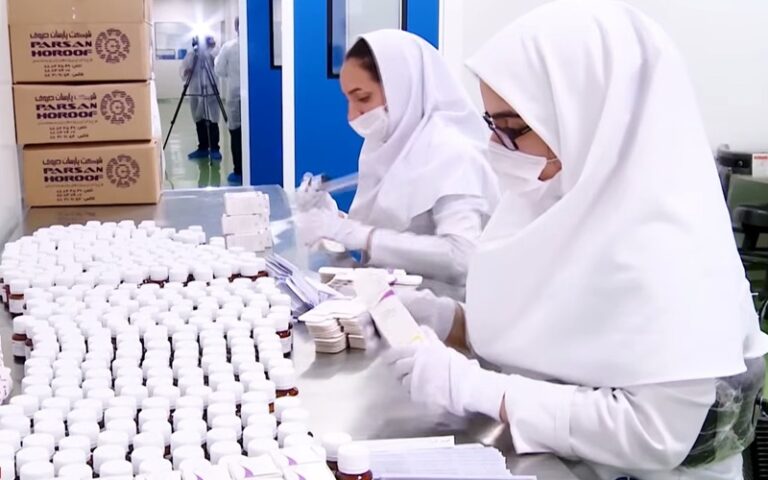
Ghasem Abutalebi, head of Iran’s regime Nurse Council, announced that the country is facing a shortage of 165,000 nurses. At the same time, Abbas Ebadi, the regime’s deputy minister of nursing at the Ministry of Health, attributed the delay in paying nurses’ arrears to two main reasons: the failure to allocate budget bonds and the delay of insurance companies in fulfilling their financial obligations.
On Wednesday, October 22, during Nurses’ Day ceremonies in Shiraz, Abutalebi said: “The nurse-to-hospital-bed ratio in Iran is 0.9, while it was supposed to reach 1.8 by the end of the Sixth Development Plan.”
Around 70,000 Iranian Nurses Have No Desire to WorkHe said that the global standard is an average of three nurses per hospital bed and added: “Currently, 165,000 nurses are working in the country, and with this shortage, we need to recruit an equal number to address the deficit in healthcare centers.” According to Abutalebi, a plan to hire 15,000 nurses annually has been drafted by the Ministry of Health and is in the approval process. Earlier, on October 6, Mohammad Sharighi-Moghaddam, secretary-general of Iran’s Nurses’ House, stated that harsh working conditions, psychological pressure, and wage inequality have caused many nurses to become disillusioned with their profession and seek ways to leave hospitals. Sharighi-Moghaddam described the state of nursing in Iran as critical, saying that while the healthcare system is suffering from a severe shortage of staff, more than 60,000 nurses in Iran are unemployed, and nursing school capacities continue to increase each year.
Nurses’ Protests in Kermanshah and Khuzestan
The state-run ILNA news agency reported on Wednesday, October 22, that nurses from Kermanshah University of Medical Sciences held a protest over unpaid wages and low salaries, saying their nursing tariffs had not been paid for more than nine months, and many earn less than 20 million tomans (approximately 1.8 million rials or about $180) per month. At the same time, nurses in Khuzestan also gathered in front of the provincial governor’s office, stressing the need to pay their back wages and improve working conditions, and demanding that officials address their livelihood and legal grievances. Abbas Ebadi, deputy minister of nursing, told ILNA that the delay in payments to nurses in Kermanshah and Khuzestan was due to delayed insurance reimbursements and the failure to allocate 800 trillion rials (approximately 696 million dollars) in bonds to the Ministry of Health under the 2025 budget. Over the past several years, nurses and other healthcare workers across Iran have repeatedly held protests, sit-ins, and strikes in response to the government’s failure to address their demands. The severe shortage of nurses and the government’s continued neglect of professional demands come despite international health standards requiring at least three nurses per 1,000 people or at least two nurses per hospital bed. However, reports indicate that Iran has reached at most half of these minimum standards — a gap that manifests itself in long shifts, occupational burnout, and declining quality of services, particularly in emergency rooms and intensive care units.The Painful Story of School Dropout Caused by Poverty in Iran
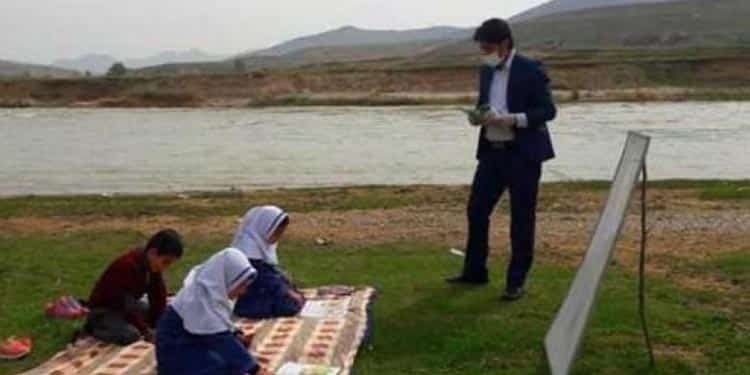
The alarming situation of students dropping out of school in Iran stems from structural factors such as severe poverty, economic inequality, and a lack of funding for educational infrastructure. This growing phenomenon is threatening the future of millions of children and adolescents and requires a serious review of the country’s educational and economic policies.
Statistical dimensions and structural causes of school dropouts
Alireza Kazemi, the education minister of Iran’s regime, recently announced that there are nearly 950,000 children who have dropped out of school. He stated that economic poverty, illnesses, migration, and poor educational conditions are among the contributing factors.Iran’s Statistical Center Reports Rise in School Dropout RatesAli Zarafshan, advisor to the education minister, cited structural crises, poverty, inequality, migration, marginalization, lack of budget for developing educational infrastructure, and child labor as the main reasons for school dropout. These factors combined have contributed to the rising dropout rate.
Geography of inequality and the impact of cultural factors on school dropout
According to the 2023–2024 Statistical Yearbook, Khuzestan Province, with 1,087,050 students, ranks fourth nationwide in total number of students. However, Rezvan Hakimzadeh, the deputy minister for primary education, had earlier stated that the highest dropout rates in Iran belong to the provinces of Sistan and Baluchestan, Tehran, Khorasan Razavi, Khuzestan, and the suburban areas of Tehran. According to Hakimzadeh, economic and cultural problems, migration, distance from school environments, and family prejudices are among the key factors contributing to school dropouts. Other major reasons include illness or even death of children, lack of accurate contact information or addresses for families, and unregistered children attending unofficial educational centers. Even in urban areas, dropout rates are significant. One of the main reasons for urban dropouts is uncertainty about future employment.Education quality and unprofessional policies: a threat to school retention
Beyond poverty and infrastructural issues, another concern is the unprofessional conduct of teaching staff. Previously, Farhangian University guaranteed that every graduate would be qualified to teach in schools. However, in recent years, mass and unqualified hirings, such as the employment of clerics in the education system, have driven schools toward unprofessionalism.950,000 Iranian Children Deprived of EducationMohammad Davari, spokesperson for the Teachers’ Organization of Iran, recently stated that in the process of selecting teachers, “mental health is sidelined while ideological and political scrutiny is extreme.” He said this imbalance in recruitment is entirely legitimate to protest against. He gave an example of a top-ranking applicant whose acceptance was revoked simply because local investigations claimed her hijab was “a bit loose.”
Shocking dropout statistics and the ministry’s conflicting priorities
The dropout statistics are staggering. The deputy minister for primary education announced that according to the Mahmoudvand system’s latest data as of May 12, 2025, a total of 152,287 out-of-school children aged 6 to 11 had been identified in Khuzestan Province. Of this number, more than 130,000 had never been registered in any school. According to the Ministry of Education’s data, in the 2022–2023 academic year, 902,188 children across different educational levels dropped out of school. The breakdown shows that 156,835 were in elementary school, 195,568 in lower secondary, and 549,785 in upper secondary. The overall dropout rate for the 2022–2023 school year was 1.97%, equivalent to 287,617 students. In the 2023–2024 school year, it was estimated at 1.65%, equal to 247,242 students.Worsening educational inequality and academic decline among students
Mohammadreza Sabaghian, a member of parliament representing Bafq, recently remarked that the current diversity of schools in Iran resembles “the caste and class system of the Sassanid era, which history condemns.” He noted that the children of wealthy families and government officials easily separate themselves by attending private schools charging hundreds of millions of tomans (billions of rials) in tuition, while 80% of the nation’s students study in public schools. Ehsan Azimirad, spokesperson for the Education and Research Committee of the parliament, recently stated that the national average student grade point is between 9 and 12 out of 20. For mathematics majors, the average is 9–10; for experimental sciences, about 10–11; and for humanities, 11–12, though he admitted these figures sometimes vary. Finally, the state-run Etemad daily reported on September 23 that with the start of the new academic year, many unregistered children in Sistan and Baluchestan Province have been unable to enroll in schools.Political Prisoners in Iran Enter 91st Week of Hunger Strikes as ‘No To Executions Tuesdays’ Campaign Spreads to 52 Prisons
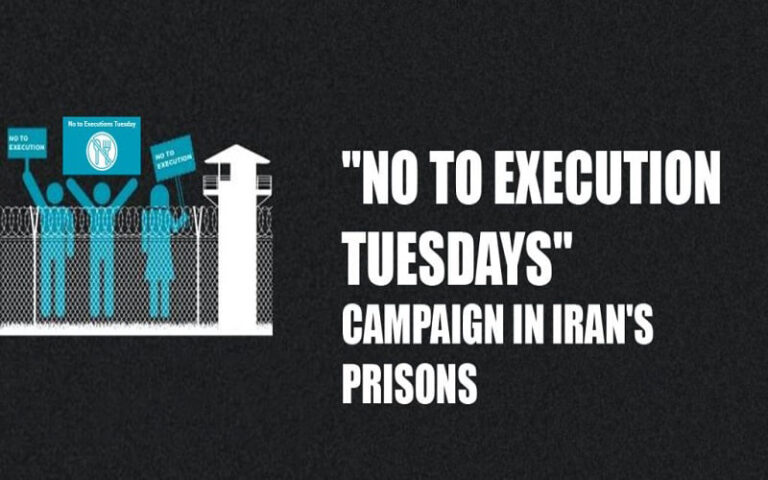
The “No To Executions Tuesdays” campaign praises the successful strike at Qezelhesar Prison that saved inmates from the gallows.
The “No to Executions Tuesdays” campaign is entering its 91st consecutive week, a powerful testament to the relentless resistance inside Iranian prisons against the regime’s policies of oppression and capital punishment. This week’s action follows a heroic hunger strike by prisoners in Ghezel Hesar Prison, who successfully saved several of their fellow inmates from imminent execution amid a brutal wave of state-sanctioned killings aimed at quelling popular dissent.
The Prisoners’ Statement
Organizers of the campaign praised the steadfastness of prisoners in Unit 2 of Ghezel Hesar Prison, who held a week-long hunger strike under the slogan “No to Execution Tuesdays.” Their resilience forced authorities to return six of their fellow inmates from solitary confinement, where they had been taken in preparation for their executions. The statement described the strike as a “defiance of death,” as the regime could have easily expedited the sentences in retaliation for their resistance.Juvenile Offender Executed in Sepidar Prison of AhvazIn a continuation of this mobilization, prisoners’ families held a protest on Sunday, October 19, outside the regime’s parliament to condemn the ongoing policies of repression and execution. The campaign’s statement frames the struggle as a confrontation with an “anti-human” regime that carries out brutal mass executions. The statistics cited are grim:
- In the past week alone, the regime executed 59 people, including two women and an individual who was a minor at the time of the alleged crime.
- The total number of executions during the Iranian month of Mehr (late September to late October) reached 232.
- This brings the total number of executions since the start of the current Iranian year (March 2025) to over 1,087.
Around 1,500 Engineering Professors Have Emigrated from Iran’s Top Universities in Past Five Years
Karen Abrinia, secretary of the Iranian University Professors’ Trade Association, reported that at least 1,500 engineering professors from Iran’s top universities have emigrated over the past five years. Ebrahim Azadegan, a professor at Sharif University of Technology—one of Iran’s most prestigious institutions—also said that currently, one professor leaves the university every week.
The state-run news website Khabar Online published a detailed interview with Karen Abrinia on Monday, October 20, discussing the emigration of professors and students as well as the securitized atmosphere in Iranian universities.
They emphasized that security vetting processes often disqualify top academics and professors for reasons such as “signing a statement,” “being single,” or “having a photo taken in a café in the U.S.”
According to the secretary of the Iranian University Professors’ Trade Association, from the 2018–2019 to the 2023–2024 academic year, 25% of the six thousand professors in engineering and technical fields at top universities have emigrated.
Growing Wave of Professor Migration Poses Serious Challenge To Iran’s Scientific FutureAt the Faculty of Mechanical Engineering at the University of Tehran, about ten professors either took early retirement to continue their work abroad or went on sabbatical and never returned. Citing official statistics, Abrinia stated that between 2000 and 2020, about 66,000 students emigrated from Iran. However, unofficial figures suggest that around 200,000 students left Iran during the same period.
Academic Emigration Intensified After the Mahsa Amini Movement
Abrinia said that when university professors signed a statement in 2022 calling for a calm academic environment, it caused significant problems for them, and many young professors were told their contracts would not be renewed. In an interview with Khabar Online, Ebrahim Azadegan emphasized that after the nationwide protests of 2022 and over the past three years, Sharif University of Technology has faced a “disaster.” Nearly 70 professors have left the university, and suitable replacements have yet to be found. Azadegan added that these days, one professor leaves the university every week; they either take unpaid leave or go abroad for research opportunities and conferences—and never return. Azadegan described the events of 2022 as some of the most difficult days for Sharif University, recalling that during the protests, the campus was attacked, many professors and students were “beaten without cause,” and an intense security atmosphere took hold. On October 2, 2022, security forces and plainclothes agents of Iran’s regime surrounded Sharif University, arrested between 30 to 40 students, and opened fire on students attempting to leave the campus. Azadegan said that even now, women stationed at the university gates “warn” students about their attire, the campus is filled with surveillance cameras, and students are still summoned to disciplinary committees for defying the mandatory hijab rules.The Regime Welcomes the Departure of Critical Professors
Abrinia went on to say that in some cases, the authorities are pleased when critical professors emigrate, believing such individuals “cause trouble.” The secretary of the Iranian University Professors’ Trade Association also cited the conduct of university security offices, the securitized mindset, and the humiliating treatment during faculty selection processes as key factors driving emigration. Abrinia gave an example from the current administration, saying that a professor was once made to sit in a room, handed a Quran, and told to “read.” In another case, a young professor was told, “Why haven’t you married yet? If you don’t marry by next year, we won’t renew your contract.” She added: “The situation has become such that a professor educated at one of the world’s best universities is made to sit across from someone—I don’t even know if they have a high school diploma—to be interrogated and asked absurd questions that undermine their credibility.” Azadegan also cited an example where Sharif University rejected a philosophy PhD graduate from Princeton University simply because of a photo showing him with several male and female friends in a café in the U.S. However, according to him, the real reason was that the authorities did not want someone educated in the U.S. to teach at Sharif University and used the photo as a pretext. He added that a philosophy graduate from the Sorbonne was told: “Why did you even come back? We will never allow your ideas to be taught at our university.”After the War, Academic Emigration Declined Due to Visa Restrictions
Abrinia noted that after the 12-day war (a reference to the recent conflict in the Middle East), the rate of emigration among professors and students declined—not because the war discouraged migration, but because foreign countries have become less willing to issue visas to Iranians. She recalled that when obtaining visas was easier, most professors emigrated to the U.S., Canada, Europe, and Australia, but recently many have also been moving to neighboring countries such as Saudi Arabia, Turkey, and the United Arab Emirates. Azadegan added that among those who left Sharif University’s philosophy department, most have relocated to the United Kingdom, the United States, and Germany. According to him, professors and students from technical and engineering disciplines emigrate more frequently than those from the humanities, and most end up working in private companies rather than universities.Malnutrition Responsible for About 35% Of Deaths in Iran
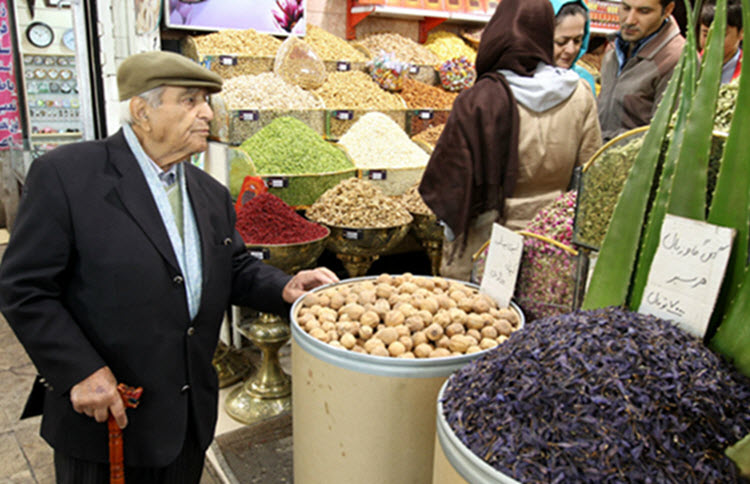
The state-run news website Rouydad24 reported that with the worsening economic crisis and a sharp decline in people’s purchasing power, an increasing number of Iranian citizens can no longer afford essential food items, and malnutrition has now become the cause of about 35% of deaths in the country.
In the report published on Monday, October 20, it stated: “From the reduction in the consumption of dairy and meat to shortages of fruits and vegetables, the nutrition crisis in the country has sounded the alarm for public health and household economies.”
Rouydad24, quoting Ahmad Esmailzadeh, head of the Community Nutrition Improvement Office at the Ministry of Health, wrote that every year between 400,000 to 420,000 people die in Iran, and according to estimates, about 35% of these deaths are related to “nutritional deficiencies and problems.”
Iran’s Regime Agriculture Minister Admits to ‘Toughest Conditions Of Food Security’According to the report, the decline in consumption of dairy, meat, fruits, and vegetables, along with the increase in obesity among children and pregnant women, and widespread deficiencies in essential vitamins and minerals, has created a new public health crisis in the country that could pose a serious threat to future generations. Earlier, on October 8, Gholamreza Nouri Ghezeljeh, Iran’s regime agriculture minister, described the rising prices as “logical” and claimed that food prices in Iran “are still cheap compared to global prices.” Based on the Ministry of Health’s estimates, at least 10,000 people in Iran die each year due to a lack of omega-3 fatty acids, about 10,000 from insufficient fruit and vegetable consumption, and roughly 25,000 more due to a deficiency of whole grains and bread in their diet. Between 50% to 70% of Iran’s population also suffers from vitamin D deficiency—a crisis that directly leads to weakened immune systems and an increase in bone-related diseases. Dairy and meat are consumed at less than half the recommended levels Rouydad24 continued in its report: “Fluctuations in food prices and rising inflation have played a major role in reducing the consumption of essential items. Dairy and meat, which are among the most important protein sources, are consumed at less than half the recommended amount due to price increases. Even supplements and vitamins have become unaffordable for many.”
Iran’s Economy in Freefall: A Looming Hunger CrisisAccording to the report, the worsening economic conditions and declining purchasing power have placed a heavy burden on families, leading to a deeper crisis in food security and public health in deprived provinces such as Sistan and Baluchestan, Kerman, and Hormozgan. Rouydad24 added: “The consequences of this crisis are not limited to mortality. Overweight and obesity among children, stunted growth in deprived provinces, and the increasing prevalence of chronic diseases such as hypertension and diabetes are all linked to dietary patterns.” On October 16, Hassan Sadeghi, head of the Veterans’ Workers Union, warned that the poorest segment of society has risen from 30% to about 45%. He continued: “If this trend continues, by the end of the current year, a larger portion of the middle class will fall below the poverty line.” In recent weeks, rampant inflation and the rise of foreign exchange rates have deepened concerns about Iran’s deteriorating economic situation—a trend that has intensified following the activation of the UN sanctions “snapback mechanism.” On September 27, Iran’s Statistical Center announced that the annual inflation rate for September was 37.5%, the year-on-year inflation rate was 45.3%, and the monthly inflation rate for September was 3.8%.
Juvenile Offender Executed in Sepidar Prison of Ahvaz
The death sentence of Ali Aghajeri, a juvenile offender who was arrested at the age of seventeen following a family dispute in the city of Behbahan, was carried out in Sepidar Prison of Ahvaz.
The human rights news agency HRANA reported on Monday, October 20, that about five years ago, when Aghajeri was only seventeen, he was arrested during a group altercation over farmland.
According to the report, one person was killed in the fight, and the criminal court sentenced Aghajeri to death on charges of premeditated murder.
A source close to Aghajeri’s family said that his relatives had tried over the years to pay blood money and seek forgiveness from the victim’s family, but their efforts were unsuccessful.
As of the time of this report, judicial authorities and Sepidar Prison officials have not officially confirmed the execution.
The execution of individuals who were under eighteen at the time of their alleged crime is a blatant violation of the Iranian regime’s international obligations, including the Convention on the Rights of the Child, to which Iran is a signatory.
In a statement the National Council of Resistance of Iran (NCRI) announced the number of executions carried out over the past year as follows:
“Over the past year (from October 1, 2024, to September 30, 2025), the religious fascism ruling Iran has recorded a bloody and unprecedented record of cruelty and crime. During this period, the execution of 1,654 prisoners was documented across 31 provinces, representing a 2.3-fold increase compared to the same period the previous year (with 851 executions), and a 2.8-fold increase compared to the year before that (with 693 executions).”
These figures were compiled based on verification networks and independent sources due to the judiciary’s secrecy
On October 16, Amnesty International announced that more than one thousand executions have been reported in Iran since the beginning of 2025 and called for an immediate halt to all executions.
The international human rights organization reported that executions in Iran are carried out following unfair trials and are intended to suppress protests and minorities.
Hussein Baoumi, Amnesty International’s Deputy Director for the Middle East and North Africa, said on Thursday, October 16, “UN Member states must confront the Iranian authorities’ shocking execution spree with the urgency it demands.”
He added that since the start of the 2022 protests, officials of Iran’s regime have used the death penalty “to instill fear among the population, crush dissent and punish marginalized communities.”
In this context, political prisoners across various prisons have expressed their opposition to the growing wave of executions in Iran through sit-ins, issuing statements, and participating in “No to Execution” campaigns.
In this context, political prisoners across various prisons have expressed their opposition to the growing wave of executions in Iran through sit-ins, issuing statements, and participating in “No to Execution” campaigns.
Around 70,000 Iranian Nurses Have No Desire to Work

Mohammad Sharifi-Moghaddam, secretary-general of the Nurses’ Association of Iran, reported that “around 60,000 to 70,000” unemployed nurses in Iran are unwilling to return to work.
Speaking to the state-run Ham-Mihan daily on Saturday, October 18, Sharifi-Moghaddam said, “A salary below 200 million rials (approximately 180$) for a woman with two children only covers childcare expenses, and she must also bear the emotional cost of being away from her children. Therefore, staying home is actually less costly for her.”
Emphasizing that nurses lack motivation to work, he added that officials in the Ministry of Health “have no understanding of these wages because their own salaries are in the hundreds of millions of rials.”
Thousands of Unemployed Nurses Show Little Interest in Job PostingsHe had previously stressed that harsh working conditions, psychological stress, and wage inequality have caused many nurses to lose interest in their profession and seek ways to leave hospital work altogether. According to Sharifi-Moghaddam, some nurses have shifted to jobs in insurance and medical equipment, while others have turned to unrelated fields such as nail care or driving for ride-hailing apps.
Nursing graduates are not entering the workforce
Mansoureh Khavari, head of nursing at Mahdieh Hospital, also stated on October 18 that nurses’ salaries do not reflect their workload or the difficulty of their jobs, leading nursing graduates to show little interest in entering the workforce. She said that the situation has become so unfavorable that the number of applicants for the nursing employment exams is lower than the available quotas allocated to medical universities. Khavari added, “If nurses’ working conditions, overtime, and pay were aligned with the difficulty of their work, the situation would change, and more graduates would be eager to join the workforce.” In another Ham-Mihan report, Karim Abedini, a nurse in the adult chemotherapy ward of a Tehran hospital, said that in some hospital wards, two nurses and one assistant are responsible for as many as 30 patients. According to healthcare system standards, there should be three nurses per 1,000 citizens or two active nurses for each hospital bed. Ideally, the nurse-to-bed ratio should be about two nurses per bed, but in Iran, the national average is around 1.1, dropping to as low as 0.8 in some provinces. Abbas Ebadi, deputy minister of nursing at the Iranian regime’s Ministry of Health, announced on August 30 that since March 21, 2025, a total of 570 nurses have emigrated from Iran. He stated that the country currently needs 100,000 nurses. Sharifi-Moghaddam also stressed on October 11 that the official statistics on nurse emigration are inaccurate, as many leave the country without formal migration documentation.Iran’s Regime Preparing to Counter Reinstated U.N. Sanctions
On Sunday, October 19, The Washington Times reported that while Western powers are celebrating the reinstatement of U.N. sanctions against Tehran, analysts warn that without a coordinated, multilateral pressure campaign, the Iranian regime could evade the actual enforcement of these penalties.
Germany, the United Kingdom, and France—signatories to the 2015 nuclear deal (JCPOA)—triggered the 30-day “snapback” mechanism in a letter to the U.N. Security Council on August 28 to restore the organization’s sanctions.
The sanctions include an arms embargo, diplomatic travel restrictions, asset freezes, and extensive limitations on Iran’s nuclear program.
Iranian Regime Puts Iran’s Oil on Sale in China with Bigger DiscountsThe Washington Times wrote that experts say these sanctions will likely have little impact on Iran’s oil sales, the regime’s main source of revenue. China, one of the regime’s key allies, imports about 1.5 million barrels of oil per day from Iran—a revenue stream worth billions of dollars that helps fund Tehran’s military projects and foreign operations. According to data from the U.S. Energy Information Administration, Iran exported around 587 million barrels of oil in 2024—an 11% increase from the previous year—earning approximately 43 billion dollars in revenue. In line with U.S. President Donald Trump’s maximum pressure policy, the U.S. Treasury Department imposed new sanctions in October on Chinese refineries, shadow fleets, and unregistered ships carrying illicit oil shipments.
