


 RFE/RL: A former cellmate of an Iranian political prisoner who died this week of cancer says authorities provided medical treatment that was too little, too late, RFE/RL’s Radio Farda reports.
Radio Free Europe / Radio Liberty
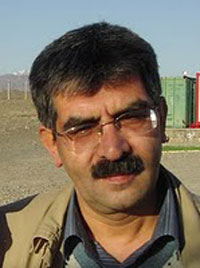 A former cellmate of an Iranian political prisoner who died this week of cancer says authorities provided medical treatment that was too little, too late, RFE/RL’s Radio Farda reports.
Mohsen Dokmehchi was buried on March 30 after losing a battle with pancreatic cancer. He was 53.
Dokmehchi, who worked at the Tehran Bazaar, was among hundreds of people arrested after the June 2009 disputed presidential election that sparked widespread protests.
He was serving a 10-year sentence on charges of supporting the exiled opposition group the People’s Mujahedin of Iran (also known as the Mujahedin-e Khalq Organization, or MKO).
During his time in Evin and Rajaishahr prisons, Dokmehchi was diagnosed with pancreatic cancer.
Journalist and blogger Saeed Pourheydar shared a cell with Dokmehchi in Evin prison for nearly two months last year.
In a March 30 interview with RFE/RL’s Radio Farda, Pourheydar, who is now based outside Iran, said doctors were at first slow to diagnose Dokmehchi’s cancer — and when he finally received treatment, it was patchy at best.
“Dokmehchi did not have any previous medical history, and the first signs of his illness appeared in November,” Pourheydar said. “But as the authorities were ignorant and he was merely taken to the prison hospital for pain killer shots, his cancer was diagnosed when it was too late.”
Pourheydar said that everyone initially thought Dokmehchi was suffering from a stomach condition as he could not eat or drink water properly. Once his condition worsened, he was taken to a hospital where his cancer was diagnosed.
But as a political prisoner, Pourheydar said, Dokmehchi did not get the care he needed.
“Moreover, those imprisoned on the charge of supporting the MKO were completely ignored relative to the other prisoners,” he said.
“As Mohsen was no longer able to sleep at nights due to his pain, he was transferred to the prison dispensary, where either the doctor would refuse to see him or he would be sent back after a pain killer,” he said, adding that the prison doctor claimed at one point that Dokmehchi was faking his illness.
Pourheydar said that once Dokmehchi was transferred to hospital outside prison for chemotherapy, he was tied to his bed at all times. Dokmehchi protested, as did his doctor — but “Dokmehchi was unfortunately transferred back to prison,” he said.
Pourheydar said authorities were definitely aware of Dokmehchi’s health condition.
He said Tehran’s chief prosecutor is scheduled to meet political prisoners twice a week, at which the prisoners are usually put under pressure to plead guilty and give confessions.
“During my last meeting with the prosecutor in prison, I mentioned the condition of Mr. Dokmehchi and asked him to grant him leave or transfer him to a hospital,” Pourheydar said. “He retorted by saying that it is none of my business.”
The prosecutor told him that “not all prisoners are meant to be executed to die,” he said.


