


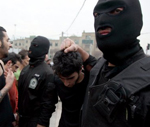
 Fox News: While the new Iranian regime is busy trying to convince the outside world it is moderate, Tehran has clamped down even harder on human rights and stepped up public executions in recent weeks.
FoxNews.com
By Lisa Daftari
While the new Iranian regime is busy trying to convince the outside world it is moderate, Tehran has clamped down even harder on human rights and stepped up public executions in recent weeks.
An estimated 560 people have been executed in Iran this year, including as many as 250 since President Hasan Rouhani took office in August, according to human rights advocates. In the two weeks between Sept. 11 and Sept. 25, Iranian officials hanged a record 50 people, mostly for drug offenses, according to International Campaign for Human Rights in Iran.
“While Rouhani was promoting a softer image of Iran internationally during his visit to New York two weeks ago, it was business as usual on the domestic front with scores of prisoners put to death following unfair trials,” said Hadi Ghaemi, executive director of the International Campaign for Human Rights in Iran. “Since Rouhani’s inauguration, the increasing number of prisoners being sent to the gallows is indefensible.”
One man who was hanged last month for a drug offense — but survived his first encounter with the rope — was nursed back to health only to be hanged again, this time until he was dead.
“We found him alive again, which made his two daughters very happy,” family members of 37-year-old Alireza M. told state-run Iranian media before the man was executed on the second attempt.
The brutality continues even as the Iranian regime continues its quest to appease the west and to make concessions on its nuclear program to six world powers in Geneva this week. Rouhani ran his campaign as a moderate and vowed to divert his course from the abusive and harsh government of his predecessor, Mahmoud Ahmadinejad.
This week, Iranian officials met with the P5+1 nations in Geneva to come to a resolution regarding Tehran’s ongoing nuclear program, which the nation still insists is for peaceful purposes.
During the two-day conference, Iran put forth a plan offering concessions over its nuclear program in exchange for economic relief from sanctions imposed by the West. No immediate resolutions were reached, according to diplomats, but follow-up talks have been scheduled for early November.
Last month, Rouhani made his first trip to the U.S., traveling with his envoy to New York for the annual United Nations General Assembly. Even before landing on U.S. soil, Rouhani had begun a charm offensive, suggesting one-on-one negotiations with the U.S. would be a possibility after three decades. His trip to New York ended with an unprecedented phone call between him and President Obama.
But the phone conversation is not believed to have touched on human rights violations, despite the fact that Iran’s prisons are filled with journalists, bloggers, political activists, Christians and Bahai’s who have been arrested and are being held for compromising national security or going against the teachings of Islam.
Iran currently has the highest rate of executions per capita, putting more people to death annually than any nation except China. Prisoners are routinely denied medical treatment, proper nutrition, and even family visits, according to reports from inside the regime.
This week, many were expecting the prisoners who were held for their involvement in the so-called Green Revolution of 2009 to be released out of clemency for the Eid holiday. However, Iran’s judiciary spokesperson, Mohsen Ejei, announced that prisoners would not be released.
Although some 80 prisoners were released with fanfare just before Rouhani’s trip to the UN last month, cynics now believe that, too, was merely part of the charm offensive of Rouhani, who may not even be in a position to change the nation’s hardline approach. Most of the vital political and religious decisions made by the Iranian regime are ultimately the say of Supreme Leader Ali Khamenei.
Also this week, Maryam Naqash Zargaran was sentenced to four years for practicing her Christian faith. She has been accused of “activities and propaganda” against the regime and provoking the public to create unrest by establishing church houses.
Iranian-American Pastor Saeed Abedini is still being held in Iran for practicing his Christian faith. He has been sentenced to eight years and has consistently been denied proper medical treatment for his injuries sustained by regular prison beatings, according to his family and attorneys. Amir Hekmati, a former U.S. Marine, has been sentenced to death for ‘spying for the US’ when he was visiting his family in Iran.
The two Americans are among thousands who human rights advocates say are languishing in prisons for nothing more than their beliefs.
Lisa Daftari is an Iranian journalist and Fox News contributor.


