


 UPI: The European Parliament’s delegation for relations with Iran is set to travel to Iran this week. If it goes ahead as planned, this will be the first official visit by the Parliament to Iran in six years.
United Press International
By ABBAS REZAI, UPI Outside View Commentator
LONDON, Dec. 9 (UPI) — The European Parliament’s delegation for relations with Iran is set to travel to Iran this week. If it goes ahead as planned, this will be the first official visit by the Parliament to Iran in six years.
The Parliament’s governing body last month authorized a 10-member delegation to travel to Iran from Dec. 12-17.
The delegation will be composed of Chairwoman Tarja Cronberg from Finland, Cornelia Ernst from Germany, Marietje Schaake from the Netherlands and several other members.
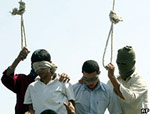
During the last such visit in the previous parliamentary term in 2007, Iran resorted to several public executions while the parliamentarians were in Tehran. All other initiatives during the current parliamentary term were canceled often due to Iran’s refusal to accept preconditions set by the Parliament to have access to political prisoners or opposition activists.
The new attempt could be the last for this term as there’s little space left in the parliamentary calendar before the European elections in spring 2014.
The Iranian Embassy in Brussels, which in 2005 was the main initiator of this friendship delegation, has repeatedly insisted that visits to Iran must be held without preconditions. Therefore, to avoid any cancellation risks this time, the delegation has set aside all such human rights prerequisites and decided to visit the country with no such leverages.
With the media mostly attentive to the recent nuclear deal with Iran, the situation of human rights and the sudden increase of public executions by the government of Hassan Rouhani have remained almost unnoticed.
According to figures compiled from Iranian media reports, some 190 executions were carried out during the first half of 2013 when Mahmoud Ahmadinejad was in power. However, the number of executions only since June when Rouhani replaced Ahmadinejad has reached more than 370.
No U.N. Special Rapporteur for Human Rights in Iran has been allowed access to the country for seven years, including the latest rapporteur, elected two years ago, despite him being Muslim and from a small country.
The latest report by Ahmed Shaheed to the U.N. General Assembly’s Third Committee in October emphasizes that the situation of human rights in Iran remains a source of concern with no sign of improvement. It explicitly refers to waves of executions, gender discrimination and consistent violations of civil, political, economic, social and cultural rights of the Iranian people where many political and civil rights are breached by the regime’s official laws.
Amnesty International stressed “In the first 100 days of President Rouhani’s government, human rights in Iran have remained a low priority despite earlier promises made during the presidential campaign.” It also reiterated that “Iran’s prisons remain full of political prisoners and prisoners of conscience, many of whom suffer from lack of adequate medical care.”
Although the Sakharov Prize winner Nasreen Soutudeh was released from jail as a sort of “moderation” gesture before Rouhani’s trip to the U.N. General Assembly in New York, there is no official document stating she has been liberated. She was merely orally informed that she can leave and, without any official release documents, she could be re-incarcerated at any moment.
In a Washington Post opinion article last week, Iranian Nobel Peace Prize laureate Shirin Ebadi, reminded that Iran maintains “world’s highest per capita rate of executions.” She warned, “Will the world community disregard human rights in the coming months to conclude a comprehensive nuclear deal?”
Other members of European Parliament’s Iran Delegation who have expressed interest to join the trip include Isabelle Durant from Belgium, Josef Weidenholzer from Austria, Paweł Zalewski from Poland, Dimitrios Droutsas and Niki Tzavela from Greece and Pavel Poc from Czech Republic.
Some senior members of the delegation however have rejected the idea of visiting Iran at this stage. They include three Italians, Vice Chairman Potito Salatto, Oreste Rossi and Marco Scurria, and European Parliament Vice President Alexander Alvaro from Germany and British conservative Geoffrey Van Orden.
The European Parliament’s biggest political group, the European People’s Party and the European Conservatives and Reformists Group have also declared they won’t dispatch any members to Iran in with the current conditions.
Critics have often maintained that, whatever good intentions, sending an official mission to Iran without preconditions on human rights will be taken as a green light by the ruling clergy to increase human rights violations and would serve Iran’s domestic propaganda consumption.
—
(Abbas Rezai, is a human rights activist who served seven months in Iran’s notorious Evin Prison in the 1980s. Now in exile, he occasionally writes about Iranian political affairs.)


