


By Jubin Katiraie
Due to Iranian authorities’ imprudence and incompetence, many of the people are under the danger of infection with the coronavirus.
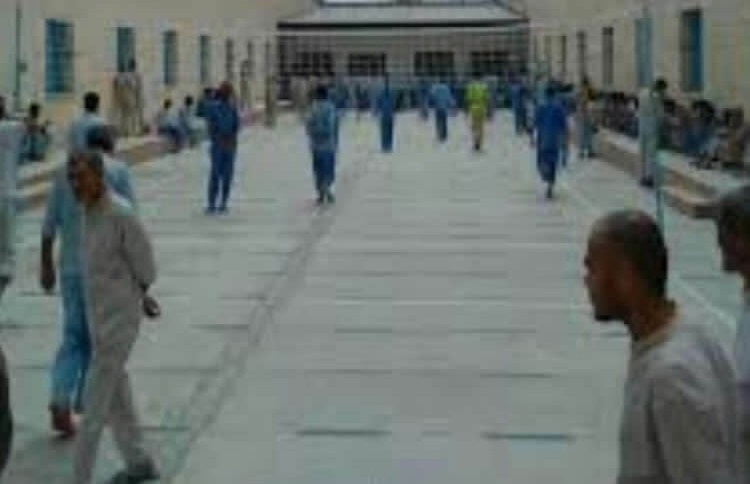
In this context, the conditions in prisons are especially dire and prisoners, particularly political ones, lack essential items for disinfectant and pre-emptive measures to protect themselves from infection. The guards’ indifference prompted jailed people to attempt for fleeing to rescue their lives.
On March 19, reports from Khorramabad city, the capital of Lorestan province, said that prisoners of Parsilon Prison succeeded to escape after a planned rebellion and breaking the prison’s door. They disarmed two soldiers and injured two other agents.
A local said, “The guards gunned down around 40 inmates, but others fled… The guards shot around 250 prisoners from behind, between 50-60 were injured and 130 others evaded… Fugitive prisoners later took a minibus and fled the city. In the airport, they set a car in a fire to block the road.”
Another report said, “About eight soldiers have been wounded and an officer was killed.” The people also reported that there was heavy fire exchange between the prisoners and security forces. Security forces have imposed martial law in Khorramabad and are carrying out a home-to-home search in surrounding villages to find the fugitives.
Notably, many human rights organizations, including Amnesty International, previously called on the Iranian government to release prisoners to deter the spread of the deadly virus among the defenseless prisoners. The Special Rapporteur for Human Rights’ conditions in Iran Mr. Javid Rahman also demanded Iranian officials to free all prisoners, particularly political prisoners.
In this respect, the Judiciary System claimed that it has released thousands of prisoners during recent weeks. However, it didn’t release even one of the political prisoners who have been sentenced in unjust courts and under illusory accusations.
Remarkably, the regime has been especially harsh in treating political prisoners since its founding in 1979. In 1988, the regime massacred more than 30,000 political prisoners, mostly members, and supporters of the main opposition group Mojahedin-e Khalq (MEK/PMOI).
Ebrahim Raisi, the current head of the Judiciary System and a member of the inner circle of the supreme leader Ali Khamenei’s, played an essential role in the “death commission,” which was responsible for the extrajudicial executions of 1988.
The former Justice Minister Mostafa Pourmohammadi was another perpetrator of the most vicious crime in the Islamic Republic’s history. Last year, in late November, Pourmohammadi in a TV program defended his crime in the summer of 1988 and threatened protesters and MEK supporters, saying, “Our job hasn’t yet finished with you!”
More recently, in 2018, the regime murdered dozens of political prisoners in its jails, claiming that they had committed suicide. Now, the coronavirus outbreak has become its latest tool to torture political prisoners.
Also, on March 20, local reports from Aligudarz county in Lorestan province pertained that inmates in this prison have revolted to save their lives versus the coronavirus outbreak in prison. “On the sunset of March 20, prisoners who were held in Aligudarz Prison protested, which resulted in chaos inside the prison. But we could control the situation,” Hamid Kashkouli, the mayor, announced in an interview with the state-run news agency ISNA. However, sounds of heavy fire exchange are heard in a video circulated in social media in addition to raising billow of smoke from inside the prison.
Since the beginning of the coronavirus outbreak in Iran, the Iranian resistance time and again called on international rights organizations to put pressure on the Iranian government to release prisoners, especially political prisoners.
The government finally released some prisoners who committed financial crimes under the mounting pressure. However, these poor prisoners, who have nothing to find a shelter for themselves or buy a ticket for returning to their hometown, have become the source of another crisis in the society and have crowded terminals and other public places. Indeed, prison guards released many prisoners without testing them for coronavirus which can further exacerbate the contagion.
Read More:
Human Rights in Iran: February 2020


