


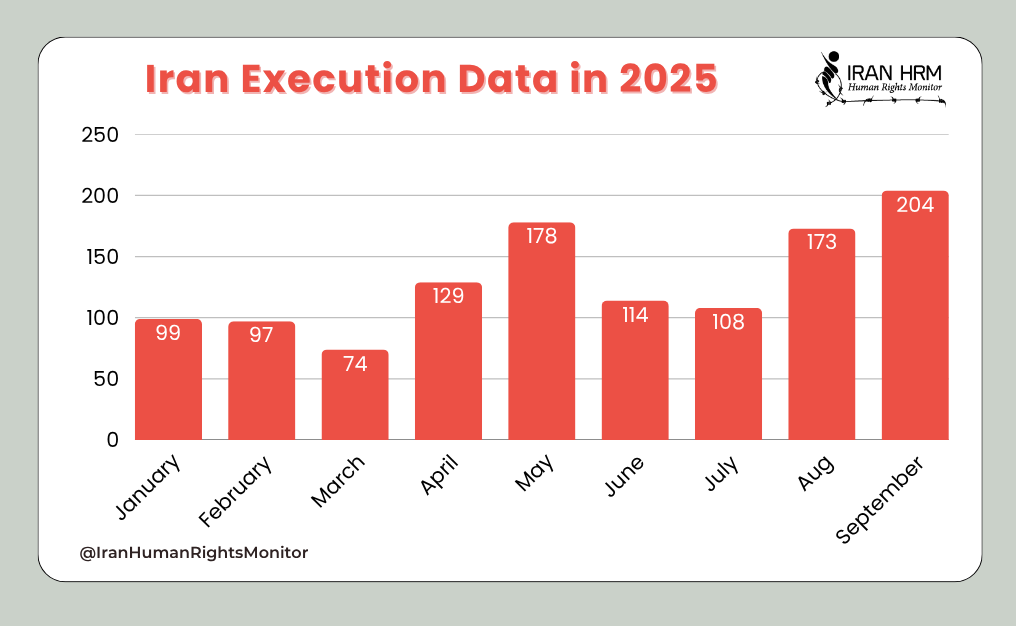
The Iran Human Rights Monitor (iran-hrm), a human rights website, reported in its new annual report that in 2025 at least 1,956 people were executed in prisons across Iran, representing a 97% increase compared to the previous year. According to the report, among those executed, 10 people were put to death in public, in front of onlookers.
These statistics cover the period from January 1, 2025, to December 20, 2025.
The report states that during this period, in addition to those executed, at least 168 people were sentenced to death by Iran’s regime judiciary, and the death sentences of at least 56 individuals were upheld by the Supreme Court.

Over 400 Global Figures Urge Halt to Execution of Iranian Political Prisoner
It also notes that two individuals who were under 18 years old at the time of the alleged offense, legally referred to as juvenile offenders, were among those executed this year.
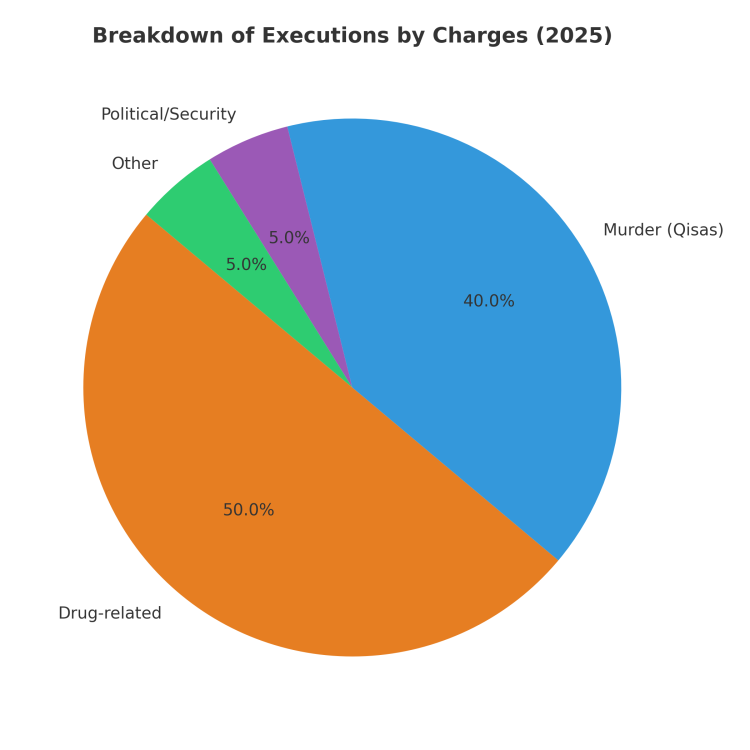
According to the Iran Human Rights Monitor, 40% of those executed in Iran in 2025 were charged with “murder,” and 50% were executed on charges related to “narcotics.”
In 2025, the highest shares of carried-out executions were, respectively, in Alborz Province, which hosts two of the country’s most crowded prisons, with 10.87%; Khorasan Razavi with 8.22%; Isfahan with 7.70%; Fars with 6.92%; and Lorestan with 4.89%.
In terms of prisons carrying out executions, Ghezel Hesar Prison in Karaj, Dastgerd Prison in Isfahan, Adelabad Prison in Shiraz, Vakilabad Prison in Mashhad, and Dizelabad Prison in Kermanshah were at the top of execution figures during this period.
Unprecedented execution figures over the past 11 years
Execution statistics over the past 11 years show that the number of executions declined from 2015 to 2020, but rose again from 2021 onward, reaching its highest level in 2025.
This significant increase highlights serious concerns regarding the human rights situation and the intensification of executions in Iran.
The Iran Human Rights Monitor says that 95% of executions were carried out secretly, meaning without announcement in official or domestic media, and only 5% were reported by media outlets or internal institutions.
The relentless increase in the issuance, confirmation, and implementation of death sentences in Iran in recent months has drawn widespread attention from international bodies and has been accompanied by protests inside and outside the country.
Iranian Political Prisoner Ehsan Rostami Faces Risk of Execution
On December 18, the United Nations General Assembly adopted its annual resolution on the human rights situation in Iran with 78 votes in favor. Earlier, on November 19, the Third Committee of the UN General Assembly had adopted a resolution condemning human rights violations in Iran with 79 votes in favor, a text that this year placed broader emphasis on executions, women’s rights, the suppression of protesters, and transnational repression.
Mai Sato, the UN Special Rapporteur on the human rights situation in Iran, stated on October 30 at a meeting of the Third Committee of the UN General Assembly that Iran’s regime, by carrying out widespread executions, has embarked on a path of “crimes against humanity.”
Protests and strikes in Iran
According to a report by the Human Rights Activists News Agency (HRANA), a human rights news website, in 2025 at least 2,606 protests and strikes took place, including 2,174 protest gatherings, 407 labor strikes, and 25 professional strikes across various sectors of the country.
Among the recorded gatherings, 813 were labor protests, most of them related to wage demands, and in 40 cases workers were prevented from holding their protests.
HRANA also reported 940 professional protests and five cases in which such gatherings were prevented, writing that the main focus of these protests was wage demands by professional groups, اعتراض to economic conditions, and objections to the inefficient management of state institutions of the Islamic Republic.
In recent years, retirees, workers, and pensioners have repeatedly held protests and marches in various cities across Iran over the failure to fulfill their demands.
The livelihood conditions of these groups have led to a significant increase in the number of professional protests and demonstrations.


