


Iranian authorities have carried out the executions of two political prisoners identified as members of the People’s Mojahedin Organization of Iran (PMOI/MEK), Vahid Bani Amerian and Abolhassan Montazer, in what marks the latest development in a rapidly escalating wave of executions targeting political detainees. The hangings followed closely on the heels of the execution of four other PMOI members during a 48-hour period on March 30 and 31, underscoring the speed and scale of the current campaign.
According to the provided report, the executions of Bani Amerian and Montazer came immediately after the deaths of Mohammad Taghavi, Akbar Daneshvarkar, Babak Alipour, and Pouya Ghobadi. The sequence of six executions within days has drawn renewed attention to the treatment of political prisoners in Iran and the use of capital punishment in politically sensitive cases.
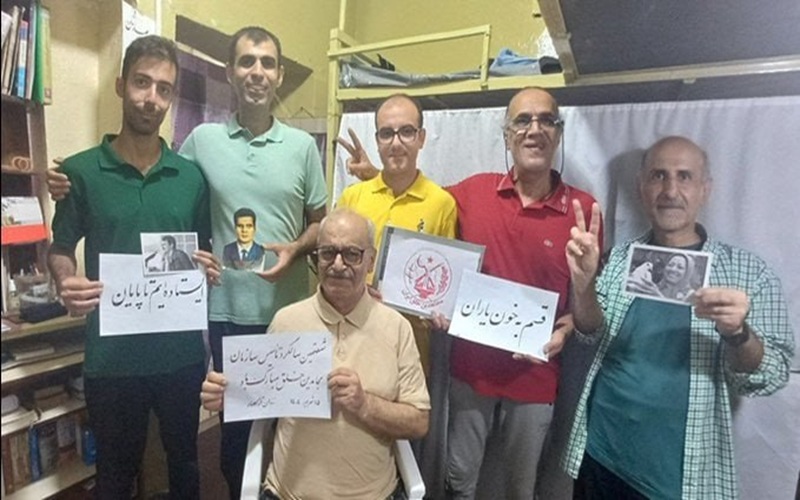
State-affiliated media sought to frame the case as a national security matter. The Islamic Revolutionary Guard Corps (IRGC)-linked Tasnim News Agency described the two men as part of a “terrorist team,” stating that they had been convicted on charges of baghi—armed rebellion—and actions against internal security. The regime claimed that Montazer had allegedly used cryptocurrency to rent safe houses and assemble explosives, while Bani Amerian was reportedly arrested in possession of four rocket launchers. Tasnim also linked Montazer to Mohammad Taghavi, one of the four PMOI members executed days earlier.
Abolhassan Montazer, 66, was described as an architect and a former political prisoner from the 1980s. Vahid Bani Amerian, 33, held a master’s degree in management and had reportedly spent four years in prison since 2017. Their cases reflect both generational continuity and the persistence of long-running confrontations between the Iranian state and organized opposition networks.
The legal process leading to the executions were deeply irregular. Following their arrests in January 2024, both men were reportedly held for months in Ward 209 of Tehran’s Evin Prison, where they were subjected to severe physical and psychological pressure. These measures were used to extract forced confessions.
Their death sentences were later issued by Judge Iman Afshari of Branch 26 of Tehran’s Revolutionary Court. During a retrial on November 16, 2025, defense lawyers reportedly requested that all six co-defendants be tried together. That request was denied, and instead separate hearings were held for each defendant, each lasting only a few minutes. Iran’s Supreme Court subsequently upheld the sentences in December 2025.
The final days before the executions were also marked by reports of heightened prison pressure. On the night of March 29, anti-riot guards allegedly raided Ward 4 of Ghezel Hesar prison, where Bani Amerian and Montazer were being held. Political prisoners in the ward were beaten, and all phone lines were cut, leaving detainees without contact with the outside world shortly before the executions began.
The hangings proceeded despite mounting international concern. Amnesty International had warned days earlier that both prisoners were at imminent risk of execution following a “grossly unfair torture-tainted trial,” while also noting that authorities had concealed their whereabouts from family members.
A WEEK OF SLAUGHTER IN IRAN
Six political prisoners and PMOI members from a single case were executed in less than a week. All were victims of notoriouse Judge Iman Afshari’s Branch 26:
Mon: Mohammad Taghavi & Akbar Daneshvarkar
Tue: Babak Alipour & Pouya Ghobadi
Sat: Abolhassan… pic.twitter.com/tEUIvfGmA2— Iran Focus (@Iran_Focus) April 4, 2026
Political reactions also emerged from the United States and Europe. U.S. Congressman Brad Sherman, who said the men were executed after torture and a sham trial. U.S. Representative Laura Friedman described the timing as an acceleration of repression during ongoing conflict, while UK MP Jim Shannon called the executions a moral outrage. Members of the European Parliament, including Petras Auštrevičius and Milan Zver, similarly warned of a broader pattern involving PMOI-affiliated prisoners.
The timing of the executions is especially notable within the broader political context outlined in the report. The hangings follow months of domestic unrest, including nationwide uprisings between December 2025 and January 2026, and come amid continued instability after the reported death of Supreme Leader Ali Khamenei in a February 28 airstrike. Within this setting, the executions are part of a rapidly unfolding sequence of state actions inside the prison system, particularly against detainees accused of links to organized opposition groups.
There is also concern about additional prisoners facing similar charges of baghi, suggesting that more executions may be imminent. The combination of communication blackouts, rapid legal proceedings, prison raids, and closely timed executions has intensified scrutiny from observers concerned about the fate of other political detainees.
This case offers a stark window into the current intersection of domestic unrest, prison policy, and the judiciary’s handling of opposition-linked cases. With six PMOI prisoners executed in a matter of days, this pattern is likely to continue and the response of international institutions will be pivotal to saving the lives of political prisoners.


