


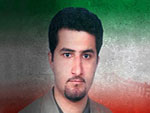
 Iran Focus: Tehran, Iran, May 10 – When Iranian nuclear scientist Shahram Amiri went missing during a pilgrimage to Mecca last summer, Ministry of Defence intelligence officials promptly warned his relatives not to alert anyone to his disappearance.
Iran Focus
 Tehran, Iran, May 10 – When Iranian nuclear scientist Shahram Amiri went missing during a pilgrimage to Mecca last summer, Ministry of Defence intelligence officials promptly warned his relatives not to alert anyone to his disappearance.
Amiri, 32, disappeared in Saudi Arabia on 3 June 2009, three days after arriving in the Kingdom.
An official from the Ministry of Defence’s security section, who went by the name Ahmadi, contacted Amiri’s wife, telling her it would be in her husband’s interest if the matter was kept secret. She was told to provide the ministry with any new information she might receive.
Ahmadi assured her that the ministries of Defence and Foreign Affairs were both on her husband’s case.
At first, officials kept the matter low key and simply asked the Medina office of Iran’s Hadj and Pilgrimage Organization to contact Saudi officials about the disappearance of an ordinary pilgrim.
When that effort proved fruitless, officials from the Foreign Ministry’s Political Section and Tehran’s ambassador in Riyadh formally raised the issue with Saudi officials. The Saudis informed Tehran that Amiri had arrived in the Kingdom through the airport, and their records showed that no such person had left the country through legal borders.
Finally, in September, Tehran decided to publicise the issue. Foreign Minister Manouchehr Mottaki announced that Amiri was among four nuclear scientists “kidnapped” by the United States. The claim was reiterated by President Mahmoud Ahmadinejad in November. State media carried interviews with Amiri’s wife claiming the Central Intelligence Agency played a role in his disappearance, and reports abroad have said the scientist defected with the assistance of the CIA.
The embarrassing sudden loss of one of Iran’s top nuclear scientists came as a serious blow to Tehran.
Opposition sources have told Iran Focus that Amiri was a key researcher in Iran’s nuclear industry and likely has knowledge of a wealth of classified information.
Amiri, born in Kermanshah, western Iran, lived in the Imam Khomeini township, a restricted residential area in Tehran’s Hakimeh district run by the Aerospace Industries Organization of Iran (AIO), a subsidiary of the Ministry of Defence and Armed Forces Logistics.
Amiri received a degree in Physics and a Masters in Solid State Physics from Elm-va-Sanaat University (University of Science and Technology) in Tehran. Iran Focus has learned that he conducted research for Iran’s nuclear weapons program at the Lavizan-Shian centre in Tehran.
After the opposition National Council of Resistance of Iran revealed the existence of the secret centre in 2003, the site was razed and its personnel were transferred to another secret location, Mojdeh. Iran later told the UN nuclear watchdog, the IAEA, that “defence-related nuclear work” had been carried out at the Lavizan-Shian site by the Physics Research Centre (PHRC) between 1989 and 2004, but denied any work on nuclear material.
Opposition sources have told Iran Focus that Amiri could be a missing link to one of Iran’s most internationally sought after nuclear experts. Mohsen Fakhrizadeh, who is listed in the annex of UN Security Council Resolution 1747 as one of the regime’s scientists involved in the nuclear weapons program, was in the charge of the operation at Lavizan-Shian where Amiri worked. He reports directly to the Defence Minister. Despite repeated requests by the International Atomic Energy Agency, Iran refuses to grant international inspectors an interview with Fakhrizadeh.
Amiri’s former supervisor at Lavizan-Shian, Dr. Parviz Katani, is a leading figure in Fakhrizadeh’s team.
Once equipment had been transferred from Shian to Mojdeh, Amiri began working at the new site, which became the command and control centre for the production of nuclear weapons. Sources tell Iran Focus that Amiri has key intelligence on the regime’s nuclear activities there.
The sources say the site was set up near the Malek Ashtar University to make it more difficult to be identified as a military centre. In April 2004, the opposition NCRI revealed the existence of the Mojdeh site, but Iran refuses to allow IAEA inspectors to visit it.
The Mojdeh site was later merged with Malek Ashtar University. The merged entity is called the Pardis (paradise) of Malek Ashtar University and is run by Fakhrizadeh. Sources have told Iran Focus that in addition to his activities at the Mojdeh site, Amiri worked at the Fordo uranium enrichment site in Qom. Iran revealed the existence of the Fordo site in September, three months after Amiri’s disappearance in Saudi Arabia, and was reprimanded by the IAEA for not disclosing it sooner.


