


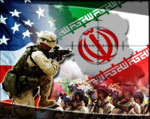
 AP: Iraq is increasingly turning to other governments like Iran, Russia and Syria to help beat back a rampant insurgency because it cannot wait for additional American military aid, Baghdad’s top envoy to the U.S. said Tuesday. Such an alliance could test the Obama administration’s influence overseas and raise risks for the U.S. as some of its main global opponents consider joining forces.
By LARA JAKES and ROBERT BURNS
WASHINGTON (AP) — Iraq is increasingly turning to other governments like Iran, Russia and Syria to help beat back a rampant insurgency because it cannot wait for additional American military aid, Baghdad’s top envoy to the U.S. said Tuesday.
Such an alliance could test the Obama administration’s influence overseas and raise risks for the U.S. as some of its main global opponents consider joining forces. Moreover, such a partnership could also solidify a Shiite-led crescent across much of the Mideast at a time when the Sunni-led insurgency in Iraq is trying to create an Islamic state through the region.
Iraqi Ambassador Lukman Faily stopped short of describing enduring military relationships with any of the other nations that are offering to help Iraq fight the Islamic State of Iraq and the Levant. And he said Baghdad would prefer to work with the U.S.
But Faily said delays in U.S. aid have forced Iraq to seek help elsewhere. He also called on the U.S. to launch targeted airstrikes as a “crucial” step against the insurgency.
“That choice is primarily from the need, rather than the desire,” Faily told an audience at the Carnegie Endowment for International Peace in Washington. “Further delay only benefits the terrorists.”
So far, the Obama administration has resisted airstrikes in Iraq but has not ruled them out.
Faily’s comments came as chaos in Baghdad continued.
Despite a constitutional deadline to name a new parliament speaker, minority Sunni and Kurdish lawmakers walked out of the first session of the newly seated legislature on Tuesday, dashing hopes for the quick formation of a new government that could hold the country together in the face of a militant blitz. Hours later, ISIL leader Abu Bakr al-Baghdadi called on Muslims worldwide to join the battle and help build an Islamic state in land that the extremist group controls in Iraq and Syria.
The Obama administration has been hesitant to send much military aid to Iraq for fear of dragging the U.S. into another yearslong Mideast war. President Barack Obama has ruled out sending combat troops back into Iraq after withdrawing U.S. forces in 2011, but this week sent more soldiers to Baghdad to help bolster the U.S. Embassy. All told, officials said, there are about 750 U.S. troops in Iraq – about half of which are advising Iraqi counterterror forces fighting ISIL.
Since then, Washington has sold more than $10 billion in military equipment and weapons to Baghdad, and recently stepped up its surveillance and intelligence support to its security forces.
The additional 300 U.S. troops moving into Iraq this week are equipped with Army Apache attack helicopters as well as unarmed surveillance drones, Pentagon spokesman Rear Adm. John Kirby said.
Noting international bans on Iranian military sales, Faily said Iraq is mostly seeking Tehran’s advice on how to combat ISIL – a foe that Iran has faced in Syria’s civil war. ISIL is one of a number of Sunni-led groups that have been fighting for three years to force President Bashar Assad from power.
Assad is an Alawite, a religious sect that is an offshoot of Shiite Islam, and Iraqi Prime Minister Nouri al-Maliki is Shiite. Faily said Baghdad would be willing to work with the Syrian government to control the border between the two nations, and keep it from falling into ISIL’s hands.
And he said Russia’s fighter jets and pilots have been willing to fill Iraq’s air support needs.
Plans to send U.S. fighter jets to Iraq have been stalled, although State Department deputy spokeswoman Marie Harf said some F-16s could be delivered this fall.
Harf said the Iraqi government needs to finish its plans for sheltering the fighter jets, training pilots to fly them, and completing financial and administrative details before the planes can be delivered.
“The Iraqis have been slow in terms of moving that part of the process forward,” Harf said. “Now we’re in a place where some of those things are made more challenging by the security situation.”
She said the U.S. does not object to other governments sending legal aid to Baghdad. But she said the U.S. has “been very clear” that the Syrian government isn’t a legitimate source of support to Iraq.
Meanwhile, Saudi Arabia gave the United Nations $500 million on Tuesday to help the humanitarian crisis in Iraq, where more than 1 million people have been displaced. The U.N. said more than 2,400 people were killed in Iraq in June, making it the deadliest month in the country in years.
The Sunni-dominated Saudi kingdom and al-Maliki have had frosty relations for years. The donation served as an appeal to the Iraqi people as its leaders build a new government – potentially one without al-Maliki at the helm, although Faily said there was no indication that the prime minister would leave his post.
In an interview, Saudi Ambassador Adel al-Jubeir said the donation aims to help Iraqis of all religions, sects and ethnic backgrounds.
“It should go, we hope, a long way toward easing the suffering of the Iraqi people in Iraq,” al-Jubeir said.


