


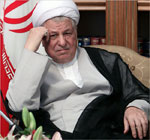
 New York Times: The future of Iran’s largest academic institution is in question after the supreme leader stepped into a tug of war this week between President Mahmoud Ahmadinejad and his rival Ali Akbar Hashemi Rafsanjani, who was instrumental in vastly expanding and improving the university.
The New York Times
By WILLIAM YONG
 TEHRAN — The future of Iran’s largest academic institution is in question after the supreme leader stepped into a tug of war this week between President Mahmoud Ahmadinejad and his rival Ali Akbar Hashemi Rafsanjani, who was instrumental in vastly expanding and improving the university.
The supreme leader, Ayatollah Ali Khamenei, issued a ruling this week that Mr. Rafsanjani could not place the vast financial assets of the Islamic Azad University — which some estimates put at $250 billion — into a public religious trust. Doing so would have effectively prevented Mr. Ahmadinejad from seizing control of the institution.
The proposed change raised “fundamental juridical and legal difficulties,” Ayatollah Khamenei wrote Monday in a letter addressed to both men. But he also disallowed some moves backed by Mr. Ahmadinejad to make changes that would extend government control over the university’s assets and appointments to its governing body. The struggle over the university is the latest skirmish in the high-stakes power struggle at the heart of Iran’s political elite.
The university has more than 1.3 million fee-paying students and around 350 branches nationwide. It was intended to be an Islamist bulwark against Iran’s more left-leaning governmental universities. But over the years, it evolved into a bastion of middle-class values and has served to promote the pragmatic conservative platform of Mr. Rafsanjani and his supporters.
During last year’s election campaign, supporters of Mr. Ahmadinejad accused university leaders of giving material support to the campaign of the opposition candidate Mir Hussein Moussavi. The accusation recalled the role the university played in 1997, when students helped mobilize voters in the landslide victory of the reformist president Mohammad Khatami.
Mr. Rafsanjani allied himself with Mr. Moussavi’s Green Movement, and the university students played a significant role in the months of protests set off by the announcement in June last year that Mr. Ahmadinejad had won re-election in a landslide. Mr. Ahmadinejad has crushed much of the opposition, and he has continued to attack Mr. Rafsanjani and tried to isolate him.
The two foremost figures to emerge from the aftermath of the death of Ayatollah Ruhollah Khomeini in 1989, Mr. Rafsanjani and Mr. Khamenei were once close allies. Mr. Rafsanjani played a leading role in bringing Mr. Khamenei to power, an appointment that overlooked his lack of formal qualifications as a grand ayatollah. But their visions for the country long ago diverged. In a provocative speech last month, Mr. Rafsanjani pressed his campaign to turn the university into a nonprofit, saying that God “would not allow anyone” to prevent the move to put its assets into a protected endowment. Some analysts said that the supreme leader’s ruling was a response.
The ruling, said Mohammad Sahimi, a California-based Iran analyst, was a blunt reminder that, according to the Islamic republic, it is Ayatollah Khamenei who is “the representative of God on earth.”
“At this point it seems to me that Khamenei himself wants to control the university,” said Mr. Sahimi, who contributes to the Web site Tehran Bureau.
Mr. Rafsanjani posted a response to the leader’s ruling on his Web site, suggesting that the battle was not yet over.
“While the Imam’s words still guide us, Azad University will never be government run,” Mr. Rafsanjani said in a statement. To bolster his argument among his constituency of moderate conservatives, he referred to an edict by the revered founder of the Islamic republic, Ayatollah Khomeini, that the university stay outside government control.


