


 AFP: “The only path” for world powers holding talks with Iran on its nuclear activities is to accept Tehran’s position, a top military representative for the country’s supreme leader said on Sunday, according to the Mehr news agency.
By Marc Burleigh
 TEHRAN (AFP) — “The only path” for world powers holding talks with Iran on its nuclear activities is to accept Tehran’s position, a top military representative for the country’s supreme leader said on Sunday, according to the Mehr news agency.
“Unfortunately, the P5+1 logic, especially that of America, is of bullying, which is in no way acceptable to our people and officials,” said Ali Saeedi, a senior figure in Iran’s powerful Revolutionary Guards who acts as agent for supreme leader Ayatollah Ali Khamenei.
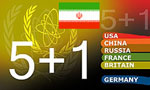
The comments hardened a tone of defiance coming from Tehran ahead of a new round of fraught talks to take place in Moscow on June 18-19 between Iran and the so-called P5+1 group (the United States, Britain, France, Germany, Russia and China).
They also added to a sense of pessimism growing over a separate track of dialogue between the International Atomic Energy Agency (IAEA) and Iran about inspections following a fruitless meeting last Friday in Vienna.
Saeedi accused the West of “pursuing its own aims that go beyond the (nuclear Non-Proliferation Treaty) regulations and the agency, and which do not fall within the IAEA’s remit.”
He portrayed Iran’s position in both tracks as “logical and rational” and sternly told the United States and its Western allies to adopt it.
“The only path in front of them is to accept Iran’s demands in an atmosphere of mutual respect, and to stop politicising it (the nuclear issue),” Mehr quoted him as saying.
“The Islamic Republic of Iran has accepted the IAEA’s regulations and it is in the interest of the West to adhere to the agency’s regulations,” he said.
Other Iranian officials have underlined that Tehran is not budging from its view that the West should ease its punishing economic embargoes and accept Iran has a “right” to uranium enrichment as first steps in the negotiations.
That insistence contrasts with the P5+1 group’s equally stubborn bid to coax Iran into giving up its higher-level uranium enrichment and stocks in exchange for more modest incentives, such as airplane spare parts and the lifting of an EU ban on insurance for oil tanker shipments to Asia.
The gulf between those two positions almost caused the collapse of the last round of Iran/P5+1 talks, in Baghdad last month. Both sides, though, agreed to hold the next round in Moscow — just two weeks before a total EU embargo on Iranian oil imports comes into effect.
Iran’s defence minister, Ahmad Vahidi, was quoted by the official IRNA news agency as echoing the line that it was up to the West, not Iran, to bend in the negotiations.
“The Western nations should comply with Iran’s rational demand for the use of peaceful nuclear energy,” he said, adding that Iran “will not give up its rights.”
Iran rejects Western and IAEA suspicions that it is pursuing the development of a nuclear weapons capability.
Vahidi and other officials have highlighted Khamenei’s repeated stated opposition to possessing atomic weapons.
The Islamic republic accuses the United States and its allies of using the nuclear issue as a pretext for a broader political goal believed to be geared towards toppling Tehran’s theocratic regime.
The IAEA, Iran says, is also being manipulated to that end.
Iran’s envoy to the UN nuclear watchdog, Ali Soltanieh, reiterated in an interview published on Sunday by the Tehran Times newspaper that “a couple of Western governments” are trying to turn the IAEA into an intelligence service rather than a technical verification body.
He noted that Iran observes the terms of the nuclear Non-Proliferation Treaty, but that its adherence to an “additional protocol” to that treaty permitting more invasive IAEA inspections “depends on the resolution of the (nuclear) issues with respect to the UN Security Council.”
The Security Council has since 2006 issued six resolutions demanding Iran comply with the additional protocol it dropped in 2005, and to suspend all of its uranium enrichment activities.


