


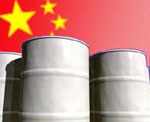
 CNN: The United States faces a deadline Thursday of deciding whether to issue a waiver to China and other purchasers of Iranian oil, or move to cut them off from the U.S. financial system as punishment for not reducing their purchases of Iranian crude by significant amounts.
CNN
By Jamie Crawford
 The United States faces a deadline Thursday of deciding whether to issue a waiver to China and other purchasers of Iranian oil, or move to cut them off from the U.S. financial system as punishment for not reducing their purchases of Iranian crude by significant amounts.
Under legislation signed by President Barack Obama on December, the United States will take action against countries that continue buying large volumes of Iranian oil through Iran’s Central Bank by cutting off financial institutions engaged in those transactions from the U.S. banking system.
The legislation was signed with the goal of strangling the biggest source of revenue for the Iranian government as a way to get Tehran to halt work on segments of its nuclear program that many Western countries fear is being used to produce a bomb. Iran contends its nuclear program is purely for peaceful purposes.
To date, the United States has issued waivers to 17 countries and Taiwan for reducing their purchases of Iranian oil and diversifying their supply to other countries. On Sunday, the European Union, one of Iran’s biggest trading partners, will go ahead with a complete embargo on all purchases of Iranian crude.
Current estimates show a drop to between 1.2 million and 1.8 million barrels a day of Iranian oil since the sanctions were put into effect. Many U.S. officials say the sanctions have already had a devastating effect on the economy and were a main driver in persuading Iran to return to talks with the five members of the U.N. Security Council and Germany, the so-called P5+1, to reach a settlement to Iran’s nuclear program.
“Iran is estimated to have lost approximately $10 billion in oil revenue, the Iranian currency has plummeted, and oil output has fallen to a 20-year low – and that is all before the U.S. and EU sanctions go into effect,” Sen. Robert Menendez, D-New Jersey, said earlier this month in a statement. He is one of the authors of the legislation Obama signed.
India, Japan and Turkey, major purchasers of Iranian oil, have already been granted waivers from U.S. sanctions because of their significant reduction in Iranian oil purchases. Another major importer, South Korea, announced earlier this week that it would completely halt its purchase.
But China, one of the largest purchasers of Iranian oil products, has been conspicuously missing from any U.S. waivers from sanctions that by law must be made by Thursday. But even if China is not judged as compliant, it will still be some time before any sanctions take effect, according to an administration official. The official would speak only on the condition of anonymity because of the sensitivity of the issue.
Some analysts who follow the sanctions program closely think China will ultimately get a waiver.
Mark Dubowitz, with the Foundation for the Defense of Democracies in Washington, says China’s imports of Iranian oil were down 20% to 25% from January to May this year from the previous year. “Technically on the basis of the law, the administration would be justified in granting an exemption,” based on their reductions earlier this year, Dubowitz said.
While many analysts have attributed that drop to a contract pricing dispute between China and Iran, there are other reasons the U.S. might want to grant a waiver to China as well.
“I also think [the United States] is going to want to maintain P5+1 unity, and would not want to get into a major diplomatic spat with Beijing by sanctioning Chinese banks,” Dubowitz said.
“We have had discussions with China; we continue discussions with China,” on their purchases of Iranian oil, a senior administration officials told reporters in a conference call earlier this month after the latest round of sanctions waivers were announced. “It’s been a very important partner in the P5+1 process. It’s been committed to working with us to help Iran from acquiring a nuclear weapon.”
The P5+1 talks seemingly stalled after the last session earlier this month in Moscow when a lack of progress on the issues prevented a follow-up round of political talks to be scheduled. While a meeting between the parties at the technical level is scheduled for next week in Istanbul, some analysts question whether Iran is even a genuine party to the talks despite the bite of sanctions.
“I think the administration is hoping that in the aftermath of the full implementation of the central bank sanctions and the impending implementation of the EU embargo on Iranian crude imports that that the Iranians will feel a greater imperative to give a little bit. I’m not persuaded that’s the case,” Suzanne Maloney, a senior fellow at the Saban Center for Middle East Policy at the Brookings Institution, told CNN.
For Maloney, Iran’s insistence in negotiations that it would like to be rewarded for granting concessions over its nuclear program might serve as a predicate to how future talks and sanctions against the Islamic Republic are approached.
“Ultimately whether the Iranian logic offends us or not, I think that is very much the way they perceive their own security interests and if we want them to move, we have to be able to think more creatively about what it is the international community can do to give them incentives to do that.”
With a review for those countries granted waivers under U.S. sanctions mandated every 180 days, analysts such as Dubowitz say the administration should call on countries to reduce their purchases by 30% to 40% before the next review. Current waivers have been granted for reductions of 11% to 22%.
Congress is also considering additional legislation seeking to add provisions to current sanctions that would eliminate any possible loopholes Iran may use to run around the current set. One proposal on Capitol Hill would call for Iran’s central bank to be labeled a proliferation concern and bar every financial transaction with the bank with the exception of humanitarian goods, thereby setting up a de-facto trade embargo of the country.
Another proposal would label Iran’s entire energy sector a proliferating concern and thereby close existing loopholes that Iran uses to circumvent current sanctions by setting up alternative payment mechanisms for oil trade.
Regardless of what action may come, the current set of sanctions are dependent on the supplies in world oil markets to stay as loose as possible so U.S. and EU actions are not rolled back because of national security concerns.
“The most important thing is Saudi Arabia,” Dubowitz said. “If the Saudis maintain their productions levels – that really is the key swing factor.”


