


 AFP: Egypt’s plan to build four nuclear powerplants by 2025 underscores the emerging interest in atomic energy across the Middle East, where even oil-rich nations such as Kuwait and the United Arab Emirates are eyeing fossil fuel alternatives to satisfy growing demand.
By Samer al-Atrush
CAIRO (AFP) — Egypt’s plan to build four nuclear powerplants by 2025 underscores the emerging interest in atomic energy across the Middle East, where even oil-rich nations such as Kuwait and the United Arab Emirates are eyeing fossil fuel alternatives to satisfy growing demand.
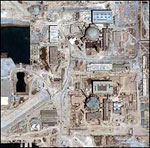
In the region and beyond all eyes are on Iran, which says it is firing up its first nuclear reactor before the end of this year, becoming the first Muslim country in the Middle East to produce nuclear energy.
The announcement that the Russian-built Bushehr reactor in southern Iran will start up in October or November rang alarm bells in the region and beyond.
Iran’s neighbours and world powers largely suspect that behind its claimed drive to acquire atomic energy for peaceful purposes, Tehran’s anti-Western government is hiding a covert atomic weapons programme.
Though wary of Iran, Middle Eastern states want to harness nuclear energy more out of necessity than competition with Iran, some analysts and officials say.
“It is a matter of energy,” said Mostafa el-Feki, who heads the Egyptian parliament’s foreign relations committee and who was Egypt’s ambassador to Austria and its representative at the International Atomic Energy Agency.
He said Egypt has a scientific base for nuclear energy: “When I was ambassador to Vienna, we used to have nearly 10 Egyptian inspectors.”
Egypt, which has flirted with nuclear power since the 1950s, is also planning solar and wind plants, with the target of producing 20 percent of its energy from renewable resources by 2020. Its gas and oil reserves are expected to last three decades.
Cairo said last month that a plant on the Mediterranean coast of el-Dabaa will be the centrepiece of a plan to build four nuclear plants by 2025, part of a regional trend away from conventional energy as demand soars.
Oil-poor Jordan also says the regional drive is fuelled by economic necessity.
“The increasing interest in the region in nuclear power is because of the high oil prices. Countries who don’t have oil are now looking for other options to generate energy,” said Jordan’s Atomic Energy Commission chief Khaled Tukan.
This month, Jordan and Japan signed an agreement on civilian nuclear energy cooperation in the ninth such accord by the kingdom.
Jordan, which imports about 95 percent of its energy needs, wants its first nuclear plant to be ready by 2015.
Oil-rich Kuwait, Saudi Arabia and the United Arab Emirates have also expressed interest in building nuclear power stations.
The UAE, which hopes to start its first plant in 2017 and already imports natural gas to produce energy, says that necessity, not regional politics, is behind its nuclear ambitions.
Its energy demand is projected to increase to 40,000 megawatts by 2020, double its current level. Last year, it awarded a multi-billion-dollar contract to a South Korean-led consortium for four nuclear power plants.
Kuwait, the world’s fourth-largest oil exporter, has signed a nuclear cooperation agreement with Japan, and announced it intends to build four nuclear reactors over the next 12 years.
The emirate faced unprecedented violent protests this summer following record temperatures and power cuts.
Saudi Arabia, which holds around a fifth of the world’s known oil reserves, agreed in July to sign a nuclear cooperation accord with France, opening the way for French help “for the development of peaceful uses of nuclear energy.”
But some analysts believe that regional interest in nuclear energy transcends economic necessity.
“In general the drive to build nuclear power plants transcends any economic rationale, there are strategic drivers,” said Leila Benali, the Paris-based Middle East director for the energy advisory group Cambridge Energy Research Associates.
“You also have security reasons, and the fact that once Iran made its nuclear programme public it became clear that at some point some countries in the region would have to do something to counter nuclear Iran, whether for prestige or for deterrence,” she added.
Since the 1979 Islamic revolution, Iran has ben repeatedly accused of trying to export Shiite militancy to the region, and Arab governments have been wary of Tehran and suspicious of its nuclear intentions.
“The Iranian nuclear programme was a wake up call. The Iranians insist on their right. They are talking about a strategic direction,” said Mustafa Alani, a security expert with the Dubai-based think tank the Gulf Research Centre.
It is widely accepted that Iran’s arch-foe Israel possesses an undeclared nuclear arsenal.


