


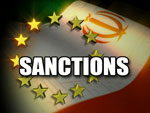
 UPI: The U.S. Treasury Department has identified several front companies it says are helping Tehran evade U.S. and European sanctions aimed at throttling Iran’s oil exports. United Press International
 DUBAI, United Arab Emirates, (UPI) — The U.S. Treasury Department has identified several front companies it says are helping Tehran evade U.S. and European sanctions aimed at throttling Iran’s oil exports.
The Iranian deception campaign includes reflagging and renaming — even repainting — its fleet of supertankers to avoid detection as it secretly sells oil to keep its sagging economy afloat.
The Iranians have made several of their disguised tankers effectively vanish from the world’s shipping lanes in a cat-and-mouse game with the U.S.-led Western powers, Western security officials say.
The Financial Times recently reported the state-owned National Iran Tanker Co. has renamed at least 24 of its vessels, more than half its 44-ship fleet.
“The changes have particularly affected NITC’s largest ships, capable of shipping 2 million barrels of oil each,” the FT said.
The company has replaced the Iranian, Maltese and Cypriot flags under which these tankers operate with those of Tanzania and the Pacific Ocean island state of Tuvalu.
Tanzania’s foreign minister, Bernard Membe, said July 5 the government was investigating U.S. allegations that at least six Iranian tankers were now sailing under the East African state’s flag.
“If we confirm there are Iranian ships flying Tanzania’s flag, we’re going to obliterate the registration,” Membe declared.
On Thursday, the U.S. Treasury announced yet another round of sanctions against Iran and identified dozens of Iranian front companies, ships and banks it alleges are helping Tehran dodge the sanctions aimed at stopping the Islamic Republic from acquiring nuclear weapons.
It blacklisted Noor Energy, Petro Suisse Intertrade, Petro Energy and Hong Kong Intertrade as fronts for the NITC and other Iranian entities and said this would undermine Tehran’s sanctions-busting operations.
Treasury Department official David Cohen said the moves would foil “deceptive efforts” by Iran to sell oil as well as Iran’s nuclear and ballistic missile programs.
Westerns sanctions were initially imposed in mid-2010, but they have been tightened since then. The 27-member EU sharply escalated the campaign July 1 with a total boycott of all Iranian oil exports.
NITC is the world’s eighth-largest owner and operator of supertankers with 10.6 million deadweight tons. It’s ranked above Vela, the shipping arm of Saudi Arabia’s state oil company Aramco, listed at No. 14 with around 6.6 million deadweight tons.
NITC has not itself come under U.S. or EU sanctions. But the United States has targeted the company for involvement in smuggling illegally purchased components for Iran’s contentious nuclear program and smuggling arms to its allies in the Middle East and Africa, such as Syria and Hezbollah, Iran’s key proxy in Lebanon.
“Since the beginning of the year, Tehran has tried to hide the final destination of its oil exports as Western powers have targeted the country’s energy sales in an effort to bring Tehran to the negotiating table over its nuclear program,” the FT’s commodities editor, Javier Blas, reported.
“While the name-changing does not stop trackers finding the vessels, it complicates their efforts.”
Shipping sources in London say switching off the supertankers’ satellite tracking transponders, known as the Automatic Identification System used to monitor maritime movements, has allowed some Iranian vessels to go “off-radar.”
While this has not totally blinded global maritime authorities, it’s made the task of assessing how much oil Iran is managing to export increasingly difficult as longtime customers, fearful of U.S. and EU penalties for dealing with Tehran, stop buying Iranian crude.
Some industry sources speculate this could end up with Western warships seizing these tankers, a move fraught with peril given current tensions.
Despite Iran’s efforts to evade sanctions, its oil production, its economic mainstay, has slumped to its lowest level since 1992.
Tehran insists there’s been no significant change. But Western policymakers estimate Tehran pumped 3.2 million barrels a day in June, with Japan and South Korea, two major buyers of Iranian crude, halting all imports.
Based on the number of tankers leaving Iran’s main export terminal at Kharg Island, output is expected to fall to 1.1 million to 1.3 million bpd in July, with India likely to reduce its July loadings under U.S. pressure.
Production figures alone don’t tell the full story. As sales tumbled, Iran has been storing oil aboard tankers anchored in the Persian Gulf rather than close down fields, which could damage them.
According to industry estimates, Iran is expected to store 8.3 million barrels in July, double the June amount.


