


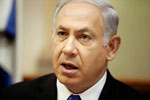
 Los Angeles Times: Benjamin Netanyahu and other Israeli officials say the United States and five other nations may have offered too much to Tehran in nuclear negotiations.
By Paul Richter, Los Angeles Times
WASHINGTON — An offer in the most recent round of negotiations over Iran’s nuclear program has created anxiety in Israel and injected tension into President Obama’s scheduled meetings Wednesday with Prime Minister Benjamin Netanyahu in Jerusalem.
Netanyahu and other Israeli officials worry that the United States and five other world powers offered too much to Tehran during Feb. 26-27 talks in Almaty, Kazakhstan, aimed at persuading Iran’s government to curb its uranium enrichment program. Iranian negotiators showed interest in the offer, but no deal was reached.
According to Iranian news reports, officials in Tehran have boasted that the concessions showed that the West is giving up hope that sanctions can force Iran to end its nuclear program. Western experts said the news accounts may be part of a government campaign to claim victory to mask compromises that Tehran must make to end the standoff.
Another round of talks over the so-called confidence-building proposal is scheduled April 5-6 in Almaty.
The six powers — the United States, France, Britain, China, Russia and Germany — have acknowledged two shifts last month from their earlier negotiating positions.
The proposed interim deal calls for Iran to suspend enrichment at its underground nuclear facility at Fordow rather than close it permanently, as previously had been demanded. And the six powers signaled a willingness to ease tight economic sanctions by permitting Iran to use gold as a currency for international trade.
A senior U.S. official said the shifts were intended to buy time for more substantive talks without allowing Iran to enlarge its cache of enriched uranium.
He said the six powers have not abandoned their ultimate aims: shutting the Fordow plant, halting production of medium-enriched uranium that could be converted into nuclear bomb fuel, and removing the existing stockpile.
“Our goals have not changed,” said the official, who asked not to be identified discussing sensitive diplomacy.
But Israeli officials contend that the six nations offered substantial concessions for relatively small gains when they could use trade-crippling sanctions already imposed on Iran to demand far more, according to analysts and diplomats.
The Israelis argue that the U.S. and its partners “haven’t been maximizing their leverage,” said David Makovsky, a Mideast specialist at the Washington Institute for Near East Policy, a nonpartisan think tank.
He said Iran may read the offer as a sign of wavering U.S. resolve. Other signs, he said, include not sending a second U.S. aircraft carrier to the Persian Gulf because of budget cuts at the Pentagon, and Obama’s nomination as Defense secretary of Chuck Hagel, who in the past has expressed reluctance to go to war with Iran.
“Even if Hagel turns out to be an excellent secretary, will Iran read this as a sign the administration is not serious about preventing Iran from getting a bomb?” Makovsky asked.
Other nations also expressed concern about the offer. Before the meeting, French diplomats argued privately that the six powers should demand more. In the end, however, France voted to authorize the revised offer to Iran, diplomats said.
According to the Aftab news website, a senior Iranian nuclear negotiator said the six powers made more than two concessions in Almaty.
He said they also had tacitly acknowledged Iran’s right to enrich uranium at low levels under the nuclear nonproliferation treaty, a statement likely to alarm U.S. conservatives and some Israelis. The same article said that the six had offered to lift banking sanctions if Iran agreed to suspend enrichment for six months.
Ray Takeyh, a former Obama administration advisor on Iran who now is at the Council on Foreign Relations, said he considered Aftab generally credible. The senior U.S. official declined to confirm or deny the report.
Makovsky said Obama and Netanyahu probably will not clash over Iran in public during their meetings this week because both leaders appear determined to overcome past differences. But in private, “there will be some pointed questions,” he said.


