


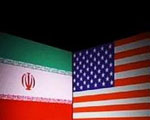
 The Guardian: Barack Obama on Sunday sought to shore up the potency of American deterrence in the Middle East, warning Iran that he was still prepared to take military action against the Iranian nuclear programme, which the president described as “much closer to our core interests” than Syria’s chemical weapons.
US president seeks to shore up US deterrence in the Middle East and warns action against Iranian nuclear programme
Julian Borger
The Guardian
Barack Obama on Sunday sought to shore up the potency of American deterrence in the Middle East, warning Iran that he was still prepared to take military action against the Iranian nuclear programme, which the president described as “much closer to our core interests” than Syria’s chemical weapons.
But at the same time, Obama presented the Geneva deal on Syria as an opportunity to bolster diplomacy with Tehran a week ahead of the first official visit to the US by the newly-elected Iranian president, Hassan Rouhani. Obama made a point of inviting Iranian involvement in international talks about a broader settlement to the Syrian conflict, something Washington had previously resisted.
Speaking on ABC News television, Obama revealed that he had exchanged letters on the Syrian crisis with Rouhani, a moderate elected in June, and raised the prospect of Iran participation in global diplomacy on Syria if Tehran recognised “that what’s happening there is a train wreck that hurts not just Syrians but destabilising the entire region”.
He said the Geneva deal could pave the way for talks involving Russia and Iran aimed at “some sort of political settlement that would − deal with the underlying terrible conflict.”
Rouhani is due to attend the United Nations general assembly next week, but it is not yet clear whether he will meet the US president there.
Britain’s foreign office said on Sunday that the foreign secretary, William Hague, would meet his Iranian counterpart in New York, in what it called “a positive step” toward restoring full diplomatic ties between the two countries.
In the same interview, Obama also urged the Iranian leadership not to draw the wrong lessons from his decision to draw back from air strikes on Syria in pursuit of a diplomatic solution to the chemical weapons crisis. He said it showed that it was possible to resolve the stand-off over Iran’s nuclear aspirations peacefully, but insisted it did not indicate a weakening of US resolve to stop the proliferation of weapons of mass destruction.
“I think what the Iranians understand is that – the nuclear issue – is a far larger issue for us than the chemical weapons issue, that – the threat against Iran – against Israel, that a nuclear Iran poses, is much closer to our core interests. That – a nuclear arms race in the region – is something that would be profoundly destabilising,” the president said in an ABC interview recorded on Friday, before a final Syria deal with Russia was struck in Geneva.
“My suspicion is that the Iranians recognise they shouldn’t draw a lesson that we haven’t struck to think we won’t strike Iran,” Obama said, in remarks that may also have been intended as a reassurance to Israel that US deterrence against any Iranian attempt to build nuclear weapons had not been weakened.
After a meeting with US secretary of state, John Kerry, the Israeli prime minister, Binyamin Netanyahu, stressed the same point.
“The determination the international community shows regarding Syria will have a direct impact on the Syrian regime’s patron Iran. Iran must understand the consequences of its continued defiance of the international community by its pursuit toward nuclear weapons,” Netanyahu said.
However, Obama also stressed that there was also a more optimistic message for Iran arising from the Syrian deal with Russia.
“What they should draw from this lesson is that there is the potential of resolving these issues diplomatically,” the president said.
“You know, negotiations with the Iranians [are] always difficult. I think this new president is not going to suddenly make it easy. But you know, my view is that if you have both a credible threat of force, combined with a rigorous diplomatic effort … you can you can strike a deal.”


