


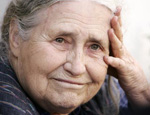
 AFP: British author Doris Lessing, whose powerful feminist and anti-colonial writing won her the Nobel Prize in Literature, died on Sunday at the age of 94. Born in what is now Iran in 1919, Lessing was raised by British parents in Southern Rhodesia, now Zimbabwe.
By Katy Lee
London (AFP) — British author Doris Lessing, whose powerful feminist and anti-colonial writing won her the Nobel Prize in Literature, died on Sunday at the age of 94.
Her agent and longtime friend Jonathan Clowes said Lessing, hailed as one of Britain’s greatest modern writers, had died peacefully at her London home in the early hours of the morning.
“She was a wonderful writer with a fascinating and original mind,” Clowes said.
“It was a privilege to work for her and we shall miss her immensely.”
Best known for the 1962 novel “The Golden Notebook”, today considered a landmark feminist work, Lessing became the oldest winner of the Nobel Prize in 2007, just shy of her 88th birthday.
She penned more than 50 other works ranging from political critiques to science fiction — many of them inspired by her own experiences of a lonely childhood in Africa and involvement in radical leftist politics.
She was out grocery shopping when she was announced as the winner of the Nobel Prize, and only found out when she returned home to find journalists swarming on her doorstep.
Her reaction was a characteristic: “Oh, Christ.”
Nicholas Pearson, her editor at HarperCollins, said Lessing’s life and career had been “a great gift to world literature”.
“She wrote across a variety of genres and made an enormous cultural impact,” he said in a statement.
“Even in very old age she was always intellectually restless, reinventing herself, curious about the changing world around us, always completely inspirational. We’ll miss her hugely.”
Charlie Redmayne, chief executive of HarperCollins UK, said Lessing was “a compelling storyteller with a fierce intellect and a warm heart”.
Tributes poured in for the writer from fans on Twitter, while the Swedish author Per Wastberg pronounced her “one of the world’s greatest contemporary writers”.
“At an advanced age, she wrote some very beautiful works,” Wastberg told the Swedish news agency TT.
“I think her books will pass into posterity.”
Razor-sharp attacks on colonialism, apartheid
Lessing published her first novel, “The Grass Is Singing”, in 1950. She went on to pen operas, short stories and two plays as well as dozens of other novels, including several science fiction works.
On granting her the Nobel Prize, the Swedish Academy praised the “scepticism, fire and visionary power” with which she had examined her own society.
Lessing later said winning the Nobel had been a “bloody disaster” because it had left her with no time to write.
“All I do is give interviews and spend time being photographed,” she told BBC radio in 2008.
She warned that her novel, “Alfred and Emily” — an exploration of how World War I shaped her parents’ lives, published that year — would be her last, and it was.
Asked about her writing, she said at the time: “It has stopped. I don’t have any energy any more.
“This is why I keep telling anyone younger than me, ‘don’t imagine you’ll have it forever.’
“Use it while you’ve got it because it’ll go, it’s sliding away like water down a plughole.”
Among the array of other awards she won were the Prix Medicis in 1976 and the Los Angeles Times Book Prize in 1995.
Born in what is now Iran in 1919, Lessing was raised by British parents in Southern Rhodesia, now Zimbabwe. She taught herself from the age of 13 by reading authors such as Charles Dickens and Leo Tolstoy.
After running away from her second husband and moving to Britain in 1949, she became involved in the British Communist Party, but resigned in 1956 at the time of the Hungarian uprising, which was crushed by Soviet tanks.
She became an increasingly outspoken critic of corruption and embezzlement by African governments and repeatedly used her razor-sharp writing to attack colonialism and what she saw as the sterility of white culture in southern Africa.
An outspoken critic of apartheid, she was barred from South Africa in 1956 but was finally able to revisit in 1995, after white rule was dismantled.
Twice divorced, Lessing is survived by a daughter and two granddaughters.


