


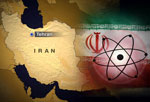
 AP: Iran has set up new equipment that could let it produce more enriched uranium from a smaller amount of raw material, diplomats said Friday.
The Associated Press
By GEORGE JAHN
VIENNA (AP) — Iran has set up new equipment that could let it produce more enriched uranium from a smaller amount of raw material, diplomats said Friday.
The step could one day make it easier to produce a nuclear bomb and is likely to give the U.S. more leverage with Russia and China in its push for new U.N. sanctions on Iran.
Moscow — which has softended its traditional opposition to sanctions in recent weeks — warned Iran that time was running out to avoid such punishment, urging it to show compromise on its nuclear activities during a visit by Brazil’s president, Luiz Inacio Lula da Silva.
Russian President Dmitry Medvedev said after meeting Silva in Moscow that “maybe it is the last chance before the adopting of known decisions in the Security Council.”
The international showdown is focused at a nuclear facility in the desert outside the central city of Natanz. Almost all of the thousands of centrifuges set up there produce uranium that is made up of 3.5 percent uranium-235, the isotope needed to produce a nuclear explosion. Uranium enriched to 3.5 percent can be used to fuel civilian reactors that produce electricity — Iran’s declared purpose for enrichment.
One set of 164 centrifuges has been linked in a cascade, or string of machines, that has been producing uranium enriched to near 20 percent since February.
If enriched to around 95 percent, uranium can be used in building a nuclear bomb. At 20 percent, it can be turned into weapons-grade material much more quickly than less-enriched uranium.
The U.N. nuclear watchdog, the International Atomic Energy Agency, monitors Natanz with remotely controlled video cameras and inspections by experts. Two diplomats familiar with the information produced by that monitoring said that Iranian technicians had in recent weeks assembled another 164-centrifuge cascade. They spoke on condition of anonymity because their information was confidential.
They appeared ready to activate it and increase the efficiency of production by hooking it up to the cascade now operating and recycling the waste now being left by it to squeeze out more enriched uranium at near 20-percent levels, said the diplomats.
One of the diplomats familiar with Iran’s enrichment programs emphasized that the idea appeared not to produce greater amounts than the operating cascade is now turning out, but to improve productivity.
Tehran denies any interest in developing nuclear arms and says it needs the higher enriched uranium to supply a research reactor with fuel after a U.N.-supported deal to provide the material from abroad fell apart.
Iran agreed in principle about six weeks ago to address some agency concerns about its program by repositioning monitoring cameras now focused on the 3.5 percent facility to be able to monitor the operation producing the higher-enriched material and giving IAEA experts more access. But it has yet to act on those promises, said an international official, who also asked for anonymity because his information was privileged.
An IAEA-backed plan that offered nuclear fuel rods for Tehran’s research reactor in exchange for most of Iran’s stock of lower-level enriched uranium initially raised Western hopes that it could temporarily curb Iran’s capacity to make a nuclear bomb.
But it hit a dead end last year after Iran rejected it, though the country’s leaders have since tried to keep the offer on the table, proposing variations without accepting the original terms. As the standoff continues, Russia and China — two veto-wielding Security Council members normally against sanctions — are signaling increased willingness to support a new round of U.N. penalties meant to punish the Iranian government for its nuclear defiance.
At U.N. headquarters on Thursday, U.S. Ambassador Susan Rice said that talks on a U.S.-drafted sanctions resolution are making “good progress.”
Diplomats familiar with the negotiations said a draft resolution could be circulated to all Security Council nations — permanent members the U.S., Britain, China, France and Russia and 10 elected countries — before the end of the month.
The stepped-up diplomatic activity is taking place ahead of a weekend visit to Tehran by Silva, the Brazilian president whose country is one of the 10 non-permanent council members. Silva has indicated a reluctance to support new sanctions against Iran.
Iran says Brazil and Turkey — which are UN Security Council members — have offered a promising new proposal for a nuclear fuel deal that would make the U.S.-led push for sanctions irrelevant. Western diplomats, however have dismissed that announcement as a further tactic in what they characterize as Tehran’s diplomatic maneuvering to avoid sanctions. The international official said that — as of Friday — the IAEA, which helped broker the original deal, had received no new proposals.
Rice said Silva’s visit “is not impeding progress” by the six countries in reaching agreement on a fourth round of sanctions against Iran.
She said advances made by the five permament council members plus Germany — the six powers spearheading policy on Iran’s nuclear program — are aking will perhaps strengthen Silva’s hand as he hopefully delivers a message to the Iranians “that pressure will intensify” unless they suspend enrichment and start negotiations on their suspect nuclear program.


