


 Reuters: New sanctions imposed on Iran over its nuclear program are tightening the noose on Tehran, with growing numbers of private sector companies joining banks in shunning ties with the Islamic Republic as too risky, senior U.S. officials said on Tuesday.
By Andrew Quinn
WASHINGTON, June 22 (Reuters) – New sanctions imposed on Iran over its nuclear program are tightening the noose on Tehran, with growing numbers of private sector companies joining banks in shunning ties with the Islamic Republic as too risky, senior U.S. officials said on Tuesday.
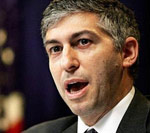
“Virtually all major financial institutions have either completely cut off or dramatically reduced their ties with Iran,” Undersecretary of the Treasury Stuart Levey told a hearing of the Senate Foreign Relations Committee.
“We are now starting to see companies across a range of sectors, including insurance, consulting, energy, and manufacturing make similar decisions,” Levey said in testimony.
Levey said the new measures, which include new U.N. Security Council sanctions passed two weeks ago along with additional measures proposed by the United States and the European Union, were creating a “reputational risk” for companies with ties to Iran and that this was reinforcing government efforts to pressure Tehran.
“The private sector really is getting the point that if they do business with Iran, they put themselves at enormous risk,” Levey said.
The new U.N. sanctions blacklist dozens of Iranian military, industrial and shipping companies, tighten an arms embargo and provide for inspections of suspect cargoes to and from Iran.
Russia and China, which have strong economic ties with Tehran and have at times resisted sanctions, supported the final measure but managed to dilute Western hopes for tougher moves targeting Iran’s energy sector.
Iran denies Western allegations that it is seeking atomic weapons, insisting that it only wants peaceful nuclear energy.
The United States has led the way in pushing for even harsher unilateral sanctions, including draft legislation in the House of Representatives which aims to deprive foreign banks of access to the U.S. financial system if they do business with Iran’s key banks or its Islamic Revolutionary Guards Corps.
SHARP CHOICES
The U.S. Treasury has already imposed its own set of new sanctions, blacklisting another of Iran’s state-controlled banks, companies that are fronts for its state shipping line, and more of the IRGC. It has also identified some 20 petroleum and petrochemical companies as being under Iranian government control — putting them off limits to U.S. businesses under a general trade embargo.
The European Union, for its part, agreed new unilateral measures to block oil and gas investment and curtail Iran’s refining and natural gas capacity.
Undersecretary of State William Burns told the committee that the new economic steps against Iran were helping to “sharpen the choices” for Iran’s leadership, and that the United States was open to talks on Iran’s nuclear program if Tehran would address serious international concerns.
“The door is open to serious negotiation if Iran is prepared to walk through it,” Burns said. “There is growing international pressure on Iran to live up to its obligations and growing international isolation for Iran if it does not.”
The success of U.S. sanctions on Iranian entities will depend largely on whether foreign governments and businesses heed them. So far, many European banks have halted trade with companies on Treasury blacklists, and U.S. officials plan a major effort to persuade governments to support the U.S. sanctions and take similar steps.
Burns said Russia’s decision not to deliver S-300 missiles to Iran was a sign of the effectiveness of the new resolutions, but said China — which has fast-growing business dealings with Iran — remained a concern.
“The issue of China’s continuing or potential investment in Iran’s energy sector is going to remain a very important concern for us … we’re going to continue to press that hard,” Burns said.
“They increasingly understand the threat. I’m not sure they share the same sense or urgency that we and others do.” (Reporting by Andrew Quinn; editing by Patricia Wilson and Mohammad Zargham)


