


 Reuters: Talks between six major powers and Iran over its nuclear program were “difficult and candid” but must lead to practical steps by Tehran to assuage global concerns, a senior U.S. administration official said Tuesday.
By Stephanie Nebehay
GENEVA (Reuters) – Talks between six major powers and Iran over its nuclear program were “difficult and candid” but must lead to practical steps by Tehran to assuage global concerns, a senior U.S. administration official said Tuesday.
The official, who asked not to be named, underlined how difficult future talks would be by noting that the six powers, known as the P5+1, insisted that Iran must suspend its enrichment of uranium — something categorically rejected by Iran’s chief nuclear negotiator, Saeed Jalili.
“Suspension is mandated by several Security Council resolutions. That is still the position of the P5+1,” the official told reporters.
Earlier Jalili told a news conference that enrichment would not be on the agenda at the next meeting, which the two sides had agreed to hold in Istanbul in late January.
“I am announcing openly and clearly that Iran will not discuss a uranium enrichment halt in the next meeting in Istanbul with major powers,” Jalili said.
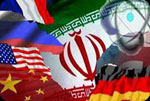
The six powers — the United States, Russia, China, Britain, France and Germany — fear that Iran’s nuclear program is a cover for acquiring an atomic bomb, while Tehran insists it is aimed at producing electricity.
The senior U.S. official confirmed that the United States did not have a formal bilateral meeting with Iran during this week’s two days of talks in Geneva between the six powers and Tehran. But it had had opportunities to communicate its main points.
“We had several informal interactions which were useful to reinforce our main concerns,” the official told reporters.
One way for Iran to build confidence would be to revise a deal reached at a previous round of talks over a year ago, but never implemented, to exchange low-enriched uranium for fuel to run an Iranian medical research reactor, he suggested.
Asked how long Washington was prepared to wait for progress, he said: “The measure ultimately becomes practical steps… to build a sense of trust that just does not exist now.”
(Editing by Jonathan Lynn and Mark Trevelyan)


