


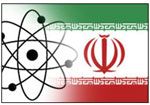
 AFP: Iran plans to triple its capacity to purify uranium later this year when it transfers the work from the central city of Natanz to the Fordo site, the country’s nuclear chief said on Wednesday.
By Mohammad Davari
TEHRAN (AFP) — Iran plans to triple its capacity to purify uranium later this year when it transfers the work from the central city of Natanz to the Fordo site, the country’s nuclear chief said on Wednesday.
“We will transfer the 20 percent enrichment from Natanz to the Fordo site this year, under the supervision of the (International Atomic Energy) Agency,” Fereydoon Abbasi Davani was quoted as saying by state television’s website.
“We will also triple the (production) capacity. The 20 percent enrichment will not be stopped at Natanz until the production level is three times higher than its current rate,” he said.
Iran’s uranium enrichment work is currently undertaken in the Natanz nuclear facility, visited regularly by international nuclear inspectors.
The announcement brought immediate condemnation from France, with a foreign ministry spokesman terming Iran’s plans a “provocation” and accusing Tehran of repeated violations of international law.
“The announcement is a provocation. It heightens the existing concerns of the international community over the intransigence of the Iranian regime and its constant breaches of international law,” said Bernard Valero.
The Fordo plant was built secretly deep inside a mountain near the holy Shiite city of Qom and about 150 kilometres (94 miles) southwest of Tehran.
Revelations in 2009 about its construction infuriated the West and prompted the United Nations to strengthen sanctions against Tehran.
In February, Iran informed the UN nuclear watchdog that the Fordo plant was prepared to host centrifuges — machines which enrich uranium at supersonic speed — and that it would become operational in the summer.
Abbasi Davani announced in April that Iran would continue to enrich uranium to 20 percent purity to fuel “four to five (research) reactors” which he said Iran plans to build in the near future.
The Islamic republic began its 20 percent uranium enrichment in February 2010, following the collapse of negotiations with the West over the acquisition of nuclear fuel for its research and medical reactor in Tehran.
On Wednesday, Abbasi Davani said that Iran would produce its first batch of fuel plates for the Tehran reactor by September.
“With high probability, the nuclear fuel in the form of plates will be produced by September,” he said.
World powers have repeatedly said Iran does not possess the technology to make the actual nuclear fuel plates required to power the 5-megawatt Tehran research reactor which makes medical isotopes.
The West accuses Iran of seeking to acquire a nuclear military capacity under the guise of its civilian atomic work, a charge Tehran strongly denies.
At the heart of Iran’s dispute with the West lies uranium enrichment, a sensitive process which can produce either fuel for a nuclear reactor or the fissile material for an atomic warhead.
Despite being targeted by four sets of sets of UN Security Council sanctions over its refusal to halt uranium enrichment, the Islamic republic is adamant it will push forward with its controversial nuclear activities.
Abbasi Davani meanwhile announced “the forthcoming installation of the first cascade of 164 new-generation centrifuges”, which are more powerful and faster than the models Iran currently operates in Natanz.
Iran has over 8,000 centrifuges of the first generation IR-1, with nearly 6,000 actively purifying uranium to the 3.5 percent level, according to the latest report by the UN nuclear watchdog in May.


