


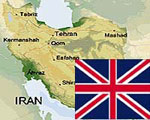
 Reuters: Iran’s nuclear energy chief accused British spies on Monday of shadowing him around the world — even to the “back door” of his university office — to gather information ahead of a failed assassination attempt on him last year.
By Fredrik Dahl
VIENNA (Reuters) – Iran’s nuclear energy chief accused British spies on Monday of shadowing him around the world — even to the “back door” of his university office — to gather information ahead of a failed assassination attempt on him last year.
Fereydoun Abbasi-Davani, subject to U.N. sanctions because of what Western officials said was his involvement in suspected atomic arms research, also blamed Israel and the United States for attacks on him and other Iranian scientists.
Western countries have previously dismissed allegations of this nature from the Islamic Republic, which they suspect of seeking to develop a nuclear weapons capability.
The Foreign Office in London declined to comment on the allegations.
Abbasi-Davani’s comments on the sidelines of the annual member state gathering of the U.N. nuclear agency in Vienna underlined steadily deteriorating ties between Iran and the West in the row over Tehran’s nuclear work.
They also made clear the limits of a “charm offensive” which Western officials say Iran has been waging in recent months in an attempt to ease tightening international pressure.
“Six years ago the intelligence service of the UK began collecting information and data regarding my past, my family, the number of children,” Abbasi-Davani told a news conference.
“The agents of MI6 of England in different and various places including the airport in France, in scientific places in Poland, Italy, Netherlands, Malaysia … repeatedly following and looking for information regarding myself.”
They had even “checked until the back door of my room in the university to see whether I have a bodyguard or not,” Abbasi-Davani added through an interpreter.
In July, university lecturer Darioush Rezaie was shot dead by gunmen in eastern Tehran, the third murder of a scientist since 2009. One was killed in a car bomb, the second by a device detonated remotely.
NO “NEED” FOR NORTH KOREA COOPERATION
Iran has said the attacks were the work of enemies that wished to deny it the right to develop nuclear technology which it says is aimed at generating electricity.
Himself slightly wounded in a 2010 car bomb blast, Abbasi-Davani said the attacks were carried out by Israel with the “support of the intelligence services of the United States and England.” A nuclear scientist, he was named to his current post a few months later.
Washington has denied any involvement in the murders and arch foe Israel has declined to comment.
Iran has repeatedly rejected Western accusations that its nuclear programme is a cover for developing atomic arms, but its refusal to curb sensitive activity has drawn increasingly tough United Nations and separate U.S. and European sanctions.
Western powers have voiced particular alarm over Iran’s decision to shift higher-grade uranium enrichment to an underground bunker near the holy city of Qom, as such work could take it closer to weapons-grade material.
Abbasi-Davani said the activity, which Iran says is intended to produce fuel for a research reactor, was moved to protect the nuclear programme against any Israeli and U.S. strikes.
He said equipment was being transferred to Fordow and that the facility would be inaugurated within six months.
Asked whether Iran had any nuclear cooperation with North Korea, Abbasi-Davani said his country had so far not had any “need” for that. But he did not rule it out in future, saying any such cooperation would be under IAEA supervision.
Western nuclear experts say both North Korea, which has carried out two nuclear tests, and Iran could benefit from exchanging nuclear know-how, material or technology, as sanctions make it difficult for them to access other sources.
(Additional reporting by Michael Shields)


